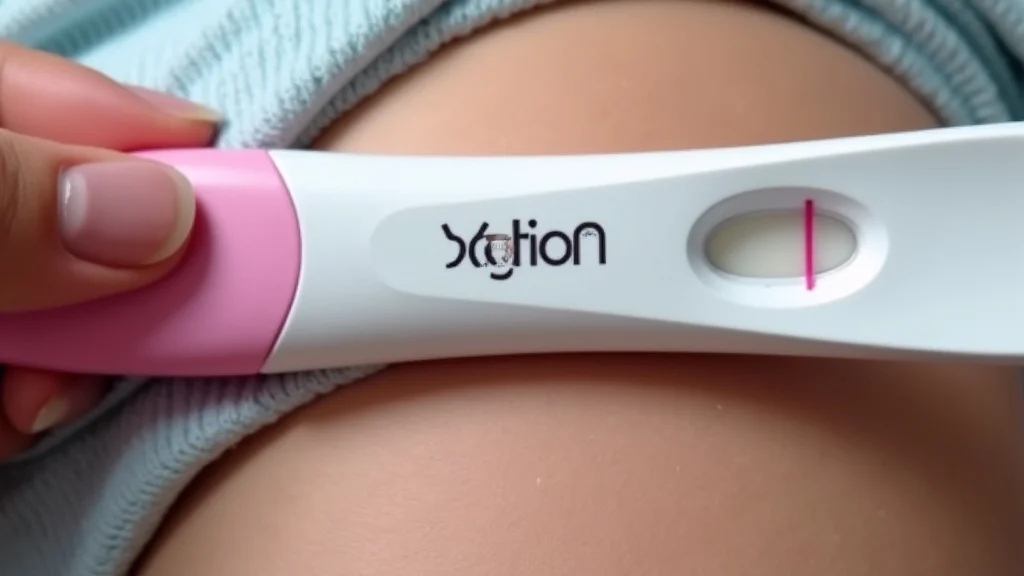
Wondering if you can get a reliable result with a pregnancy test at 3 weeks? For many, this is the first question that pops up after a missed period. It can feel a bit confusing, especially if it’s your first time trying to figure things out.
Don’t worry, we’ll walk through it step by step. We’ll make it super simple so you can get the answers you need. Keep reading to learn how to get the clearest picture.
Key Takeaways
- You can often get an accurate result with a pregnancy test at 3 weeks.
- Home pregnancy tests detect the hormone hCG.
- Timing is important for the most reliable results.
- Different types of tests have varying sensitivities.
- False negatives are more common than false positives.
- Confirming with a doctor is always a good idea.
When Can You Test for Pregnancy
Figuring out if you are pregnant often starts with a simple question: when is the right time to take a test? For many people, especially those new to this process, this timing can seem a bit like a puzzle. The key is understanding how pregnancy tests work and what they look for.
They detect a hormone called human chorionic gonadotropin, or hCG. This hormone is only produced after a fertilized egg implants in the uterus.
The amount of hCG in your body increases rapidly in the early days of pregnancy. This means that the earlier you test, the lower the level of hCG might be, and this can affect the test’s accuracy. Many home pregnancy tests are designed to detect hCG in urine.
Their sensitivity levels can vary, which is why the recommended testing times are usually based on when your period is expected.
Some tests are more sensitive than others and can detect lower levels of hCG. This means you might be able to get a positive result a few days before your missed period. However, testing too early can lead to a false negative, meaning the test says you’re not pregnant when you actually are.
This is because the hCG levels simply haven’t risen high enough yet for the test to pick them up.
Understanding hCG Levels
Human chorionic gonadotropin (hCG) is a hormone that your body starts producing shortly after a fertilized egg attaches to the uterine lining. This event, known as implantation, usually happens about six to twelve days after conception. Once implantation occurs, your body begins to release hCG, and its levels continue to rise steadily.
The concentration of hCG in your blood and urine is what pregnancy tests measure. For home urine tests, the hCG needs to reach a certain threshold concentration to be detected. This threshold is what determines the sensitivity of the test.
A highly sensitive test can detect lower concentrations of hCG, allowing for earlier detection of pregnancy.
Typically, hCG levels double roughly every 48 to 72 hours in early pregnancy. This rapid increase is why testing a few days after a missed period often yields a more accurate result. By the time your period is due, hCG levels are usually high enough for most standard home pregnancy tests to detect them reliably.
Types of Pregnancy Tests
There are two main types of pregnancy tests: urine tests and blood tests. Home pregnancy tests are urine tests. They are widely available over-the-counter at drugstores and supermarkets.
These tests are convenient and easy to use. They work by detecting hCG in your urine.
Blood pregnancy tests are performed in a doctor’s office. There are two types: qualitative and quantitative. Qualitative blood tests simply detect the presence of hCG.
Quantitative blood tests, also known as beta hCG tests, measure the exact amount of hCG in your blood. These are more sensitive than urine tests and can detect pregnancy earlier.
The sensitivity of home urine tests varies. Some are designed to be used as early as 6 days before a missed period, while others recommend waiting until you miss your period. The packaging of the test will usually state its sensitivity level, often measured in milli-international units per milliliter (mIU/mL).
A lower mIU/mL number means the test is more sensitive and can detect lower amounts of hCG.
When to Take a Pregnancy Test
The best time to take a pregnancy test is usually after you have missed your period. This is because your body needs time to produce enough hCG for the test to detect it accurately. If you test too early, you might get a false negative result, meaning the test shows you are not pregnant, but you actually are.
For home urine tests, most recommend testing on the day of your missed period for the most reliable results. Some highly sensitive tests can detect pregnancy a few days before your expected period. However, even with these tests, testing on the day your period is due or a day or two after can increase the chances of an accurate positive result.
If your period is irregular, it can be harder to pinpoint the right time to test. In such cases, waiting at least 14 to 21 days after you think you may have ovulated is often advised. If you get a negative result but still suspect you might be pregnant, wait a few days and test again.
Repeating the test can help confirm the results, especially if your hCG levels are still rising.
How Pregnancy Tests Work
Pregnancy tests work by detecting a special hormone called human chorionic gonadotropin (hCG). This hormone is produced by the cells that will eventually form the placenta. It starts to be produced shortly after a fertilized egg attaches to the wall of your uterus, which is a process called implantation.
Implantation typically happens about six to twelve days after conception.
Once implantation occurs, your body begins to release hCG into your bloodstream and it eventually appears in your urine. The amount of hCG in your body increases very quickly in the early weeks of pregnancy. It typically doubles about every 48 to 72 hours during the first few weeks.
This rapid rise is what makes pregnancy tests effective.
Home pregnancy tests, which you can buy at most drug stores, are urine tests. They contain special strips that react with hCG. If hCG is present in your urine above a certain level, the test will show a positive result, usually by displaying a line, a plus sign, or the word “pregnant.” The sensitivity of these tests varies, meaning some can detect lower amounts of hCG than others.
Detecting hCG in Urine
Urine pregnancy tests are the most common type used at home. They are designed to pick up the presence of hCG in your urine. Inside the test stick or strip are antibodies that are specifically designed to bind to hCG molecules.
When you urinate on the test, the urine flows over these antibodies.
If hCG is present in your urine, it will bind to these antibodies. This binding action triggers a chemical reaction. This reaction then causes a visible indicator to appear on the test window.
This indicator might be a line, a plus sign, or a digital readout that says “pregnant” or “not pregnant.” The amount of hCG needed to trigger this reaction depends on the test’s sensitivity.
For instance, a highly sensitive test might be able to detect hCG at levels as low as 10 or 20 mIU/mL. Less sensitive tests might require levels of 50 mIU/mL or higher. This is why testing at different times can yield different results.
Early in pregnancy, hCG levels are low, so a less sensitive test might not be able to detect them, leading to a false negative. Using first-morning urine is often recommended because it is more concentrated, meaning any hCG present will be at its highest concentration.
How Early Can Tests Detect hCG
The earliest a pregnancy test can accurately detect hCG depends on the sensitivity of the test. Some of the most sensitive home urine tests can detect hCG as early as 6 days before your missed period. This is about 5 days after ovulation, assuming conception has occurred.
However, the chances of getting an accurate positive result this early are still quite low.
At this very early stage, hCG levels are usually very low. The test needs to be sensitive enough to pick up these minimal amounts. Even if a test shows a positive result this early, it’s often a good idea to confirm it with another test a few days later, especially on the day of your missed period or after.
This helps ensure the result is accurate.
By the time your period is due, most women who are pregnant will have enough hCG in their urine for standard home pregnancy tests to detect it. If you test on the day your period is expected and get a negative result, but your period still doesn’t arrive, it’s recommended to wait a few days and test again. This is because hCG levels continue to rise significantly in the first few weeks of pregnancy.
A later test has a higher chance of detecting these increased levels.
Accuracy of Early Testing
Testing for pregnancy very early, such as at 3 weeks pregnant (which is often around the time of your missed period or just before), can be accurate, but there are factors to consider. The main factor is the level of hCG in your body. At this stage, hCG levels are rising, but they might not be high enough for all tests to detect.
A test’s accuracy depends on its sensitivity. Highly sensitive tests are better at detecting lower amounts of hCG. If you use such a test and follow the instructions carefully, you might get a positive result that is accurate.
However, there is still a chance of a false negative if the hCG level is just below the test’s detection limit.
A false negative occurs when the test says you are not pregnant, but you actually are. This is more likely to happen when testing very early. On the other hand, false positives are very rare.
They can sometimes happen due to certain medications containing hCG, recent miscarriage or abortion, or certain medical conditions. For the most reliable results, it’s generally advised to wait until the day of your missed period or a few days after.
Pregnancy Test At 3 Weeks Specifics
When you are wondering about a pregnancy test at 3 weeks, it’s important to know what “3 weeks” actually means in terms of pregnancy. Doctors usually calculate pregnancy from the first day of your last menstrual period (LMP). So, “3 weeks pregnant” typically means you are about 3 weeks from your last period’s start date.
This stage is often right around when you might expect your next period, or possibly a few days before it.
At this point, if you are indeed pregnant, implantation has likely occurred, or is just about to occur. This means your body is starting to produce hCG. The amount of hCG will vary from person to person and even from pregnancy to pregnancy.
This is why whether a pregnancy test at 3 weeks is accurate depends heavily on both the sensitivity of the test and your individual hCG levels.
If your period is due around the 3-week mark, then a standard home pregnancy test might be able to detect pregnancy. However, if your period isn’t due for another few days, testing now might yield an inaccurate negative. The best approach is often to wait until you miss your period for the most reliable result.
If you are eager to test early, opt for a highly sensitive test and use first-morning urine.
Testing Around Your Expected Period
If your 3-week mark lines up with the time your period is expected, then testing at this point can often be accurate. This is because, by the time your period is due, your body should have produced enough hCG for most standard home pregnancy tests to detect. The hCG hormone levels have been increasing since implantation, which likely happened about a week before your expected period.
When you take a test around the time of your missed period, you are giving your body sufficient time to produce detectable levels of hCG. Most home pregnancy tests are designed to provide accurate results from the first day of a missed period. Using first-morning urine is still a good practice, as it concentrates any hCG present, making it easier for the test to detect.
If you get a negative result at this stage, and your period still doesn’t arrive within a few days, it is advisable to take another test. Sometimes, hCG levels might be just below the detection threshold of the test, or ovulation might have occurred a little later than you thought, delaying your pregnancy timeline. Repeating the test a few days later can confirm the result or reveal a pregnancy that was missed earlier.
The Role of Highly Sensitive Tests
Highly sensitive pregnancy tests are designed to detect lower concentrations of hCG in urine. This means they can potentially provide a positive result earlier in pregnancy, sometimes up to 6 days before a missed period. For someone wondering about a pregnancy test at 3 weeks, especially if it’s close to their expected period date, a highly sensitive test might offer an answer.
These tests are valuable because they can detect even small amounts of hCG. If implantation has occurred and hCG production has begun, a sensitive test is more likely to pick it up. However, it’s crucial to remember that “highly sensitive” does not mean “always accurate” when testing very early.
Even these tests have a minimum detection level.
If you decide to use a highly sensitive test, it’s still best to use first-morning urine. This is because hCG levels are most concentrated then. Also, be prepared for the possibility of a faint positive line, which still indicates a pregnancy.
If you get a positive result, it’s wise to follow up with your doctor. If you get a negative result but still suspect pregnancy, wait a few days and test again.
Interpreting Faint Lines
Seeing a faint line on a pregnancy test can be confusing. A faint positive line generally indicates that hCG is present in your urine, but at a low concentration. This often happens when testing very early in pregnancy, such as around the 3-week mark, close to your missed period.
The intensity of the line on a pregnancy test usually corresponds to the amount of hCG present. A strong, clear line means a high concentration of hCG, while a faint line suggests a lower concentration. Even a faint line is typically considered a positive result, meaning the test has detected hCG and you are likely pregnant.
However, sometimes evaporation lines can appear on tests if you wait too long to read the results. These are colorless lines that form as the urine evaporates. It’s important to read the test within the timeframe specified in the instructions (usually 5-10 minutes).
If you see a faint line within this timeframe, it’s most likely a positive result. To confirm, it’s always best to retest in a couple of days or consult your doctor for a blood test.
Factors Affecting Accuracy
While taking a pregnancy test at 3 weeks can sometimes yield an accurate result, several factors can influence its reliability. Understanding these factors can help you interpret your test results more confidently and know when to seek further confirmation. The most significant factor is the level of hCG, but other elements also play a role.
One of the biggest influences is the timing of the test. Testing too early, before your body has produced enough hCG, is the most common reason for a false negative. Even if you are pregnant, the hCG concentration might be too low for the test to detect.
Conversely, false positives are rare but can occur due to specific circumstances.
The sensitivity of the test itself is also crucial. A highly sensitive test is more likely to detect lower hCG levels. Following the test instructions precisely is vital.
Using expired tests or not reading the results within the specified window can also lead to inaccuracies. Ultimately, while early testing is possible, waiting until after a missed period significantly increases accuracy.
Timing and hCG Levels
The most critical factor for an accurate pregnancy test at 3 weeks is the timing relative to your ovulation and the subsequent rise in hCG. If “3 weeks” refers to 3 weeks since your last menstrual period (LMP), and your period is due around this time, then hCG levels might be detectable. However, if you are only 3 weeks pregnant from conception (which means about 5 weeks from LMP), hCG levels are likely too low for most home tests.
Assuming you mean 3 weeks from LMP and your period is expected, implantation would have occurred roughly a week ago. This allows some time for hCG production. However, hCG levels start very low and double every 48-72 hours in early pregnancy.
Therefore, even at the end of week 3 (from LMP), the levels might still be borderline for some tests.
A highly sensitive test could potentially detect this. If you ovulated late, or implantation occurred late, your hCG levels will be even lower. This is why a negative test at 3 weeks (from LMP) doesn’t automatically mean you aren’t pregnant, especially if your period hasn’t been missed yet.
Waiting until you miss your period is generally the most reliable strategy for accurate results because hCG levels will have had more time to rise significantly.
Diluted Urine and False Negatives
Diluted urine is a common reason for a false negative pregnancy test, especially when testing early. If you drink a lot of fluids before taking the test, your urine will be more diluted. This means that any hCG present will be at a lower concentration in the urine sample.
Consequently, the pregnancy test might not be able to detect it, even if you are pregnant.
To avoid this, it’s recommended to use first-morning urine for pregnancy tests. This urine is typically more concentrated because you haven’t consumed fluids overnight. The higher concentration of hCG in first-morning urine increases the chances of detecting the hormone accurately, especially in the early stages of pregnancy.
If you must test at another time of day and have been drinking a lot of fluids, try to restrict your fluid intake for a few hours beforehand. This can help to concentrate your urine. If you receive a negative result but still suspect pregnancy, it’s advisable to retest in a day or two, preferably using first-morning urine, or wait until you miss your period for a more definitive result.
Rare Causes of False Positives
False positive results on pregnancy tests are quite rare, but they can happen. One of the most common reasons is testing too late after the specified reading time. If you wait too long, an evaporation line might appear, which can look like a faint positive but is actually a colorless line caused by urine evaporation.
Another cause can be certain medications that contain hCG, such as those used for fertility treatments. If you have recently taken such medication, it can lead to a false positive result. It’s important to inform your doctor if you are undergoing fertility treatments before taking a home pregnancy test.
Less common reasons for false positives include recent miscarriage or abortion, as hCG levels can remain in the system for some time. Certain rare medical conditions, such as ovarian cysts or certain types of cancer, can also cause elevated hCG levels. If you get a positive result and are unsure why, or if your period doesn’t arrive as expected, consult your doctor for confirmation.
Confirmation and Next Steps
If you take a pregnancy test at 3 weeks and get a positive result, or if you get a negative result but your period is still absent, the next step is usually to confirm the pregnancy with a healthcare professional. While home pregnancy tests are generally reliable, a doctor can provide definitive confirmation and guide you on what to do next. This is an important part of the process for peace of mind and proper care.
A doctor can perform a blood test, which is more sensitive than urine tests and can detect pregnancy earlier and more accurately. Blood tests can also measure the exact amount of hCG, which helps to determine how far along the pregnancy is and monitor its progress. This is especially important if you received an ambiguous result on a home test.
Once pregnancy is confirmed, your doctor will discuss prenatal care. This includes scheduling your first prenatal appointment, advising on lifestyle changes, and answering any questions you may have about your pregnancy. It’s a time for celebration and careful planning for your health and the health of your developing baby.
Consulting Your Doctor
After getting a positive result from a home pregnancy test, or if you have any concerns about your test results, contacting your doctor is a key next step. Even a faint positive line on a home test is usually an indication of pregnancy. Your doctor can confirm the pregnancy with a blood test.
Blood tests are more sensitive and can detect hCG levels earlier and more accurately than urine tests.
Your doctor will also want to establish an estimated due date. They will likely ask about the first day of your last menstrual period and your menstrual cycle history. This information helps them calculate the age of the pregnancy.
A blood test can also provide quantitative measurements of hCG, which can further help in estimating how far along you are.
This initial consultation is also an opportunity to discuss any existing health conditions you have and how they might affect your pregnancy. Your doctor will provide advice on nutrition, prenatal vitamins, and lifestyle adjustments that are important for a healthy pregnancy. They will schedule your first official prenatal visit, where they will perform a more thorough evaluation.
Understanding Prenatal Care
Prenatal care is the medical care you receive during pregnancy. It is essential for the health and well-being of both you and your developing baby. The goal of prenatal care is to monitor your health, detect and treat any potential problems early, and provide education and support throughout your pregnancy.
Your first prenatal visit typically happens soon after you confirm your pregnancy with your doctor. During this visit, your doctor will review your medical history, perform a physical examination, and likely order blood tests and a urine test. They will also discuss your diet, exercise habits, and any medications you are taking.
Regular prenatal visits will continue throughout your pregnancy, usually every 4 weeks in the first and second trimesters, and more frequently in the third trimester. These visits allow your doctor to track your baby’s growth and development, monitor your vital signs, and address any concerns or questions you may have. This consistent care helps ensure a healthy pregnancy journey.
What to Do with a Negative Result
If you take a pregnancy test at 3 weeks and get a negative result, but your period is late, it’s important to consider a few things. First, ensure you followed the test instructions precisely. Using expired tests or misinterpreting the results can lead to an inaccurate negative.
If you tested very early, it’s possible that your hCG levels were not yet high enough to be detected. In this case, it’s recommended to wait a few days, ideally until you miss your period, and then take another test. Using first-morning urine can also improve accuracy if you are testing again.
If you continue to get negative results but your period remains absent, or if you have symptoms of pregnancy, it’s wise to consult your doctor. There can be other reasons for a missed period besides pregnancy, such as stress, weight changes, hormonal imbalances, or medical conditions. Your doctor can help determine the cause and recommend appropriate steps.
Common Myths Debunked
Myth 1 A pregnancy test at 3 weeks will always be wrong
This is not true. While a pregnancy test at 3 weeks might not always be accurate, it can be. If “3 weeks” means 3 weeks from your last menstrual period (LMP) and your period is due around this time, many sensitive home tests can detect pregnancy.
The accuracy depends on the test’s sensitivity and your individual hCG levels. If you are only 3 weeks from conception, then it’s too early for most tests.
Myth 2 Only a doctor can give an accurate pregnancy test
While a doctor’s confirmation is the most definitive, home pregnancy tests are highly accurate when used correctly and at the right time. Most home tests are over 99% accurate when used from the day of your missed period. They detect hCG, the same hormone doctors look for, just in urine instead of blood.
Myth 3 A faint positive line means you aren’t really pregnant
A faint positive line usually means you are pregnant. It indicates that hCG is present in your urine, but at a lower concentration. This often happens when testing early.
If you see a faint line within the recommended reading time, it should be considered a positive result. Retesting in a few days or seeing a doctor can confirm.
Myth 4 Drinking alcohol before a test will affect the result
Drinking alcohol before taking a pregnancy test does not affect the accuracy of the test itself. Pregnancy tests detect hCG, which is a hormone produced by your body. Alcohol does not interfere with this detection process.
However, if you are pregnant, consuming alcohol is not recommended.
Frequently Asked Questions
Question: Can I take a pregnancy test at 3 weeks pregnant
Answer: If you mean 3 weeks from your last menstrual period and your period is due around this time, yes, some highly sensitive tests might detect pregnancy. However, it’s more reliable to test after you miss your period.
Question: What is the earliest I can take a home pregnancy test
Answer: Some highly sensitive tests can detect pregnancy up to 6 days before your missed period. However, testing on the day of your missed period or a few days after generally provides the most accurate results.
Question: What if my pregnancy test is a very faint line
Answer: A faint line usually means you are pregnant. It indicates that hCG is present but at a low level. It is recommended to retest in a few days or consult your doctor for confirmation.
Question: Why would a pregnancy test be negative if I think I’m pregnant
Answer: This could be because you tested too early, your hCG levels are not yet detectable, or you drank too much fluid, diluting your urine. Retesting in a few days or consulting a doctor is advisable.
Question: How accurate are pregnancy tests at 3 weeks
Answer: The accuracy at 3 weeks (from LMP, near missed period) depends on the test’s sensitivity and your hCG levels. Highly sensitive tests can be accurate, but waiting until after a missed period increases reliability.
Summary
Testing for pregnancy at 3 weeks from your last period can sometimes give you an accurate result, especially with sensitive tests. It’s when hCG levels start to rise after implantation. If your period is due, a test might work.
Using first-morning urine and following instructions is key. A positive result, even faint, usually means pregnant. Always confirm with your doctor for next steps and care.
Leave a Reply