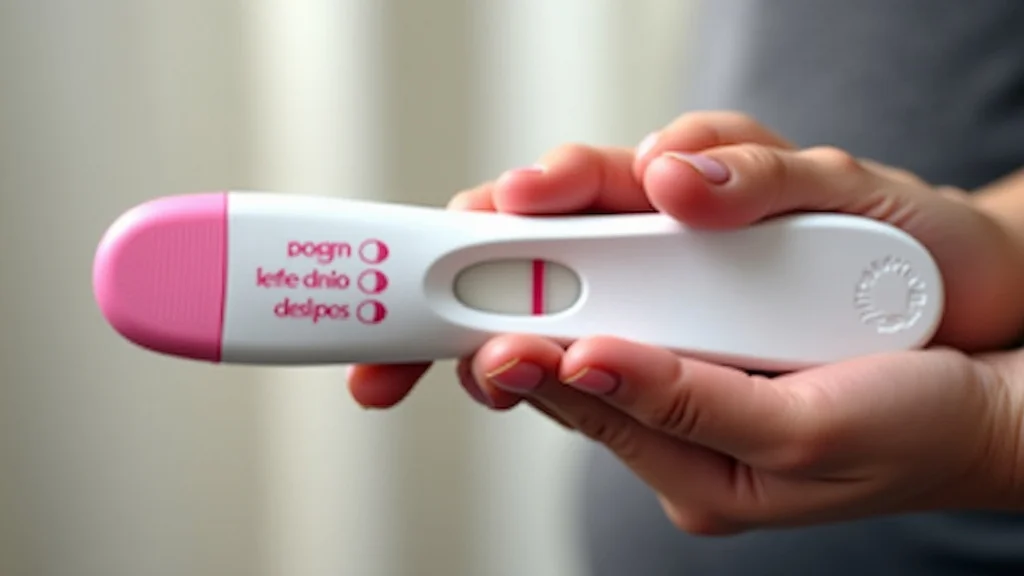
Waiting to take a pregnancy test can feel like forever, especially when you’re hoping for a positive result. For many, the question of when to test comes up often. This is especially true around the 9 days past ovulation mark, or 9 DPO.
It’s a time when excitement can mix with a little worry. If you’re new to this, figuring out the right time can seem tricky. But don’t worry, we’ve got a simple way to walk through it.
We’ll cover what to know about a pregnancy test 9 dpo and what it means.
Key Takeaways
- You can sometimes get an accurate pregnancy test result 9 days past ovulation.
- Early pregnancy symptoms can vary greatly from person to person.
- Home pregnancy tests detect the hormone hCG, which rises after implantation.
- False negatives can happen if you test too early or use a diluted urine sample.
- Staying calm and patient is important during the waiting period.
- Understanding your cycle helps in timing your pregnancy test correctly.
Taking A Pregnancy Test 9 DPO
This section looks at the timing of taking a pregnancy test, specifically around the 9 days past ovulation (DPO) mark. It explains why this timing is often a point of interest for those trying to conceive and what factors influence the accuracy of a test at this stage. We will explore the science behind pregnancy tests and how they detect the hormone that indicates pregnancy.
Understanding Ovulation and Implantation
To understand when to test, it’s helpful to know a bit about your cycle. Ovulation is when an egg is released from your ovary. This usually happens around the middle of your menstrual cycle. After ovulation, the egg travels down the fallopian tube. If sperm are present, fertilization can occur. If the egg is fertilized, it then starts to travel to the uterus. This journey takes about 6 to 12 days. Implantation is when the fertilized egg attaches itself to the lining of the uterus. This event is crucial for a pregnancy to continue.
A common misconception is that pregnancy starts immediately after intercourse. However, pregnancy is officially considered to begin at implantation. The timing of implantation is a key factor in when a pregnancy test can detect pregnancy. Different women may experience implantation at slightly different times, which can affect test results.
How Pregnancy Tests Work
Home pregnancy tests are designed to detect a hormone called human chorionic gonadotropin, or hCG. This hormone is produced by the cells that will eventually form the placenta. hCG is only produced after implantation occurs. The amount of hCG in a woman’s body starts low and then rapidly increases in the early weeks of pregnancy. Pregnancy tests measure the levels of hCG in a woman’s urine.
The sensitivity of a pregnancy test refers to how low a level of hCG it can detect. More sensitive tests can detect lower amounts of hCG, meaning they can potentially give a positive result earlier in a pregnancy. For example, a test that can detect 25 mIU/mL of hCG is less sensitive than a test that can detect 10 mIU/mL. Understanding test sensitivity is important when deciding when to take a test.
Hormone Levels and Test Accuracy
After implantation, hCG levels generally double every 48 to 72 hours. When you take a pregnancy test, the urine sample is tested for the presence of hCG. If the test is sensitive enough and hCG levels are high enough, it will show a positive result. Taking a test too early, before implantation has happened or before hCG levels have risen sufficiently, can lead to a false negative result. This means the test says you are not pregnant, but you actually are.
A study published in the American Journal of Clinical Pathology found that hCG could be detected in urine as early as 7 to 10 days after ovulation, depending on the sensitivity of the assay used. This highlights that while 9 DPO is a possibility for detection, it’s not a guarantee for everyone.
Why 9 DPO is a Popular Testing Time
Nine days past ovulation is a time when many people actively consider taking a pregnancy test. This timing is based on the average duration of the luteal phase, which is the time between ovulation and the start of the next menstrual period. The luteal phase typically lasts about 14 days. If implantation occurs around 8-10 days after ovulation, then hCG production would have begun. This makes 9 DPO a point where there’s a reasonable chance hCG levels might be detectable by some home pregnancy tests.
However, it’s important to remember that implantation can happen earlier or later than average. Some women might implant as early as 6 days past ovulation, while others may implant as late as 12 days past ovulation. This variation is one of the main reasons why a 9 DPO test might be positive for one person and negative for another, even if both are pregnant.
A poll conducted by a popular fertility app revealed that a significant percentage of users reported taking their first pregnancy test between 9 and 12 DPO, indicating the commonality of this testing window.
What to Expect with a 9 DPO Pregnancy Test
When you take a pregnancy test at 9 DPO, there are a few possibilities. You might get a clear positive result, indicating pregnancy. This often shows up as two lines, even if one is faint. You could also get a negative result, meaning no lines or only the control line appears. This doesn’t always mean you aren’t pregnant, especially if it’s early.
Another outcome is an evaporation line. This can appear as a very faint, colorless line in the test window after the recommended reading time has passed. Evaporation lines are not indicative of pregnancy and are a common cause of confusion. It’s important to read the test within the time frame specified by the manufacturer.
Faint Lines and Their Meaning
A faint positive line at 9 DPO is usually a sign of pregnancy. It means that hCG is present in your urine, but the level is still relatively low. If you see a faint line, it’s generally recommended to retest in a couple of days. By then, your hCG levels should have increased, and the line should be darker and clearer.
It is important to use the first-morning urine for testing, especially at this early stage. First-morning urine is more concentrated, meaning it has a higher level of hCG if you are pregnant. This increases the chance of detecting a faint positive line.
False Negatives and False Positives
False negatives are more common than false positives. A false negative occurs when the test shows you are not pregnant, but you are. This can happen at 9 DPO if implantation just occurred, or if you’re using a less sensitive test, or if your urine is diluted. A false positive, where the test shows you are pregnant but you are not, is very rare. It can sometimes be caused by certain medications, recent miscarriage, or very rare medical conditions.
If you get a negative result at 9 DPO but still suspect you might be pregnant, it’s best to wait a few days and test again. If your period is also late, this is a stronger indicator that you might be pregnant.
Early Signs of Pregnancy
While a pregnancy test is the most reliable way to confirm pregnancy, some people notice early signs. These signs can sometimes appear even before a missed period. However, it’s important to remember that these symptoms can also be caused by other factors, such as premenstrual syndrome (PMS) or hormonal fluctuations.
Common Early Symptoms
Some women report experiencing symptoms as early as 9 DPO. These can include breast tenderness, fatigue, frequent urination, and mild cramping. Nausea, often called “morning sickness,” can also start early for some, though it’s more commonly reported a bit later in the first trimester. Spotting, sometimes called implantation bleeding, can also occur.
It’s also possible to have no symptoms at all, even if you are pregnant. Pregnancy symptoms are highly individual. What one person experiences may be completely different from another.
Breast Tenderness and Swelling
Hormonal changes, particularly an increase in progesterone, can cause your breasts to feel tender, sore, or swollen. This symptom can be quite noticeable and is one of the earliest signs of pregnancy for many women. The nipples may also become more sensitive.
Fatigue
Feeling unusually tired is another common early pregnancy symptom. This is often due to the rise in progesterone levels, which can make you feel sleepy. The body is also working hard to support the developing pregnancy, which can contribute to increased fatigue.
Frequent Urination
You might find yourself needing to urinate more often than usual. This is because the body’s blood volume increases during pregnancy, and the kidneys work harder to process the extra fluid. The growing uterus can also put pressure on the bladder, leading to more frequent trips to the bathroom.
Nausea and Vomiting
Nausea, often accompanied by vomiting, is a well-known symptom of early pregnancy. While it’s commonly called “morning sickness,” it can occur at any time of the day or night. The exact cause isn’t fully understood, but hormonal changes are believed to play a role.
Spotting or Implantation Bleeding
Some women experience light spotting, which can be a sign of implantation bleeding. This is when the fertilized egg attaches to the uterine wall. Implantation bleeding is usually lighter than a normal period and may be pinkish or brownish in color. It typically lasts for a short period.
Differentiating from PMS Symptoms
It can be challenging to distinguish early pregnancy symptoms from premenstrual syndrome (PMS) symptoms, as many overlap. For instance, breast tenderness, mood swings, and fatigue can occur before both a period and pregnancy. This is why relying solely on symptoms can be misleading.
A key difference might be the persistence of symptoms. If you experience symptoms that continue past when you would normally expect your period to start, it might lean more towards pregnancy. However, this is not a definitive sign.
Factors Affecting Pregnancy Test Accuracy at 9 DPO
Several factors can influence the accuracy of a pregnancy test taken 9 days past ovulation. Understanding these can help manage expectations and interpret results correctly.
HCG Sensitivity of the Test
The sensitivity of the pregnancy test you use is a major factor. Tests vary in how much hCG they can detect. A highly sensitive test might pick up lower levels of hCG, potentially giving a positive result at 9 DPO. A less sensitive test might require higher hCG levels, meaning you’d need to wait a few more days for a detectable result.
For example, tests that can detect 10 mIU/mL of hCG are considered high sensitivity and are more likely to give an early result compared to those that detect 25 mIU/mL or higher. Always check the packaging for the test’s sensitivity level.
Timing of Ovulation and Implantation
As mentioned, the exact day of ovulation and subsequent implantation can vary. If you ovulated later than you thought, or if implantation occurred later in your cycle, hCG levels might not be high enough to detect at 9 DPO. This is a common reason for a false negative result.
Irregular cycles can make it harder to pinpoint the exact day of ovulation. Using ovulation predictor kits (OPKs) or tracking basal body temperature (BBT) can help you get a more accurate idea of your ovulation timing.
Urine Concentration
The concentration of hCG in your urine is highest when your urine is least diluted. This is why testing with first-morning urine is generally recommended, especially for early testing. If you drink a lot of fluids before testing, your urine can become diluted, potentially masking a positive result even if hCG is present.
Waiting a few hours after waking up or limiting fluid intake before a mid-day test can help ensure your urine is concentrated enough for accurate results.
Medications and Medical Conditions
Certain fertility treatments involve hCG injections, which can cause a false positive result if you test too soon after receiving the injection. It’s crucial to discuss any fertility treatments with your doctor and follow their guidance on when to test.
Rare medical conditions can also affect hCG levels. If you consistently get confusing or unexpected test results, it’s wise to consult a healthcare professional.
Common Myths Debunked
There are many myths surrounding early pregnancy testing. Let’s clear up some common misconceptions about taking a pregnancy test 9 DPO.
Myth 1: A faint line always means a negative result.
Reality: A faint positive line, even at 9 DPO, usually indicates that hCG is present in your urine. It means the test has detected a small amount of the pregnancy hormone. While it’s recommended to retest in a few days for a darker line, a faint line is often a sign of early pregnancy.
The intensity of the line depends on the hCG level and the test’s sensitivity.
Myth 2: You can feel pregnant right away.
Reality: While some women experience early symptoms, it’s not always possible to “feel” pregnant immediately after conception or implantation. Many early symptoms can mimic PMS. Pregnancy is a process that unfolds over time, and hormonal changes that cause symptoms take a little while to build up.
Myth 3: All pregnancy tests are the same.
Reality: Pregnancy tests vary significantly in their sensitivity to hCG. Some tests are designed for early detection and can detect lower levels of hCG than standard tests. Using a highly sensitive test can increase your chances of getting an accurate result at 9 DPO, whereas a less sensitive test might yield a negative result.
Myth 4: If you’re not pregnant at 9 DPO, you won’t be later.
Reality: A negative result at 9 DPO does not always mean you are not pregnant. Implantation might have occurred very recently, or hCG levels may not yet be high enough for detection. Waiting a few more days, especially until your period is due or late, and retesting can provide a more definitive answer.
Frequently Asked Questions
Question: Can I get a positive pregnancy test at 9 DPO?
Answer: Yes, it is possible to get a positive pregnancy test at 9 days past ovulation (DPO) if implantation has occurred and your hCG levels are high enough for the test to detect. However, results can vary depending on the test’s sensitivity and individual hormone levels.
Question: What if I get a negative result at 9 DPO?
Answer: A negative result at 9 DPO doesn’t necessarily mean you are not pregnant. It could mean you tested too early, implantation happened late, or your hCG levels are not yet detectable. It’s recommended to retest in a few days or after your missed period.
Question: What are the earliest signs of pregnancy?
Answer: The earliest signs of pregnancy can include breast tenderness, fatigue, frequent urination, and mild cramping. Some women may also experience spotting, known as implantation bleeding, which can occur around 9-12 days after ovulation.
Question: How accurate are pregnancy tests at 9 DPO?
Answer: Pregnancy tests taken at 9 DPO can be accurate, but the accuracy depends on the sensitivity of the test and when implantation occurred. Highly sensitive tests have a better chance of detecting pregnancy at this early stage compared to standard tests.
Question: Should I use first morning urine for a 9 DPO test?
Answer: Yes, using first morning urine is highly recommended for testing at 9 DPO. Your urine is most concentrated at this time, meaning hCG levels are likely to be higher and more easily detected by the test.
Wrap Up
Taking a pregnancy test at 9 days past ovulation can offer an early peek at potential pregnancy. While not always definitive, it’s a time when many experience excitement and uncertainty. Remember that a faint line can be a positive sign, and a negative result might just mean you need to wait a bit longer. Focus on using a sensitive test with first-morning urine. Patience is key. If you get a positive, celebrate! If not, give yourself a few more days and test again.
Leave a Reply