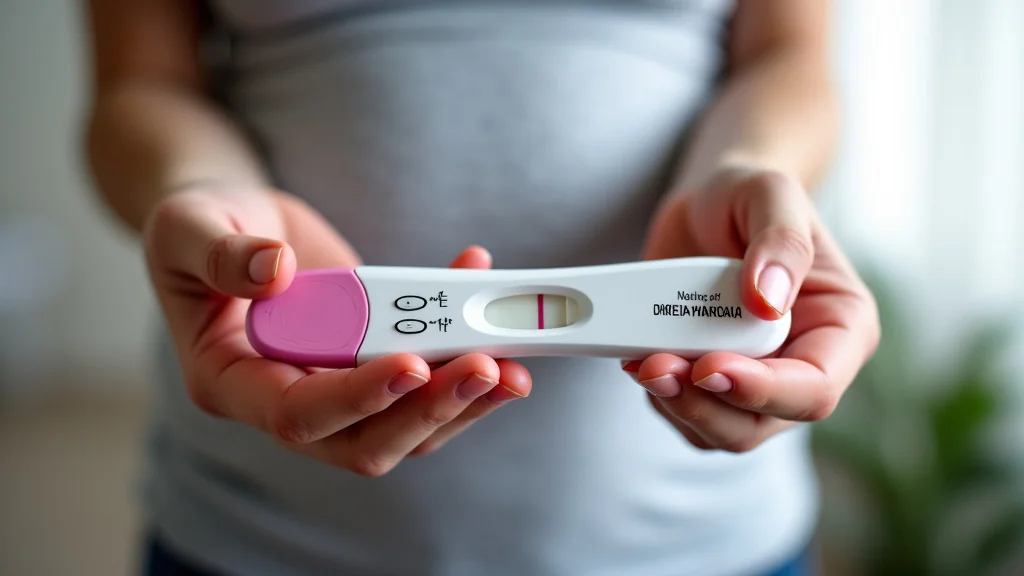
It can be a little confusing and even a bit worrying to get a negative pregnancy test 1 day late. You’re expecting a period, but it hasn’t arrived yet, and the test says you’re not pregnant. This is actually super common, especially if it’s your first time experiencing this.
Don’t fret! We’ll walk through exactly what this means and what steps to take next. It’s simpler than you might think.
Key Takeaways
- A negative test 1 day after your expected period is often normal.
- Early pregnancy hormones can be tricky to detect right away.
- Your test might have been taken too early for accurate results.
- Other factors can cause a late period besides pregnancy.
- Knowing when to retest is important for clarity.
- Understanding your cycle helps interpret test results.
Understanding a Negative Pregnancy Test 1 Day Late
When you’re expecting your period and it’s a day late, seeing a negative pregnancy test can be a mixed bag of emotions. For many, this situation is quite common. It doesn’t automatically mean you aren’t pregnant, nor does it confirm you aren’t.
It often simply means that the pregnancy hormone, human chorionic gonadotropin (hCG), hasn’t yet reached a detectable level in your urine. This hormone is what pregnancy tests look for. The concentration of hCG in your body increases daily after conception.
If you test too soon, even just one day after your missed period, the level might be too low for the test to pick up. This is particularly true for some home pregnancy tests which have different sensitivity levels. Many women experience a late period for reasons other than pregnancy, so a negative test in this scenario is usually a good indicator, but not always a definitive one.
Why Tests Might Show Negative Early On
Home pregnancy tests work by detecting hCG in your urine. This hormone is produced by the cells that will eventually form the placenta. After fertilization, it takes time for the fertilized egg to implant in the uterine wall and for hCG levels to rise significantly.
Implantation typically happens about 6 to 12 days after ovulation. For the first few days after implantation, hCG levels are very low. Most home pregnancy tests are designed to detect hCG levels around 25 mIU/mL (milli-international units per milliliter).
If your hCG level is below this threshold, the test will appear negative. A test taken just one day after your missed period might only show a positive result if implantation occurred very early and hCG levels are already climbing rapidly. Some tests are more sensitive and can detect lower levels of hCG, potentially giving a positive result earlier.
However, even with sensitive tests, there’s a window of time where a negative result is still possible even if pregnancy has occurred.
The timing of your ovulation is also a key factor. Many women have a fairly regular menstrual cycle, but ovulation can sometimes occur earlier or later than expected. If you ovulate later in your cycle than you typically do, your period will also be later, and the hCG levels will be lower when you test.
This can lead to a false negative. Understanding your menstrual cycle and estimating your ovulation date can help you determine the most accurate time to take a pregnancy test. Using an ovulation predictor kit (OPK) or tracking your basal body temperature can provide more insight into your ovulation timing.
It’s important to remember that a negative pregnancy test 1 day late might also be a sign that pregnancy is not occurring this cycle. For individuals trying to conceive, this can be disheartening. However, focusing on the accuracy of the test and the timing is crucial.
If you consistently have regular cycles and ovulate on time, and your period is still late with a negative test, it’s generally a good sign. The most important advice is to follow the test manufacturer’s instructions carefully and consider retesting in a few days if your period still hasn’t arrived.
Factors Influencing Test Accuracy
Several factors can influence the accuracy of a pregnancy test, especially when taken early. The concentration of hCG in your urine is the primary determinant. Testing with first-morning urine is often recommended because it’s more concentrated, meaning hCG levels will be higher.
Drinking excessive amounts of fluids before testing can dilute your urine, making it harder for the test to detect low levels of hCG. This can lead to a false negative result even if pregnancy is present. Additionally, the expiration date of the pregnancy test is vital.
An expired test might not work correctly, leading to inaccurate results. Storing the test properly, away from moisture and extreme temperatures, is also important for its effectiveness. Always check the expiration date on the packaging before use.
The type of pregnancy test used can also play a role. There are different types of home pregnancy tests available, varying in sensitivity. Some tests are more sensitive and can detect lower levels of hCG, allowing for earlier detection.
These are often advertised as “early detection” tests. However, even with a highly sensitive test, there’s a limit to how early hCG can be detected. If you have a very sensitive test and still get a negative result one day late, it might mean that hCG levels are still below the detection threshold.
It’s always a good idea to follow the instructions provided with your specific test kit, as they will outline the recommended time frame for testing and how to interpret the results. Using a test that is past its expiry date or has been stored incorrectly can significantly compromise its accuracy.
Another crucial factor is the exact timing of ovulation. If conception occurred later than expected in the cycle, hCG levels will be lower at the time of your missed period compared to if conception happened earlier. For instance, if you normally have a 28-day cycle and ovulate around day 14, a pregnancy is more likely to be detectable by day 28.
However, if you ovulate on day 20, then your “missed period” day would be day 34 of your cycle, and you’d be testing roughly 14 days after ovulation. This difference in timing can mean a negative pregnancy test 1 day late might still indicate a very early pregnancy. The reliability of the test depends on the amount of hCG present, and that amount is directly related to how far along in the pregnancy you are after implantation.
What a Negative Result Could Mean
When you get a negative pregnancy test 1 day late, it generally means that the test did not detect sufficient levels of hCG in your urine to confirm pregnancy. In most cases, this indicates that you are not pregnant. However, as we’ve discussed, there are scenarios where a negative result can occur even with an early pregnancy.
This includes testing too early, using a less sensitive test, or if your ovulation was delayed. It is also possible that implantation has not yet occurred or has only just begun, and hCG levels are not yet high enough for detection.
Another possibility is that you are experiencing a delayed period for reasons unrelated to pregnancy. Many factors can affect your menstrual cycle, such as stress, changes in diet or exercise, significant weight fluctuations, illness, or certain medications. Hormonal imbalances, like those associated with polycystic ovary syndrome (PCOS) or thyroid issues, can also cause irregular periods.
Sometimes, a chemical pregnancy, which is a very early miscarriage that occurs shortly after implantation, can result in a positive test followed by a negative one, or a negative test when a period is expected. If you continue to have no period and are concerned, it’s always best to consult a healthcare provider.
If you are trying to conceive and received a negative test, it simply means that pregnancy has not been confirmed at this specific moment. It’s a good idea to continue tracking your cycle and consider retesting in a few days if your period still hasn’t arrived. Sometimes, a little more time is all that’s needed for hCG levels to rise to a detectable point.
Patience and accurate testing are key when you’re waiting for confirmation either way. The focus should be on gathering accurate information about your body’s signals and hormonal changes.
When to Retest For Clarity
If you’ve received a negative pregnancy test 1 day late, and your period still hasn’t started, retesting is a sensible next step. Home pregnancy tests are designed to detect hCG, and its levels rise steadily in early pregnancy. Waiting a couple of days allows hCG levels to increase, making them more likely to be detected by the test.
If you test again in 2-3 days and still get a negative result, and your period has arrived, it’s highly probable that you are not pregnant. However, if your period remains absent and subsequent tests are also negative, it might be beneficial to seek medical advice.
When retesting, it’s advisable to use first-morning urine. As mentioned before, this urine is more concentrated, and therefore more likely to contain detectable amounts of hCG if pregnancy has occurred. Following the instructions on the test packaging is crucial for accurate results.
Different brands have varying sensitivity levels, and using them correctly ensures you get the most reliable outcome. If you are experiencing symptoms of pregnancy, such as nausea, fatigue, or breast tenderness, and continue to get negative results, it’s still a good idea to consult a doctor. They can perform more sensitive blood tests or an ultrasound to confirm pregnancy if it’s suspected.
It is also important to consider the typical length of your menstrual cycle. If you have very irregular cycles, determining when your period is “late” can be challenging. In such cases, tracking ovulation through methods like basal body temperature charting or using ovulation predictor kits can help you pinpoint when conception might have occurred, allowing for more accurate timing of pregnancy tests.
If your period is consistently more than a week late and you’ve had multiple negative tests, it might indicate an underlying issue with your menstrual cycle that warrants a doctor’s evaluation. This could be due to hormonal imbalances, stress, or other health conditions.
Testing Too Early Mistakes
One of the most common reasons for a negative pregnancy test 1 day late, when pregnancy is actually present, is testing too early. Pregnancy tests rely on detecting hCG, and this hormone isn’t produced in significant amounts until after implantation. Implantation can occur anywhere from 6 to 12 days after ovulation.
If you test before implantation is complete or before hCG levels have risen sufficiently, you might get a false negative. This means the test shows you’re not pregnant, but you actually are. This can be particularly frustrating for those actively trying to conceive.
To avoid this common mistake, it’s best to wait until the day your period is expected, or even a few days after. While some “early detection” tests claim to detect pregnancy a few days before a missed period, their accuracy is still dependent on hCG levels. If you test even a day before your period is due and get a negative result, it’s highly recommended to retest a few days later if your period doesn’t arrive.
Many women find that retesting after a missed period provides a more reliable result. It’s a matter of giving your body enough time to produce enough hCG for the test to pick it up accurately.
Another aspect of “testing too early” involves miscalculating ovulation. If you believe your period is late, but you actually ovulated later than you thought, then you might be testing before there’s enough hCG. Factors like stress, illness, or changes in routine can shift your ovulation date.
Therefore, relying solely on your calendar cycle length might not always be accurate for determining the right time to test. Understanding your body’s signs or using fertility tracking methods can help improve the timing of your tests and reduce the chances of a false negative due to premature testing.
Understanding hCG Levels and Timing
Human chorionic gonadotropin (hCG) is the hormone that pregnancy tests detect. It starts being produced by the developing placenta shortly after implantation. The amount of hCG in your body typically doubles every 48 to 72 hours in early pregnancy.
This rapid increase is why testing too early can lead to a negative result. For example, if implantation occurs 10 days after ovulation, and your period is due on day 14, testing on day 14 might be too soon if the hCG level hasn’t reached the test’s detection threshold yet. A negative pregnancy test 1 day late is often a result of these low initial hCG levels.
Let’s consider some typical hCG levels. At the time of a missed period (around 14 days post-ovulation), hCG levels can range from about 0 to around 200 mIU/mL, with most pregnancy tests able to detect levels around 25 mIU/mL or lower. If you test one day after your missed period, your hCG level might be at the lower end of this range, or even below it, depending on when implantation occurred and how quickly your body is producing hCG.
For instance, if implantation happened on day 10 post-ovulation, by day 15 (one day after your expected period), your hCG might be around 50-100 mIU/mL. However, if implantation happened on day 12, by day 15, your hCG might only be 10-20 mIU/mL, which would still be negative on a standard test. This is why waiting a few extra days can be so beneficial for accuracy.
The accuracy of the test also depends on the brand and its sensitivity. Some highly sensitive tests can detect hCG levels as low as 10 mIU/mL. These tests might give a positive result a few days earlier than standard tests.
However, even with these sensitive tests, if implantation occurred very late, or if hCG production is slower, you might still get a negative result when you are pregnant. The key takeaway is that a negative pregnancy test 1 day late is not a definitive answer. Giving your body more time to produce hCG is the most reliable way to confirm pregnancy if your period is still absent.
It is always recommended to read the instructions of your specific pregnancy test carefully.
Best Practices for Testing
When you suspect you might be pregnant, especially if your period is late, following best practices for taking a pregnancy test is crucial for accurate results. First and foremost, always read and follow the instructions provided with the specific pregnancy test you are using. Different brands have different sensitivities and testing procedures.
Most tests recommend using first-morning urine because it is the most concentrated, and therefore, hCG levels will be highest. This increases the chances of detecting even low levels of the hormone.
If your test is negative and your period is still absent, it’s advisable to wait at least 2-3 days before retesting. This waiting period allows for a potential increase in hCG levels, which can make the difference between a negative and a positive result. If you continue to get negative results but your period doesn’t arrive, it is a good idea to schedule an appointment with your doctor.
They can perform more sensitive blood tests or conduct other examinations to determine the cause of your missed period and confirm or rule out pregnancy. Don’t rely on a single negative test if your symptoms or concerns persist.
Avoid drinking large amounts of fluids before taking the test, as this can dilute your urine and lower the concentration of hCG. If the test requires dipping a test strip into a urine sample, ensure you dip it for the exact amount of time specified in the instructions. If it’s a midstream test, hold the absorbent tip in your urine stream for the recommended duration.
Properly storing the test kit is also important. Keep it in a dry place away from extreme temperatures to prevent it from degrading before you use it. Checking the expiration date on the package before use is essential.
An expired test may not provide accurate results.
Other Reasons for a Delayed Period
It’s important to remember that a late period doesn’t always mean pregnancy. Many factors can influence your menstrual cycle, leading to a delayed period even if you are not pregnant. Understanding these common causes can help alleviate anxiety when you get a negative pregnancy test 1 day late.
Stress and Lifestyle Changes
Stress is a significant factor that can disrupt your hormonal balance and affect your menstrual cycle. When you’re under a lot of stress, your body releases cortisol, a stress hormone. High levels of cortisol can interfere with the hormones that regulate ovulation, such as luteinizing hormone (LH) and follicle-stimulating hormone (FSH).
This disruption can delay ovulation, resulting in a later period or even an absent period. Significant life changes, such as starting a new job, moving, or relationship problems, can all contribute to stress.
Sudden changes in your lifestyle can also impact your cycle. This includes significant changes in your diet, such as starting a restrictive diet or experiencing drastic weight loss or gain. Intense exercise routines, especially if you haven’t built up to them gradually, can also put a strain on your body and affect your hormones.
For example, athletes who engage in very high levels of physical activity may experience irregular periods or amenorrhea (absence of menstruation). Even changes in your sleep schedule or travel across time zones can throw off your body’s internal clock and affect your cycle.
The body is a complex system, and when it perceives stress or significant changes, it may temporarily pause reproductive functions to conserve energy. This is a natural survival mechanism. Therefore, if you’re experiencing a delayed period and a negative pregnancy test, consider whether you’ve recently gone through any stressful events or made significant lifestyle alterations.
Often, once the stress subsides or your body adjusts to the new routine, your cycle will return to normal. However, if stress is chronic or very severe, it might be beneficial to seek strategies for stress management, such as mindfulness, meditation, or gentle exercise.
Medical Conditions and Medications
Certain medical conditions can cause irregular periods or cause your period to be late. Polycystic ovary syndrome (PCOS) is a common hormonal disorder that can lead to irregular ovulation, causing missed or infrequent periods. Thyroid disorders, such as hypothyroidism (underactive thyroid) or hyperthyroidism (overactive thyroid), can also affect your menstrual cycle because the thyroid gland plays a role in regulating hormones.
Other conditions like premature ovarian insufficiency or uterine fibroids can also contribute to menstrual irregularities.
Medications can also influence your menstrual cycle. Some birth control methods, especially hormonal ones like the pill, patch, or ring, can alter your cycle or cause you to have lighter periods or no periods at all. If you have recently started or stopped hormonal contraception, it can take some time for your cycle to regulate.
Certain medications used to treat conditions like depression, anxiety, or high blood pressure can also have side effects that impact your menstrual cycle. If you have started a new medication or changed your dosage, it’s worth discussing this with your doctor to see if it could be related to your delayed period.
It’s important to consult a healthcare professional if you suspect an underlying medical condition or if your menstrual irregularities are persistent. They can perform the necessary tests to diagnose any issues and recommend appropriate treatment. Understanding that these conditions exist can provide reassurance when you receive a negative pregnancy test 1 day late.
It highlights that pregnancy is not the only explanation for a missed period. Regularly reviewing your health and discussing any concerns with your doctor is always a good practice, especially if you have a history of irregular cycles.
Hormonal Fluctuations and Age
Hormonal fluctuations are a natural part of a woman’s life and can significantly affect the menstrual cycle. Throughout the month, hormone levels, particularly estrogen and progesterone, rise and fall, triggering ovulation and the shedding of the uterine lining (menstruation). Sometimes, these hormonal fluctuations aren’t perfectly balanced, which can lead to a delayed period.
This can happen even in women with otherwise regular cycles.
As women age, their reproductive hormones naturally change. Closer to perimenopause, the stage leading up to menopause, hormonal fluctuations become more pronounced. This can result in irregular periods, including skipped periods or periods that are lighter or heavier than usual.
For some women, perimenopause can begin in their late 30s or early 40s. If you are in this age range, a delayed period might be a sign of these natural hormonal shifts rather than pregnancy. The average age for menopause is 51, but perimenopause can start years before that.
The transition through perimenopause is characterized by inconsistent ovulation. This means that while pregnancy is still possible, the regularity of your cycle may decrease. This variability in ovulation can lead to periods arriving earlier, later, or being skipped altogether.
Therefore, a negative pregnancy test 1 day late, coupled with symptoms that might be attributed to hormonal changes, could be an indication of this natural life stage. Discussing your cycle changes with a healthcare provider is recommended if you are concerned or unsure about what might be happening.
Common Myths Debunked
Myth 1: A Negative Test Means I’m Definitely Not Pregnant
This is a common misconception. While a negative pregnancy test is a strong indicator that you are not pregnant, it’s not always 100% conclusive, especially if the test was taken too early. As we’ve discussed, hCG levels need to reach a certain threshold for detection.
Testing even one day late might not be enough time for hCG to be detectable. Factors like an inaccurate calculation of your cycle, delayed ovulation, or using a less sensitive test can all lead to a false negative. If your period continues to be absent and you suspect pregnancy, retesting in a few days is recommended.
Your doctor can also perform more accurate blood tests.
Myth 2: All Pregnancy Tests Are Equally Accurate
Not all pregnancy tests are created equal. They vary in their sensitivity to detecting hCG. Some tests are designed for early detection and can pick up lower levels of hCG, meaning they might give a positive result a few days before your missed period.
Other standard tests require higher hCG levels. If you use a less sensitive test when your hCG levels are still low, you might get a negative result even if you are pregnant. Always check the sensitivity of the test (often measured in mIU/mL) and consider using a more sensitive test if you are testing before your period is significantly late.
Myth 3: Drinking Lots of Water Before Testing Helps You Get a Clearer Result
This is actually the opposite of what’s recommended for pregnancy testing. Drinking excessive amounts of water before taking a pregnancy test can dilute your urine. Diluted urine will have a lower concentration of hCG, which can lead to a false negative result.
For the most accurate result, it’s best to use first-morning urine, which is naturally more concentrated. If you need to test at another time of day, try to avoid drinking large quantities of fluids for a couple of hours beforehand.
Myth 4: If My Period Is Late, I Must Be Pregnant
While a missed period is often the first sign of pregnancy, it is not the only cause. Many factors can lead to a delayed or missed period, including stress, hormonal imbalances, significant weight changes, excessive exercise, certain medical conditions like PCOS or thyroid issues, and some medications. It’s crucial to consider these other possibilities, especially if you have a negative pregnancy test 1 day late.
If your period continues to be absent and you are concerned, consult a healthcare provider to explore other potential causes.
Frequently Asked Questions
Question: How soon can I get a reliable negative pregnancy test 1 day late?
Answer: A negative pregnancy test 1 day late is often reliable if your cycle is regular and you ovulated as expected. However, for maximum accuracy, waiting until 2-3 days after your missed period or until your period is a full week late is best, especially if you suspect early pregnancy.
Question: What if I have pregnancy symptoms but my test is negative?
Answer: Early pregnancy symptoms can sometimes mimic premenstrual symptoms. If you have a negative test 1 day late and are experiencing symptoms, it’s best to retest in a few days. If your period still hasn’t arrived and symptoms persist, consult your doctor for further evaluation and more sensitive testing like a blood test.
Question: Can I trust a home pregnancy test?
Answer: Yes, home pregnancy tests are generally very accurate when used correctly and at the right time. They are designed to detect hCG, the hormone produced during pregnancy. Following the instructions precisely and testing when hCG levels are likely to be detectable increases their reliability significantly.
Question: What should I do if my period is more than a week late and I keep getting negative tests?
Answer: If your period is more than a week late and you consistently get negative pregnancy tests, it’s advisable to see a doctor. They can help determine the cause of your missed period, which could be due to various factors unrelated to pregnancy, or they can perform more definitive tests to confirm pregnancy if it’s still suspected.
Question: Does alcohol affect pregnancy test results?
Answer: Consuming alcohol does not directly affect the accuracy of a pregnancy test. The test detects the presence of the hCG hormone. However, excessive alcohol consumption can potentially disrupt hormonal balance and affect your menstrual cycle.
If you are trying to conceive, it is generally recommended to limit or avoid alcohol intake.
Final Thoughts
Getting a negative pregnancy test 1 day late is usually a good sign you’re not pregnant. If your period still hasn’t come, wait a few more days to retest. Always use first-morning urine for the most accurate results.
Many things besides pregnancy can make your period late, so don’t worry too much if you’re not pregnant. If you’re concerned or your period remains absent, talk to your doctor.
Leave a Reply