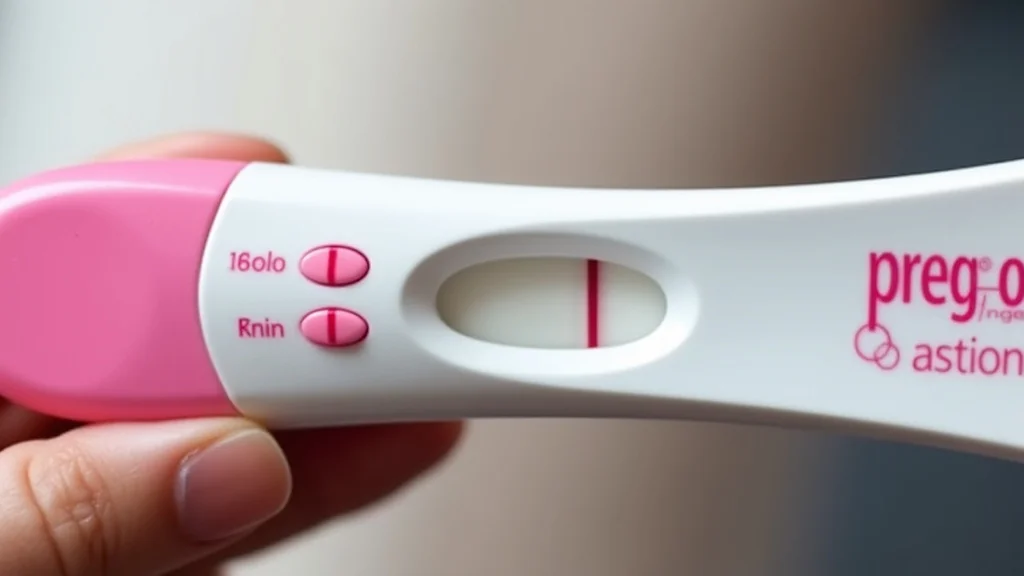
Seeing lines on a pregnancy test can sometimes feel confusing, especially if it’s your first time. You might wonder what each line means or if a faint line still counts. It’s totally normal to feel a bit unsure.
This guide will break down pregnancy test results lines in a super simple way, step by step. Get ready to understand your test results clearly, with easy-to-follow advice. We’ll cover everything you need to know about those important lines.
Key Takeaways
- You will learn how to read the two main types of pregnancy tests.
- We will explain what different line combinations mean for your results.
- You will discover why faint lines are still significant.
- We will cover when to take a test for the most accurate results.
- You will find out what to do after getting your test results.
Understanding Pregnancy Test Results Lines
Pregnancy tests work by detecting a hormone called human chorionic gonadotropin (hCG) in your urine. This hormone is produced by your body shortly after a fertilized egg implants in the uterus. The test strips have a special window that changes color or shows lines when hCG is present.
Different tests use different designs, but the basic idea of showing lines to indicate a result is the same. For beginners, the variety of test designs and how lines appear can be a bit puzzling. This section will help you make sense of it all.
How Home Pregnancy Tests Work
Home pregnancy tests are designed for easy use at home. They are readily available at drugstores and supermarkets. The tests typically involve dipping the absorbent end of the test stick into your urine stream or into a collected urine sample.
After a short waiting period, usually between one to five minutes, you can read the results. The test will display one or more lines in a result window. These lines are your signal about whether hCG is detected.
The technology behind these tests relies on chemical reactions. When hCG from your urine comes into contact with special antibodies on the test strip, a reaction occurs. This reaction causes a line to appear, indicating a positive result.
If no hCG is present, or if the test is invalid, different line patterns will show. Understanding these patterns is key to getting an accurate reading of your pregnancy test results lines.
There are two main types of home pregnancy tests you’ll commonly find: line tests and digital tests. Line tests show physical lines, and digital tests display words like “Pregnant” or “Not Pregnant.” While digital tests are straightforward, understanding line tests is fundamental because many tests still use them, and even digital tests have line indicators internally.
Line Tests Explained
Line tests are the most common type. They usually have a control line and a test line. The control line is there to show that the test is working correctly.
If the control line doesn’t appear, the test is invalid, and you’ll need to take another one. The test line is where you look for your result. If a test line appears, it means hCG has been detected.
The number of lines and their appearance tell the whole story. A single line often means not pregnant, but this depends on the specific test. Two lines almost always mean pregnant, even if one line is fainter than the other.
The darkness of the test line can indicate how much hCG is in your urine, which can sometimes relate to how far along you are in the pregnancy. However, it’s best not to rely solely on line darkness for dating a pregnancy.
Some tests have a plus (+) or minus (-) sign instead of lines. A plus sign usually means pregnant, and a minus sign means not pregnant. Other tests might use a C for control and T for test.
A line at C means the test is working. A line at T means hCG is present.
Digital Tests Explained
Digital pregnancy tests are simpler to read. They don’t involve interpreting lines. Instead, they show clear words on a small screen.
You’ll see either “Pregnant” or “Not Pregnant.” Some digital tests can even tell you how many weeks pregnant you might be. These are generally more expensive but offer convenience and reduce the chance of misinterpreting the results of pregnancy test results lines.
Even though digital tests are easy, it’s good to know about line tests. Many women still choose line tests because they can be more affordable. Plus, some people like to see the lines themselves.
The core function is the same: detecting hCG. The difference is just how the result is presented to you.
When to Take a Pregnancy Test
Timing is crucial for an accurate result. Taking a test too early can lead to a false negative, meaning the test says you’re not pregnant when you actually are. This happens because hCG levels are still too low to be detected by the test.
The best time to take a pregnancy test is typically one day after your missed period. If your cycles are irregular, waiting at least 21 days after unprotected sex is recommended. Testing first thing in the morning is also advised.
Your urine is more concentrated in the morning, which means hCG levels will be higher and easier for the test to detect. This increases the chances of getting a clear and accurate reading of your pregnancy test results lines.
Some very sensitive pregnancy tests claim to detect hCG a few days before your missed period. While these can sometimes provide an early result, they are also more prone to false negatives if you test too soon. For the most reliable outcome, waiting until your period is due is the safest bet.
Interpreting Common Pregnancy Test Results
Understanding what the lines on your pregnancy test mean is essential. Most home pregnancy tests use a control line and a test line. The presence and appearance of these lines will guide you to your result.
Positive Results
A positive pregnancy test result means hCG has been detected in your urine, indicating you are likely pregnant. For most line tests, this means you will see two lines. One line will be the control line, and the other will be the test line.
Even if the test line is faint, it still generally means you are pregnant. A faint line indicates that some hCG is present. The concentration of hCG might be lower if you are testing very early in your pregnancy.
The darkness of the lines can vary based on the test sensitivity and how diluted your urine is. If you see two lines, even faint ones, it’s a good idea to confirm with your doctor.
Some tests use plus and minus signs. For these, a plus sign typically means pregnant. For tests with C and T, a line at both C and T means pregnant.
Digital tests will simply display the word “Pregnant.” Regardless of the format, a positive result should always be confirmed by a healthcare provider.
Negative Results
A negative pregnancy test result means hCG was not detected in your urine at a level that the test could identify. This usually means you are not pregnant, or you tested too early for hCG levels to be high enough.
For line tests, a negative result typically means you will see only one line, which is the control line. If the control line does not appear, the test is invalid, and you need to retake it. If you see only the control line and your period is still late, you might want to wait a few days and test again, or consult your doctor.
For digital tests, a negative result will be displayed as “Not Pregnant.” If you get a negative result and still suspect you might be pregnant, or if your period doesn’t arrive soon, it’s wise to retest in a few days or see your doctor. There can be many reasons for a missed period besides pregnancy.
Invalid Results
An invalid result means the test did not work correctly. This can happen for several reasons, such as not following the test instructions properly, the test being expired, or a manufacturing defect. An invalid test will not show a control line, or it may show no lines at all, or lines that are unclear and unreadable.
If your test is invalid, you cannot rely on the result. You should discard the test and use a new one. Make sure to read the instructions carefully before you start.
Using a fresh test and following the steps precisely will help ensure you get an accurate reading of your pregnancy test results lines.
Common reasons for invalid results include not using enough urine, not waiting the correct amount of time, or the test strip getting too wet. If you encounter an invalid result, don’t panic. Just grab a new test, read the instructions, and try again.
Understanding Faint Lines
A faint line on a pregnancy test is one of the most common reasons for confusion. Many people wonder if a faint line means pregnant or not. The simple answer is usually yes, a faint line still indicates a positive result.
Pregnancy tests detect hCG, and the lines appear as a result of a chemical reaction with this hormone. When you are in the early stages of pregnancy, your hCG levels are still low. A sensitive test can pick up these low levels, causing the test line to appear, but it may be fainter than the control line because there is less hCG present to create a strong color.
Think of it like this: the control line is always bold because it’s designed to react easily and show the test is working. The test line appears when hCG levels reach a certain threshold. If that threshold is just barely met, the line will be faint.
As hCG levels rise, the test line will become darker.
If you see a faint line, it is generally considered a positive result. However, it is always recommended to confirm a faint positive with your doctor. They can perform more sensitive tests and offer further guidance.
Why Faint Lines Happen
Faint lines usually occur in the early days of pregnancy when hCG hormone levels are still rising. Your body starts producing hCG shortly after implantation, which can happen as early as 6 days after fertilization. However, it takes time for hCG to build up to detectable levels in urine.
Another reason for a faint line can be testing too soon after conception. If you take a test before your missed period, the hCG concentration might be very low, resulting in a weak signal and a faint line. Diluted urine, such as when you test later in the day after drinking a lot of fluids, can also lead to fainter lines.
Evaporation lines are another possibility, though less common with modern tests. An evaporation line can appear if you wait too long to read the test results. It’s a colorless or faint line that shows up in the test window after the test has dried out.
Always read your test within the time frame specified in the instructions.
What to Do with a Faint Line
If you get a faint line on your pregnancy test, it’s important to stay calm and not jump to conclusions. The first step is to carefully re-read the test instructions to ensure you followed all the steps correctly and are interpreting the result within the designated timeframe.
If the faint line appeared within the recommended reading time, it’s usually a sign of pregnancy. To confirm, it’s best to take another pregnancy test a couple of days later. By then, your hCG levels should have increased, potentially resulting in a darker, more distinct test line.
Testing again in the morning with your first urine of the day can also help since hCG is more concentrated then.
Ultimately, the most accurate way to confirm a faint positive is to schedule an appointment with your doctor. They can perform blood tests, which are more sensitive than urine tests, and can detect hCG earlier and in smaller amounts. They can also begin prenatal care if the pregnancy is confirmed.
Types of Pregnancy Tests
The market offers various types of pregnancy tests, each with its own features. Understanding these differences can help you choose the best test for your needs and interpret your pregnancy test results lines accurately.
Dip Tests
Dip tests are one of the simplest and most common types. You collect a urine sample in a clean cup and then dip the absorbent end of the test stick into the urine for a specified amount of time, usually 5 to 10 seconds. After dipping, you lay the test flat and wait for the result to appear, typically within one to five minutes.
These tests are generally very affordable and widely available. They are a good option if you are looking for a budget-friendly way to test for pregnancy. The accuracy of dip tests is comparable to other types of urine tests, provided they are used correctly and at the right time.
The instructions for dip tests are usually straightforward, but it’s essential to follow them precisely to avoid an invalid result. Make sure the urine sample is fresh and that you don’t over-soak or under-soak the test strip.
Midstream Tests
Midstream tests are similar to dip tests but are designed for convenience. Instead of collecting urine in a cup, you hold the absorbent end of the test stick directly in your urine stream for a few seconds. The rest of the process – waiting for the result – is similar to dip tests.
These tests are very popular due to their ease of use. They eliminate the need for a separate collection cup, making them ideal for testing anytime, anywhere. Like dip tests, they show results through lines, symbols, or words on a display window.
Midstream tests are also quite accurate when used correctly. They come in various sensitivities, so you can choose one that allows for early testing if desired. The visual display of results is usually clear, helping you interpret the pregnancy test results lines.
Early Detection Tests
Early detection tests are specifically designed to detect pregnancy earlier than standard tests. They are typically more sensitive, meaning they can detect lower levels of hCG in the urine. This allows you to test a few days before your expected period.
While these tests offer the advantage of potentially knowing sooner, they also carry a higher risk of false negatives if you test too early. If an early detection test shows a negative result, but your period is still delayed, it’s recommended to retest a few days later or after your missed period. Using these tests requires careful attention to the instructions regarding when to test for optimal accuracy.
The sensitivity of a test is usually measured in milli-international units per milliliter (mIU/mL). A test with a lower mIU/mL number is more sensitive and can detect pregnancy earlier. For example, a test with 10 mIU/mL sensitivity can detect pregnancy sooner than a test with 25 mIU/mL sensitivity.
Digital Tests
Digital pregnancy tests offer a clear, unambiguous result. Instead of interpreting lines, these tests display words like “Pregnant” or “Not Pregnant” on a digital screen. Some advanced digital tests can even estimate how many weeks pregnant you are by measuring the hCG levels.
These tests are excellent for eliminating guesswork and reducing anxiety associated with interpreting faint lines. However, they are generally more expensive than traditional line tests. Despite the higher cost, many people prefer them for their simplicity and clarity.
The internal mechanism still detects hCG, but the display translates it into words for easy understanding.
Factors Affecting Accuracy
While pregnancy tests are highly accurate, certain factors can influence the reliability of your results, especially when interpreting pregnancy test results lines.
Timing of the Test
As mentioned earlier, testing too early is a primary reason for inaccurate results. hCG levels need to reach a certain concentration in your urine for a test to detect them. Testing before your hCG levels are high enough can lead to a false negative.
If you get a negative result but suspect you might be pregnant, or if your period is late, it is advisable to retest in a few days. Waiting until at least the first day of your missed period usually provides the most accurate results. For the most sensitive tests, testing a few days before your missed period might be possible, but it increases the risk of a false negative.
Medications and Medical Conditions
Certain medications and medical conditions can affect the accuracy of pregnancy tests. Some fertility drugs contain hCG, and taking them before a pregnancy test can lead to a false positive result. It is important to inform your doctor about any medications you are taking.
Certain medical conditions, though rare, can also interfere with test results. For instance, some tumors can produce hCG. Similarly, conditions that affect kidney function might alter how hCG is processed, potentially impacting test readings.
If you have any underlying health issues, discuss them with your doctor when interpreting your test results.
It is crucial to be aware that certain lifestyle factors can also play a role. Excessive fluid intake just before testing can dilute your urine, making it harder for the test to detect hCG. Therefore, it’s often recommended to use your first morning urine, which is typically more concentrated.
Expired or Damaged Tests
Like any medical diagnostic tool, pregnancy tests have an expiration date. Using an expired test can lead to inaccurate results, either false positives or false negatives. Always check the expiration date on the packaging before use.
Tests can also become damaged if stored improperly, such as in extreme heat or humidity, or if the packaging is compromised. A damaged test strip might not function correctly, rendering the results unreliable. It is best to store pregnancy tests in a cool, dry place, away from direct sunlight.
If you notice any damage to the packaging or the test itself before using it, it’s safer to discard it and use a new one. This ensures that the internal components of the test are intact and ready to provide an accurate reading of your pregnancy test results lines.
Common Myths Debunked
Myth 1: A faint line means you’re not pregnant.
Reality: A faint line on a pregnancy test usually indicates a positive result. It means that hCG, the pregnancy hormone, has been detected, but at a low concentration. This is common in the early stages of pregnancy.
If you see a faint line, it’s best to retest in a few days or see your doctor for confirmation.
Myth 2: You can get pregnant from casual contact.
Reality: Pregnancy can only occur through sexual intercourse involving the exchange of semen and an egg. Casual contact, such as kissing or hugging, does not lead to pregnancy.
Myth 3: Pregnancy tests can be inaccurate if you have a certain blood type.
Reality: Blood type has absolutely no bearing on the accuracy of a pregnancy test. Pregnancy tests detect the presence of the hCG hormone, which is independent of blood type.
Myth 4: You have to use your first morning urine for any test.
Reality: While first morning urine is often recommended because it is more concentrated and can detect lower levels of hCG, many modern and sensitive pregnancy tests can provide accurate results at any time of day, especially after your period is missed. However, for early testing, first morning urine is still the best bet.
Frequently Asked Questions
Question: How soon can I take a pregnancy test?
Answer: Most home pregnancy tests can detect pregnancy from the first day of your missed period. Some very sensitive tests can detect pregnancy a few days earlier, but testing too soon may result in a false negative.
Question: What does it mean if the control line is faint but the test line is dark?
Answer: If the control line is faint and the test line is dark, it usually still means you are pregnant. The control line’s strength is less important than the presence of the test line, indicating hCG detection.
Question: Can taking a bath affect my pregnancy test results?
Answer: No, taking a bath will not affect your pregnancy test results. The test is performed with urine, and bathing unrelated to urine collection has no impact on the test’s accuracy.
Question: What should I do if I get two faint lines?
Answer: Two faint lines generally indicate a positive pregnancy test. It’s recommended to repeat the test in a couple of days or see your doctor for confirmation and further guidance.
Question: Are digital pregnancy tests more accurate than line tests?
Answer: Digital tests are often considered easier to read and less prone to misinterpretation than line tests. However, both types are generally accurate when used correctly and at the appropriate time. The accuracy of line tests depends on clear interpretation of the pregnancy test results lines.
Summary
Understanding pregnancy test results lines can seem tricky at first. Remember, two lines usually mean pregnant, even if one is faint. Always check the control line to ensure the test worked.
If you’re unsure or get a faint result, retesting in a few days or seeing a doctor is the best next step.
Leave a Reply