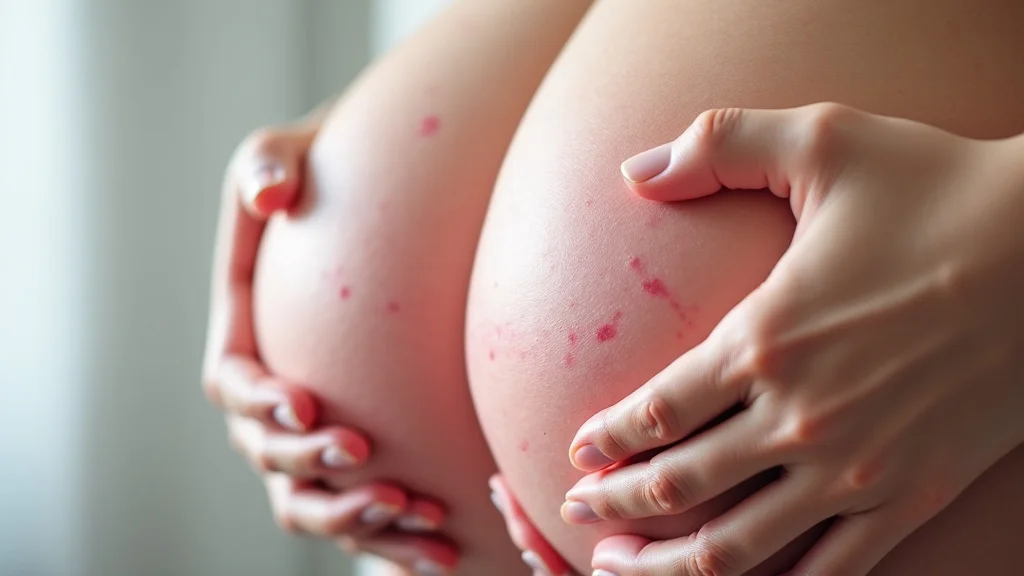
Finding a rash during pregnancy can be worrying, especially when you’re in the second trimester. For many expecting parents, this is a common yet confusing experience. You might feel unsure about what’s causing it or how to make it feel better. Don’t fret, though. We’ll walk through this together with simple, clear steps. We’ll help you understand what’s happening and what you can do about it.
Key Takeaways
- You will learn common causes of second trimester rashes.
- This post explains how to identify different types of pregnancy rashes.
- Discover safe and effective home remedies and treatments.
- Understand when to seek professional medical advice.
- Learn tips for preventing itchy skin during pregnancy.
Common Causes of Second Trimester Rashes
The second trimester is often called the “golden period” of pregnancy because many early pregnancy symptoms ease up. However, for some, new challenges like skin issues can arise. Hormonal shifts continue to play a big role in how your body feels and looks. These changes can make your skin more sensitive. They can also trigger new reactions that weren’t present before.
The growing baby inside you also puts new demands on your body. Your skin is stretching more than ever. This stretching can sometimes lead to irritation or dryness, which can then manifest as a rash. Environmental factors, like increased heat or sweat, can also contribute. Your immune system is also adjusting, which can sometimes result in unexpected skin reactions.
Hormonal Changes and Skin Sensitivity
Hormones are the unseen conductors of many pregnancy changes. During the second trimester, your body is producing a lot of progesterone and estrogen. These hormones are essential for supporting the pregnancy. However, they can also make your skin more prone to sensitivity and dryness. This increased sensitivity means that things your skin usually tolerates might now cause a reaction.
Think of your skin like a finely tuned instrument. When the hormones shift, they can change the instrument’s tuning. This can make it react differently to everyday things. For example, a new soap or laundry detergent might suddenly cause itching or redness. The skin’s natural barrier function can also be affected, making it harder to keep moisture in and irritants out. This can lead to dry, itchy patches.
Skin Stretching and Irritation
As your baby grows, so does your belly. This rapid stretching of the skin is a natural part of pregnancy. But it can sometimes cause discomfort and irritation. The skin loses some of its elasticity as it stretches quickly. This can lead to dryness and a feeling of tightness. Sometimes, this stretching can cause small red bumps or a general rash-like appearance.
This type of irritation is often called pruritic urticarial papules and plaques of pregnancy (PUPPP). It commonly starts on the abdomen. It can spread to the thighs and buttocks. It often feels very itchy. The stretching can also make it harder for your skin to breathe, leading to increased sweat and friction, which can worsen irritation.
Environmental and Lifestyle Factors
What you eat, what you wear, and what you are exposed to can all affect your skin. During pregnancy, your body’s reactions to these factors can change. For instance, you might find that certain foods that never bothered you before now cause a skin flare-up. The same can be true for new fabrics or even certain skincare products.
Heat and humidity are also common culprits. When you’re pregnant, your body temperature can feel higher. This can lead to more sweating. Sweat trapped against the skin can block pores and cause irritation. Wearing tight clothing can also increase friction and trap sweat, leading to prickly heat or other rashes. Even stress can impact your skin.
Types of Second Trimester Rashes
Pregnancy can bring a variety of skin conditions, and distinguishing between them is key to finding relief. Some rashes are benign and resolve on their own, while others may require medical attention. Knowing the common types can help you understand what you might be experiencing. It can also help you talk to your doctor more effectively.
The appearance and location of a rash can offer clues to its cause. Some rashes look like small red bumps, while others might be itchy patches or blisters. The second trimester often sees specific pregnancy-related rashes emerge. Understanding these can alleviate some of the worry associated with an unexpected skin change.
Pruritic Urticarial Papules and Plaques of Pregnancy PUPPP
PUPPP is one of the most common and often most frustrating rashes during pregnancy. It typically starts in the third trimester but can sometimes appear earlier, including the second trimester. It usually begins as small, itchy red bumps on the abdomen, often within the stretch marks. These bumps can merge into larger, raised patches.
The itching from PUPPP can be intense and disruptive. It can affect sleep and daily comfort. While the exact cause is unknown, it’s thought to be related to skin stretching and hormonal changes. It’s generally not harmful to the baby. However, the discomfort for the mother can be significant. Treatment focuses on relieving the itch and inflammation.
Symptoms of PUPPP
- Intense itching.
- Red, raised bumps.
- These bumps often start on the belly.
- They can spread to thighs, buttocks, and arms.
- The rash usually appears in stretch marks.
- It is very itchy but not contagious.
The key characteristic of PUPPP is its intense itchiness, often described as one of the most bothersome symptoms of pregnancy. The rash itself usually appears as small, red, raised bumps, often called papules. These can cluster together to form larger, irregular patches, known as plaques. While it commonly begins on the abdomen, especially within existing stretch marks, it frequently spreads to other areas like the thighs, buttocks, and sometimes even the arms and legs. Despite the distressing appearance and itch, PUPPP is generally considered harmless to the developing baby.
Cholestasis of Pregnancy ICP
Cholestasis of pregnancy, also known as intrahepatic cholestasis of pregnancy (ICP), is a liver disorder that can cause severe itching, often without a visible rash. However, scratching can lead to skin irritation that resembles a rash. This condition usually appears in the third trimester but can sometimes start earlier. It involves a buildup of bile acids in the liver.
The itching associated with ICP is typically most severe on the palms of the hands and soles of the feet. It can also occur on the arms, legs, and torso. The itching is often worse at night and can significantly disrupt sleep. While the mother experiences discomfort, ICP also poses risks to the baby, including premature birth and stillbirth. Therefore, any persistent itching should be evaluated by a doctor.
Signs of ICP
- Severe itching, especially on hands and feet.
- Yellowing of the skin or eyes (jaundice) may occur but is not always present.
- Dark urine.
- Pale stools.
- Fatigue.
Cholestasis of pregnancy is characterized by intense itching that is often localized to the palms of the hands and the soles of the feet, though it can spread to other parts of the body. This itching is not typically accompanied by a visible rash in its early stages, but excessive scratching can cause skin irritation, redness, and even small abrasions that might look like a rash. While jaundice (yellowing of the skin and whites of the eyes) can be a symptom, it doesn’t always occur. Other signs may include dark urine and pale, clay-colored stools due to the impaired bile flow. Importantly, ICP is a serious condition for the baby.
Atopic Eruptions of Pregnancy AEP
Atopic eruptions of pregnancy (AEP) are a group of skin conditions that are more common in people with a history of eczema or allergies. They can appear at any point during pregnancy, including the second trimester. These eruptions are characterized by itchy, red, and sometimes scaly patches. They can vary in severity.
AEP is not a single condition but rather a spectrum of skin reactions. It includes conditions like eczema, prurigo, and lichen simplex chronicus that worsen or first appear during pregnancy. The itching is a primary symptom, and scratching can lead to thickened skin and further inflammation. While generally not harmful to the baby, AEP can cause significant discomfort to the mother.
Characteristics of AEP
- Itchy red patches, sometimes scaly.
- Often seen in people with a history of eczema or allergies.
- Can appear on arms, legs, and torso.
- Scratching can worsen the condition.
- Managed with moisturizing and topical treatments.
Atopic eruptions of pregnancy encompass a range of itchy skin conditions that are more likely to occur in individuals with a pre-existing history of atopic diseases such as eczema, asthma, or hay fever. These eruptions can manifest as red, inflamed patches, sometimes dry and scaly, or as small, intensely itchy bumps. The location of these rashes can vary, but they are commonly found on the limbs, trunk, and sometimes the face. A hallmark of AEP is the significant itching, which can lead to excoriation (scratching that damages the skin), creating a cycle of itching and inflammation that can be difficult to break.
Other Potential Causes
Besides the pregnancy-specific rashes, other common skin conditions can occur during pregnancy. These include heat rash, also known as miliaria, which happens when sweat ducts become blocked. Fungal infections like yeast infections can also occur more frequently due to hormonal changes. Allergies to new soaps, detergents, or even certain foods can also trigger reactions.
Contact dermatitis, an itchy rash caused by direct contact with a substance, is another possibility. This could be from touching a plant, a new metal in jewelry, or even a latex glove. It’s important to consider all these factors when trying to identify the cause of your rash. Your healthcare provider will help rule out these common culprits.
Identifying Your Rash
Figuring out what kind of rash you have is the first step toward finding relief. Pregnancy rashes can look similar, making it tricky to tell them apart. Pay attention to how the rash looks, where it started, and how it feels. This information will be very helpful when you talk to your doctor.
It’s also useful to think about when the rash appeared and if anything seemed to trigger it. Did it start after you used a new lotion? Did it appear after you were out in the sun? These details can provide important clues. Don’t try to self-diagnose too much, but gathering information can empower you for your medical appointments.
Visual Clues and Location
The appearance and location of a rash can offer significant hints about its cause. For instance, PUPPP typically begins on the abdomen and often appears within existing stretch marks, looking like red, itchy bumps. In contrast, cholestasis of pregnancy usually presents with severe itching, particularly on the palms and soles, without an obvious rash initially. Atopic eruptions of pregnancy, like eczema flare-ups, might appear as dry, scaly, red patches on the arms and legs.
Consider the pattern. Are the spots small and widespread, or are they larger, irregular patches? Do they form rings, or are they just red blotches? The areas affected are also important. Rashes on the hands and feet might point to different causes than rashes on the trunk or limbs. Observing these visual cues carefully will help your doctor narrow down the possibilities.
Sample Rash Descriptions
- PUPPP: Starts on the belly, looks like small, red, intensely itchy bumps that merge into patches.
- ICP: Severe itching mainly on palms and soles, often no visible rash initially.
- AEP: Dry, red, scaly patches or itchy bumps on arms and legs, history of eczema suggests this.
- Heat Rash: Small, red, itchy bumps in areas where sweat collects, like the neck or under breasts.
When describing a rash, using clear, specific terms can greatly assist your healthcare provider. For example, if you have PUPPP, you might note that the rash started on your lower abdomen, appearing as tiny, intensely red bumps that feel very itchy and seem to be clustered around your stretch marks. These bumps have begun to join together, forming larger, raised areas. If you suspect cholestasis of pregnancy, you would emphasize the severe, unbearable itching on the soles of your feet and the palms of your hands, which is worse at night, even if you don’t see any visible skin changes. For AEP, you might describe dry, red, and slightly raised patches on your arms and legs that are incredibly itchy, recalling that you’ve had eczema in the past. Heat rash would be described as small, pinpoint red bumps, often prickly or stinging, appearing in areas prone to sweat accumulation like your neck, under your breasts, or in skin folds.
When to See a Doctor
It’s crucial to consult your doctor or midwife if you develop any new rash during pregnancy, especially if it’s persistent, spreads rapidly, or is severely itchy. While many pregnancy rashes are harmless, some, like cholestasis of pregnancy, require prompt medical attention due to potential risks to the baby. Don’t hesitate to seek professional advice if you’re concerned or unsure about the cause of your rash.
Your healthcare provider can perform a physical examination, ask about your symptoms, and may order tests to determine the cause of the rash. They can then recommend safe and effective treatments to manage your discomfort and ensure the health of you and your baby. Early diagnosis and treatment are key to resolving most pregnancy-related skin issues.
Safe Treatments and Relief for Second Trimester Rashes
Dealing with a second trimester rash can be uncomfortable, but there are many safe and effective ways to find relief. The best treatment depends on the type of rash you have. Your doctor will guide you on the most appropriate options. However, many home care strategies can help soothe itchy and irritated skin.
The goal of treatment is to reduce itching, calm inflammation, and prevent the rash from worsening. It’s important to use products that are pregnancy-safe. Many common over-the-counter creams and lotions can be used. Always check with your healthcare provider before trying any new treatment.
Home Care and Soothing Remedies
Gentle, natural remedies can often provide significant relief from itchy skin. Keeping your skin moisturized is fundamental. Use a mild, unscented lotion or cream several times a day, especially after bathing. This helps to restore the skin’s barrier and prevent dryness.
Cool compresses can also be very soothing. Apply a clean, damp cloth to the itchy areas for 15-20 minutes. Taking cool or lukewarm baths can also help. Avoid hot water, as it can strip the skin of its natural oils and worsen itching. Adding colloidal oatmeal to a bath can be particularly effective for calming irritated skin.
Effective Home Remedies
- Moisturize Regularly: Use a gentle, fragrance-free lotion. Apply after bathing while skin is damp.
- Cool Compresses: Apply a damp cloth to itchy areas for relief.
- Lukewarm Baths: Avoid hot water. Add colloidal oatmeal for extra soothing.
- Loose Clothing: Wear soft, breathable fabrics like cotton. Avoid tight synthetic materials.
- Oatmeal Baths: Colloidal oatmeal can significantly reduce itching and inflammation.
Regular moisturizing is a cornerstone of managing itchy skin during pregnancy. Opt for a thick, creamy, fragrance-free moisturizer. Products containing ingredients like ceramides or hyaluronic acid can help to repair the skin’s natural barrier. Applying moisturizer immediately after a shower or bath, while your skin is still slightly damp, helps to lock in moisture more effectively. This creates a protective layer that reduces dryness and the sensation of tightness.
Pregnancy-Safe Topical Treatments
For more persistent itching or inflammation, your doctor might recommend pregnancy-safe topical treatments. Low-potency corticosteroid creams or ointments are often prescribed. These can help reduce inflammation and the urge to scratch. They are generally considered safe when used for short periods and on limited areas of the body, as directed by your doctor.
Antihistamine creams might also be suggested for topical use to help control itching. Oral antihistamines may also be prescribed if itching is severe and interfering with sleep. Your doctor will choose medications that are proven to be safe for use during pregnancy. Always follow their instructions carefully regarding application and duration of use.
Types of Topical Treatments
- Mild Corticosteroid Creams: Reduce inflammation and itching. Used for short periods.
- Antihistamine Creams: Applied topically to soothe itchy skin.
- Moisturizing Ointments: Thicker than lotions, provide long-lasting hydration.
- Calamine Lotion: Can help dry out weeping rashes and provide cooling relief.
When considering topical treatments, it’s vital to prioritize those approved for pregnancy use. Mild corticosteroid creams, such as those containing hydrocortisone 1%, are frequently prescribed. They work by reducing inflammation, redness, and itching. However, their use should be limited to the affected areas and for the shortest duration necessary, under medical supervision, to minimize any potential absorption into the bloodstream. Antihistamine creams can offer localized relief from itching by blocking histamine, a chemical released during allergic reactions. Calamine lotion, known for its cooling and drying properties, can be beneficial for rashes that are weeping or blistering, providing a soothing effect and helping to prevent infection.
When to Seek Medical Advice Promptly
While home remedies can offer comfort, certain symptoms warrant immediate medical attention. If your rash is accompanied by a fever, chills, or general malaise, it could indicate an infection that needs to be treated promptly. Any rash that spreads very quickly or covers a large portion of your body should also be evaluated.
If the itching is so severe that it disrupts your sleep or daily activities, it’s important to talk to your doctor. Extreme itching, especially if it’s on the palms of your hands and soles of your feet, could be a sign of cholestasis of pregnancy, which requires immediate medical management to protect the baby. Don’t delay in seeking help if you have any concerns about your rash.
Preventing Itchy Skin During Pregnancy
While not all rashes can be prevented, you can take steps to minimize the risk of developing itchy skin. Focusing on maintaining healthy, hydrated skin is key. This can help reduce your susceptibility to irritations and flares. Implementing a good skincare routine and being mindful of your environment can make a big difference.
Paying attention to what you wear and use can also help. Avoiding potential triggers is an important part of proactive skin care during pregnancy. These preventative measures can help you feel more comfortable throughout your pregnancy.
Skincare Routine Tips
A consistent and gentle skincare routine is essential. Always use mild, fragrance-free soaps and body washes. Avoid harsh scrubbing, which can irritate the skin. After bathing, gently pat your skin dry instead of rubbing vigorously.
Apply a rich, unscented moisturizer immediately after bathing while your skin is still damp. This helps to seal in moisture and keep your skin hydrated. Choose products specifically designed for sensitive skin. Natural oils like coconut oil or shea butter can also be effective moisturizers, but patch-test them first to ensure they don’t cause a reaction.
Choosing the Right Fabrics and Products
Your choice of clothing and personal care products can significantly impact your skin. Opt for loose-fitting clothes made from natural, breathable fabrics like cotton or linen. These materials allow air to circulate and help prevent sweat from building up, which can cause irritation. Avoid synthetic fabrics like polyester or nylon, which can trap heat and moisture.
Similarly, be mindful of the laundry detergents and fabric softeners you use. Choose mild, hypoallergenic options that are free from dyes and strong fragrances. Test new products on a small area of skin first before using them all over your body. This can help you avoid unexpected reactions.
Diet and Hydration
Staying well-hydrated is vital for overall skin health. Drink plenty of water throughout the day. Proper hydration helps keep your skin supple and less prone to dryness and itching. A balanced diet rich in vitamins and minerals also supports healthy skin.
Include plenty of fruits, vegetables, and whole grains in your diet. Foods rich in omega-3 fatty acids, like fish and flaxseeds, can also help reduce inflammation. While specific dietary triggers vary from person to person, paying attention to how your skin reacts to certain foods can help you identify and avoid potential irritants.
Common Myths Debunked
Frequently Asked Questions
Question: Is it safe to use over-the-counter anti-itch creams for second trimester rashes
Answer: Many over-the-counter anti-itch creams contain ingredients that are not recommended during pregnancy. Always check with your doctor or pharmacist before using any new medication, even if it’s available without a prescription.
Question: Can stress cause rashes during pregnancy
Answer: Yes, stress can sometimes trigger or worsen skin conditions during pregnancy. Managing stress through relaxation techniques can be helpful for overall well-being and skin health.
Question: Are all itchy rashes during pregnancy serious
Answer: No, not all itchy rashes are serious. Many are mild and can be managed with home care. However, some, like cholestasis of pregnancy, require medical attention.
Question: Can I use essential oils to treat my pregnancy rash
Answer: While some essential oils are thought to have skin benefits, many are not recommended during pregnancy due to potential risks. It’s best to consult your doctor before using any essential oils.
Question: Will a rash during pregnancy harm my baby
Answer: Most common pregnancy rashes, like PUPPP, are not harmful to the baby. However, certain conditions, like cholestasis of pregnancy, can pose risks. Your doctor will monitor you and your baby closely.
Conclusion
Second trimester rashes are a common concern, but understanding their causes and how to manage them offers great relief. We’ve explored how hormonal shifts, skin stretching, and external factors contribute to these itchy occurrences. Identifying the type of rash and knowing when to seek medical help is essential. Safe home remedies and pregnancy-approved topical treatments can effectively soothe discomfort. By adopting a gentle skincare routine and choosing the right products, you can also help prevent itchy skin. You have the tools now to feel more comfortable and confident throughout your pregnancy.
Leave a Reply