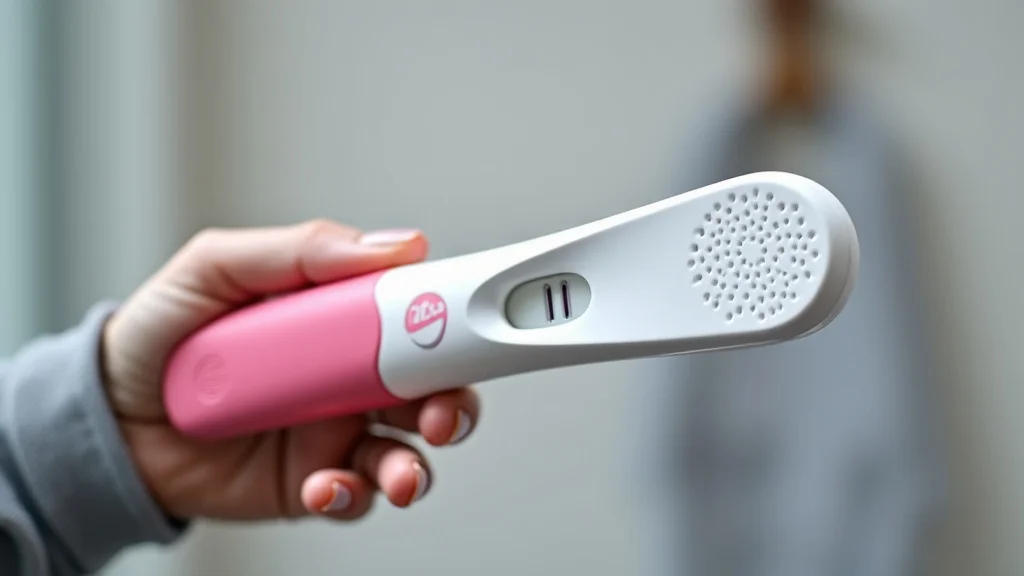
It can be confusing when you first look at pregnancy tests. You might see different numbers like 25 miu ml and wonder what it means. This is a common point for people starting out.
Don’t worry, it’s simpler than it looks. We’ll walk through what this number means step by step. After this, you’ll know exactly how to choose and use the right test.
Let’s make this easy.
Key Takeaways
- Understanding “25 miu ml” helps you pick the right pregnancy test.
- This number tells you how sensitive the test is to hCG.
- Higher sensitivity means the test can detect pregnancy earlier.
- Most home pregnancy tests use a 25 mIU/mL sensitivity.
- Proper timing and following instructions are key for accurate results.
- Knowing the sensitivity helps avoid early false negatives.
Understanding Pregnancy Test Sensitivity
The number 25 miu ml you see on pregnancy tests refers to the sensitivity of the test. This means the test can detect a certain level of human chorionic gonadotropin (hCG) in your urine. hCG is a hormone your body starts producing soon after a fertilized egg implants in the uterus.
It’s often called the “pregnancy hormone.” The “mIU/mL” stands for milli-International Units per milliliter. This is the standard unit for measuring hCG concentration in the blood and urine. A lower number means the test is more sensitive.
It can detect smaller amounts of hCG. A higher number means it’s less sensitive. It needs more hCG to show a positive result.
For beginners, understanding this sensitivity can seem a bit technical. However, it’s quite straightforward. Imagine you have a very sensitive thermometer that can detect tiny changes in temperature.
This is like a highly sensitive pregnancy test. It can pick up small amounts of hCG. A less sensitive test is like a thermometer that needs a bigger temperature change to register.
It needs a larger amount of hCG. Most over-the-counter pregnancy tests have a sensitivity of 25 mIU/mL. This is considered a standard level.
It allows for reliable detection of pregnancy once hCG levels rise sufficiently.
What Does 25 MiU ML Actually Mean
The 25 mIU/mL on a pregnancy test signifies its detection threshold for hCG. This means that if your urine contains 25 milli-International Units of hCG per milliliter or more, the test should detect it and show a positive result. It’s a way to measure how much of the pregnancy hormone the test needs to see a positive.
For example, a test with a 50 mIU/mL sensitivity would need twice as much hCG to show a positive result. A test with a 10 mIU/mL sensitivity would be much more sensitive and could detect pregnancy even earlier.
Think of it like this: if you’re trying to hear a whisper, you need a very quiet room or a sensitive microphone. A 25 mIU/mL test is like having a pretty good microphone. It can hear the whisper when it’s clear enough.
If the whisper is very faint, you might need a more sensitive microphone (a lower mIU/mL number). Most women will reach hCG levels of 25 mIU/mL around the time of their missed period. This is why tests with this sensitivity are common and effective for most people.
Why 25 MiU ML is a Common Standard
The reason you see 25 mIU/mL so often is that it strikes a balance. It’s sensitive enough to detect pregnancy shortly after a missed period. Yet, it’s not so sensitive that it might pick up very faint traces of hCG that could lead to confusion.
For instance, very early pregnancy losses can sometimes produce temporary hCG spikes. A highly sensitive test might detect these, leading to a positive result followed by a period. This can cause unnecessary distress.
A 25 mIU/mL test generally avoids this by requiring a more established pregnancy to produce a clear positive.
This standard sensitivity also helps manufacturers produce tests reliably and affordably. Having a common standard makes it easier for consumers to choose. It simplifies the process of understanding what to expect from a home pregnancy test.
The goal is to confirm pregnancy when it is most likely to be detected accurately. The 25 mIU/mL threshold is well-researched and proven to work for this purpose for the majority of pregnancies.
How hCG Levels Rise During Pregnancy
After conception, the developing placenta begins to produce hCG. This hormone’s levels rise very quickly in early pregnancy. They typically double every 48 to 72 hours.
At the time of a missed period, a woman’s hCG levels can range from about 25 mIU/mL to around 200 mIU/mL or even higher. This wide range is why a 25 mIU/mL test is usually reliable when taken on or after the day your period is expected. By this time, most pregnant individuals will have levels above 25 mIU/mL.
In the first few weeks, hCG levels continue to climb exponentially. Around week 8 of pregnancy, hCG levels usually peak. Then, they start to decline slightly and level off for the remainder of the pregnancy.
Knowing this helps understand why testing too early might give a negative result, even if you are pregnant. Your hCG levels simply may not have risen to the 25 mIU/mL mark yet.
Using A Pregnancy Test 25 MiU ML Effectively
Using a pregnancy test with a 25 mIU/mL sensitivity is generally straightforward. The most crucial factor is timing. These tests are designed to give the most accurate results when taken from the first day of your missed period.
Taking the test too early, even with a 25 mIU/mL sensitivity, might mean your hCG levels haven’t reached the detection threshold yet. This can lead to a false negative result, where the test shows you aren’t pregnant when you actually are.
Always read the specific instructions that come with your test. Different brands might have slight variations in how to use them. Typically, you’ll need to collect a urine sample or hold the absorbent tip of the test stick in your urine stream for a specific amount of time.
Using your first-morning urine is often recommended. This is because your hCG concentration is typically highest then, giving the test the best chance to detect it.
The Importance of Timing Your Test
Timing is paramount for accurate results, especially with a 25 mIU/mL test. If you test too soon, your hCG levels might still be below 25 mIU/mL. This could lead to a negative result even if you are pregnant.
This is known as a false negative. It’s common for women to experience this when testing a few days before their expected period. The pregnancy hormone needs time to build up in your system to detectable levels.
The general recommendation is to wait until at least the first day of your missed period. For even greater certainty, some advise waiting a full week after your missed period. By then, hCG levels are almost always high enough for a 25 mIU/mL test to reliably detect them.
If you get a negative result but still suspect you might be pregnant, wait a few days and test again. This allows more time for hCG to increase.
What To Do With Your First Morning Urine
Using your first morning urine is a smart strategy when taking a pregnancy test. During the night, your body doesn’t process fluids as rapidly. This means the hCG hormone your body is producing becomes more concentrated in your urine.
For tests with a 25 mIU/mL sensitivity, this concentrated sample is ideal. It increases the chances of detecting even small amounts of hCG that might be present. This reduces the risk of a false negative result.
When you wake up, try not to drink a lot of fluids before collecting your sample. Excessive fluid intake can dilute your urine. This might lower the hCG concentration.
Collect the urine in a clean container or directly into the test cup if provided. Follow the test instructions carefully regarding how long to collect the sample or how to use the absorbent stick.
Interpreting Your Pregnancy Test Results
Interpreting your pregnancy test results correctly is simple once you know what to look for. Most tests show results in one of two ways: lines or digital readouts. With line tests, a single line usually means negative, and two lines mean positive.
Some tests use symbols like plus (+) for positive and minus (-) for negative.
A positive result, indicated by two lines or a plus sign, means the test detected hCG at or above 25 mIU/mL. This indicates you are likely pregnant. A negative result, shown by one line or a minus sign, means hCG was not detected above 25 mIU/mL in your urine sample.
Always wait for the test to fully develop before reading the results. Waiting too long can sometimes lead to inaccurate results, called evaporation lines.
Factors Affecting Pregnancy Test Accuracy
While a 25 mIU/mL pregnancy test is quite reliable, several factors can influence its accuracy. The most common issue is testing too early. As mentioned, if hCG levels are below 25 mIU/mL, the test will show negative even with a confirmed pregnancy.
This is a major reason for false negatives.
Another factor is not following the test instructions precisely. This can include not collecting enough urine, not holding the test stick in the urine long enough, or reading the result too late. These errors can lead to inaccurate readings.
Also, certain medications that contain hCG, like those used in fertility treatments, can cause a false positive result.
False Negatives and What They Mean
A false negative occurs when a pregnancy test shows a negative result, but you are actually pregnant. The most frequent cause for a false negative with a 25 mIU/mL test is testing too early. Your hCG levels may simply not have risen to the 25 mIU/mL threshold yet.
This is common if you test a few days before your expected period.
Other reasons for a false negative include dilution of urine from drinking too much fluid before testing. Incorrect handling or reading of the test can also contribute. If you suspect a false negative, wait a few days, retest with your first morning urine, and ensure you follow all instructions carefully.
Sometimes, medical conditions can affect hCG production or detection, but this is rare.
False Positives Are Less Common
False positives, where a test shows you are pregnant when you are not, are much rarer than false negatives. They are often caused by specific circumstances. The most common reason for a false positive is the presence of hCG from fertility treatments.
If you are undergoing such treatments, it’s essential to discuss potential test results with your doctor.
Other less common causes include certain medical conditions, such as rare ovarian cysts or tumors that might produce hCG. Evaporation lines, which can appear as faint lines after the test has dried for too long, can sometimes be mistaken for a positive result. Always read the test results within the timeframe specified in the instructions.
The Role of Evaporation Lines
Evaporation lines are a common source of confusion with pregnancy tests. They appear as faint, colorless lines that can form on the test window after the urine has evaporated from the test area. These are not true positive results.
They occur because the liquid from the urine leaves behind a residue as it dries. This residue can sometimes mimic the appearance of a positive line.
To avoid mistaking an evaporation line for a positive result, always read your pregnancy test within the time frame indicated by the manufacturer. This is typically between 3 to 10 minutes. If you check the test after this window, any lines you see should be considered unreliable.
If you see a faint line within the correct time, it is more likely to be a true positive, especially if it has color. If unsure, repeat the test with a new test kit.
Comparing Different Test Sensitivities
While 25 mIU/mL is a common standard, pregnancy tests come in various sensitivities. Understanding these differences can help you choose the best test for your situation. A lower mIU/mL number means a more sensitive test.
It can detect pregnancy earlier. A higher mIU/mL number means a less sensitive test. It requires more hCG for a positive result.
For example, a test with 10 mIU/mL sensitivity is more sensitive than a 25 mIU/mL test. It can detect pregnancy a few days earlier. However, it might also be more prone to false positives from very faint hCG traces or chemical pregnancies.
A 50 mIU/mL test is less sensitive. It would typically be used later, perhaps a week after a missed period, for confirmation if earlier tests were negative.
Lower Sensitivity Tests (e.g., 10-20 mIU/mL)
Tests with lower sensitivity, such as those detecting 10-20 mIU/mL of hCG, are designed for early detection. They can potentially show a positive result a few days before your expected period. This can be exciting for those eager to know.
However, this early detection comes with caveats. If you get a positive result with a very sensitive test, it might be a “chemical pregnancy.” This is a very early miscarriage that occurs shortly after implantation.
The hCG levels might rise briefly but then fall. A less sensitive test would likely not have detected this. While early detection can be useful, it’s important to be aware of the possibility of chemical pregnancies and the emotional impact they can have.
Always confirm any early positive result with a subsequent test or a doctor’s visit.
Higher Sensitivity Tests (e.g., 50+ mIU/mL)
Tests with higher sensitivity, often 50 mIU/mL or more, are less likely to detect very early pregnancy. They require a more significant amount of hCG to show a positive result. These tests are typically used as a confirmation test.
They are best used a week or more after a missed period. They offer a high degree of certainty when a positive result is obtained.
If you’ve had inconsistent results with more sensitive tests, or if you are simply waiting for the most definitive result, a higher sensitivity test can be a good choice. They are less prone to giving confusing faint lines or early positives that might not lead to a viable pregnancy. Their main advantage is reduced risk of early, confusing results.
Choosing The Right Test For You
When choosing a pregnancy test, consider your personal preferences and your situation. If you want to test as early as possible, opt for a sensitive test (10-20 mIU/mL). Be prepared for the possibility of early detection leading to results you may need to confirm later.
If you prefer to wait for a more definitive result and are less concerned about testing days before your period is due, a standard 25 mIU/mL test is an excellent choice.
If you’ve already missed your period and want the highest confidence, a test with 50 mIU/mL sensitivity might be your best bet. Most experts agree that a 25 mIU/mL test is a great all-around option. It provides a good balance of early detection and accuracy around the time of your missed period.
Always check the packaging for the sensitivity level and follow the instructions carefully, regardless of which test you choose.
Common Myths Debunked
Myth 1: Any faint line on a pregnancy test means you are pregnant
This is not always true. A faint line can sometimes be an evaporation line, which appears as a colorless mark after the urine has dried on the test strip. True positive lines are usually colored and appear within the specified reading time.
If you see a faint line, it’s best to retest in a day or two to confirm. A colored line within the proper timeframe is a stronger indicator of pregnancy.
Myth 2: You can get accurate results any time of day
While some very sensitive tests might detect pregnancy at any time, accuracy is highest with first-morning urine. This is because hCG levels are most concentrated in the morning. Testing later in the day after drinking a lot of fluids can dilute your urine.
This might lead to a false negative if your hCG levels are borderline.
Myth 3: Pregnancy tests can be wrong if you’ve had a lot of caffeine or sugar
The foods and drinks you consume, like caffeine or sugar, do not directly affect the accuracy of a standard urine pregnancy test. These tests detect the presence of the hCG hormone. Your diet does not change the amount of hCG your body produces during pregnancy.
However, excessive fluid intake before testing can dilute urine and potentially affect results.
Myth 4: A digital pregnancy test is always more accurate than a line test
Digital and line tests detect hCG. Their accuracy depends on their sensitivity and when you test. A digital test might be easier to read, stating “Pregnant” or “Not Pregnant.” However, a faint line on a line test, if it’s a true positive and within the reading window, is just as accurate as a digital “Pregnant” result.
The sensitivity (mIU/mL) is what truly determines how early you can get a result.
Frequently Asked Questions
Question: When is the best time to take a pregnancy test with 25 miu ml sensitivity
Answer: The best time is on the first day of your missed period, or ideally, a few days after your missed period. Using your first morning urine can also increase accuracy.
Question: Can a 25 miu ml test detect pregnancy a week before my period
Answer: It’s unlikely. While some highly sensitive tests (10-20 miu ml) might detect pregnancy this early, a 25 miu ml test usually requires hCG levels to be higher, which typically occurs around the time of your missed period.
Question: What does it mean if I get a very faint positive line with a 25 miu ml test
Answer: A faint positive line, if colored and within the test’s reading time, likely means you are pregnant. However, it’s always best to confirm with a retest in a few days or consult a doctor.
Question: Are 25 miu ml tests the most common type available
Answer: Yes, 25 mIU/mL is a very common sensitivity level for over-the-counter home pregnancy tests. It offers a good balance between early detection and reliability.
Question: How soon after unprotected sex can I trust a 25 miu ml pregnancy test
Answer: You cannot accurately test for pregnancy with a 25 miu ml test until implantation has occurred and your hCG levels have risen to at least 25 mIU/mL, which usually happens around the time of your missed period. Testing too soon will likely yield a false negative.
Summary
Understanding pregnancy test 25 miu ml is key for accurate results. This number shows the test’s sensitivity to the pregnancy hormone hCG. A 25 mIU/mL test is standard and works best around your missed period.
Test with first morning urine and follow instructions precisely. Be aware of false negatives from testing too early and false positives are rare. Choosing the right test sensitivity supports timely and reliable pregnancy confirmation.
Leave a Reply