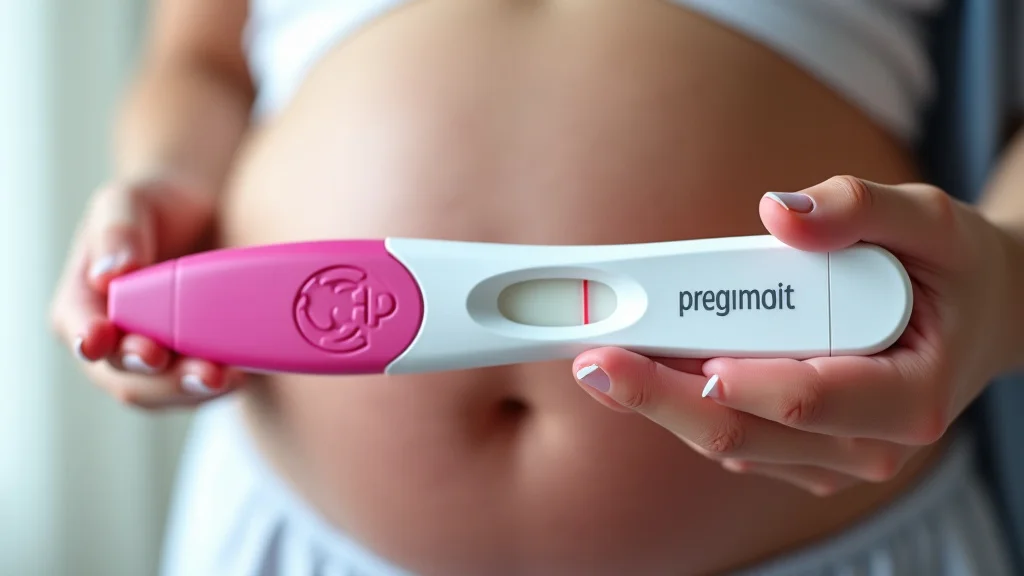
Seeing a positive result on a pregnancy test can bring up many feelings. For those new to this, looking at pregnancy test kit result positive images can be a bit confusing. You might wonder if you’re seeing it right or what different lines mean.
It’s totally normal to feel unsure. This guide will make everything clear. We’ll walk through what those positive images really show and what to expect next, step-by-step, in a simple way.
Get ready to feel confident about what your test means.
Key Takeaways
- You will learn what a positive pregnancy test result looks like in images.
- Understand the different types of lines and symbols on test kits.
- Discover why timing is important for accurate results.
- Find out what to do after seeing a positive pregnancy test.
- Learn about factors that can affect test accuracy.
What a Positive Pregnancy Test Looks Like
A positive pregnancy test result usually means that a hormone called human chorionic gonadotropin (hCG) has been detected in your urine. This hormone is produced shortly after a fertilized egg attaches to the uterine lining. Most home pregnancy tests work by detecting this hCG.
When the test detects enough hCG, it shows a positive result.
The way a positive result appears can vary slightly between different brands and types of pregnancy tests. However, most follow a similar pattern. They typically use a test window and a control window.
The control window shows if the test is working correctly. The test window shows your result. A positive result typically appears in the test window.
Understanding Test Lines and Symbols
Many pregnancy tests use lines to show results. A positive result often means seeing two lines. One line is in the control window, and another line appears in the test window.
The line in the control window is there to show that the test kit itself is working fine. If this line doesn’t show up, the test is invalid, no matter what appears in the other window.
The second line, in the test window, is the one that indicates a positive result. This line can range in strength. Sometimes it’s a dark, clear line.
Other times, it might be fainter. Even a faint positive line generally means you are pregnant. It’s important to remember that any visible line in the test window, no matter how light, is usually considered positive.
Some newer tests use digital displays. These tests will clearly state “Pregnant” or “Not Pregnant” on a screen. This removes any guesswork about interpreting lines.
They are often easier for beginners to understand. However, the underlying principle is the same: detecting hCG levels in your urine. The images of these digital tests simply show the words “Pregnant” on their screen.
Common Positive Result Appearances in Images
When you look at pregnancy test kit result positive images online, you’ll see a variety of visual cues. The most common image shows a test stick with two pink or blue lines. One line will be in the control area, and the second, positive line will be in the test area.
The intensity of the positive line can sometimes tell you something about how far along you might be, though this is not a precise measurement. A darker line might indicate higher hCG levels, which often happens a bit later in early pregnancy.
Other images might show a plus sign (+) in the test window, with a vertical line from the control appearing as the top part of the plus. Some tests use a checkmark symbol. Digital tests, as mentioned, will just show the word “Pregnant” on their display.
It is very helpful to look at several examples to get a good sense of what to expect. This visual preparation can ease anxiety when you take your own test.
When to Take a Pregnancy Test
The timing of taking a pregnancy test is crucial for accurate results. Most home pregnancy tests are most reliable when used on the day of your missed period, or even a few days after. Some highly sensitive tests can detect hCG a few days before your expected period.
However, taking them too early can lead to a false negative result.
This is because hCG levels are very low in the very early stages of pregnancy. It takes time for these levels to rise enough for a test to detect them. If you get a negative result but still suspect you might be pregnant, it’s often recommended to wait a few days and test again.
Repeating the test can help confirm a pregnancy or rule out an early pregnancy that has not yet produced detectable hCG levels.
How Pregnancy Tests Work to Detect hCG
Pregnancy tests are designed to be sensitive to the hormone hCG. This hormone is a key indicator of pregnancy. Once a fertilized egg implants in the uterus, the body starts producing hCG.
This production increases rapidly in the early weeks of pregnancy. Home pregnancy tests use antibodies that bind to hCG if it’s present in your urine.
When the urine sample flows through the test strip, it encounters these antibodies. If hCG is present, it attaches to the antibodies. This binding then triggers a chemical reaction.
This reaction causes a line, symbol, or digital message to appear on the test. The control line uses a different set of antibodies to confirm that the test is functioning correctly and that the urine has moved through the test properly.
The Role of hCG in Early Pregnancy
Human chorionic gonadotropin (hCG) is often called the “pregnancy hormone.” Its primary role is to signal the body to maintain the corpus luteum. The corpus luteum is a temporary gland in the ovary that produces progesterone. Progesterone is essential for sustaining the uterine lining.
This lining is what nourishes the developing embryo.
hCG levels typically double every 48 to 72 hours during the first few weeks of pregnancy. This rapid rise is why pregnancy tests become more accurate as time passes. A doctor can also measure hCG levels in blood tests.
Blood tests can detect pregnancy even earlier and provide more precise measurements than urine tests.
Understanding Sensitivity Levels of Tests
Pregnancy tests come with different sensitivity levels. Sensitivity refers to how much hCG the test can detect in a given amount of urine. This is usually measured in milli-international units per milliliter (mIU/mL).
A lower mIU/mL number means the test is more sensitive and can detect lower levels of hCG.
For example, a test with a sensitivity of 10 mIU/mL is more sensitive than one with a sensitivity of 50 mIU/mL. If you are testing very early, a more sensitive test might give you a positive result sooner. However, it’s important to follow the instructions on the test package.
Using a test correctly, regardless of its sensitivity, is key to getting an accurate result. Even the most sensitive tests can produce false negatives if not used at the right time.
Why Timing Affects Accuracy
Timing is everything when it comes to getting a correct pregnancy test result. If you test too soon after conception, before your hCG levels have risen sufficiently, the test might not detect the hormone. This can lead to a false negative result, where the test indicates you are not pregnant, but you actually are.
The fertilized egg needs time to travel to the uterus and implant, which is when hCG production really begins to increase.
Generally, it’s best to wait until the day you expect your period. By this time, your hCG levels should be high enough for most standard pregnancy tests to detect. Some early detection tests are designed to work a few days before your missed period.
These often have higher sensitivity. However, even with these, testing too early can still yield an inaccurate result. Waiting until your period is late is the most reliable approach for most people.
Interpreting Different Types of Positive Results
Seeing a positive result on a pregnancy test can bring a rush of emotions. It’s important to know how to interpret what you’re seeing, whether it’s lines or digital readouts. Different tests have slightly different ways of showing a positive outcome, but the core meaning remains the same.
The most common indicator is the appearance of two lines, one in the control window and one in the test window. This signifies the presence of hCG above the test’s detection threshold. A faint line is still a positive result.
It just means hCG levels might be lower, which is common in early pregnancy.
The Two-Line Indicator
The classic two-line result is the most familiar. In this case, you’ll see a distinct line in the control window. This line confirms the test is working.
Then, you’ll see a second line in the test window. This second line is the one that indicates pregnancy. Its strength can vary.
A strong, dark second line usually means there are higher levels of hCG. A faint second line means hCG levels are lower, which is typical in very early pregnancy, perhaps a few days after implantation.
Some tests use different colors for these lines, often pink or blue. The important part is that both lines are visible. If you see two lines, even if one is very faint, it’s generally considered a positive result.
It’s always a good idea to check the specific instructions that came with your test kit for precise interpretation.
Digital Test Displays
Digital pregnancy tests offer a more straightforward interpretation. Instead of lines, these tests have a small screen that displays words. When a positive result is detected, the screen will clearly show “Pregnant.” This eliminates any ambiguity that can sometimes arise from interpreting faint lines on traditional tests.
These are particularly helpful for people who might have difficulty seeing faint lines or are anxious about their results.
Similarly, if the test is negative, the screen will display “Not Pregnant.” Some digital tests may even give an estimate of how many weeks pregnant you are, based on hCG levels. This feature is sometimes called a “weeks estimator” test. While convenient, it’s still recommended to confirm any result with a healthcare provider.
Faint Lines and What They Mean
A faint positive line is a very common point of confusion. Many people see a very light line in the test window and wonder if it’s a real positive or just an evaporation line. An evaporation line is a colorless mark that can appear in the test window after the urine has dried.
It’s not an indicator of pregnancy.
However, a faint positive line that appears within the time frame specified in the test instructions is usually a true positive. It means hCG is present, but at a lower concentration. This is often the case in very early pregnancy.
If you see a faint line, it’s a good idea to retest in a day or two. If the line becomes darker, it confirms a pregnancy. Waiting until your period is late will typically result in a stronger line.
Sample Scenarios for Interpreting Results
Let’s look at a couple of common situations. Imagine you take a test and see a clear line in the control window and a strong, dark line in the test window. This is a definitive positive result.
You are likely pregnant.
Another scenario: you take a test, and there’s a clear control line, but the test line is very faint, almost invisible. If this appears within the recommended reading time, it’s likely a faint positive. It means hCG is present.
If you’re unsure, try another test the next day. If the line becomes more visible, it confirms pregnancy.
Consider a third case: you see a control line, but absolutely no line or marking in the test window. This is a negative result. You are likely not pregnant.
What to Do After a Positive Pregnancy Test
Receiving a positive pregnancy test result is a significant moment. It marks the beginning of a new chapter. The next steps are important to ensure your health and the health of your developing pregnancy.
Don’t delay in taking action after you see that positive result.
The most crucial step is to contact a healthcare provider. They will confirm the pregnancy and guide you through the initial stages of prenatal care. This professional confirmation is vital for several reasons, including establishing a due date and addressing any immediate health concerns.
Confirming the Pregnancy with a Doctor
After you get a positive result at home, the next step is to schedule an appointment with your doctor or a local health clinic. They will likely perform their own pregnancy test, either with urine or a blood test. Blood tests can detect hCG earlier and provide a more precise measurement of its levels.
Your doctor will also discuss your medical history and ask about your last menstrual period. This information helps them estimate your due date. They will also screen for any potential risks or complications.
This initial visit is the foundation for a healthy pregnancy journey.
Starting Prenatal Care
Prenatal care is essential for monitoring your health and the development of your baby. Once your pregnancy is confirmed, your doctor will outline a schedule for regular check-ups. These appointments will involve various tests and screenings to ensure everything is progressing as it should.
During prenatal visits, your doctor will monitor your weight, blood pressure, and the baby’s growth. They will also discuss important aspects like nutrition, exercise, and avoiding harmful substances. Early and consistent prenatal care significantly improves outcomes for both mother and baby.
It’s about taking proactive steps for a healthy pregnancy.
Understanding Potential Variations in Results
While a positive result is usually straightforward, there are some rare instances where variations can occur. These can include chemical pregnancies, where pregnancy occurs but ends very early, often around the time of your period. This is detected by a sensitive test but does not result in a viable pregnancy.
Another possibility is a molar pregnancy, which is a rare complication where a non-viable tissue grows inside the uterus. These can also cause a positive pregnancy test. If your doctor has any concerns after your initial tests, they may conduct further investigations.
It’s important to rely on professional medical advice for any unusual results.
Factors Affecting Pregnancy Test Accuracy
While home pregnancy tests are highly accurate when used correctly, several factors can influence their reliability. Understanding these can help you get the most dependable result and avoid unnecessary confusion or anxiety. It’s not just about seeing the lines; it’s about using the test under the right conditions.
The most common issues relate to timing, the test itself, and certain medications or health conditions. Paying attention to these details ensures you can trust the outcome of your test. Let’s explore these factors in detail.
Incorrect Timing of the Test
As discussed earlier, testing too early is a primary reason for inaccurate results. Home pregnancy tests detect hCG, and this hormone needs time to build up in your body after conception. If you test before your hCG levels are high enough, you might get a false negative.
This means the test reads negative, but you are actually pregnant. Waiting until the day of your missed period, or a few days after, significantly increases accuracy. For example, studies show that testing on the day of a missed period can detect pregnancy in about 99% of cases when the test is performed correctly.
Expiration Dates and Storage
Like any diagnostic tool, pregnancy tests have expiration dates. Using an expired test can lead to inaccurate results, either positive or negative. The chemicals and antibodies within the test strip can degrade over time, affecting their ability to detect hCG.
Always check the expiration date on the test package before using it. Furthermore, proper storage is important. Tests should be kept in a cool, dry place, away from direct sunlight and moisture.
Storing them in a humid bathroom, for instance, could compromise their integrity.
Diluted Urine Samples
The concentration of hCG in your urine is key to getting a positive result. If your urine is very diluted, the hCG levels might be too low for the test to detect, even if you are pregnant. This often happens if you drink a lot of fluids right before taking the test.
For this reason, many healthcare professionals recommend using your first-morning urine for testing. This sample is typically more concentrated and therefore more likely to contain detectable levels of hCG. If you must test later in the day, try to limit your fluid intake for a few hours beforehand.
Certain Medications and Medical Conditions
Some medications can interfere with pregnancy test results. For example, certain fertility drugs contain hCG and can lead to a false positive result if taken recently. Always inform your doctor about any medications you are taking before using a home pregnancy test.
Certain medical conditions can also affect results, though this is less common. For instance, some rare tumors can produce hCG, leading to a false positive. However, for the vast majority of people, these factors are not a concern.
Evaporation Lines Versus Positive Lines
Distinguishing between a faint positive line and an evaporation line can be tricky. An evaporation line appears in the test window after the urine has evaporated from the strip. It’s often colorless or gray and may appear after the recommended reading time (usually 3-10 minutes).
A true positive line, even if faint, will typically have color and appear within the specified time frame. If you’re unsure, it’s best to wait and retest. A new test, taken with first-morning urine, should provide a clearer result.
Common Myths Debunked
Myth 1: A faint line means you’re not pregnant
Reality: A faint line is often a sign of early pregnancy when hCG levels are lower. Most tests are designed to detect even small amounts of hCG. If you see a colored line, no matter how faint, it typically indicates a positive result.
Retesting in a day or two, especially with first-morning urine, should show a darker line if pregnancy is progressing.
Myth 2: You can test too early and get a false positive
Reality: It’s more common to get a false negative by testing too early than a false positive. False positives are rare and usually due to specific medications containing hCG or rare medical conditions. If a test shows a positive result, it’s highly likely that you are pregnant.
The confusion with “too early” usually refers to detecting a pregnancy that may not continue, like a chemical pregnancy.
Myth 3: All pregnancy tests are the same
Reality: Pregnancy tests vary in sensitivity, design, and how they display results. Some are more sensitive and can detect pregnancy earlier. Others use digital displays for clearer results.
While the underlying science of detecting hCG is the same, the way they present information differs. It’s important to read the instructions for each specific test you use.
Myth 4: Storing a test in the bathroom is fine
Reality: Bathrooms are often humid environments. Humidity and extreme temperatures can damage the test’s internal components. This can lead to inaccurate results.
Pregnancy tests should ideally be stored in a cool, dry place, like a medicine cabinet in a bedroom or a kitchen drawer, away from direct sunlight and moisture.
Frequently Asked Questions
Question: What do two pink lines on a pregnancy test mean
Answer: Two pink lines on a pregnancy test typically mean you are pregnant. One line is the control line showing the test works, and the second line is the test line indicating the presence of hCG.
Question: Can I get a positive result if I’m not pregnant
Answer: False positives are very rare. They can happen if you are taking hCG fertility medications or have certain rare medical conditions. For most people, a positive test means pregnancy.
Question: How soon can I get accurate results
Answer: Most tests are accurate from the day of your missed period. Some sensitive tests can detect pregnancy a few days earlier. Testing with first-morning urine often provides the most accurate results.
Question: What should I do if I get a very faint line
Answer: A faint line usually means you are pregnant but hCG levels are low. Retest in a day or two with first-morning urine. If the line becomes darker, it confirms pregnancy.
Question: Are digital pregnancy tests more accurate
Answer: Digital tests are not necessarily more accurate, but they are often easier to read. They remove the ambiguity of interpreting faint lines, providing a clear “Pregnant” or “Not Pregnant” message.
Summary
Seeing a positive pregnancy test result is a significant moment. Understanding images of pregnancy test kit results, like two lines or clear digital messages, is key. Faint lines still often mean pregnancy.
Always confirm with a healthcare provider. They will guide you through next steps in prenatal care. Taking care of yourself early ensures a healthy journey ahead.
Leave a Reply