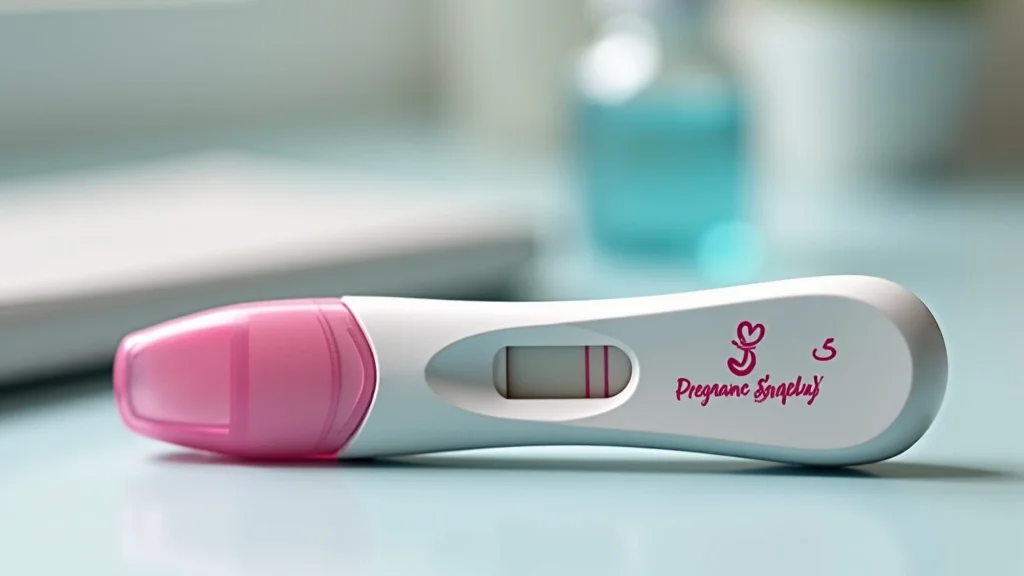
Figuring out if you are pregnant can bring up lots of questions. Many people wonder about the best way to test and sometimes stumble over terms like “pregnancy test serum.” This term might sound a bit technical, but it’s actually quite straightforward. We’ll break down what it means in a way that’s easy to grasp.
Get ready for a simple guide that will clear everything up, step by step. Let’s get started on understanding your options.
Key Takeaways
- You will learn what pregnancy test serum refers to.
- This post explains how these tests detect pregnancy.
- It covers the accuracy and timing for pregnancy test serum.
- You will discover the differences between types of tests.
- The article offers practical tips for using pregnancy tests.
What Is Pregnancy Test Serum
What Is Pregnancy Test Serum
When we talk about a pregnancy test, we’re usually thinking about the common home urine test. These are super popular and easy to find. But sometimes, especially in medical settings, people might hear about a “pregnancy test serum.” This essentially means testing for pregnancy using a blood sample instead of urine.
Blood tests can be a bit more sensitive and can detect pregnancy hormones earlier than urine tests. This can be helpful in certain situations where early detection is important for managing a pregnancy or making medical decisions.
Understanding Serum Pregnancy Tests
Serum pregnancy tests look for a specific hormone called human chorionic gonadotropin, or hCG. This hormone is produced shortly after a fertilized egg attaches to the wall of the uterus. It’s the main indicator that pregnancy has begun.
Urine tests detect hCG that has been filtered by the kidneys and is present in urine. Serum tests detect hCG directly in the bloodstream, where hormone levels are higher and appear sooner after conception.
The scientific term “serum” simply refers to the liquid part of blood left over after blood cells and clotting factors have been removed. So, a serum pregnancy test involves drawing a small amount of blood, processing it to get the serum, and then testing that serum for hCG. This process is typically done at a doctor’s office or a laboratory.
Why Serum Testing Is Different
The main difference lies in sensitivity and timing. Serum tests can often detect hCG levels at a much lower concentration than urine tests. This means a serum test might be able to confirm a pregnancy a few days earlier than a home urine test.
For instance, some serum tests can detect pregnancy as early as 6 to 8 days after ovulation, while most home urine tests need you to wait until you’ve missed your period, which is usually around 14 days after ovulation.
This early detection capability can be crucial. It allows for timely prenatal care and can help in managing potential pregnancy complications. For example, it can help confirm an intrauterine pregnancy and rule out an ectopic pregnancy early on.
It also allows for prompt treatment if a woman has a history of miscarriages or needs to start specific medications very early in pregnancy.
The Role of hCG
Human chorionic gonadotropin (hCG) is the key hormone that pregnancy tests detect. It’s often called the “pregnancy hormone” because its levels rise rapidly during the early stages of pregnancy. hCG is produced by cells that will eventually form the placenta.
It plays a vital role in maintaining the pregnancy by signaling the body to keep producing progesterone, which is necessary to support the uterine lining.
The amount of hCG in the body increases significantly each day during early pregnancy. For example, it typically doubles every 48 to 72 hours in the first few weeks of gestation. This rapid increase is what makes hCG a reliable marker for pregnancy.
Both urine and blood tests measure hCG, but blood tests can detect it when its levels are very low.
This understanding of hCG levels is fundamental to how pregnancy tests work. Doctors can even use hCG levels to estimate how far along a pregnancy is, although it’s not the sole determinant. The presence and quantity of hCG confirm the presence of a pregnancy and can offer insights into its progression.
How Pregnancy Tests Detect hCG
How Pregnancy Tests Detect hCG
Pregnancy tests, whether they are the simple home kits or the more sophisticated lab tests, all work on the same basic principle: detecting the presence of hCG. The technology behind these tests, though, can vary. Home urine tests typically use a type of immunoassay.
This is a test that uses antibodies to detect a specific substance in a sample.
In serum tests, similar immunoassay techniques are used, but they are often more sensitive and automated. These lab-based tests can quantify the exact amount of hCG present, providing more precise information than a simple positive or negative result from a home kit. This quantitative data can be very useful for doctors in monitoring pregnancy progression.
Types of hCG Tests
There are two main types of hCG tests: qualitative and quantitative. Qualitative tests simply tell you if hCG is present or not. These are what most home urine pregnancy tests are.
They give a “yes” or “no” answer. Quantitative tests, also known as beta hCG tests, measure the exact amount of hCG in your blood.
Quantitative tests are usually performed in a laboratory. They provide a specific number, for example, “100 mIU/mL of hCG.” This number can be compared to typical hCG levels for different stages of pregnancy. This is why doctors often order quantitative tests if they need to monitor a pregnancy closely or if there are concerns about complications.
For example, a quantitative test might be ordered if a woman has experienced recurrent miscarriages, is undergoing fertility treatments, or if there’s a suspicion of an ectopic pregnancy. The ability to track the rise or fall of hCG levels over time gives medical professionals valuable information.
The Science Behind the Lines
Home urine tests often show results with lines or a digital display. The test strip inside a urine test contains antibodies that are designed to bind to hCG. If hCG is present in the urine, it binds to these antibodies.
This binding triggers a chemical reaction that causes a line to appear, or a “pregnant” symbol to show up on a digital screen.
In a lab, quantitative serum tests use similar antibody-based methods, but often employ more advanced technologies like enzyme-linked immunosorbent assays (ELISAs) or chemiluminescent immunoassays (CLIAs). These methods are highly sensitive and can detect very low concentrations of hCG. They also allow for precise measurement of the hormone.
The sensitivity of a test is measured in milli-international units per milliliter (mIU/mL). Home urine tests typically require a higher concentration of hCG to show a positive result, often around 20-50 mIU/mL. Serum tests, on the other hand, can detect hCG levels as low as 5-10 mIU/mL, which is why they can provide an earlier indication of pregnancy.
Accuracy and Timing Considerations
The accuracy of any pregnancy test depends on several factors, including the sensitivity of the test and when it is performed. For home urine tests, it’s best to test after you’ve missed your period for the most accurate results. Testing too early can lead to a false negative, where the test shows you are not pregnant even if you are, simply because hCG levels are not yet high enough to be detected.
Serum tests are generally more accurate and can detect pregnancy earlier due to their higher sensitivity. However, even with serum tests, there’s a window of time after conception before hCG is produced at detectable levels. So, testing immediately after unprotected intercourse is unlikely to yield a positive result, regardless of the test type.
It’s also important to consider that certain medical conditions or medications can affect test results. For instance, some fertility drugs contain hCG, which could lead to a false positive if tested too soon after administration. Doctors are trained to consider these possibilities when interpreting test results.
Comparing Serum and Urine Pregnancy Tests
Comparing Serum and Urine Pregnancy Tests
When you need to know if you’re pregnant, you have a couple of main options: testing with urine at home or getting a blood test at a doctor’s office. Both methods aim to find the same hormone, hCG, but they do it in different ways and at different times. Understanding these differences can help you choose the best option for your situation.
Home urine tests are incredibly convenient. You can buy them at almost any pharmacy or supermarket and use them in the privacy of your own home. They are designed for ease of use, with clear instructions usually involving dipping the test stick into a urine sample or holding it under a stream of urine.
The results typically appear within a few minutes.
Advantages of Urine Tests
The biggest plus for urine tests is their accessibility and ease of use. They are inexpensive, readily available, and don’t require a doctor’s visit. For most people, once their period is late, a urine test is highly accurate.
They provide a quick answer without any special preparation or appointments.
They are perfect for a first-time check when you suspect you might be pregnant. If you get a positive result on a home urine test, it’s almost always correct. A positive result means hCG is definitely present.
If you get a negative result, it might mean you aren’t pregnant, or you might have tested too early.
Consider Sarah, who thought she might be pregnant. She waited until the day her period was due and took a home urine test. It came back positive.
She then contacted her doctor to confirm and begin prenatal care. This is a very common and effective way to confirm a pregnancy.
Advantages of Serum Tests
Serum tests, which use a blood sample, offer a few key advantages, primarily in sensitivity and timing. Because blood carries hCG directly from the source, these tests can detect lower levels of the hormone earlier than urine tests. This means a blood test can confirm a pregnancy a few days sooner than a home urine test.
This early detection is beneficial for several reasons. It allows for quicker initiation of prenatal care, which is important for a healthy pregnancy. It can also be crucial in cases where there’s a concern about an ectopic pregnancy or other early pregnancy complications.
Doctors can also use quantitative serum tests to monitor the hCG levels over time, which gives them more information about how the pregnancy is progressing.
For example, a woman experiencing early pregnancy bleeding might have a serum hCG test to see if her levels are rising as expected or dropping, which could indicate a problem. This detailed information helps guide medical decisions and provide the best care.
When to Choose Which Test
The choice between a serum test and a urine test often depends on your specific needs and circumstances. If you’ve missed your period and want a quick, easy, and affordable check, a home urine test is usually the best starting point. Most are accurate when used correctly after a missed period.
However, if you need to know if you’re pregnant as early as possible, or if you have a medical reason to monitor hCG levels closely (like fertility treatments or a history of complications), a serum test ordered by your doctor might be more appropriate. A doctor will decide if a quantitative or qualitative blood test is needed based on the clinical situation.
It’s also worth noting that if a home urine test gives an unclear result (like a faint line), your doctor might suggest a blood test for a more definitive answer. Some individuals might also prefer the reassurance of a lab-confirmed result.
| Feature | Urine Test | Serum Test |
|---|---|---|
| Method | Urine Sample | Blood Sample |
| Detection Level | Higher hCG levels needed | Lower hCG levels detected |
| Timing | Best after missed period | Can detect earlier (days before missed period) |
| Availability | Widely available over-the-counter | Requires doctor’s order and lab visit |
| Result Type | Qualitative (Positive/Negative) | Qualitative or Quantitative (specific measurement) |
| Cost | Lower | Higher |
Common Myths Debunked
Common Myths Debunked
Myth 1: A faint line on a urine test means you are not pregnant.
This is not true. A faint positive line on a urine pregnancy test usually indicates that hCG is present, but at a lower concentration. This often happens when a woman tests very early in her pregnancy, just as her hCG levels are starting to rise.
The intensity of the line can vary based on the test brand, how concentrated your urine is, and how much hCG is in your system. If you see any line, even a faint one, it’s a good idea to retest in a day or two or consult with your doctor for confirmation, potentially with a blood test.
Myth 2: You can get a pregnancy test serum from any doctor’s office.
While most doctor’s offices can perform or order pregnancy tests, the specific type available might vary. A standard check-up might involve a urine test, or they might send you to a lab for a blood draw. It’s best to ask your healthcare provider if they offer serum pregnancy testing or if they will refer you to a laboratory for it.
Not all clinics have the on-site facilities for immediate blood processing and analysis of serum.
Myth 3: Home pregnancy tests are never as accurate as blood tests.
This is a common misconception. When used correctly and at the right time (usually after a missed period), home urine pregnancy tests are highly accurate, often over 99%. The primary difference is sensitivity and timing.
Blood tests can detect pregnancy earlier and provide a specific level of hCG, which is useful in certain medical situations. For confirming a pregnancy once a period is missed, a home urine test is very reliable.
Myth 4: Only women can have a “pregnancy test serum.”
Pregnancy is defined by the presence of a fertilized egg developing into an embryo and fetus, which requires specific hormones like hCG. While pregnancy is biologically associated with individuals who can conceive and carry a pregnancy, the hormone hCG is detected in the bloodstream regardless of gender. Therefore, a medical professional might conduct a serum hCG test on any individual presenting with symptoms or concerns that warrant checking for pregnancy, though this is far more common in individuals who can become pregnant.
Frequently Asked Questions
Question: Can I test for pregnancy using serum at home?
Answer: No, serum pregnancy tests require a blood draw and laboratory analysis, so they cannot be performed at home. Only urine tests are available for home use.
Question: How soon can a serum pregnancy test detect pregnancy?
Answer: Serum pregnancy tests are very sensitive and can often detect pregnancy as early as 6 to 8 days after ovulation, sometimes even before a missed period.
Question: What does it mean if my serum hCG level is low but positive?
Answer: A low positive hCG level in serum generally still indicates pregnancy. It might mean you are very early in the pregnancy, or it could be a sign of a non-viable pregnancy, like an ectopic pregnancy or a miscarriage. Your doctor will monitor your hCG levels to understand what’s happening.
Question: Are serum pregnancy tests more accurate than urine tests?
Answer: Serum tests are more sensitive and can detect pregnancy earlier. For confirming pregnancy after a missed period, both types are generally very accurate. The “accuracy” depends on when the test is performed and the sensitivity of the specific test.
Question: What is the normal range for hCG in early pregnancy?
Answer: hCG levels vary greatly in early pregnancy. For example, 3 weeks after the last menstrual period, levels can range from about 5 to 50 mIU/mL. By 8 weeks, they can be as high as 20,000 to over 100,000 mIU/mL.
Doctors use these ranges to assess pregnancy progression.
Summary
Understanding pregnancy test serum means knowing it’s a blood test for hCG, offering early detection. Both serum and urine tests detect this vital hormone but differ in timing and sensitivity. While home urine tests are convenient and accurate after a missed period, serum tests provide earlier confirmation and detailed levels for medical monitoring.
This guide helps demystify the process, ensuring you know your options for confirming pregnancy.
Leave a Reply