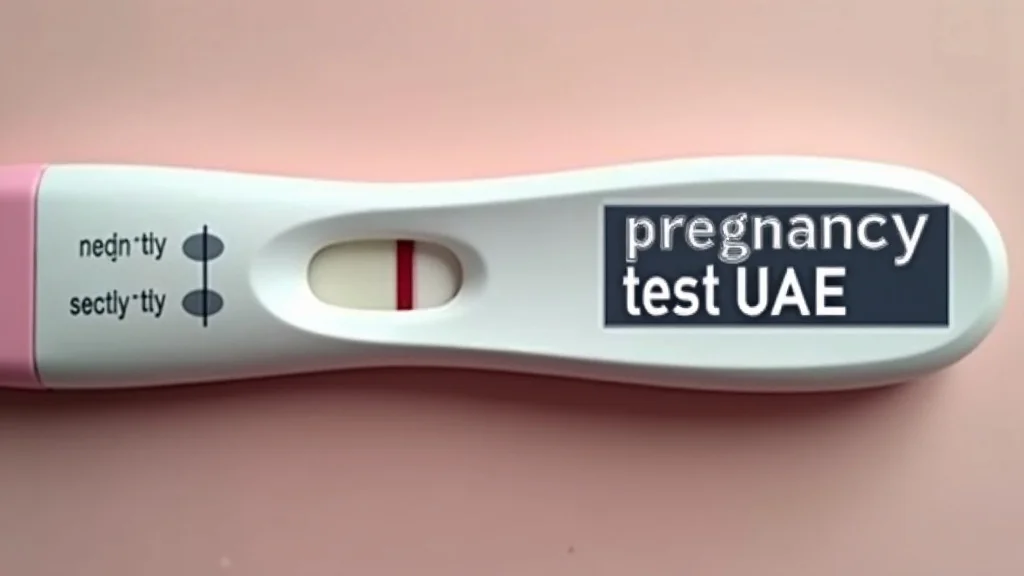
Finding out if you are pregnant can be a big moment. For people in the UAE, getting the right information about a pregnancy test UAE is super important. You might feel a bit unsure where to start, especially if this is your first time.
Don’t worry! This guide will make it easy. We will walk through everything step by step so you know exactly what to do.
Key Takeaways
- Learn how pregnancy tests work to detect hCG.
- Discover different types of pregnancy tests available in the UAE.
- Understand the best time to take a pregnancy test for accurate results.
- Find out where to buy pregnancy tests in the UAE and what to expect.
- Get tips for interpreting pregnancy test results correctly.
How Pregnancy Tests Work
Pregnancy tests are designed to detect a hormone called human chorionic gonadotropin, or hCG. This hormone is only produced by the body after a fertilized egg implants in the uterus. The amount of hCG increases rapidly in early pregnancy, making it a reliable indicator.
Home pregnancy tests, also known as urine tests, are the most common type. They use a chemical that reacts with hCG in your urine.
When the test strip comes into contact with urine containing hCG, a line or symbol appears, usually indicating a positive result. The sensitivity of different tests can vary. Some are designed to detect lower levels of hCG, meaning they can detect pregnancy a bit earlier.
It is always best to follow the specific instructions provided with the test kit you purchase, as these can differ.
Detecting hCG Hormone
The presence of hCG is the core principle behind all pregnancy tests. After conception, the placenta begins to develop and starts releasing hCG. This hormone is essential for maintaining the pregnancy.
Its levels typically double every 48 to 72 hours in the early stages of pregnancy.
Home pregnancy tests have a special absorbent tip. When you hold this tip in your urine stream or dip it into a collected sample, it soaks up the liquid. Inside the test, there are strips of paper treated with antibodies that bind to hCG molecules.
If hCG is present in the urine, it binds to these antibodies.
This binding triggers a chemical reaction that causes a colored line or a plus sign to appear in a designated window on the test. Most tests also have a control line that appears regardless of the result. This control line shows that the test is working correctly.
Understanding this basic mechanism helps demystify how these simple tests provide such significant information.
Types of Pregnancy Tests
In the UAE, you can find a few main types of pregnancy tests. The most popular are home urine tests. These are easy to find in pharmacies and supermarkets.
They come in various forms, like dip-stick tests, midstream tests, and digital tests. Midstream tests are very common; you simply hold the stick in your urine stream for a few seconds. Dip-stick tests require you to collect your urine in a cup first and then dip the stick into it.
Digital pregnancy tests are also available. These are often more expensive but can be simpler to read. Instead of lines, they show words like “Pregnant” or “Not Pregnant” on a digital screen.
Some even give an estimate of how many weeks pregnant you might be. For the most accurate confirmation, especially if your home test is positive or you have concerns, a blood test from a doctor is also an option. Blood tests can detect hCG earlier and in smaller amounts than urine tests.
The availability of these options in the UAE makes it convenient for individuals to choose the test that best suits their needs and preferences. Whether you prefer a quick result from a midstream test or the clear readout of a digital one, there is a reliable option available.
Home Urine Tests
Home urine tests are the most accessible and widely used method for detecting pregnancy. They work by detecting the presence of hCG in a person’s urine. These tests are designed for at-home use, offering privacy and convenience.
- Midstream Tests: These are perhaps the most common type. They have a stick with an absorbent tip. You hold this tip directly in your urine stream for a set number of seconds, as per the instructions. The urine is absorbed, and a result appears on the stick within a few minutes.
- Dip-Stick Tests: With dip-stick tests, you first collect your urine in a clean cup. Then, you dip the absorbent end of the test stick into the collected urine for a specified time. The result is then displayed on the stick.
- Digital Tests: These advanced tests display the result in a clear, digital format. Instead of interpreting lines, you will see words like “Pregnant,” “Not Pregnant,” or sometimes an indication of how many weeks along you are. They often have a simpler reading process.
The accuracy of these tests is very high, often over 99%, when used correctly and at the right time. They are generally affordable and can be purchased over-the-counter in pharmacies, supermarkets, and even some online stores across the UAE.
Blood Tests
While home urine tests are convenient, blood tests offer a more sensitive and sometimes earlier detection of pregnancy. They are performed by healthcare professionals in clinics or hospitals. Blood tests are useful in certain situations where urine tests might not be sensitive enough or when more precise information is needed.
There are two main types of blood tests for pregnancy: qualitative and quantitative. A qualitative blood test simply detects whether hCG is present in the blood. A quantitative blood test, also known as a beta-hCG test, measures the exact amount of hCG in the blood.
This can be helpful in tracking the progression of a pregnancy or investigating potential complications.
The results from blood tests can typically be obtained within a few hours to a day. They can detect pregnancy earlier than most urine tests, sometimes as early as 6 to 8 days after ovulation. For individuals experiencing irregular cycles or who need definitive results quickly, a blood test is a valuable option.
Healthcare providers in the UAE routinely offer these tests.
When to Take a Pregnancy Test
The timing of your pregnancy test is very important for getting an accurate result. The best time to take a pregnancy test is usually after you have missed your period. This is when the hCG hormone levels in your urine are typically high enough for most home tests to detect them.
Taking a test too early might lead to a false negative result, meaning the test says you are not pregnant when you actually are. This happens because hCG levels might not be high enough yet. For most standard home pregnancy tests, waiting until the first day of your missed period is recommended.
Some highly sensitive tests can detect pregnancy a few days before your missed period, but it is still more reliable to wait.
Taking the test first thing in the morning can also increase accuracy. Your first morning urine is usually more concentrated, meaning it has higher levels of hCG if you are pregnant. This can help the test detect the hormone more easily, especially in the early days of pregnancy.
Always read the instructions on your specific test kit for the most accurate guidance on timing.
First Day of Missed Period
The most common and reliable time to take a home pregnancy test is on the first day you expect your period to start, but it hasn’t arrived. By this point, if you are pregnant, your body will have produced a sufficient amount of hCG hormone for most over-the-counter tests to detect.
Missing your period is often the first sign that pregnancy might be occurring. Waiting until this milestone significantly increases the chances of getting a positive result if pregnancy has occurred. Testing too soon, before your period is due, can lead to what is called a false negative.
This is because the hCG levels might still be too low to be detected by the test’s chemical reagents.
For individuals with regular menstrual cycles, this is usually straightforward. If your cycles are irregular, it can be a bit trickier. In such cases, it is often advised to wait at least 14 days after unprotected intercourse to test.
This ensures that enough time has passed for implantation and subsequent hCG production.
Early Testing Options
While waiting for a missed period is the standard advice, some individuals may wish to test earlier. For those who are eager to know or are experiencing early pregnancy symptoms, “early detection” pregnancy tests are available. These tests are designed to be more sensitive and can detect lower levels of hCG.
These early detection tests can sometimes provide a positive result a few days before your expected period. However, it is crucial to understand that testing too early, even with a sensitive test, still carries a risk of a false negative. If you test early and get a negative result, but your period still doesn’t arrive, it is advisable to retest a few days later.
The increased sensitivity means that the test can pick up the smaller amounts of hCG present in your urine in the very early stages of pregnancy. This can provide peace of mind or allow for earlier prenatal care if the test is positive. Always follow the specific instructions for early detection tests, as their timing recommendations may differ from standard tests.
Where to Buy Pregnancy Tests in UAE
Finding pregnancy tests in the UAE is quite simple. They are readily available at most pharmacies, which are a primary source. You can walk into any community pharmacy or a larger chain pharmacy and find a variety of brands and types.
These pharmacies are staffed by pharmacists who can also offer advice if you have questions.
Supermarkets and hypermarkets also commonly stock pregnancy tests in their health and beauty sections. This makes them very convenient to pick up during your regular grocery shopping. Many online shopping platforms and e-commerce websites operating in the UAE also sell pregnancy tests.
This offers an extra layer of privacy and convenience for those who prefer to shop from home.
When purchasing, you will see different brands, each with slightly different price points and sensitivities. The prices can range from around 15 AED to 50 AED or more, depending on the brand and type of test, especially for digital ones. It’s often a good idea to look for tests that are approved by local health authorities to ensure quality and reliability.
Pharmacies
Pharmacies are the most common and reliable place to purchase pregnancy tests in the UAE. You can find them in virtually every neighborhood, from large chain pharmacies like Aster Pharmacy, Life Pharmacy, and Super-Pharm, to smaller independent ones.
The advantage of buying from a pharmacy is that you can often speak with a pharmacist if you have any questions about the different types of tests, how to use them, or when to test. They can guide you to the best option based on your needs. Pharmacists are trained professionals who can offer discreet advice and ensure you get a reputable product.
Pregnancy tests are usually displayed in the family planning or women’s health sections. You will find a variety of brands, including well-known international names and sometimes local options. The pricing at pharmacies is generally competitive, and they ensure that the products are stored correctly to maintain their efficacy.
Supermarkets and Hypermarkets
Many large supermarkets and hypermarkets across the UAE also carry pregnancy tests. Stores like Carrefour, Lulu Hypermarket, and Spinneys often have a dedicated section for health and personal care items where you can find these tests.
This offers a convenient alternative, allowing you to purchase a pregnancy test while you are doing your regular shopping. The selection might not be as extensive as in a dedicated pharmacy, but you will typically find several popular brands available. The pricing in supermarkets can sometimes be slightly lower than in pharmacies, making it a budget-friendly option.
It is important to check the expiry date of any product you purchase from a supermarket, just as you would with any other health-related item. The availability in these large retail outlets makes accessing pregnancy tests very straightforward for most residents.
Online Stores
For those seeking maximum privacy or convenience, online shopping is a popular choice for buying pregnancy tests in the UAE. Major e-commerce platforms like Amazon UAE, Noon, and others offer a wide selection of pregnancy tests from various brands.
When ordering online, you can often find competitive prices and a broader range of options than you might see in a single physical store. The products are typically delivered discreetly to your doorstep in plain packaging, ensuring privacy. Many online retailers also provide customer reviews, which can help you make an informed decision about which test to buy.
It is essential to ensure that you are purchasing from reputable sellers on these platforms to guarantee the authenticity and quality of the tests. Always check the product descriptions carefully and look for tests that clearly state their intended use and manufacturing standards. Delivery times can vary, so plan accordingly if you need a test urgently.
Interpreting Pregnancy Test Results
Once you have taken a pregnancy test, the next step is to read the results correctly. Every pregnancy test kit comes with specific instructions, and it is vital to follow them precisely. Different tests use different symbols or lines to indicate a positive or negative result.
Pay close attention to the control line, which shows that the test has worked properly.
A positive result typically means that hCG has been detected in your urine, indicating that you are likely pregnant. This is usually shown by two lines, a plus sign, or the word “Pregnant” appearing in the result window. A negative result means no hCG was detected, suggesting you are likely not pregnant.
This is often indicated by one line, a minus sign, or the word “Not Pregnant.”
It is also important to know about potential issues like evaporation lines. These can appear if you wait too long to read the test. An evaporation line is a faint, colorless line that shows up after the positive/negative result window has passed.
Always read the test within the time frame specified in the instructions (usually 3-10 minutes). If you are unsure about your result, or if you get a faint positive or a negative result but your period is still missed, it is best to retest or consult a doctor.
Positive Result
A positive pregnancy test result generally indicates that you are pregnant. The test detects the hormone hCG (human chorionic gonadotropin) in your urine. The presence of this hormone is a strong sign of pregnancy because it is produced by the developing placenta shortly after implantation.
Most urine pregnancy tests will show a positive result with either two lines, a plus sign, or the word “Pregnant” displayed. Even a very faint positive line is usually considered a positive result, especially if it appears within the recommended testing time and matches the appearance of the control line. If you see a positive result, it is highly recommended to schedule an appointment with a healthcare provider to confirm the pregnancy and begin prenatal care.
It is important to read the test within the timeframe specified in the instructions. Lines that appear after the designated reading time might be evaporation lines and could lead to confusion. Always refer to the test’s manual for specific interpretation guidelines.
Negative Result
A negative pregnancy test result means that the test did not detect hCG in your urine at a level high enough to indicate pregnancy. This usually means you are not pregnant, or you tested too early before hCG levels were sufficient.
A negative result is typically shown by one line, a minus sign, or the word “Not Pregnant.” If you receive a negative result and your period still hasn’t started, it is advisable to wait a few days and retest. Sometimes, hCG levels rise more slowly, or your cycle might be slightly off. Retesting, especially with first-morning urine, can provide a more accurate outcome.
If you continue to get negative results but your period remains absent, or if you have other concerns, it is best to consult a healthcare professional. There can be other reasons for a missed period, and a doctor can help determine the cause and provide appropriate guidance.
Faint Lines and Evaporation Lines
Interpreting faint lines on a pregnancy test can sometimes be confusing. A faint positive line, if it appears within the recommended time frame and has color, usually means the test has detected hCG. This could be in the very early stages of pregnancy when hCG levels are just starting to rise.
However, it is also important to be aware of evaporation lines. These are faint, colorless lines that can appear on the test window as the urine evaporates after the test has been sitting for too long. They can sometimes be mistaken for a positive result.
The key difference is that a true positive line, even if faint, will typically have color (pink, blue, etc., depending on the test).
To avoid confusion, always read the pregnancy test results within the time frame specified in the instructions (usually 3-10 minutes). If you are unsure about a faint line, wait a day or two and test again. Retesting with a new test kit, preferably with first-morning urine, can help clarify the result.
If you get a consistent faint positive or are still concerned, a doctor’s visit is the best way to get a definitive answer.
Common Myths Debunked
Myth 1: All pregnancy tests are the same
This is not true. While all pregnancy tests aim to detect hCG, they vary in sensitivity, brand, and how results are displayed. Some are more sensitive and can detect pregnancy earlier than others.
Digital tests offer clear word results, while traditional tests use lines. It is important to choose a test based on your needs and follow its specific instructions.
Myth 2: You can get accurate results anytime
Timing is crucial for pregnancy tests. For the most accurate results, it is best to test after you have missed your period. Testing too early can lead to a false negative because hCG levels might not be high enough yet for the test to detect.
First-morning urine is also often recommended as it is more concentrated.
Myth 3: A faint line means a negative result
A faint positive line usually indicates pregnancy. If the line appears within the time frame specified by the test instructions and has color, it means hCG has been detected. It might just mean pregnancy is in its very early stages.
If you see a faint line, it is best to retest in a day or two or see a doctor.
Myth 4: Pregnancy tests are only available in pharmacies
While pharmacies are a primary source, pregnancy tests are also widely available in supermarkets, hypermarkets, and online stores across the UAE. This makes them very accessible and convenient to purchase from various locations.
Frequently Asked Questions
Question: Can I use any brand of pregnancy test in the UAE?
Answer: Yes, you can use most common brands of home pregnancy tests in the UAE. They are widely available in pharmacies, supermarkets, and online. Ensure the test is from a reputable manufacturer and check the expiry date.
Question: How soon can I take a pregnancy test?
Answer: For the most accurate results, it is best to wait until you have missed your period. Some sensitive tests can detect pregnancy a few days before your missed period, but testing too early might give a false negative.
Question: What does a faint line on a pregnancy test mean?
Answer: A faint line that appears within the test’s recommended time frame and has color usually indicates a positive result, meaning hCG has been detected. It is recommended to retest in a day or two or consult a doctor for confirmation.
Question: Where can I buy pregnancy tests in Dubai?
Answer: You can buy pregnancy tests in Dubai at most pharmacies, large supermarkets and hypermarkets, and through various online shopping platforms.
Question: Are home pregnancy tests accurate in the UAE?
Answer: Yes, home pregnancy tests are highly accurate when used correctly and at the right time, often over 99%. Following the instructions carefully is key to getting a reliable result.
Wrap Up
Finding out if you are pregnant is a significant step. This guide has made using a pregnancy test UAE easy. You now know how tests work, where to get them, and how to read your results accurately.
Remember to test at the right time for the best outcome. If you are unsure, a quick retest or a visit to your doctor can provide the answers you need.
Leave a Reply