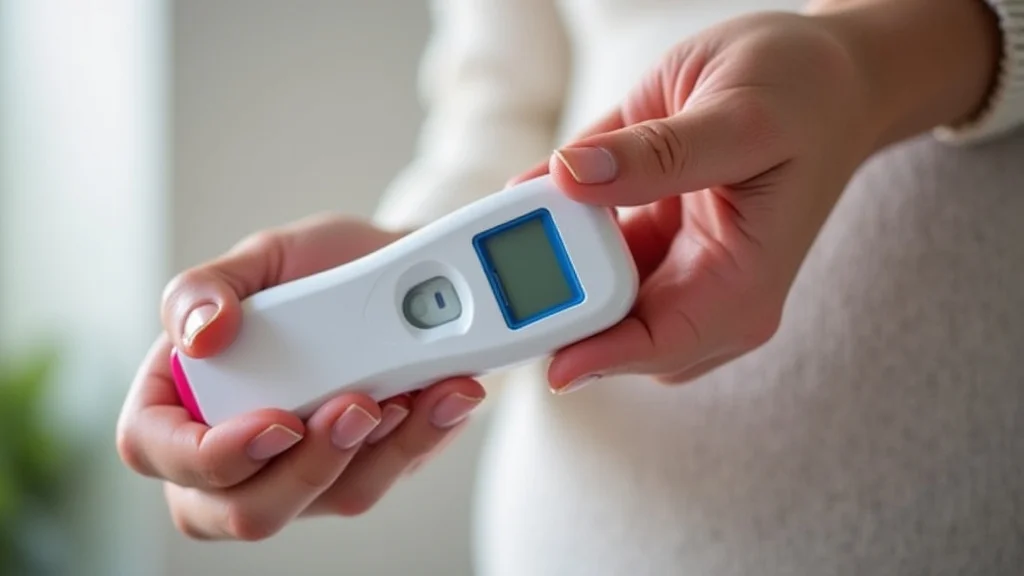
Many people find using a pregnancy test device a bit tricky the first time. It seems simple, but there are details that can feel confusing. This guide makes it super easy.
We will walk through every step so you know exactly what to do. Get ready for clear instructions and helpful tips.
Key Takeaways
- Learn how to choose the right pregnancy test device.
- Understand the different types of pregnancy test devices available.
- Follow simple steps for accurate results with your pregnancy test device.
- Discover when to take a pregnancy test device for the best outcome.
- Know what to do with your pregnancy test device results.
- Troubleshoot common issues with using a pregnancy test device.
Understanding Pregnancy Test Devices
A pregnancy test device is a tool used at home to check if a person is pregnant. It works by detecting a hormone called human chorionic gonadotropin (hCG) in the urine. This hormone is made shortly after a fertilized egg attaches to the uterus lining.
The level of hCG in the body goes up quickly in early pregnancy. The pregnancy test device is designed to find even small amounts of this hormone. This is why it can tell you if you are pregnant quite early.
It’s a private and quick way to get an answer. Many women rely on this simple device for initial confirmation.
How Pregnancy Test Devices Work
At its core, a pregnancy test device uses antibodies that react to hCG. When your urine, containing hCG, touches the test strip, a chemical reaction happens. This reaction causes a line, a plus sign, or digital words to appear.
This signals that hCG was detected. The sensitivity of a test device refers to how little hCG it can detect. Higher sensitivity means you can test earlier.
Some tests can detect pregnancy as early as 10 days after conception. Others are best used when you expect your period. Reading the instructions that come with your specific pregnancy test device is always important.
They will tell you how sensitive their test is and when it works best.
Types of Pregnancy Test Devices
There are a few main types of pregnancy test devices. Stick tests are very common. You hold the absorbent end in your urine stream for a few seconds.
Then you lay it flat and wait for the result. Midstream tests are similar but have a wider collection area. You hold this part in your urine.
Digital tests are also available. These show clear words like “Pregnant” or “Not Pregnant” on a screen. They are often easier to read.
Some advanced tests can even tell you how many weeks pregnant you might be. Choosing a type depends on your preference for ease of use and clarity of results. Always check the expiration date before buying or using any test.
Hormone Detection
The key to any pregnancy test device is its ability to detect hCG. This hormone is like a signal that pregnancy has started. After fertilization and implantation, your body begins producing hCG.
The amount of hCG doubles roughly every 48 to 72 hours in early pregnancy. This rapid increase is why pregnancy tests become more accurate the longer you wait to test. A very sensitive pregnancy test device can pick up on the lower levels of hCG present in the first few days after implantation.
This allows for testing before a missed period in some cases. Understanding this hormone is key to knowing when and how to use the test effectively.
Accuracy and Sensitivity
The accuracy of a pregnancy test device depends on several factors. The most important is the test’s sensitivity to hCG. A more sensitive test can detect lower levels of hCG, meaning it can give a positive result earlier.
Manufacturers often state the sensitivity in terms of milli-international units per milliliter (mIU/mL). A lower number indicates higher sensitivity. For example, a test with a 10 mIU/mL sensitivity is more sensitive than one with a 25 mIU/mL sensitivity.
Following the test instructions precisely is also vital for accuracy. Testing too early, not using enough urine, or diluting the urine can lead to inaccurate results. Even the time of day you test can matter, as hCG levels can be more concentrated in first morning urine.
When to Take a Pregnancy Test Device
Timing is really important for getting an accurate result from a pregnancy test device. The best time to test is after you have missed your period. This is usually about 14 days after you ovulated.
Testing too early might give a false negative result, meaning the test says you are not pregnant, but you actually are. This is because there might not be enough hCG in your urine yet for the test device to detect. If you get a negative result but still think you might be pregnant, wait a few days or a week and test again.
Some very sensitive tests can detect pregnancy up to four days before your missed period. However, testing on the day of your missed period or later generally gives the most reliable results.
Using your first morning urine is often recommended, especially for early testing. Your urine is most concentrated at this time, meaning it has the highest level of hCG if you are pregnant. This can help ensure you get an accurate reading even if hCG levels are still low.
If you test later in the day, try to limit how much you drink for a few hours before testing. This helps to concentrate your urine. Following the specific advice on your pregnancy test device’s packaging is always a good idea.
They will give you the most accurate guidance for their product.
Testing Before a Missed Period
Some pregnancy test devices are designed to be used before you miss your period. These are called early detection tests. They are much more sensitive to hCG, meaning they can detect lower amounts of the hormone.
You can often use these tests as early as four days before your expected period. While this can give you an answer sooner, it also increases the chance of a false negative. If you test early and get a negative result, it’s a good idea to retest a few days later, especially if your period still hasn’t arrived.
A false negative happens when the test says you are not pregnant, but you are. This is usually because hCG levels are not yet high enough to be detected by the pregnancy test device.
Testing After a Missed Period
Testing after you have missed your period is the most reliable way to get an accurate result from a pregnancy test device. By this time, if you are pregnant, your hCG levels should be high enough for most pregnancy tests to detect. This reduces the risk of a false negative.
If you test after a missed period and get a negative result, it’s still possible you are pregnant, but less likely. If your period does not start within a week of the negative test, you might want to test again. Some women’s cycles can be irregular, or they might have miscalculated when their period was due.
Retesting confirms the result or catches a very early pregnancy that was missed the first time.
How to Use a Pregnancy Test Device Step-by-Step
Using a pregnancy test device is straightforward. First, read the instructions that come with your specific test. Each brand can have slight differences.
Make sure the test is not expired. Gather your test, a clock or timer, and possibly a cup if you need to collect urine. When you are ready, unwrap the test.
If it’s a stick test, you can either hold the absorbent end directly in your urine stream for the time specified (usually 5-10 seconds). Or, you can collect your urine in a clean cup and dip the absorbent end into it for the recommended time. Be careful not to get urine on the result window.
After exposing the test to urine, lay it on a flat surface with the result window facing up.
Now, wait for the time indicated in the instructions. This is usually between 1 to 5 minutes. Do not read the result after the maximum time, as it could be incorrect.
Look at the result window. You will see lines or symbols that indicate the result. Usually, two lines mean pregnant, and one line means not pregnant.
Digital tests will show words. If you are unsure, refer back to the instructions. They will explain how to read your specific test.
Collecting Your Urine Sample
How you collect your urine is an important part of using the pregnancy test device correctly. For most home pregnancy tests, you will either pee directly on the absorbent tip of the test stick or collect your urine in a clean cup. If you are peeing directly on the stick, make sure to aim the absorbent tip into the urine stream and keep it there for the duration specified in the instructions, usually about 5 to 10 seconds.
It’s important to saturate the absorbent tip. If you are using a clean cup, make sure the cup is dry and clean. You will then dip the absorbent end of the test stick into the collected urine for the time recommended in the test’s instructions.
Regardless of the method, avoid over-saturating the test or getting urine on the result window. If the test instructions say to collect urine in a cup, do not collect it from the toilet bowl. Use a separate, clean container.
Some very sensitive tests might require a smaller amount of urine. Always follow the specific instructions provided with your pregnancy test device for the best and most accurate results.
Reading The Results
Reading the results of your pregnancy test device is the final step. Most tests will show a control line and a test line. The control line indicates that the test worked properly.
If the control line doesn’t appear, the test might be faulty, and you should use a new one. If the control line appears, then look at the test line. If the test line also appears, it usually means you are pregnant.
The intensity of the test line can sometimes indicate how much hCG is present. A darker test line generally means higher hCG levels. Digital tests are simpler.
They will display “Pregnant” or “Not Pregnant.” Some digital tests might also show “Weeks Estimator” which gives an estimate of how far along you might be.
It’s very important to read the results within the time frame specified in the instructions. Reading the test too early or too late can lead to misinterpretation. An evaporation line can sometimes appear after the test has dried for a while, which might look like a faint positive result but is actually negative.
Always refer to the instruction manual for a clear explanation of what your specific pregnancy test device’s results mean.
Interpreting Your Pregnancy Test Device Results
Once you have your result from the pregnancy test device, it’s time to understand what it means. A positive result, usually shown by two lines or a “Pregnant” message, indicates that hCG has been detected in your urine. This is a strong sign that you are pregnant.
It’s recommended to schedule an appointment with your doctor or a healthcare provider to confirm the pregnancy and begin prenatal care. They can perform further tests and provide guidance.
A negative result, typically one line or a “Not Pregnant” message, means hCG was not detected at a level the pregnancy test device could read. If you tested very early, you might have received a false negative. If your period is still late, consider retesting in a few days.
If you continue to get negative results but your period remains absent, it’s wise to consult with a doctor. There can be other reasons for a missed period. Always trust your instincts, but also rely on medical advice for definitive answers.
Positive Results
A positive result on a pregnancy test device is exciting news! This means the test has detected hCG in your urine, suggesting you are pregnant. Most tests show a positive result with two lines or a clear “Pregnant” word on a digital display.
It’s important to remember that home pregnancy tests are very accurate, but they are not 100% foolproof. However, a positive result is rarely wrong. The next step after a positive test is to contact your doctor or a healthcare provider.
They will confirm the pregnancy, usually with a blood test or an ultrasound, and discuss the next steps for your health and the health of your developing baby. They will also help you start your prenatal care journey.
Negative Results
A negative result on a pregnancy test device means that hCG was not detected in your urine at a level sufficient for the test to register as positive. This suggests you are likely not pregnant. However, there are a few situations where you might get a negative result even if you are pregnant.
This is called a false negative. It can happen if you test too early, before your body has produced enough hCG. It can also occur if your urine is very diluted, or if the test device is faulty or expired.
If you have a negative result but your period is still late, it’s a good idea to wait a few days and test again. If you continue to get negative results and your period doesn’t start, it is advisable to see a doctor to determine the cause of your missed period.
Indeterminate Results
Occasionally, you might get an indeterminate result from a pregnancy test device. This means the test does not clearly show a positive or negative result. It might look like a very faint line, a broken line, or an unclear symbol.
This can happen for a few reasons. Sometimes it’s due to user error, such as not following the instructions exactly or reading the test at the wrong time. It could also be that the hCG levels are at a very borderline amount that the test cannot definitively detect.
If you get an indeterminate result, it’s best to discard the test and try again with a new one, ideally using your first morning urine. If you continue to get unclear results, it is a good idea to consult with a healthcare professional for further testing and clarification.
Common Myths Debunked
Myth 1: You can get a false positive result easily
Many people worry about getting a false positive from a pregnancy test device. A false positive means the test says you are pregnant, but you are not. These are actually very rare.
They can sometimes happen if you are taking certain fertility medications that contain hCG, or if you have certain rare medical conditions. However, for most people, a positive result is accurate. The most common reason for thinking a result is wrong is misinterpreting an evaporation line as a positive.
Always follow instructions carefully.
Myth 2: Pregnancy tests are only accurate on the day of your missed period
While testing on the day of your missed period is generally most reliable, many pregnancy test devices are designed to detect pregnancy earlier. Highly sensitive tests can detect hCG up to four days before your expected period. The accuracy increases the closer you get to your missed period.
If you test early and get a negative result, it doesn’t necessarily mean you aren’t pregnant. It might just mean hCG levels were too low to detect yet. Retesting a few days later is often recommended if your period doesn’t arrive.
Myth 3: You must use your first morning urine for any test
Using your first morning urine is recommended for most pregnancy test devices, especially if you are testing early. This is because your urine is most concentrated in the morning, meaning it has the highest level of hCG. However, if you are testing after you have missed your period and your hCG levels are likely to be higher, you may be able to test accurately at other times of the day.
Some digital tests are also designed to be accurate regardless of the time of day. Always check the specific instructions for your pregnancy test device.
Myth 4: All pregnancy tests are the same
While most pregnancy test devices work on the same principle of detecting hCG, they do vary. They differ in sensitivity (how little hCG they can detect), how they display results (lines vs. digital words), and their ease of use.
Some tests are designed for early detection, while others are more standard. The way you use them can also differ slightly. It’s important to read the instructions for the specific brand and type of pregnancy test device you are using to ensure accuracy.
Frequently Asked Questions
Question: How early can I take a pregnancy test device?
Answer: You can often take a pregnancy test device as early as four days before your expected period, especially with early detection tests. However, testing on the day of your missed period or a few days after usually provides the most accurate results.
Question: What does a faint line on a pregnancy test device mean?
Answer: A faint line typically means that hCG was detected, but at a low level. This often indicates an early pregnancy. It’s best to retest in a few days or consult with a doctor to confirm.
Question: Can I get pregnant if my period is already late?
Answer: Yes, if your period is late and you are sexually active, you could be pregnant. Taking a pregnancy test device is the best way to check. If the test is negative but your period is still missing, see a doctor.
Question: What if the control line on my pregnancy test device doesn’t show up?
Answer: If the control line does not appear, the test is invalid. This means it did not work correctly. You will need to use a new pregnancy test device and try again.
Question: How long do I need to wait to get results from a pregnancy test device?
Answer: Most pregnancy test devices provide results within 1 to 5 minutes. It’s important to read the result within the timeframe specified in the instructions, as reading it too late can lead to inaccurate results.
Final Thoughts
Using a pregnancy test device is a simple way to find out if you are pregnant. You now know how they work, when to test, and how to read the results. Follow the steps carefully for the most accurate answer.
A pregnancy test device gives you important information quickly. If you have any doubts or need confirmation, always speak with a healthcare provider.
Leave a Reply