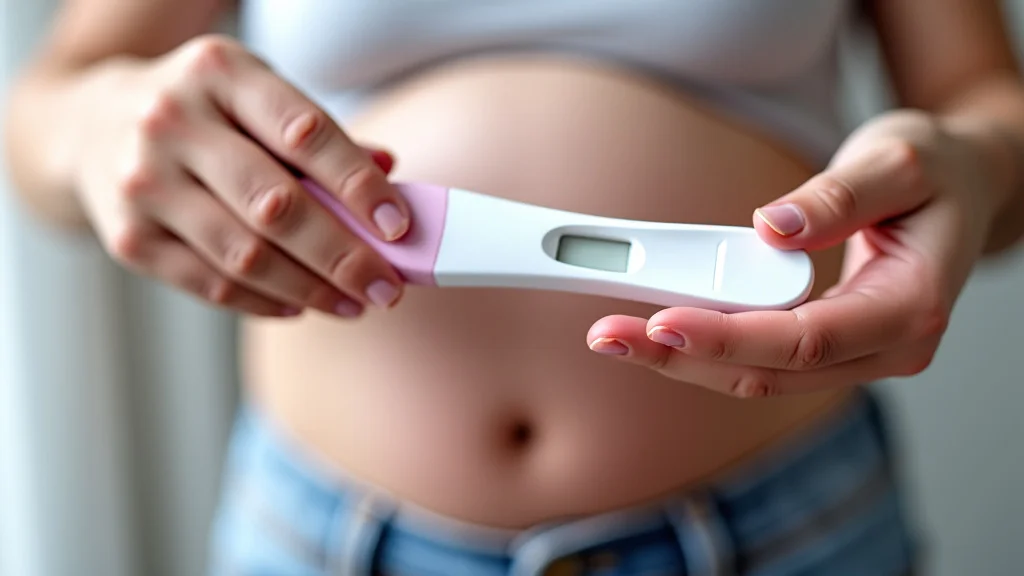
It’s a super exciting time when you’re wondering about a pregnancy test 3 weeks after your last period. Many people find this stage a little tricky because it’s right on the edge of when you can get a clear answer. You want to know now, but sometimes the test needs a tiny bit more time to be totally accurate.
Don’t worry, though! We’ll walk through everything you need to know in a really simple way. Get ready for a clear path to understanding your results.
Key Takeaways
- Understand when to take a pregnancy test for the best results.
- Learn how pregnancy tests work and what they detect.
- Know what a positive and negative result looks like.
- Discover what to do after you get your test results.
- Find out how to confirm your pregnancy with a doctor.
When Is The Best Time To Test
Knowing the right moment to take a pregnancy test can make all the difference. Testing too early might give you an answer you don’t expect, leading to confusion or disappointment. The key is timing.
We’ll explore the optimal window to ensure you get the most reliable result possible.
Understanding Ovulation and Implantation
To understand when to test, you need to know a little about how pregnancy starts. It begins with ovulation, when an egg is released from an ovary. If this egg is fertilized by sperm, it travels down to the uterus.
This journey takes several days. Implantation, when the fertilized egg attaches to the uterine wall, is the crucial step. This usually happens about 6 to 12 days after fertilization.
This implantation is when your body starts producing the pregnancy hormone, hCG (human chorionic gonadotropin).
The hCG hormone is what pregnancy tests look for. The amount of hCG in your body doubles roughly every 48 to 72 hours in the early stages of pregnancy. This steady increase is why waiting a little longer is often better.
A test taken too soon might not detect the low levels of hCG present, leading to a false negative result. This means the test says you’re not pregnant, but you actually are. It’s a common pitfall when you’re eager for an answer.
The Significance Of Your Last Menstrual Period
Your last menstrual period (LMP) is a very important reference point for estimating pregnancy. Doctors often use your LMP to calculate your due date and estimate how far along you are in your pregnancy. A standard menstrual cycle is about 28 days.
Ovulation typically occurs around day 14 of a 28-day cycle. Fertilization and implantation then follow. Therefore, testing around 14 days after ovulation, or about three weeks after your LMP, is when hCG levels become more detectable.
If your cycle is irregular, it can be harder to pinpoint ovulation and implantation. This is why basing your testing time on your LMP is a common starting point. However, if you know your ovulation date more precisely, you can time your test around that.
For most people, waiting until you’ve missed your period is the most recommended time. This usually aligns with about three weeks after conception or four to five weeks since your LMP.
Testing Around Three Weeks After Potential Conception
When people refer to a pregnancy test 3 weeks, they often mean three weeks after they believe they may have conceived. This can be about 5 weeks from their last menstrual period. At this point, if pregnancy has occurred, hCG levels are usually high enough for most home pregnancy tests to detect.
These tests measure the amount of hCG in your urine. The sensitivity of the test varies, but most standard tests are designed to detect hCG at levels of 25 mIU/mL or higher.
Some highly sensitive tests can detect hCG at lower levels, sometimes as early as 10 days after conception. However, to avoid false negatives, it’s generally advised to wait. Waiting until you’ve missed your period is the safest bet.
This usually means waiting about 14 days after ovulation. If you’re testing exactly three weeks after you think you conceived, and if conception happened shortly after ovulation, you might be around 17-18 days past ovulation. This is often a good time to get a reliable result.
How Pregnancy Tests Work
Pregnancy tests, whether the ones you buy at the store or a lab test, all rely on detecting a specific hormone. This hormone is only produced when a woman is pregnant. Knowing how this hormone works and how the tests find it can help you understand your results better.
The Role Of Human Chorionic Gonadotropin hCG
Human Chorionic Gonadotropin, or hCG, is the key hormone that pregnancy tests look for. It’s produced by cells that will eventually form the placenta shortly after implantation. Think of it as your body’s signal that a pregnancy has begun.
The levels of hCG rise rapidly in the early weeks of pregnancy, doubling approximately every 48 to 72 hours.
This rapid increase is why pregnancy tests become more accurate as time goes on. When you take a home pregnancy test, it contains antibodies that react with hCG. If hCG is present in your urine, it will bind to these antibodies.
This binding triggers a chemical reaction that causes the test to show a positive result, usually a line, plus sign, or a digital reading.
Types Of Pregnancy Tests
There are two main types of pregnancy tests: urine tests and blood tests. Urine tests are the most common and what most people use at home. They are readily available at pharmacies and supermarkets.
These tests are easy to use and provide results within minutes.
Blood tests, on the other hand, are performed in a doctor’s office or a lab. They can detect pregnancy earlier and provide more precise information about the amount of hCG present. There are two kinds of blood tests: qualitative and quantitative.
A qualitative test simply tells you if hCG is present, similar to a urine test. A quantitative test measures the exact amount of hCG in your blood, which can be helpful in certain situations, like monitoring early pregnancy or diagnosing potential problems.
Home Pregnancy Tests
Home pregnancy tests are designed for convenience and privacy. They work by detecting hCG in your urine. You typically urinate directly onto the absorbent tip of the test stick or dip the tip into a cup of collected urine.
The test then takes a few minutes to develop. Results are usually displayed as lines, symbols, or words on a digital screen.
These tests vary in sensitivity. Some are “early detection” tests, meaning they can detect lower levels of hCG. These might give you a result a few days before your missed period.
However, for the most accurate result, it’s still best to wait until you’ve missed your period. Testing at pregnancy test 3 weeks after potential conception, which is often around 5 weeks from your LMP, usually provides a reliable outcome with most standard home tests.
Laboratory Pregnancy Tests
Laboratory pregnancy tests, usually blood tests, offer greater accuracy and can detect pregnancy sooner than home urine tests. There are two main types of blood tests: qualitative and quantitative.
A qualitative hCG blood test checks if hCG is present in your blood. It can detect pregnancy as early as 6 to 8 days after ovulation. A quantitative hCG blood test, also known as a beta hCG test, measures the exact amount of hCG in your blood.
This test is very precise and can confirm pregnancy, help date the pregnancy, and monitor its progress. It’s often used by healthcare providers to get a clear confirmation early on.
Interpreting Your Test Results
Reading your pregnancy test results can be a moment of anticipation. It’s important to follow the instructions on your test kit carefully to get an accurate reading. Most tests will show a positive result with a line, a plus sign, or a specific word like “Pregnant.” A negative result usually appears as a different line, a minus sign, or the word “Not Pregnant.”
Sometimes, you might see a very faint positive line. This usually still means you are pregnant. The faintness can be due to low hCG levels, especially if you tested very early.
If you see this faint line, it’s a good idea to retest in a day or two. If the line gets darker, it’s a strong sign of pregnancy. Always contact your doctor to confirm any positive result.
Understanding Your Pregnancy Test 3 Weeks Results
When you take a pregnancy test around the three-week mark of potential conception, you’re often at a point where the results are becoming quite clear. This period is exciting because you’re moving from a “maybe” to a more definite answer. Let’s explore what positive and negative results mean at this stage.
What A Positive Result Means
A positive pregnancy test result, whether it’s a faint line or a clear digital “Pregnant” message, indicates that the pregnancy hormone hCG has been detected in your urine. This is the strongest indicator that you are likely pregnant. Congratulations!
At three weeks after potential conception (which is around five weeks from your last menstrual period), hCG levels are typically well above the detection threshold for most home pregnancy tests.
This means that if you get a positive result at this stage, it is highly likely to be accurate. However, it’s always recommended to schedule an appointment with your doctor. They will likely perform their own tests, perhaps a blood test, and an ultrasound to confirm the pregnancy, estimate your due date, and ensure everything is progressing as it should.
This is the start of a wonderful new chapter.
What A Negative Result Means
A negative pregnancy test result means that hCG was not detected in your urine at the time of the test. If you tested at the right time – meaning after you missed your period and at least three weeks after potential conception – a negative result is usually reliable. It suggests that you are not pregnant.
However, there are a few reasons why you might get a negative result even if you are pregnant. One common reason is testing too early. If you tested before your hCG levels were high enough, you might have received a false negative.
If your period is still delayed and you suspect you might be pregnant, it’s best to wait a few more days and test again. Sometimes, certain medications containing hCG can also affect results, though this is rare.
Dealing With An Indeterminate Or Faint Result
Occasionally, a pregnancy test might show an unclear result. This could be a very faint line or a situation where the test doesn’t seem to work correctly. A faint positive line usually indicates pregnancy, but with lower hCG levels.
This often happens if you test very early.
If you get a faint line, don’t panic. The best course of action is to retest in 24 to 48 hours. If you are pregnant, your hCG levels should increase, and the line should become darker and more distinct on subsequent tests.
If the test shows no lines or an error message, it might be a faulty test. In such cases, it’s best to try a new test from a different brand or consult your doctor.
Confirming Pregnancy With A Doctor
While home pregnancy tests are quite accurate, they are just the first step. A visit to your doctor is essential to confirm the pregnancy and begin prenatal care. Your doctor has access to more advanced tests and can provide guidance for a healthy pregnancy.
The Role Of Your Healthcare Provider
Your doctor or healthcare provider plays a vital role in confirming your pregnancy and ensuring your well-being. They will review your medical history and discuss any symptoms you may be experiencing. This conversation helps them understand your individual health situation.
They will likely perform a physical examination and may order a blood test to confirm the presence of hCG. Blood tests are more sensitive than urine tests and can detect pregnancy earlier. This confirmation is the official start of your prenatal journey.
It’s a crucial step for both you and the developing baby.
Blood Tests For Confirmation
As mentioned earlier, blood tests are a highly accurate way to confirm pregnancy. A qualitative hCG blood test can detect pregnancy even before a missed period, typically about 7 to 10 days after ovulation. This offers very early confirmation.
A quantitative hCG blood test measures the precise amount of hCG in your blood. This measurement can help your doctor estimate how far along the pregnancy is. For instance, typical hCG levels at around 5 weeks from LMP (which is around 3 weeks after conception) might range from 18 to 7,340 mIU/mL.
Your doctor will interpret these numbers in the context of your pregnancy. They use this data to monitor the pregnancy’s progress and identify potential issues early on.
Schedule Your First Prenatal Appointment
Once your pregnancy is confirmed, the next important step is scheduling your first prenatal appointment. This appointment is usually scheduled a few weeks after you’ve missed your period, often around 8 to 10 weeks of pregnancy. However, your doctor may recommend an earlier visit if you have a high-risk pregnancy or specific concerns.
During this first appointment, your doctor will perform a thorough check-up. This includes reviewing your health history, possibly a pelvic exam, and ordering initial lab tests. These tests might include blood work for your blood type, Rh factor, and screening for certain infections.
They will also discuss essential aspects of prenatal care, such as nutrition, exercise, and avoiding harmful substances. This is also your opportunity to ask any questions you might have.
What To Expect At Your First Appointment
Your first prenatal visit is comprehensive and aims to establish a baseline for your health and the pregnancy. Your doctor will likely ask about your menstrual cycle, any previous pregnancies, and your family’s medical history. They will measure your vital signs, including blood pressure, weight, and height.
A pelvic exam might be performed to check your reproductive organs. They may also order an ultrasound early in the pregnancy to confirm the presence of a gestational sac, check for a heartbeat, and estimate the gestational age. You’ll receive guidance on vitamins, especially folic acid, which is critical for preventing neural tube defects.
This appointment sets the stage for a healthy pregnancy and a happy, healthy baby.
Common Myths Debunked
There are many old wives’ tales and myths about pregnancy and testing. Let’s clear up some of the most common misconceptions.
Myth 1: You Can Feel If You’re Pregnant
Some people believe you can intuitively “feel” pregnant very early on, even before a test can detect it. While some women experience early symptoms like fatigue, nausea, or breast tenderness, these symptoms are not exclusive to pregnancy. They can also be caused by hormonal fluctuations, stress, or other bodily changes.
Relying solely on feelings can be misleading. Scientific detection through hormone levels is the most reliable way to know.
Myth 2: Testing With Your First Morning Urine Is Always Necessary
While first-morning urine is often recommended because it’s more concentrated and has higher hCG levels, it’s not always strictly necessary, especially if you are testing a few days after a missed period or at the three-week post-conception mark. By this time, hCG levels are often high enough that you can get an accurate result at any time of day. However, for early detection, first-morning urine is usually best to maximize the chances of detecting lower hCG concentrations.
Myth 3: A Very Faint Line Means It’s Not A Real Pregnancy
A faint positive line on a home pregnancy test is usually a sign of pregnancy, especially if you tested a bit early. It simply means that the hCG level detected is lower. This can happen if you are in the very early stages of pregnancy.
It’s always a good idea to retest in a day or two. If the line becomes darker, it strongly suggests pregnancy. If you are concerned, a blood test from your doctor will provide a definitive answer.
Frequently Asked Questions
Question: How accurate are home pregnancy tests at 3 weeks pregnant
Answer: Home pregnancy tests are generally very accurate when used correctly, especially around 3 weeks after potential conception (about 5 weeks from your last menstrual period). If you’ve missed your period, the accuracy is very high. Testing too early, before hCG levels are high enough, is the main cause of inaccurate negative results.
Question: Can I take a pregnancy test if I am on birth control
Answer: Yes, you can take a pregnancy test if you are on birth control. Birth control methods are designed to prevent pregnancy, but if you suspect you might be pregnant, a test will still accurately detect the hCG hormone if conception has occurred.
Question: What should I do if my pregnancy test is positive
Answer: If your pregnancy test is positive, the first and most important step is to contact your healthcare provider or doctor to schedule your first prenatal appointment. They will confirm the pregnancy and discuss the next steps for your care.
Question: Can I drink fluids before taking a pregnancy test
Answer: While you can drink fluids, it’s generally advised not to drink a large amount of liquid right before taking a pregnancy test, especially if you are testing early. Excessive fluid intake can dilute your urine, potentially lowering hCG concentration and affecting the test’s accuracy. Testing with a less diluted urine sample, like first-morning urine, is usually best.
Question: How long should I wait to take another pregnancy test if the first was negative
Answer: If your first pregnancy test was negative but you still suspect you are pregnant, wait at least 48 to 72 hours before taking another test. This waiting period allows your hCG levels to rise if you are indeed pregnant, increasing the chances of a more accurate result on the next test.
Wrap Up
Knowing when to test for pregnancy at 3 weeks after conception is key. You are likely to get a reliable result if you’ve missed your period. Home tests detect hCG, and a positive result is a strong sign.
Always confirm with your doctor. Your healthcare provider will guide you through this exciting time. Enjoy this new beginning!
Leave a Reply