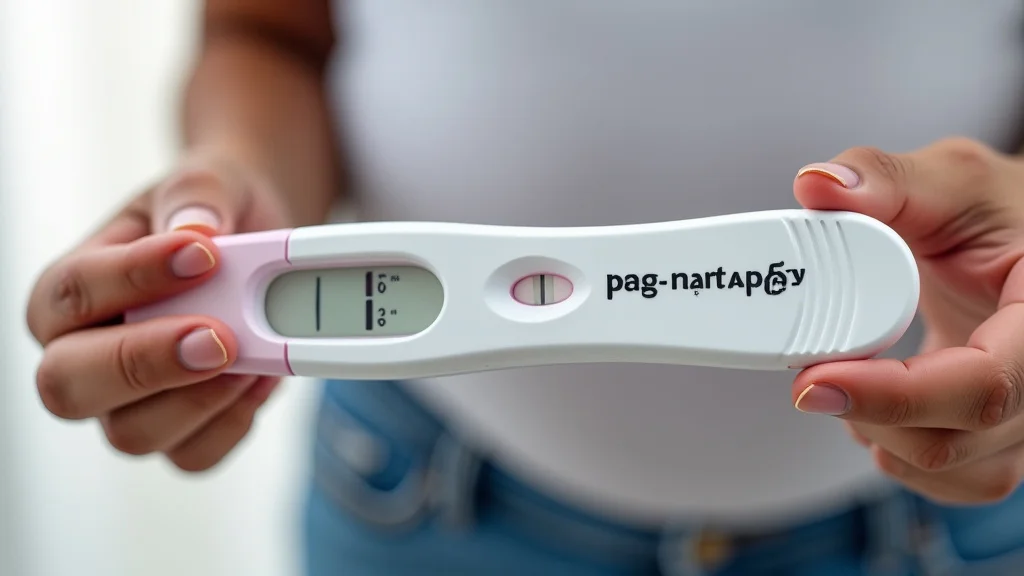
Figuring out how pregnancy tests work can feel a bit tricky at first. Many people wonder about the science behind those little lines or plus signs. It’s a common question for anyone who’s taken a test or is thinking about it.
But don’t worry! This guide will break down how to pregnancy tests work in easy steps. We’ll make it super clear so you know exactly what’s happening inside that little stick.
Get ready to learn the simple science!
Key Takeaways
- Pregnancy tests detect a hormone called hCG in your urine.
- hCG is only produced when a fertilized egg implants in the uterus.
- Test kits contain antibodies that react with hCG to show a result.
- Different brands may have slight variations in their testing mechanisms.
- Proper timing and following instructions are key for accurate results.
Understanding Pregnancy Test Basics
Pregnancy tests are amazing little tools that help determine if someone is pregnant. They all work by looking for a specific hormone in the body. This hormone is a signal that pregnancy has begun.
Without this hormone, a test will show a negative result. The tests are designed to be sensitive, meaning they can detect even small amounts of this hormone. This allows for early detection, often before a missed period.
The hormone pregnancy tests look for is called human chorionic gonadotropin, or hCG. This hormone is produced shortly after a fertilized egg attaches to the lining of the uterus. It’s often called the “pregnancy hormone.” The amount of hCG in a person’s body increases rapidly in the early weeks of pregnancy.
This rise is what the tests are designed to measure.
The Role of hCG
Human chorionic gonadotropin (hCG) is a hormone that your body starts making after a fertilized egg attaches to the uterine wall. This attachment usually happens about six to twelve days after conception. Once hCG is produced, it enters your bloodstream and your urine.
This makes urine a perfect place for pregnancy tests to detect it.
The levels of hCG double approximately every 48 to 72 hours in early pregnancy. This rapid increase is why pregnancy tests become more accurate the longer you wait after conception. Some early detection tests can pick up hCG as early as ten days after conception, but most are most accurate after a missed period.
A small amount of hCG can also be present in the body due to certain medical conditions or tumors, but this is rare. For most people, detecting hCG in urine is a clear indicator of pregnancy. The test kits are specifically designed to differentiate this pregnancy-related hCG from other substances.
How Home Pregnancy Tests Work
Home pregnancy tests use a chemical reaction to detect hCG. Inside the test, there are special antibodies. These antibodies are designed to bind to the hCG hormone if it’s present in your urine.
The test also contains a color indicator. When the antibodies bind to hCG, they trigger a reaction that makes a line or a plus sign appear on the test window.
Think of it like a lock and key. The hCG is the key, and the antibodies in the test are the lock. If the key (hCG) is present, it fits into the lock (antibodies), and this action causes a change – the appearance of the result.
If there’s no hCG, the key isn’t there, and the lock doesn’t trigger the change. This simple chemical interaction is the core of how these tests work.
The instructions that come with the test are very important. They tell you how to collect your urine sample and how long to wait to read the results. Reading the test too early or too late can lead to inaccurate results.
This is because the chemical reaction needs a specific amount of time to complete.
Types of Pregnancy Tests
There are two main types of pregnancy tests: those you can buy at home and those done by a doctor. Both types detect hCG, but they do it in slightly different ways and with different levels of sensitivity. Home tests are convenient and can be taken in private.
Doctor’s tests are usually more sensitive and can provide confirmation.
Home pregnancy tests are widely available at drugstores and supermarkets. They are designed for easy use by individuals at home. Doctor’s tests are performed in a clinic or hospital setting and are often more accurate, especially in the very early stages of pregnancy.
Urine Tests
The most common type of pregnancy test is a urine test. These are the ones you buy in a box from a store. You collect a sample of your urine, usually by peeing on a stick or dipping the stick into a cup of urine.
The test then analyzes this sample for the presence of hCG.
Urine tests work through a process called immunoassay. This means they use antibodies to detect the hCG hormone. The test strip inside the device contains a special paper that has antibodies on it.
When urine flows over this paper, if hCG is present, it binds to the antibodies. This binding then causes a color change, which appears as a line or symbol on the test window.
There are a few different formats for urine tests. Some are simple sticks you pee on directly. Others come with a small cup, and you collect urine in the cup before dipping the test strip.
Digital tests are also available, which show a word like “Pregnant” or “Not Pregnant” instead of lines.
Blood Tests
Blood pregnancy tests are performed by a healthcare professional in a clinic or hospital. They are generally more sensitive than urine tests and can detect pregnancy earlier. There are two main types of blood tests: qualitative and quantitative.
A qualitative blood test checks for the presence of hCG in the blood. It will tell you if hCG is there or not, similar to a urine test. A quantitative blood test, also known as a beta hCG test, measures the exact amount of hCG in your blood.
This can be very useful for tracking the progress of a pregnancy or diagnosing certain conditions.
Blood tests can detect hCG about six to eight days after ovulation. This is earlier than most urine tests. They are often used when a doctor needs to confirm a pregnancy or monitor a high-risk pregnancy.
The Science Behind the Result
The magic behind pregnancy tests lies in their ability to detect hCG. This hormone acts as a signal that your body is pregnant. The tests are carefully designed with specific chemicals that react to hCG.
This reaction is what produces the visible result you see on the test.
Understanding this science helps you trust the results you get. It’s not magic; it’s chemistry. When you follow the instructions, you are allowing this chemical reaction to happen correctly.
This ensures the most accurate outcome.
Antibodies and hCG Interaction
Pregnancy test strips contain lines of antibodies. One line is the control line, which shows the test is working correctly. The other line, or symbol, is the test line, which appears if hCG is present.
These antibodies are proteins that can bind to specific molecules, in this case, hCG.
When you urinate on the test, the urine travels up the strip. If hCG molecules are in the urine, they attach themselves to the antibodies on the test line. This attachment triggers a chemical reaction, often involving dyes.
The dyes are released, making the test line visible. The control line also has antibodies, but it’s designed to react differently to ensure the test has enough urine and is functioning properly.
The concentration of hCG needed to trigger a positive result varies between tests. More sensitive tests can detect lower levels of hCG, allowing for earlier detection. Less sensitive tests require a higher concentration, meaning you might need to wait longer for a positive result.
Interpreting the Results
Reading a pregnancy test result is usually straightforward, but it’s essential to follow the instructions for your specific test. Most tests have a control line that appears first, indicating that the test is working. If a second line or symbol appears, it typically means hCG has been detected, and the result is positive.
A positive result is usually indicated by two lines, a plus sign, or the word “Pregnant” on digital tests. A negative result is usually one line, a minus sign, or “Not Pregnant.” It’s important to note that a faint positive line still means positive. The intensity of the line can depend on how much hCG is present and how diluted your urine is.
Always check the expiration date on the test. An expired test may not work correctly and could give a false result. Also, be sure to read the test within the specified time frame.
Reading it too early might show a false negative, and reading it too late could show an evaporation line, which looks like a faint positive but isn’t.
Factors Affecting Accuracy
While pregnancy tests are quite accurate, several factors can influence their results. Understanding these factors can help you get the most reliable answer. The most common reasons for inaccurate results are testing too early or not following the instructions correctly.
Using the test at the wrong time or misinterpreting the results are also common issues. Even how you store the test can matter. Being aware of these potential pitfalls can make a big difference.
Timing of the Test
The timing of when you take a pregnancy test is one of the most critical factors for accuracy. Home pregnancy tests detect hCG, and the levels of this hormone need to reach a certain point to be detectable. This is why testing too early is a common cause of false negatives.
Most home pregnancy tests are most accurate when taken on the day of your missed period or a few days after. Some early detection tests claim to detect pregnancy up to five days before a missed period. However, the hCG levels may still be too low for these tests to pick up reliably that early.
Waiting until you miss your period gives your body enough time to produce sufficient hCG for a more accurate result.
It’s also recommended to use first-morning urine for testing. First-morning urine is typically more concentrated, meaning it has a higher level of hCG if you are pregnant. This increases the chances of getting a positive result if pregnancy has occurred.
Example Scenario:
- Sarah thinks she might be pregnant and takes a test four days before her period is due. The test is negative.
- A week later, after her period is a few days late, Sarah takes another test. This test shows a clear positive result.
This scenario highlights how crucial timing is for accurate results.
Instruction Adherence
Following the instructions that come with your pregnancy test is vital for getting an accurate result. These instructions are specific to the brand and type of test you are using. They will tell you how to collect the urine sample, how long to hold the test in the urine stream, and how long to wait before reading the result.
For instance, some tests require you to pee on the absorbent tip for a certain number of seconds, while others require dipping the test into a collected urine sample. Not doing this correctly can lead to the test not functioning properly.
Similarly, reading the test outside the specified time frame can cause confusion. If you read it too early, the chemical reaction may not have fully completed, leading to a false negative. If you read it too late, an evaporation line might appear, which can look like a faint positive but is not a true positive result.
Always wait for the recommended time and then read the test promptly.
Storage and Handling
Proper storage and handling of pregnancy tests are also important for their accuracy. Pregnancy tests are sensitive medical devices, and they can be affected by environmental factors. They should be stored in a cool, dry place, away from direct sunlight and moisture.
Extreme temperatures can degrade the chemicals within the test, making them unreliable. For example, leaving a test in a hot car or a very cold bathroom could damage it. Always check the storage instructions on the packaging.
When you handle the test, try to avoid touching the absorbent tip or the test window. This helps prevent contamination. If the test appears damaged or has been stored improperly, it’s best to get a new one to ensure accurate results.
Common Myths Debunked
Myth 1: A faint line means it’s not a positive result
The reality is that a faint positive line on a pregnancy test still indicates a positive result. The intensity of the line depends on the concentration of hCG in your urine. In early pregnancy, hCG levels can be low, resulting in a faint line.
As pregnancy progresses, hCG levels rise, and the line becomes darker. If you see any second line, no matter how faint, it’s a good idea to confirm with your doctor.
Myth 2: You can only take a pregnancy test with first-morning urine
While first-morning urine is often recommended because it’s more concentrated and can lead to earlier detection, it’s not the only time you can get an accurate result. As hCG levels rise throughout the day, you can get a positive result at any time of day, especially once you’ve missed your period and your hCG levels are higher. However, for early testing or to maximize accuracy, first-morning urine is generally best.
Myth 3: All pregnancy tests work exactly the same way
While the fundamental principle of detecting hCG is the same for all home pregnancy tests, there can be differences in their sensitivity levels and the technology used. Some tests are designed to detect lower levels of hCG, making them “early detection” tests. Others may have different types of indicators or digital displays.
Always read the specific instructions for the test you are using.
Myth 4: A negative test always means you’re not pregnant
A negative pregnancy test typically means hCG levels are not high enough to be detected. This can happen if you test too early, before your hCG levels have risen sufficiently. It could also be due to diluted urine or a faulty test.
If you have missed your period and get a negative result, it’s often recommended to retest in a few days or consult a healthcare provider.
Frequently Asked Questions
Question: How soon can I take a pregnancy test?
Answer: You can take a pregnancy test as early as 10 days after conception. However, most tests are most accurate when taken on or after the day of your missed period.
Question: What does a positive pregnancy test look like?
Answer: A positive pregnancy test usually shows two lines, a plus sign, or the word “Pregnant” on a digital test. Even a faint second line typically indicates a positive result.
Question: Can I get a false negative result?
Answer: Yes, it’s possible to get a false negative if you test too early, use diluted urine, or don’t follow the instructions correctly. Retesting in a few days might give a different result.
Question: Can I get a false positive result?
Answer: False positive results are rare but can happen due to certain medications, medical conditions, or an evaporation line appearing on the test after the reading window.
Question: How accurate are home pregnancy tests?
Answer: When used correctly and at the right time, home pregnancy tests are over 99% accurate. Following the instructions carefully is key to achieving this accuracy.
Summary
Pregnancy tests work by detecting the hormone hCG in your urine. This hormone is produced shortly after a fertilized egg implants. By understanding how hCG levels rise and how the antibodies in the test react, you can feel confident in your results.
Always follow the instructions carefully and test at the right time for the most accurate answer.
Leave a Reply