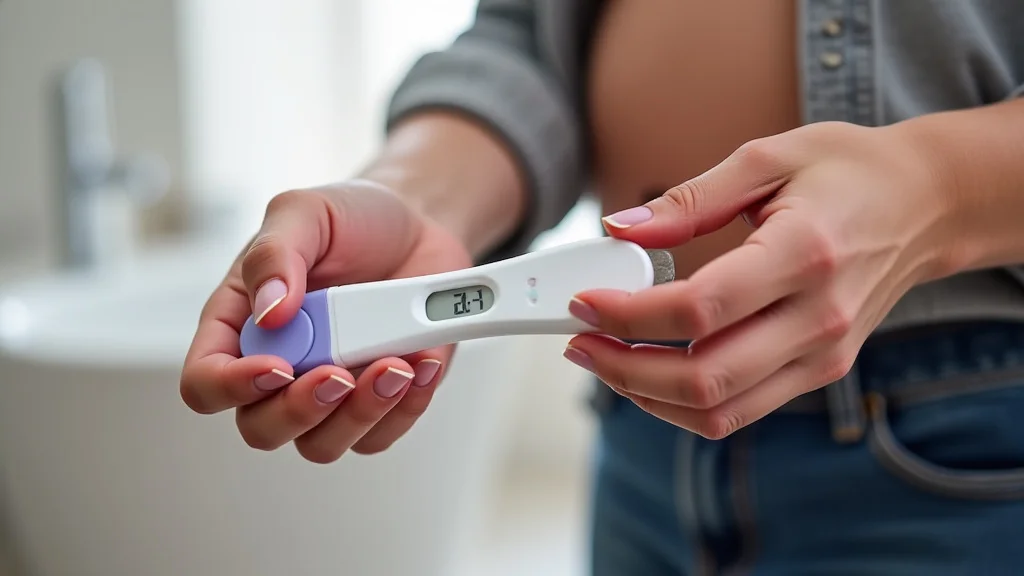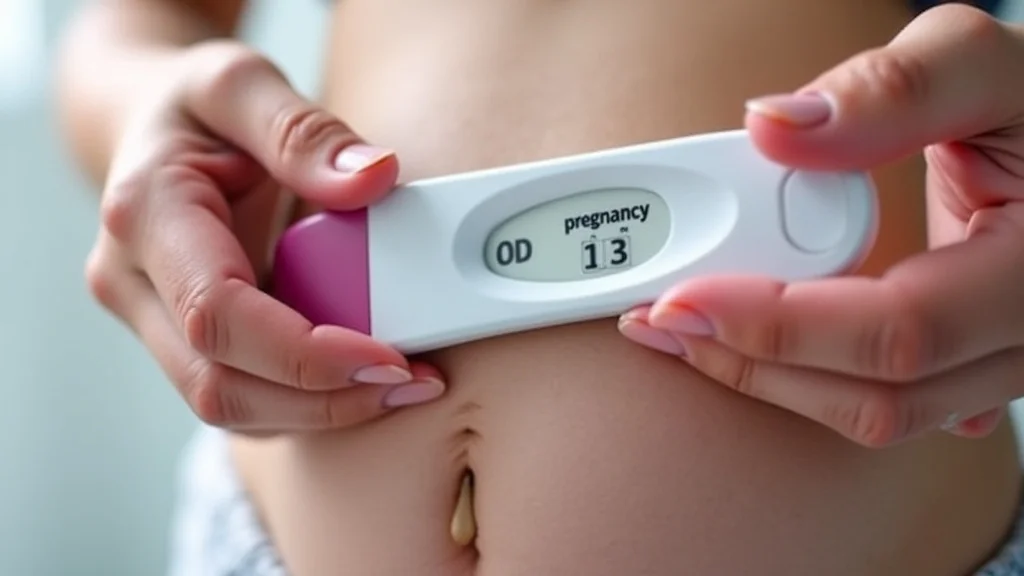
When you’re trying to get pregnant, those early days can feel like forever. You might be wondering if you can take a pregnancy test really early, like at 6 days past ovulation, or 6dpo. It’s a common question for many beginners because waiting is hard!
You want to know as soon as possible. It’s okay to feel this way. We’re here to make it simple and show you exactly what to think about when considering a pregnancy test 6dpo.
Let’s explore what this early testing means and how to approach it.
Key Takeaways
- You can sometimes get an accurate result with a pregnancy test at 6dpo.
- Early testing depends on the sensitivity of the test and when implantation occurs.
- Implantation typically happens between 6-12 days after ovulation.
- False negatives are common when testing too early.
- Understanding hormone levels is key to accurate early results.
- Patience often leads to more reliable outcomes.
Pregnancy Test 6dpo Understanding Early Detection
Taking a pregnancy test early can be exciting but also a bit confusing. The main thing to know about a pregnancy test 6dpo is how it works. Pregnancy tests look for a hormone called human chorionic gonadotropin (hCG).
This hormone is made by the body after a fertilized egg implants in the uterus. The amount of hCG in your body increases quickly after implantation. However, at 6 days past ovulation, the level of hCG might still be very low, sometimes too low for a standard test to detect.
For a pregnancy test to show a positive result, there needs to be a certain amount of hCG present. This amount is called the “detection threshold.” Different pregnancy tests have different detection thresholds. Highly sensitive tests can detect lower levels of hCG than standard tests.
This means a sensitive test might give you a positive result at 6dpo if implantation has already happened and hCG levels have started to rise. However, it’s still quite early in the process, and many factors can affect the outcome.
How Early Can You Detect hCG
Human chorionic gonadotropin, or hCG, is the pregnancy hormone that home pregnancy tests detect. After an egg is fertilized and implants in the uterine wall, the body begins to produce hCG. This process of implantation usually happens about 6 to 12 days after ovulation.
So, at 6 days past ovulation (6dpo), it’s possible that implantation has just begun or is about to happen. If implantation has occurred and the body is starting to produce hCG, a very sensitive test might be able to pick up a trace amount.
However, the amount of hCG produced varies from person to person and even from pregnancy to pregnancy. Some women might produce hCG quickly, while others take a bit longer. This means that even if implantation has occurred by 6dpo, the hCG levels might be below the detection limit of most pregnancy tests.
This is why testing at 6dpo, while tempting, often leads to uncertain results or negative results that could later turn positive.
The concentration of hCG in the blood typically doubles every 48 to 72 hours in early pregnancy. This rapid increase is what makes pregnancy tests reliable in the days and weeks following implantation. A standard urine pregnancy test can usually detect hCG about 12 to 14 days after ovulation, or around the time of your missed period.
At 6dpo, you are still several days away from when most tests become reliably accurate.
Factors Influencing Early Pregnancy Test Results
Several factors can influence whether a pregnancy test 6dpo will give you an accurate result. The most critical factor is the timing of implantation. If the fertilized egg implants later in the window, say on day 10 or 11 past ovulation, then on day 6, there would be virtually no hCG to detect.
Implantation is the key event that triggers hCG production. Without implantation, there is no hCG, and therefore no positive pregnancy test.
Another significant factor is the sensitivity of the pregnancy test itself. Tests are often measured in milli-international units per milliliter (mIU/mL) of hCG. Lower mIU/mL numbers indicate higher sensitivity.
For example, a test with a sensitivity of 10 mIU/mL is more sensitive than one with a sensitivity of 25 mIU/mL. If you are testing at 6dpo, you would need a highly sensitive test, ideally one that can detect hCG at around 10 mIU/mL or even lower, to have any chance of a positive result.
The concentration of hCG in your urine also varies throughout the day. It is generally more concentrated in the first-morning urine. Therefore, if you are attempting to test very early, like at 6dpo, using your first-morning urine is highly recommended.
This is because it provides the highest concentration of hCG, increasing the chances of detecting even small amounts. Testing later in the day, when you may have had more fluids, can dilute the urine and make hCG harder to detect.
Understanding Implantation and hCG Production
Implantation is the crucial step where a fertilized egg attaches to the lining of the uterus. This event is the biological trigger for the production of human chorionic gonadotropin (hCG). The process usually starts about 6 to 12 days after fertilization, which is equivalent to 6 to 12 days past ovulation (6dpo to 12dpo).
So, at 6dpo, implantation might be happening, or it could still be a few days away. The timing of implantation is very individual.
Once implantation begins, cells from the developing placenta start to produce hCG. The levels of hCG in the bloodstream then start to rise. Initially, the levels are very low, often too low to be detected by urine tests.
As the pregnancy progresses, hCG levels increase rapidly, doubling approximately every 48 to 72 hours. This exponential rise in hCG is what makes pregnancy tests accurate as the days pass after ovulation.
A very sensitive pregnancy test might be able to detect hCG as early as 6dpo, but this depends entirely on whether implantation has occurred and how quickly the body is producing hCG. If implantation happens on the earlier side of the typical window, say day 6 or 7, then it’s remotely possible to get a faint positive. However, for most people, implantation occurs later, meaning hCG levels will be too low for detection at 6dpo.
This is why early testing can lead to disappointment or confusion.
The Odds of A Positive Pregnancy Test 6dpo
When considering a pregnancy test 6dpo, it’s important to set realistic expectations. The chances of getting a truly accurate positive result at this very early stage are quite slim for most individuals. This is primarily due to the biological timeline of pregnancy.
As discussed, implantation, the event that triggers hCG production, typically occurs between 6 and 12 days past ovulation. At 6dpo, you are at the very earliest edge of this implantation window.
If implantation has just begun on day 6, the amount of hCG produced will likely be minuscule. Home pregnancy tests, even highly sensitive ones, have a detection threshold. This means they need a certain concentration of hCG to register a positive result.
A very sensitive test might detect hCG levels as low as 10 mIU/mL. However, at 6dpo, the hCG level might still be below 5 mIU/mL, which is usually considered the “negative” threshold for most tests.
Therefore, while it’s not impossible to get a positive result at 6dpo, it’s statistically unlikely for the majority of people. The more common outcome at this stage is a negative result, even if pregnancy has occurred. This can lead to frustration and unnecessary further testing.
Waiting a few more days, or until closer to your expected period, significantly increases the reliability of a pregnancy test.
Why Early Testing Can Be Misleading
Testing for pregnancy at 6dpo, though tempting, can be very misleading. The primary reason is the variability in implantation timing and subsequent hCG production. If implantation happens on day 10, for example, then on day 6, there is no hCG to detect.
Even if implantation happens on day 6, the levels might be so low they are not detectable. This leads to a high probability of a false negative result.
A false negative occurs when the test shows a negative result, but you are actually pregnant. This can happen if you test too early, before hCG levels have risen enough to be detected. Receiving a false negative can cause unnecessary stress and disappointment.
You might then re-test prematurely, leading to repeated negative results until hCG levels are high enough. This cycle of early testing and potential false negatives can be emotionally draining.
Furthermore, some people might get a very faint positive line at 6dpo that could be an evaporation line. Evaporation lines are faint, colorless lines that can appear on some tests as the urine evaporates. They can be mistaken for a positive result, causing false hope.
It’s crucial to follow test instructions carefully and interpret results within the recommended timeframe. If you get a very faint line, it’s always best to re-test in a few days to confirm.
The Role of Sensitive Pregnancy Tests
Highly sensitive pregnancy tests are designed to detect lower concentrations of hCG. These tests often have a sensitivity rating of 10 mIU/mL or even less. While they offer the possibility of detecting pregnancy a few days earlier than standard tests, they are not magic wands.
Even with a sensitive test, the critical factor remains the presence of detectable hCG levels, which are directly tied to implantation and subsequent hormone production.
Using a sensitive test at 6dpo does increase the odds slightly compared to a standard test, but it doesn’t eliminate the risk of a false negative. If implantation has not occurred by 6dpo, or if it has just begun and hCG levels are below the test’s detection threshold, the result will still be negative, even with the most sensitive test available.
The key takeaway is that while sensitive tests can be helpful for detecting pregnancy closer to your expected period, they are still best used with some waiting time. For instance, a sensitive test might reliably detect pregnancy a day or two before a missed period, whereas a standard test might only be accurate on or after the missed period. For 6dpo, a sensitive test is still a gamble.
Patience remains the most effective strategy for an accurate result.
When Is the Best Time To Test
The most reliable time to take a pregnancy test is typically on the day of your missed period, or about 14 days after ovulation. By this time, if you are pregnant, your hCG levels will have risen significantly, making it highly likely that a standard home pregnancy test will detect them accurately. This approach minimizes the chance of false negatives and provides a more definitive answer.
If you want to test earlier, it’s best to wait at least a few days after your expected period. For example, testing 7 days after a missed period usually offers very high accuracy. If you have irregular cycles, it can be harder to pinpoint your exact ovulation date and the timing of your missed period.
In such cases, tracking ovulation through methods like ovulation predictor kits (OPKs) or basal body temperature (BBT) can be beneficial.
For those who are keen to test as early as possible, aiming for at least 10 to 12 days past ovulation (10dpo to 12dpo) is generally recommended, especially if using a sensitive test. This provides a much higher chance of a correct result compared to testing at 6dpo. Remember, the waiting period can be agonizing, but patience almost always pays off in terms of accuracy and peace of mind.
Common Myths Debunked
Myth 1: A negative test at 6dpo means I’m definitely not pregnant.
This is a common misconception. At 6dpo, hCG levels are often too low to be detected by any pregnancy test. If implantation has not occurred yet, or has just begun, the test will show negative even if conception did occur.
A negative result at 6dpo simply means that if you are pregnant, hCG levels are not yet high enough for detection. It does not rule out pregnancy.
Myth 2: I can use any pregnancy test for early detection at 6dpo.
Not all pregnancy tests are created equal, especially for early detection. Standard pregnancy tests require a higher concentration of hCG to produce a positive result. To have any chance of detecting pregnancy at 6dpo, you would need to use a highly sensitive test, often one specifically marketed for early testing.
These tests have lower detection thresholds (e.g., 10 mIU/mL hCG).
Myth 3: A very faint positive line at 6dpo is always a true positive.
A very faint line at 6dpo could be a positive sign, but it’s not always definitive. It could also be an evaporation line, which can appear on some tests as the urine dries. Evaporation lines are typically colorless and may appear outside the usual test result window.
If you see a faint line, it’s crucial to re-test in a few days to confirm. A clearer, colored line is usually a more reliable indicator.
Myth 4: If I drink a lot of water, I can get a better early positive result.
Drinking a lot of water before testing can actually hinder early detection. Pregnancy tests work by detecting hCG in your urine. If you drink a large amount of water, your urine will be diluted, which can lower the concentration of hCG.
This makes it even harder for a test to detect the hormone, potentially leading to a false negative. It’s best to use first-morning urine, which is more concentrated.
Frequently Asked Questions
Question: Can I get pregnant if my period is late but the test is negative?
Answer: Yes, it’s possible. A negative test could mean you’re not pregnant, or it could be a false negative due to testing too early, an evaporation line, or a faulty test. If your period is significantly late, consider re-testing in a few days or consulting a doctor to determine the cause.
Question: How accurate are early pregnancy tests?
Answer: Early pregnancy tests can be accurate if used correctly and at the right time. Highly sensitive tests can detect hCG a few days before a missed period. However, the accuracy decreases significantly when testing too early, such as at 6dpo, increasing the risk of false negatives.
Question: What if I got a positive result at 6dpo then a negative a few days later?
Answer: This scenario often indicates a chemical pregnancy or a false positive. A chemical pregnancy is a very early miscarriage that happens shortly after implantation, where hCG levels rise briefly and then fall. A false positive can occur due to faulty tests or certain medical conditions.
It’s advisable to consult your doctor for a definitive diagnosis.
Question: Does drinking alcohol affect early pregnancy test results?
Answer: Alcohol consumption does not directly affect the chemical reaction of a pregnancy test detecting hCG. However, excessive alcohol intake can potentially affect hormone levels or delay conception. It is always recommended to avoid alcohol if you are trying to conceive or suspect you might be pregnant.
Question: What are the symptoms of implantation bleeding?
Answer: Implantation bleeding is light spotting that can occur when a fertilized egg attaches to the uterine lining. It is usually pink or brown and much lighter than a menstrual period. Other early pregnancy symptoms like fatigue, breast tenderness, or nausea might also be present around the time of implantation.
Summary
Testing for pregnancy at 6 days past ovulation offers a slim chance of a positive result. This is because implantation, which triggers hCG production, may not have occurred or is just beginning. Highly sensitive tests increase the odds slightly, but false negatives are common at this stage.
For reliable results, it is best to wait until closer to your missed period. Patience ensures accuracy and reduces unnecessary worry.