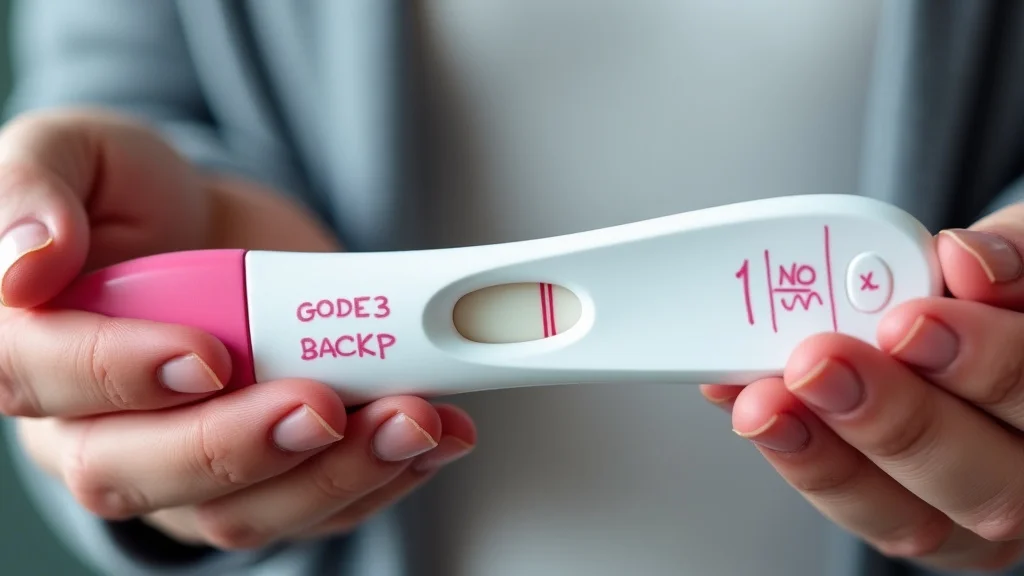
Seeing a “C” line on a pregnancy test can sometimes feel confusing, especially if it’s your first time. Many people wonder what it means and if it means they are pregnant. This line is a normal part of how most tests work, and it’s usually a good sign that the test is working correctly.
We’ll break down exactly what the C line means and what you need to look for next. It’s simpler than you might think!
Key Takeaways
- The “C” line indicates the control window on a pregnancy test.
- A visible “C” line means the test has been performed correctly.
- The “T” line is the test window, which shows a positive pregnancy result.
- Both “C” and “T” lines appearing means a positive result.
- Only the “C” line appearing means a negative result.
- If no “C” line appears, the test is invalid and needs to be repeated.
What Is A Pregnancy Test Control Line
Pregnancy tests work by detecting a hormone called human chorionic gonadotropin (hCG) in your urine. This hormone is produced shortly after a fertilized egg attaches to the uterine lining. The test has a few parts, including a control window and a test window.
The control window is where you’ll see the “C” line, and the test window is where you’ll see the “T” line. The control line is super important because it shows that the test is working correctly.
Think of the control line like a little check mark from the test itself. It proves that the liquid you applied flowed through the test strip properly and that the test’s internal mechanisms are functioning as they should. Without this control line, you wouldn’t be able to trust the result shown in the test window.
It’s a built-in reassurance that you’re getting a reliable reading.
The presence of the c line on pregnancy test is a fundamental part of the testing process. It’s designed to be visible with every valid test, regardless of whether you are pregnant or not. This uniformity is key to interpreting the results accurately.
Many manufacturers aim to make this line appear relatively quickly after you’ve performed the test, giving you an early indication of its functionality.
How The Control Line Works
The control line uses a special chemical reaction. When urine passes over the test strip, it encounters a set of antibodies. Some of these antibodies are designed to bind to the liquid that is moving through the strip, triggering the color change that forms the “C” line.
This happens no matter what. It’s a consistent process that relies on the physical movement of the urine and the chemical properties of the test strip’s components.
This process ensures that the test has received enough urine to function and that the internal elements are reacting. If the urine doesn’t reach the control line area, or if the antibodies in that area are faulty, the “C” line will not appear. This is why seeing the “C” line is the very first thing you should check after taking a pregnancy test.
The color of the control line can sometimes vary between brands, but its presence is what matters most. Some tests have a pink control line, others blue. What’s important is that a distinct line forms in the designated “C” area within the specified time frame.
This indicates that the test has successfully absorbed the urine and is ready to show a pregnancy result if hCG is present.
Why The C Line Is Important For Accuracy
The control line is your guarantee that the test is valid. If you see the “C” line, it means the test has worked properly, and you can trust the result shown in the “T” window. If the “C” line does not appear, it means the test is faulty.
You cannot rely on any line that shows up in the test window if the control line is missing. This is a critical point for anyone trying to get an accurate pregnancy result.
Imagine you’re baking a cake, and the oven light doesn’t turn on. You can’t be sure if the oven is heating up properly, so you wouldn’t trust the cake to be cooked. The control line is like that oven light for your pregnancy test.
It tells you the “oven” (the test) is working correctly.
When you take a pregnancy test, always wait for the recommended amount of time before reading the results. This time allows the urine to travel through the test strip and react with the chemicals. Reading it too early or too late can lead to misinterpretation, especially concerning the appearance of any lines, including the control line.
Interpreting Pregnancy Test Results
Understanding what the lines mean is key to getting the right answer. The result is a combination of what you see in the control window (C) and the test window (T). Most home pregnancy tests have clear instructions, but sometimes the lines can be faint or appear in unexpected ways.
Let’s break down the common scenarios so you know exactly what to look for.
The primary goal of the test is to detect hCG. The control line simply confirms the test is ready to do its job. The test line is where the magic happens for pregnancy detection.
Its appearance, or lack thereof, directly relates to the presence of hCG in your urine.
It’s always a good idea to read the instructions that come with your specific pregnancy test brand. While most work on similar principles, there can be slight variations in how results are displayed or read. Familiarizing yourself with the instructions beforehand can save you confusion later.
Positive Pregnancy Result
A positive pregnancy result is indicated by the presence of two lines: one in the “C” window and one in the “T” window. This means the test has detected hCG in your urine. Even if the line in the “T” window is faint, it is generally considered a positive result.
Seeing two lines means your body is producing hCG, which is a strong sign of pregnancy. The intensity of the “T” line can sometimes indicate how far along you are in your pregnancy, with darker lines typically appearing later. However, even a very light “T” line warrants further confirmation.
It’s important to remember that even a faint line is significant. It signals the presence of the pregnancy hormone. Some women experience very early pregnancies where the hCG levels are still low, leading to a faint “T” line.
It’s always best to follow up with a healthcare provider to confirm a positive result.
Negative Pregnancy Result
A negative pregnancy result is shown by only one line appearing, and that line is in the “C” window. This means that no hCG was detected in your urine at the time of the test. It indicates that you are likely not pregnant, or that your hCG levels are too low to be detected by the test.
If you get a negative result, but you still suspect you might be pregnant, it’s recommended to wait a few days and test again. Sometimes, hCG levels may not be high enough to be detected by the test yet. Repeating the test after a few more days, or at a time when your urine is more concentrated (like first thing in the morning), can provide a more accurate result.
A negative result with a visible “C” line confirms the test worked correctly and that pregnancy hormones were not found. If you have missed your period and continue to get negative results, it may be worth discussing with your doctor to explore other potential reasons for the delay.
Invalid Test Result
An invalid test result occurs when the “C” line does not appear at all, even if a “T” line is present. In this situation, the test is not reliable, and you cannot interpret the result. This usually means there was an error in the testing process or the test itself is defective.
If your test is invalid, you should discard it and take a new one. Make sure to follow the instructions carefully this time. Incorrectly performing the test, such as not using enough urine or using urine that is too diluted, can sometimes lead to an invalid result.
An invalid test can be frustrating, but it’s better to know it’s not working than to trust a potentially false result. Double-checking the expiration date on the test kit is also a good practice, as expired tests can lead to inaccurate readings.
Understanding hCG And Pregnancy Tests
The core of any pregnancy test’s ability to work lies in its detection of human chorionic gonadotropin (hCG). This hormone is a vital indicator of pregnancy and is produced by the cells that will develop into the placenta. Once a fertilized egg implants in the uterus, hCG production begins.
The amount of hCG in a woman’s body increases rapidly in the early stages of pregnancy. It typically doubles every 48 to 72 hours. This rising level is what pregnancy tests are designed to measure.
Home pregnancy tests are sensitive enough to detect hCG in urine once it reaches a certain threshold.
The development of home pregnancy tests has made early detection more accessible. They offer a convenient way for individuals to find out if they are pregnant without needing to visit a doctor immediately. The accuracy of these tests has improved significantly over the years, making them a reliable tool for many.
What is hCG
Human chorionic gonadotropin (hCG) is a hormone that your body starts producing soon after a fertilized egg attaches to the wall of your uterus. This is typically about six to ten days after conception. hCG is often called the “pregnancy hormone” because its levels are very high during pregnancy and it is not usually found in the body of a non-pregnant woman.
The primary role of hCG in early pregnancy is to maintain the corpus luteum, a temporary gland that produces progesterone. Progesterone is essential for sustaining the uterine lining and supporting the pregnancy. Without hCG, the corpus luteum would break down, leading to a loss of pregnancy.
The concentration of hCG in the blood and urine of a pregnant woman increases dramatically in the first trimester. This makes it a perfect marker for pregnancy tests. Different pregnancy tests have different sensitivities, meaning they can detect different minimum levels of hCG.
Tests with higher sensitivity can detect pregnancy earlier.
How Tests Detect hCG
Pregnancy tests use a process called immunoassay. They contain antibodies that are specifically designed to bind to hCG molecules. When you urinate on the test strip, the urine travels through it.
If hCG is present in the urine, it will bind to these antibodies.
This binding action then triggers a chemical reaction that causes a colored line to appear. The “C” line, or control line, appears because it is designed to react with the flow of liquid itself, showing that the test is working. The “T” line, or test line, only appears if there are hCG molecules present in the urine that bind to the specific antibodies in that section of the test.
The intensity of the colored lines can depend on the concentration of hCG. Higher levels of hCG will typically result in darker, more visible lines. This is why, in some cases, a faint “T” line can appear in very early pregnancy, and the line gets darker as the pregnancy progresses and hCG levels rise.
When To Test For Best Results
For the most accurate results, it’s best to take a pregnancy test after you have missed your period. Testing too early might result in a false negative because the hCG levels might not be high enough for the test to detect. Waiting until at least the first day of your missed period significantly increases the chances of getting an accurate positive result if you are pregnant.
Another tip for accuracy is to use your first-morning urine. This urine is typically more concentrated, meaning it has a higher level of hCG if you are pregnant. Testing at other times of the day might yield less reliable results if you have been drinking a lot of fluids, which can dilute your urine.
If you are tracking your ovulation or have a regular cycle, you can generally expect to get accurate results about 14 days after you ovulate. However, if your cycles are irregular, or if you are unsure about your ovulation dates, waiting until you miss your period is the most straightforward approach.
Factors Affecting Pregnancy Test Accuracy
While home pregnancy tests are quite accurate, several factors can influence their reliability. Understanding these factors can help you avoid common mistakes and ensure you get the most dependable result possible. It’s not just about following the steps; it’s about understanding the nuances that can make a difference.
Even with the best intentions, errors can happen during the testing process. These can range from how the test is handled to when it is read. Being aware of these potential pitfalls can save you from unnecessary worry or confusion about your results.
The technology behind these tests is advanced, but human error and biological variations can still play a role. Let’s explore some of the most common issues that can lead to inaccurate pregnancy test results.
Diluted Urine
As mentioned before, drinking a lot of fluids right before taking a pregnancy test can dilute your urine. This means that the concentration of hCG, if present, might be too low to be detected by the test. This is why using first-morning urine is often recommended, as it is less likely to be diluted.
If you need to test at a time other than first thing in the morning, try to limit your fluid intake for a couple of hours beforehand. This helps ensure that your urine is concentrated enough to provide an accurate reading. A diluted sample can lead to a false negative result, making you think you are not pregnant when you actually are.
It’s a delicate balance; you need enough urine for the test to work, but not so much fluid that it washes away the detectable levels of hCG. This is a common reason why some women get negative results on one day and positive results a few days later.
Expired Tests
Pregnancy test kits have an expiration date, just like any other medical or diagnostic product. The chemicals and antibodies within the test strip can degrade over time, making them less effective or completely non-functional. Using an expired test can lead to inaccurate results, either a false positive or a false negative.
Always check the expiration date printed on the test packaging before using it. If the test is expired, it’s best to purchase a new one to ensure accuracy. Expired tests might not show a control line, or they might show incorrect results in the test window.
Storing pregnancy tests properly is also important. Keep them in a cool, dry place away from direct sunlight and humidity. Extreme temperatures can also affect the integrity of the test components, even before the expiration date.
Reading The Test Too Early Or Too Late
Each pregnancy test has a specific timeframe for reading the results, usually indicated in the instructions. Reading the test before this time means the urine may not have fully flowed through the strip, and the chemical reactions might not have completed. This can lead to faint or no lines appearing.
On the other hand, reading the test too late can also cause problems. Some tests might show “evaporation lines” after a certain period. These are faint, colorless lines that can appear as the urine dries on the test strip.
They can be mistaken for a positive result, leading to a false positive.
It’s crucial to stick to the recommended reading window. If you are unsure, it’s better to retest than to misinterpret a result. The instructions are there for a reason, and following them precisely is key to accuracy.
Rare Medical Conditions
In very rare cases, certain medical conditions or medications can affect the accuracy of a pregnancy test. For example, some fertility treatments involve hCG injections, which can lead to a false positive result if the test is taken too soon after the treatment. Certain rare tumors can also produce hCG.
Some medical conditions that affect hormone levels might also cause unusual test results. If you have a medical condition or are taking medication that you suspect might affect a pregnancy test, it’s wise to discuss it with your doctor. They can advise you on the best course of action.
It’s also important to note that some women have a very low baseline level of hCG even when not pregnant. This is extremely rare, but it could theoretically cause a false positive on highly sensitive tests. However, for most people, these rare conditions are not a concern.
Common Myths Debunked
Myth 1 The C line is the test line.
The “C” line on a pregnancy test is actually the control line. It indicates that the test is working correctly. The “T” line is the test line, which shows whether hCG has been detected, suggesting pregnancy.
Both lines need to be correctly interpreted to get the right result.
Myth 2 A faint T line means the pregnancy is not viable.
A faint “T” line usually means that hCG levels are present but might still be low, which is common in very early pregnancy. It does not necessarily mean the pregnancy is not viable. It’s a positive sign, and the line often gets darker as pregnancy progresses and hCG levels rise.
Follow up with a doctor for confirmation.
Myth 3 If I get a negative result, I’m definitely not pregnant.
A negative result means that hCG was not detected at a detectable level at the time of testing. However, if you test too early, or if your urine is too diluted, you might get a false negative. If your period is still missed, it’s advisable to retest in a few days or consult a healthcare provider.
Myth 4 You can tell if you’re pregnant just by looking at the test stick without reading the instructions.
While many tests look similar, the specific way results are displayed can vary slightly between brands. Relying on general knowledge without reading the instructions can lead to misinterpretation. Always read the instructions for the specific test you are using to ensure accurate reading of the “C” line and the “T” line.
Frequently Asked Questions
Question: What does it mean if I see a C line and a T line on a pregnancy test?
Answer: If you see both a “C” line (control line) and a “T” line (test line), it means the test has detected hCG in your urine, and the result is positive. You are likely pregnant.
Question: What if only the C line appears on the pregnancy test?
Answer: If only the “C” line appears, it means the test worked correctly, but no hCG was detected. This is a negative result, indicating you are likely not pregnant.
Question: What should I do if no C line appears on my pregnancy test?
Answer: If no “C” line appears, the test is invalid. This means the test did not function correctly, and you cannot rely on the result. You should discard the test and take a new one, following the instructions carefully.
Question: Can I use an expired pregnancy test?
Answer: It is not recommended to use an expired pregnancy test. The chemicals and antibodies in the test can degrade over time, leading to inaccurate results, including false positives or false negatives.
Question: How soon after unprotected sex can I get an accurate result?
Answer: For the most accurate results, it’s best to wait until after you’ve missed your period, usually at least 14 days after unprotected sex. Testing too early can lead to a false negative.
Final Thoughts
Understanding the meaning of the c line on pregnancy test is straightforward. It confirms the test is functional. A positive result requires both a C and T line.
A negative result shows only the C line. If the C line doesn’t show, the test is invalid. Always follow instructions for the most reliable results.
Leave a Reply