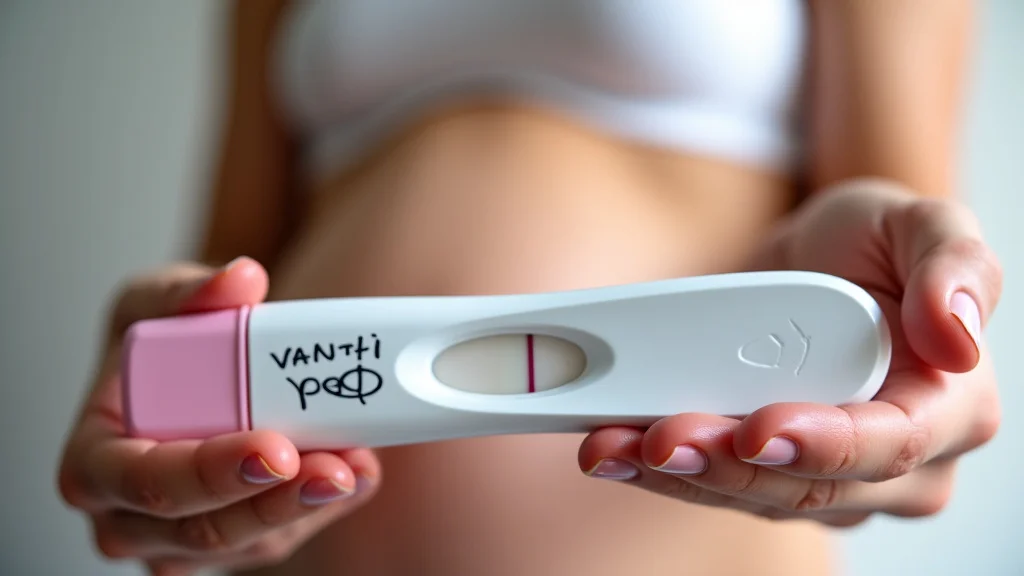
Thinking about taking a pregnancy test just four days after you ovulate can feel a bit tricky. Many people wonder if it’s too soon to get a clear answer. It’s a common question for those who are eager to know!
We’ll walk through exactly what you need to know in a simple way.
Key Takeaways
- You can sometimes get an early positive result 4 days after ovulation.
- Home pregnancy tests detect the hormone hCG.
- Early testing depends on implantation timing.
- False negatives are possible with early testing.
- Understanding your cycle helps with timing.
- Waiting a little longer can provide more certainty.
When Can You Test After Ovulation
Figuring out the best time to take a pregnancy test is key. Many people want to know if they can test early. Taking a pregnancy test 4 days after ovulation is something many consider.
It’s not the most common time for a positive result, but it’s not impossible. The hormone that tests look for, human chorionic gonadotropin (hCG), needs time to build up in your body after implantation.
Implantation is when a fertilized egg attaches to the wall of your uterus. This usually happens 6 to 12 days after ovulation. If implantation happens on the earlier side, then there might be enough hCG present for a test to detect by day 4 after ovulation.
However, it’s much more likely that implantation hasn’t happened yet, or has just happened and hCG levels are still very low.
The Role of Implantation
Implantation is the critical first step for a pregnancy to continue. Without it, there’s no pregnancy to detect. The timing of implantation varies quite a bit from person to person.
This variation is a major reason why testing very early can be unreliable.
When implantation occurs, the developing placenta begins to produce hCG. This hormone is what at-home pregnancy tests are designed to detect. The amount of hCG in your blood and urine doubles roughly every 48 to 72 hours in early pregnancy.
So, even if implantation happens on day 6, it will take a few more days for hCG levels to rise enough for a standard home test.
- Implantation typically occurs between 6 and 12 days after ovulation.
- This process is essential for pregnancy to be established.
- The timing of implantation directly impacts when hCG can be detected.
For example, if implantation happens on day 7 after ovulation, by day 10, hCG levels might be starting to be detectable. But on day 4 after ovulation, implantation is unlikely to have even begun for most people. This means hCG levels would be zero or very close to zero.
This is why most pregnancy tests won’t show a positive result this early.
Understanding hCG Levels
Human chorionic gonadotropin (hCG) is often called the pregnancy hormone. It’s produced by cells that will form the placenta. Levels of hCG start very low and increase rapidly in early pregnancy.
Pregnancy tests work by detecting this hormone in urine or blood.
The sensitivity of a pregnancy test matters a lot. Some tests are more sensitive than others, meaning they can detect lower levels of hCG. A highly sensitive test might be able to pick up on hCG as early as 10-12 days after ovulation.
However, at 4 days after ovulation, even the most sensitive tests are unlikely to detect any hCG if implantation hasn’t occurred.
- hCG levels start low and rise quickly after implantation.
- The doubling time for hCG is about 48-72 hours.
- Test sensitivity plays a big role in early detection.
If you are considering testing at 4 days past ovulation, it is important to know that if you get a negative result, it does not mean you are not pregnant. It most likely means that hCG levels are too low to be detected yet. Waiting a few more days will give your body more time to produce enough of the hormone for a more accurate result.
Can You Get a Positive Result 4 Days After Ovulation
It is extremely rare, but technically possible, to get a positive pregnancy test result 4 days after ovulation. This scenario requires a very specific set of circumstances to occur. The primary factor is how early implantation happens.
If fertilization happened very quickly after ovulation and implantation occurred unusually early, then hCG production might begin soon after.
However, for the vast majority of pregnancies, implantation does not happen this early. Standard ovulation calculators and fertility tracking apps typically estimate ovulation based on a typical cycle. But individual cycles can vary.
Even with a perfectly timed ovulation, the window for implantation is still several days later.
The Implantation Window
The implantation window is the period during your menstrual cycle when your uterus is most receptive to a fertilized egg. This window typically opens about 6 days after ovulation and closes around day 10 to 12 after ovulation. If fertilization occurs, the embryo then travels down the fallopian tube to the uterus, which takes about 5-7 days.
If the embryo arrives in the uterus and implants during this window, then hCG production begins. For a positive test 4 days after ovulation, implantation would need to happen very, very early, perhaps around day 2 or 3 after ovulation. This is not typical.
Most often, if implantation occurs on day 6, you might get a faint positive test around day 10-11 after ovulation.
- The implantation window is typically days 6-12 after ovulation.
- Early implantation (day 2-3 after ovulation) is uncommon.
- If implantation is early, hCG production may start sooner.
Even in these rare cases of very early implantation, the hCG levels would be minuscule. Most home pregnancy tests are not sensitive enough to detect such low amounts. Therefore, while the possibility exists in theory, the practical likelihood of a positive result at 4 days past ovulation is very low.
Most medical professionals would advise waiting longer for a reliable result.
When to Expect a Reliable Result
For the most accurate pregnancy test results, it’s best to wait until you miss your period. This is typically around 14 days after ovulation. By this time, hCG levels have usually risen enough to be easily detected by most standard home pregnancy tests.
If you want to test earlier, aiming for the day after your missed period is a good compromise. Many sensitive tests can detect pregnancy from about 10-12 days after ovulation. This is when implantation has likely occurred, and hCG levels are starting to climb significantly.
- Waiting until your period is missed offers the highest accuracy.
- Testing 10-12 days after ovulation can often yield accurate results.
- Higher hCG levels lead to clearer positive results.
Testing too early can lead to a false negative result, which can be emotionally distressing. This happens when the test doesn’t detect hCG because levels are still too low. It’s not that you aren’t pregnant, but rather that the test isn’t sensitive enough to pick up the very small amount of hormone present at that moment.
Why Testing Early Can Be Misleading
Testing for pregnancy very early, like 4 days after ovulation, can be misleading because of the low levels of hCG. It’s like trying to hear a whisper in a noisy room; you might not pick it up even if it’s there. The hormone hCG needs time to build up to a detectable level in your urine.
This early testing period is before most fertilized eggs have even had a chance to implant in the uterus. Without implantation, there’s no signal for the body to start producing hCG in significant amounts. Therefore, any test taken at this stage is highly likely to be negative, even if conception has occurred.
The Possibility of False Negatives
A false negative result means the test shows you are not pregnant, but you actually are. This is one of the biggest risks of testing too early. Your body might be producing hCG, but the concentration is too low for the test to register.
This can lead to unnecessary worry and confusion.
If you test at 4 days past ovulation and get a negative result, it’s very probable that you are not seeing a true negative. It simply means that the hCG levels are not yet high enough for detection. This is why healthcare providers generally recommend waiting until at least the day of your missed period for more reliable results.
- False negatives occur when hCG levels are too low for the test.
- Early testing is the most common cause of false negatives.
- A negative result this early does not rule out pregnancy.
For instance, imagine you are pregnant, and implantation happened on day 6. By day 10 after ovulation, you might have enough hCG for a sensitive test. But at day 4 after ovulation, if implantation hasn’t happened yet, hCG levels would be zero.
Even if implantation occurred on day 4, the hCG levels would be incredibly small.
How to Improve Accuracy
To get the most accurate results from a pregnancy test, timing is everything. The best approach is to wait until you’ve missed your period. This allows sufficient time for hCG levels to rise to a detectable amount.
If you are eager to test earlier, use the most sensitive home pregnancy tests available. These tests can detect lower levels of hCG. Also, consider using your first morning urine, as it is usually more concentrated and contains higher levels of hCG than urine later in the day.
This can increase your chances of detecting a very early pregnancy.
- Wait until your period is due for the most reliable results.
- Use highly sensitive pregnancy tests if testing early.
- Test with your first morning urine for concentrated hCG.
Another helpful tip is to track your ovulation carefully. Knowing your ovulation date helps you pinpoint the earliest reliable time to test. If you ovulate later in your cycle than you thought, testing too early based on an incorrect ovulation date can lead to a false negative.
Always confirm your ovulation date with methods like basal body temperature charting or ovulation predictor kits.
Factors Affecting Early Pregnancy Tests
Several factors can influence the outcome of an early pregnancy test. The most significant is the individual’s unique biology and how their body responds after conception. Not everyone’s body produces hormones at the same rate, and implantation times can differ widely.
Understanding these variables helps manage expectations when testing early. It’s not a one-size-fits-all situation. What works for one person might not work for another, especially when trying to detect pregnancy in its earliest stages.
Individual Cycle Variations
Every person’s menstrual cycle is unique. Ovulation can occur at different times within a cycle, and the length of the luteal phase (the time between ovulation and your period) can also vary. These variations directly affect when implantation might occur and, consequently, when hCG levels might become detectable.
For example, if someone has a shorter luteal phase, implantation might happen earlier relative to their next expected period. Conversely, a longer luteal phase means implantation would occur later. This variability is why a general “4 days after ovulation” marker isn’t always the best indicator for everyone.
- Menstrual cycle lengths differ from person to person.
- Ovulation timing can vary, impacting implantation dates.
- The luteal phase length affects early hCG detection.
Consider a scenario where ovulation was tracked accurately. Person A ovulates on day 14, and implantation occurs on day 8. Person B ovulates on day 16 and implants on day 10.
If both test 4 days after their presumed ovulation date, Person A is testing on day 18 of their cycle, while Person B is testing on day 20. The difference in cycle days can mean a significant difference in hCG levels.
Test Sensitivity and Accuracy
The sensitivity of a pregnancy test refers to the lowest concentration of hCG it can detect. Tests are often measured in milli-International Units per milliliter (mIU/mL). A more sensitive test will have a lower mIU/mL detection level, meaning it can detect pregnancy earlier.
For example, a highly sensitive test might detect hCG at 10 mIU/mL, while a less sensitive one might require 50 mIU/mL. If you are testing at 4 days after ovulation, even if there is a tiny amount of hCG, only the most sensitive tests might have a chance of detecting it, and even then, it is unlikely.
| Test Type | Typical Detection Level (mIU/mL) | Earliest Detection After Ovulation |
|---|---|---|
| Highly Sensitive Home Tests | 10-25 | Around 10-12 days |
| Standard Home Tests | 25-50 | Around 12-14 days |
| Blood Tests (Quantitative) | 1-5 | Can detect as early as implantation |
Blood tests are generally more sensitive than urine tests. A quantitative blood test can measure the exact amount of hCG in your blood, allowing for detection of very early pregnancies, sometimes even before implantation is complete. However, these are typically done in a doctor’s office and are not for home use.
The accuracy of any test also depends on proper usage. Following the instructions carefully is vital. Using the test too early, not waiting long enough for the result, or not using the correct urine sample can all lead to inaccurate outcomes, regardless of the test’s sensitivity.
When To Test For The Best Results
For the most reliable results, it is best to wait until your period is late. This is usually the most straightforward advice for accurate pregnancy testing. If your menstrual cycle is regular, missing your period is a strong indicator that you might be pregnant.
This timing allows for sufficient hCG production to be present in your urine, making it easier for any pregnancy test to detect. Testing too soon can lead to frustration and unnecessary expense, especially if you receive a false negative.
The Day Of Your Missed Period
Testing on the day you expect your period but don’t get it is a good starting point. By this time, if you are pregnant, hCG levels have typically risen enough to be detected by most standard home pregnancy tests. This reduces the chance of a false negative result compared to testing days before your period is due.
If you get a positive result on the day of your missed period, it is highly likely that you are pregnant. However, if you get a negative result, it’s still possible you are pregnant, but tested a little too early. In such cases, it’s recommended to retest in a few days.
- Testing on the day of your missed period is recommended for accuracy.
- This timing increases the likelihood of detecting hCG.
- A negative result at this stage may still warrant retesting.
For example, if you typically have a 28-day cycle and ovulate around day 14, your period would be due around day 28. Testing on day 28 means you are testing about 14 days after ovulation. By this point, hCG levels are usually robust enough for a clear positive if pregnancy has occurred.
Waiting A Little Longer For Certainty
Sometimes, even waiting until your period is missed might not be enough if you ovulated later than usual. If you are unsure about your ovulation date or have irregular cycles, waiting an extra few days to a week after your missed period can provide even greater certainty.
This extra waiting period allows for further hCG increase, ensuring that even if implantation was slightly delayed or your cycle is irregular, the test can pick up the hormone. This approach minimizes the chances of a false negative and provides more peace of mind. Blood tests can offer earlier detection but require a doctor’s visit.
- Waiting a week after a missed period increases test accuracy.
- This is especially useful for those with irregular cycles.
- It significantly reduces the risk of a false negative.
A scenario for this is someone who usually has a 30-day cycle but ovulated on day 18 instead of day 14. Their period would be due around day 32. If they test on day 30, they are only testing 12 days post-ovulation, which might be too early.
Waiting until day 34 would give them a much more reliable result.
Common Myths Debunked
Myth 1: A negative test 4 days after ovulation always means you aren’t pregnant
This is not true. At 4 days past ovulation, implantation has likely not even occurred for most people, or has just happened. Therefore, hCG levels are too low to be detected by a home pregnancy test.
A negative result at this stage is expected and does not rule out pregnancy.
Myth 2: All pregnancy tests are the same for early detection
This is false. Pregnancy tests vary greatly in their sensitivity to hCG. Highly sensitive tests can detect lower levels of the hormone and are therefore more likely to provide a positive result earlier than less sensitive tests.
If you are testing early, choosing a highly sensitive test is important, though still unlikely to be positive at 4 days post-ovulation.
Myth 3: You can feel if you are pregnant right away
While some people might experience very early pregnancy symptoms, these are often vague and can be mistaken for premenstrual symptoms. For most, it takes time for pregnancy hormones to become significant enough to cause noticeable changes. Relying on symptoms alone for early pregnancy detection is unreliable.
Myth 4: Testing too early can harm a potential pregnancy
This is not true. Taking a pregnancy test, even very early, does not harm a fertilized egg or a developing pregnancy. The tests simply detect hormones in your urine.
The only “harm” is the potential for emotional distress due to a false negative or an inaccurate result due to poor timing.
Frequently Asked Questions
Question: Is it possible to get a positive pregnancy test 4 days after ovulation
Answer: It is extremely rare. For a positive result, implantation needs to occur very early and hCG levels must rise quickly enough for a test to detect them. Most women will not have detectable hCG this soon.
Question: What is the earliest reliable time to take a pregnancy test
Answer: The most reliable time to take a pregnancy test is on the day you miss your period. For most women, this is about 14 days after ovulation. Sensitive tests may detect pregnancy a few days earlier.
Question: What does a negative result mean if I test 4 days after ovulation
Answer: A negative result at 4 days past ovulation typically means that hCG levels are too low to be detected. It does not necessarily mean you are not pregnant. You should retest after your missed period.
Question: How long does it take for hCG to become detectable
Answer: hCG becomes detectable once implantation has occurred and the placenta begins to produce it. This typically happens 6-12 days after ovulation, and levels rise rapidly thereafter, becoming detectable by home tests around 10-14 days after ovulation.
Question: Should I use first morning urine for an early test
Answer: Yes, using first morning urine is generally recommended for early testing, especially if you are testing before your missed period. It is more concentrated and contains higher levels of hCG, increasing the chances of detection.
Summary
Testing for pregnancy 4 days after ovulation is generally too early for an accurate result. While it’s technically possible for implantation and hCG production to begin very early, it’s uncommon. Most home pregnancy tests need higher hCG levels, which are usually present around the time of your missed period.
Testing too early often leads to a negative result that isn’t truly negative, causing unnecessary worry. Waiting until your period is due or a few days after provides a much more reliable answer.
Leave a Reply