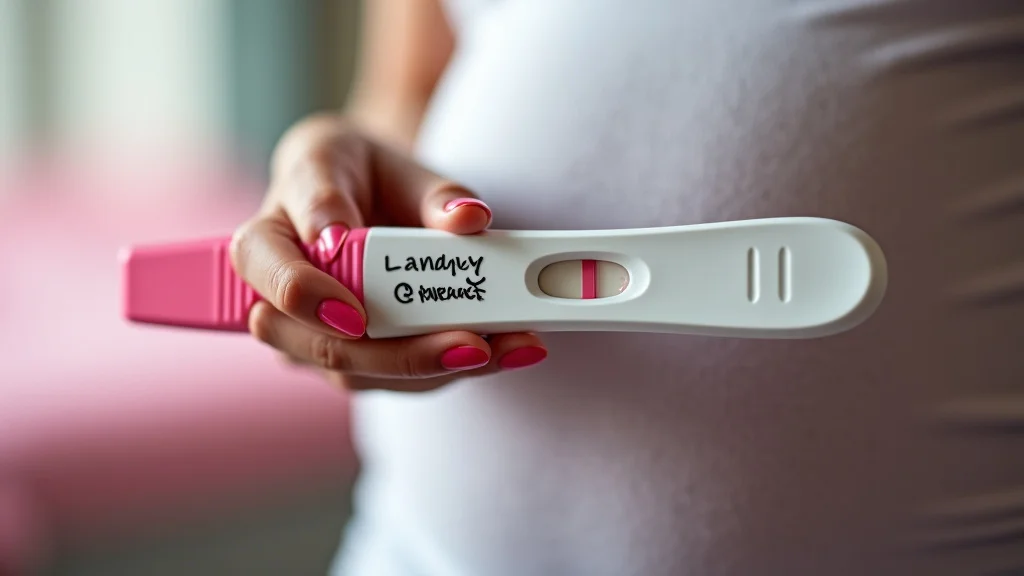
Wondering if a pregnancy test is accurate can bring up a lot of questions, especially when you’re looking for clear answers. It’s easy to feel a bit lost with all the information out there. This guide is here to help.
We’ll walk through everything you need to know in a simple, step-by-step way. Get ready to get the clear facts you need about whether pregnancy tests are reliable.
Key Takeaways
- You’ll learn about how pregnancy tests work to detect hormones.
- Discover the different types of pregnancy tests and how they are used.
- Understand the factors that can affect pregnancy test accuracy.
- Find out the best times to take a pregnancy test for reliable results.
- Learn how to read pregnancy test results correctly.
- Know when to see a doctor for further confirmation.
Understanding How Pregnancy Tests Work
Pregnancy tests are designed to detect a special hormone in your body called human chorionic gonadotropin, or hCG. This hormone starts being produced soon after a fertilized egg attaches to the uterine wall. Home pregnancy tests use a chemical that changes color or shows a symbol when hCG is present.
The amount of hCG in your body increases rapidly in the early weeks of pregnancy, which is why tests become more accurate over time.
Detecting hCG is the core of how these tests tell you if you might be pregnant. It’s a sensitive process that relies on specific antibodies in the test. These antibodies bind to the hCG molecules.
When enough hCG is present, it triggers a visible reaction on the test strip, like a line appearing or a digital display showing a positive result. The sensitivity of a test refers to how little hCG it can detect, with more sensitive tests being able to show a positive result earlier.
The Hormone hCG
Human chorionic gonadotropin (hCG) is a hormone produced by the cells that will later form the placenta. It is first detectable in the blood and urine of pregnant women shortly after implantation of the embryo. Implantation usually happens about six to twelve days after fertilization.
The levels of hCG double roughly every 48 to 72 hours during the first few weeks of pregnancy. This rapid rise is why pregnancy tests become more reliable as time passes after conception.
The presence of hCG is the key indicator that a pregnancy has begun. Without hCG, a pregnancy test will show a negative result. The concentration of hCG varies, and different pregnancy tests are designed to detect different levels of this hormone.
Understanding hCG is fundamental to grasping why pregnancy tests are accurate or when they might not be. It’s the biological signal that these tests are looking for.
How Tests Detect hCG
Home pregnancy tests use a process called immunoassay. This method involves specific antibodies within the test stick that react with the hCG hormone. When your urine passes over the test strip, if hCG is present, it binds to these antibodies.
This binding action causes a chemical reaction that produces a visible line, a plus sign, or a digital reading indicating pregnancy.
The test has different zones. One zone is for control, showing the test is working. The other is for the test result.
If hCG is present, it interacts with the antibodies in the test zone, causing it to change color or display a symbol. The stronger the urine concentration of hCG, the more likely and clearer the positive result will be. This is why timing is so important for getting accurate results.
Types of Pregnancy Tests
There are two main types of pregnancy tests: urine tests and blood tests. Urine tests are the most common and are available over-the-counter at pharmacies and supermarkets. Blood tests are performed by a healthcare provider in a clinical setting.
Home Urine Pregnancy Tests
These are the tests most people use. They come in various forms: strips, midstream tests (like a small stick you urinate on directly), and digital tests that display words like “pregnant” or “not pregnant.” They are convenient, affordable, and can be used in the privacy of your home. Their accuracy depends on several factors, including when you take the test and how you follow the instructions.
The accuracy of home urine tests is very high when used correctly. Studies have shown they can be over 99% accurate. However, this high percentage assumes the test is taken at the right time and following all directions perfectly.
For beginners, understanding these nuances is key to trusting the results they get.
Digital Tests vs. Line Tests
Digital pregnancy tests are often considered easier to read because they display a clear word like “Pregnant” or “Not Pregnant.” This avoids any confusion about faint lines that can sometimes occur with traditional line tests. Line tests show either one line for negative or two lines for positive, though the second line might be faint if hCG levels are low.
While both types of tests detect hCG, the digital format aims to remove any ambiguity. This can be very helpful for individuals who are anxious or new to taking pregnancy tests. The technology inside is similar; it’s just the display of the result that differs.
Blood Pregnancy Tests
Blood pregnancy tests are more sensitive than urine tests and can detect pregnancy earlier, sometimes even before your missed period. They are typically done in a doctor’s office or lab. There are two types of blood tests: qualitative and quantitative.
A qualitative blood test simply checks if hCG is present in your blood. A quantitative blood test, also called a beta hCG test, measures the exact amount of hCG in your blood. This can be useful for monitoring early pregnancy or diagnosing certain pregnancy-related conditions.
While more sensitive, blood tests are not usually the first step for most people due to the need for a medical professional.
Factors Affecting Test Accuracy
While pregnancy tests are generally reliable, several things can influence their accuracy. Understanding these factors is crucial for getting a trustworthy result. Even if a test says you are not pregnant, sometimes it’s best to retest or check with a doctor if you still have doubts.
Timing of the Test
The most important factor affecting accuracy is when you take the test. Taking a test too early, before your body has produced enough hCG, can lead to a false negative result. Home pregnancy tests are most accurate when taken on the day of your missed period or a few days after.
Waiting longer increases the chances of detecting the hormone.
For instance, taking a test just a few days after conception is unlikely to yield a positive result, even if pregnancy has occurred. This is because it takes time for the embryo to implant and for hCG levels to rise significantly. Most over-the-counter tests are sensitive enough to detect hCG about two weeks after ovulation, which often coincides with a missed period.
Testing Too Early
When you test too soon, your hCG levels might be too low for the test to detect. This means a negative result might not accurately reflect your pregnancy status. It’s like trying to see a very faint signal before it has become strong enough to register.
This is a common reason for people to get a “not pregnant” result and then later find out they were indeed pregnant.
A false negative can cause unnecessary worry or delay in seeking prenatal care. It’s generally recommended to wait at least until your period is late before taking a home pregnancy test for the most reliable outcome. If you do get a negative result but your period still doesn’t arrive, retesting in a few days is a good idea.
Testing at the Right Time
The best time to take a home pregnancy test is usually the day your menstrual period is expected to start. For those with irregular cycles, waiting about three weeks after unprotected sex is a good rule of thumb. Some early detection tests can provide results a few days before a missed period, but their accuracy might be slightly lower at that point.
Using first-morning urine is also recommended. Your urine is most concentrated in the morning, meaning hCG levels will be higher and easier to detect. This increases the sensitivity of the test and reduces the chance of a false negative.
Following the test’s instructions carefully, especially regarding timing and urine concentration, is vital.
Following Instructions Correctly
Every pregnancy test comes with specific instructions. Not following them precisely can lead to inaccurate results. This includes how long to hold the test in the urine stream, how long to wait for the result, and how to interpret the lines or symbols.
Even small deviations can affect the outcome.
For example, some tests require you to dip the stick for a specific number of seconds. Holding it too long or not long enough can interfere with the chemical reaction. Similarly, waiting too long to read the result can sometimes cause evaporation lines, which might be mistaken for positive results, leading to confusion.
Medications and Medical Conditions
Certain medications can interfere with pregnancy test results. Fertility treatments that contain hCG can cause a false positive. Some rare medical conditions, like certain types of ovarian cysts or tumors, can also produce hCG, leading to a false positive.
On the other hand, certain medical conditions that affect kidney function might slightly alter hCG levels, though this is less common.
It’s important to inform your doctor about any medications you are taking, especially if you are trying to conceive or suspect you might be pregnant. They can advise you on potential test interferences. If you receive an unexpected or confusing result, discussing it with a healthcare provider is always a good next step.
Diluted Urine
Drinking a large amount of fluid before taking a pregnancy test can dilute your urine. Diluted urine means that the hCG hormone concentration is lower, making it harder for the test to detect. This can lead to a false negative result, even if you are pregnant.
This is why testing with first-morning urine is generally advised, as it is less diluted.
If you must test at a time other than the morning, try to avoid drinking excessive amounts of fluids for a few hours beforehand. This helps ensure your urine is concentrated enough for the test to work effectively. Even a little bit of dilution can sometimes be enough to make a low hCG level undetectable.
How to Read Pregnancy Test Results
Reading a pregnancy test result correctly is essential for understanding its accuracy. Most tests have clear instructions, but it’s good to know what to look for. The key is to compare the result window to the control window or follow the digital display.
Interpreting Line Tests
Line tests show results using lines. Typically, one line indicates a negative result (not pregnant), and two lines indicate a positive result (pregnant). The control line usually appears first, showing the test is working.
The test line appears if hCG is detected.
A very faint second line can sometimes appear. While it might mean you are pregnant, it’s often best to retest in a day or two with a more sensitive test or first-morning urine to confirm. If the test is valid, any line, no matter how faint, indicates the presence of hCG and a positive result.
Interpreting Digital Tests
Digital tests are straightforward. They will display clear words like “Pregnant” or “Not Pregnant.” Some may also show an “Estimated Weeks” result, indicating how many weeks you are from conception. These are designed to be unambiguous, removing the guesswork often associated with line tests.
Even with digital tests, it’s important to wait for the allotted time before reading the result. The test needs time to process the urine sample and calculate the result. Reading it too early can lead to an error message or an incorrect display.
When Is The Best Time To Take A Pregnancy Test
Deciding when to take a pregnancy test is a crucial part of getting an accurate result. Taking it too early can lead to disappointment with a false negative, while waiting too long might delay confirmation. The sweet spot often depends on your menstrual cycle.
After a Missed Period
The most recommended time to take a pregnancy test is the day your period is due. By this time, your body should have produced enough hCG for most home pregnancy tests to detect it accurately. If your period is consistently regular, this is a clear indicator.
A missed period is one of the earliest and most common signs of pregnancy.
For tests taken on or after the first day of a missed period, accuracy rates are very high, often exceeding 99% when instructions are followed. This is the time when the hormone levels are typically high enough to be reliably detected by the test’s sensitive chemical indicators. Waiting until this point significantly reduces the chance of a false negative result.
Using Early Detection Tests
Some tests are marketed as “early detection” tests. These are designed to detect lower levels of hCG and can sometimes give a positive result a few days before your expected period. While convenient, their accuracy can be slightly lower than tests taken on the day of your missed period.
This is because hCG levels are still rising rapidly in these early days.
If you get a positive result with an early detection test, it’s highly likely you are pregnant. However, if you get a negative result and still suspect you are pregnant, it’s wise to retest closer to your missed period. The extra sensitivity comes with a trade-off in absolute certainty at the very earliest stages.
After In Vitro Fertilization (IVF)
For those undergoing IVF, the timing of pregnancy testing is usually dictated by the fertility clinic. They often schedule a blood hCG test around 9 to 14 days after an embryo transfer. This is because the clinic needs to confirm pregnancy and monitor hCG levels precisely.
Home tests might be used but are secondary to the clinic’s confirmed results.
The clinic’s tests are very accurate and are used to establish a baseline for your pregnancy. They can also detect subtle changes in hCG levels that might indicate the viability of the pregnancy or potential issues like an ectopic pregnancy. Relying on your clinic’s guidance is paramount during fertility treatments.
Common Myths Debunked
Myth 1: Faint Lines Mean You Aren’t Pregnant
This is a very common misconception. A faint line on a pregnancy test actually means that hCG is present, but in a lower concentration. This can happen in very early pregnancy.
As long as the line appears within the specified time frame on the test instructions, it is generally considered a positive result, even if it’s faint. Retesting in a few days often leads to a stronger line as hCG levels increase.
Myth 2: You Can Get Pregnant Right After Taking a Test
A pregnancy test tells you if you are currently pregnant based on the hormone levels detected in your urine. It does not predict future fertility or prevent pregnancy. Having unprotected sex at any time can potentially lead to pregnancy, regardless of when you last took a test or what the result was.
The test only reflects your status at the moment you took it.
Myth 3: All Pregnancy Tests Are Equally Accurate
While most home pregnancy tests are highly accurate when used correctly, their sensitivity can vary. Some tests are designed to detect lower levels of hCG, making them “early detection” tests. Others might require higher levels of hCG to show a positive result.
The brand and type of test, along with its sensitivity, can influence the accuracy, especially in the very early stages of pregnancy.
Myth 4: Drinking Soda Can Predict Pregnancy
There are many old home remedies for pregnancy testing, like mixing urine with soda. These methods are not based on science and are completely unreliable. They do not detect hCG and can produce misleading results.
Always use an FDA-approved pregnancy test designed for this purpose.
Frequently Asked Questions
Question: How soon can a pregnancy test detect pregnancy
Answer: Most home pregnancy tests can accurately detect pregnancy from the day of your missed period. Some early detection tests can detect pregnancy a few days before your missed period, usually around 10-14 days after conception.
Question: Can stress affect a pregnancy test
Answer: Stress itself does not directly affect the accuracy of a pregnancy test. However, severe stress can sometimes disrupt your menstrual cycle, making it harder to pinpoint when your period is due, which can indirectly affect the timing of your test.
Question: What does it mean if the control line doesn’t appear
Answer: If the control line on a pregnancy test does not appear, it means the test did not work correctly. This could be due to a faulty test, not enough urine on the test, or expired test materials. In this case, you should discard the test and try again with a new one.
Question: Can I reuse a pregnancy test
Answer: No, pregnancy tests are single-use devices. They are designed to be used only once. Reusing a test would lead to inaccurate results.
Question: Is it possible to have a negative pregnancy test and still be pregnant
Answer: Yes, it is possible to get a negative pregnancy test result and still be pregnant. This is most likely to happen if you test too early, before your body has produced enough hCG, or if your urine is too diluted. Retesting a few days later, especially with first-morning urine, can help confirm the result.
Summary
Pregnancy tests are very accurate when used correctly. Understanding how they detect hCG, choosing the right type, and testing at the optimal time are key. Always follow instructions to ensure reliable results.
If you have any doubts, a blood test from your doctor offers further confirmation.
Leave a Reply