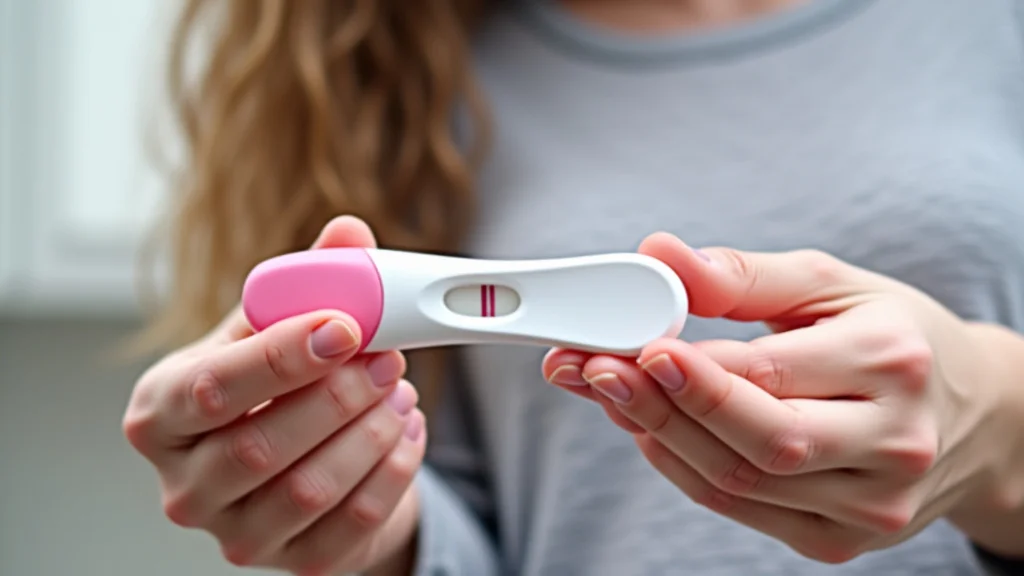
Wondering if you’re expecting can bring up lots of questions, especially about when you can get an answer. A 7 day early pregnancy test might seem like a great idea for quick results. But for beginners, it can feel a little confusing to know if it’s right for you.
Don’t worry! We’ll break down how these tests work in a super simple way. Get ready for a clear, step-by-step guide that makes everything easy to follow.
We’ll cover all you need to know to feel confident.
Key Takeaways
- You can often use a 7 day early pregnancy test before your missed period.
- These tests detect the pregnancy hormone human chorionic gonadotropin (hCG).
- Accuracy can vary, especially when testing very early.
- Following test instructions carefully is important for reliable results.
- A negative result early on might need retesting if your period is still late.
- Understanding how these tests work helps you use them correctly.
Understanding The 7 Day Early Pregnancy Test
Taking a pregnancy test before you miss your period can be exciting, offering the chance for an early answer. A 7 day early pregnancy test is designed to pick up on the pregnancy hormone, human chorionic gonadotropin (hCG), in your urine. This hormone starts to be produced shortly after a fertilized egg implants in the uterus.
The earlier you test, the lower the level of hCG will be. This is why some early tests can be less accurate than those taken on or after your missed period. They need to be sensitive enough to detect these small amounts of hCG.
The idea behind an early pregnancy test is to give you peace of mind or allow you to start planning sooner. However, there are things to keep in mind. If you test too soon, the hCG levels might not be high enough for the test to detect, leading to a false negative.
This means the test says you’re not pregnant, but you actually are. This can be disappointing and confusing, especially for those new to pregnancy testing. Learning about how these tests work and when to use them is key to getting a reliable result.
How Early Pregnancy Tests Work
Pregnancy tests, whether used early or on your missed period, work by detecting hCG. This hormone, often called the “pregnancy hormone,” is made by the cells that will form the placenta. After fertilization, the egg travels down the fallopian tube and implants in the uterine lining.
This implantation process usually happens about 6 to 12 days after ovulation. Once implantation occurs, your body begins producing hCG. The amount of hCG doubles approximately every 48 to 72 hours in early pregnancy.
Early pregnancy tests are more sensitive than standard tests. This means they can detect lower levels of hCG. A typical pregnancy test might be designed to detect hCG levels of 50 mIU/mL or higher.
In contrast, a sensitive early test might detect levels as low as 10-25 mIU/mL. This higher sensitivity is what allows them to potentially give a positive result before a missed period. However, this increased sensitivity also means they are more prone to false negatives if hCG levels are still very low or false positives due to certain medical conditions.
The test itself usually contains antibodies that bind to hCG in the urine. When hCG is present, it triggers a chemical reaction that causes a line or symbol to appear on the test, indicating a positive result. The accuracy of any pregnancy test depends on several factors, including the sensitivity of the test, the timing of the test, and how correctly it is used.
For a 7 day early pregnancy test, the critical factor is whether enough hCG has been produced by this point to be detected by the test’s sensitivity level.
Why A 7 Day Early Pregnancy Test Can Be Challenging
For beginners, the main challenge with a 7 day early pregnancy test lies in the timing. Ovulation, the release of an egg, can vary from person to person and even month to month. If you don’t pinpoint your ovulation accurately, you might test too early.
This means the fertilized egg may not have even implanted yet, or it might have implanted very recently, and hCG levels are too low to be detected by any test. Testing too soon is the most common reason for an inaccurate negative result.
Another challenge is understanding what “early” truly means for your body. While a test might claim to be accurate up to 7 days before your missed period, this is based on an average cycle and average implantation times. Your individual cycle might be different.
If your luteal phase (the time between ovulation and your period) is shorter than average, or if implantation occurred later than usual, you’ll need to wait longer for hCG to rise to detectable levels.
It’s also important to remember that not all early pregnancy tests are created equal. Some are more sensitive than others. Using a less sensitive test too early will almost certainly result in a negative reading, even if you are pregnant.
The anxiety and anticipation can also play a role. Beginners might overthink the results, looking for faint lines or second-guessing the outcome, which adds to the difficulty of interpreting an early test.
The Role Of hCG In Pregnancy Detection
Human chorionic gonadotropin (hCG) is the key hormone that all pregnancy tests look for. It’s like the body’s signal that pregnancy has begun. After a fertilized egg attaches itself to the wall of the uterus, the cells that will become the placenta start producing hCG.
This usually happens about a week after conception, which is why testing too early is risky.
The levels of hCG rise rapidly in the first few weeks of pregnancy. For instance, a common hCG level might be around 5 mIU/mL soon after implantation. By the time you miss your period (around 14 days after ovulation), hCG levels can be around 50 mIU/mL or more.
A 7 day early pregnancy test needs to be sensitive enough to detect levels that might be as low as 10-25 mIU/mL. This is why the sensitivity of the test is so important.
If you take a test before your hCG levels are high enough, you will get a negative result even if you are pregnant. This is called a false negative. It can be disheartening, but it doesn’t mean you aren’t pregnant.
It simply means the test couldn’t detect the hormone yet. Your hCG levels need time to build up. This is why retesting a few days later, especially if your period doesn’t arrive, is often recommended after an early negative result.
Getting An Accurate Result With Early Testing
Achieving an accurate result with a 7 day early pregnancy test involves understanding a few key factors. The most important element is timing. While the test might claim accuracy up to seven days before your missed period, this is often based on specific conditions.
These conditions include having a regular menstrual cycle, ovulating around day 14, and conceiving shortly after. If your cycle is irregular or your ovulation happened later than usual, testing this early might not give you a reliable answer.
To maximize your chances of an accurate result, it’s best to use the first-morning urine. This is because your hCG levels are most concentrated in your urine when you first wake up. Drinking a lot of fluids before testing can dilute your urine, making it harder for the test to detect low levels of hCG.
This dilution can lead to a false negative result, even if you are pregnant. So, try to hold your urine for a few hours before taking the test if possible, and definitely use your first pee of the day.
Another tip for accuracy is to read the test instructions carefully. Each brand and type of early pregnancy test might have slightly different instructions on how to use it and how long to wait for the result. Following these directions to the letter is vital.
Some tests may require you to dip the stick in urine for a specific time, while others might have a dropper. Misinterpreting the results or not waiting long enough can also lead to confusion. A faint line on an early test usually means positive, but it’s always wise to confirm with another test a few days later or with your doctor.
When To Use A 7 Day Early Pregnancy Test
The ideal time to use a 7 day early pregnancy test is, as the name suggests, up to seven days before your expected period. However, it’s crucial to understand that “expected period” refers to the first day of your next period. To use this effectively, you need to have a fairly regular menstrual cycle so you can predict when your period is due.
If your cycles are unpredictable, this early testing window might not be reliable for you.
For example, if your cycle is consistently 28 days long, and you ovulate around day 14, your period is expected on day 29. Testing 7 days before this means testing around day 22 of your cycle. If you conceived shortly after ovulation, by day 22, your hCG levels might just be starting to become detectable by a very sensitive test.
This is why first-morning urine is so important at this stage. It gives the test the best possible chance to pick up those early hCG levels.
If you get a negative result when testing 7 days before your period, it doesn’t mean you aren’t pregnant. It could simply mean your hCG levels haven’t risen high enough yet. You should consider retesting in a few days, especially as your expected period date gets closer.
If your period doesn’t arrive, testing again on the day your period is due, or a day or two after, will give you a much more accurate result.
Interpreting Your Early Pregnancy Test Results
Interpreting the results of any pregnancy test, especially an early one, requires attention to detail. Most pregnancy tests use lines, plus signs, or digital readouts to show the result. A positive result is typically indicated by two lines, a plus sign, or the word “Pregnant” on a digital test.
A negative result usually shows one line, a minus sign, or the word “Not Pregnant.” It’s important to compare your result against the control line on the test, which indicates the test worked correctly.
With early pregnancy tests, you might see a very faint positive line. This is often called an “evaporation line” or a “faint positive.” If you see a faint line, it generally means that hCG is present, and you are likely pregnant. However, because hCG levels are so low early on, these faint lines can sometimes be difficult to distinguish from an evaporation line, which can appear after the test has dried.
Evaporation lines are usually colorless or gray and appear in the same place the positive line would show.
To be sure about a faint positive, it’s best to retest in 24 to 48 hours. If you are pregnant, your hCG levels will have increased, and the line should be darker and more distinct. If you get a negative result but still suspect you might be pregnant, especially if your period is late, wait a couple of days and test again.
Sometimes, the difference in hCG levels can be enough to change a negative result to a positive one. If you consistently get negative results and your period is still absent, it’s a good idea to consult a doctor to explore other possibilities.
Factors Affecting Test Accuracy
Several factors can influence the accuracy of any pregnancy test, and this is especially true for a 7 day early pregnancy test. The most common culprit is testing too soon. As we’ve discussed, if you test before your body has produced enough hCG, you’ll likely get a false negative.
This is because the test isn’t sensitive enough to detect the minuscule amount of hCG present at that very early stage.
Following the instructions for the pregnancy test is also paramount. Many users misunderstand or skip steps, which can lead to incorrect results. For example, not waiting for the full development time or dipping the test too long or not long enough can compromise its accuracy.
Also, the temperature of the urine can play a small role; very cold or very hot urine might affect the test’s chemical reaction, though this is less common than other issues.
Medications can also interfere with pregnancy tests. While most common medications like pain relievers or antibiotics don’t affect results, fertility drugs that contain hCG can cause a false positive. Similarly, certain medical conditions, like ovarian cysts or specific hormonal imbalances, can sometimes lead to higher hCG levels, causing a false positive.
It’s always wise to inform your doctor about any medications you are taking or any health conditions you have when discussing pregnancy test results.
Comparing Early Pregnancy Tests
When you’re looking to test early, you’ll find a variety of pregnancy tests on the market. The main difference between them, especially for early testing, is their sensitivity to hCG. This sensitivity is often measured in milli-international units per milliliter (mIU/mL).
The lower the mIU/mL number, the more sensitive the test is, and the earlier it can potentially detect pregnancy.
Standard pregnancy tests typically have a sensitivity of around 50 mIU/mL. This means they are most accurate when taken on or after your missed period. Early pregnancy tests, like those you might use for a 7 day early pregnancy test, often have sensitivities ranging from 10 mIU/mL to 25 mIU/mL.
A test with a 10 mIU/mL sensitivity is more likely to detect pregnancy earlier than a test with a 25 mIU/mL sensitivity.
Digital pregnancy tests can also be used for early testing, and some are designed for this purpose. They offer a clear “Pregnant” or “Not Pregnant” readout, which can be easier to interpret than faint lines. However, the sensitivity of digital tests can vary, so it’s important to check the packaging for information about how early you can test and the test’s hCG sensitivity.
When choosing an early pregnancy test, look for one that clearly states its sensitivity level and its recommended early testing window.
| Test Type | Typical Sensitivity (mIU/mL) | Best For |
|---|---|---|
| Standard Pregnancy Test | 50+ | On or after missed period |
| Sensitive Early Pregnancy Test | 10-25 | Up to 7 days before missed period (may vary) |
| Very Sensitive Early Pregnancy Test | Under 10 | Very early testing, but fewer options available |
Different Types Of Early Pregnancy Tests
The world of early pregnancy tests offers several formats to suit different preferences. The most common type is the urine dipstick, which is a simple, affordable strip. You collect your urine in a clean cup and dip the test strip into it for a specified amount of time.
After a few minutes, lines will appear indicating the result.
Another popular format is the midstream test. This looks like a larger plastic stick. You simply hold the absorbent tip in your urine stream for a few seconds.
These are convenient because they don’t require a separate collection cup, making them easier to use in a restroom. Both dipstick and midstream early tests rely on the same hCG detection technology.
Digital pregnancy tests are also available for early testing. These tests offer a clear, unambiguous result displayed as words (“Pregnant” or “Not Pregnant”) on a small screen. This can be very reassuring for those who find interpreting faint lines stressful.
While often more expensive, digital tests provide a straightforward answer. When selecting an early test, check the packaging for information regarding its sensitivity and how many days before your missed period it can accurately detect pregnancy.
When Is The Best Time To Retest?
If you take a 7 day early pregnancy test and get a negative result, but your period still hasn’t arrived, retesting is a good idea. The best time to retest is usually a few days later, ideally closer to your expected period date. Waiting at least 24 to 48 hours after your initial test allows your body more time to produce a detectable amount of hCG.
For instance, if you tested 7 days before your period and got a negative, try testing again 3 days later. This would put you about 4 days before your expected period. If you get another negative but your period is still absent, wait another day or two.
Testing on the day your period is due is often the most accurate time for a definitive result, even if you tested early and got a negative.
If you receive a positive result, even a faint one, it’s very likely you are pregnant. However, due to the possibility of false positives or very early miscarriages (chemical pregnancies), it’s always recommended to confirm with your doctor. They can perform a blood test, which is more sensitive than urine tests, and schedule an ultrasound if necessary.
Retesting helps ensure you don’t miss a pregnancy due to low hCG levels.
Practical Tips For Using Early Pregnancy Tests
Using a 7 day early pregnancy test effectively involves more than just peeing on a stick. To start, always buy a test that is specifically labeled for early detection. These tests are designed to be more sensitive to lower levels of hCG.
Don’t assume any pregnancy test will work accurately before your missed period; standard tests are usually not sensitive enough.
Make sure to check the expiration date on the test packaging. Expired tests can give inaccurate results, either false positives or false negatives. Once you open the test, use it immediately.
Storing it improperly can also affect its performance.
When you’re ready to test, follow the instructions precisely. This includes how long to hold the absorbent tip in the urine, how long to wait for the result, and how to interpret the lines or symbols. Don’t guess or estimate.
The timing is critical for accurate readings, especially when dealing with very low hormone levels.
Best Practices For Testing
The most critical best practice for using any pregnancy test, especially an early one, is to test at the right time. For a 7 day early pregnancy test, this means testing close to seven days before your expected period. However, remember that your ovulation day can vary.
If you don’t ovulate precisely in the middle of your cycle, your actual implantation and hCG production might be delayed.
Using your first-morning urine is another essential best practice. This is when your urine is most concentrated, meaning it will contain the highest level of hCG if you are pregnant. Testing at other times of the day, especially after drinking a lot of fluids, can dilute your urine and lead to a false negative result.
This is because the hCG concentration might be too low for the test to detect.
Reading the test results within the specified timeframe is also vital. Most tests need to be read between 3 and 10 minutes after use. Reading too early might mean the result hasn’t fully developed, while reading too late could show an evaporation line, which can be mistaken for a positive result.
Always refer to the package insert for the exact time window for reading your results.
When To See A Doctor
Seeing a doctor is an important step after getting a positive pregnancy test, regardless of when you took it. If you use a 7 day early pregnancy test and get a positive result, it’s a strong indication that you are pregnant. However, your doctor can confirm this with a blood test, which can detect hCG at even lower levels and quantify them.
This confirmation is crucial for starting prenatal care and ensuring a healthy pregnancy.
If you get a negative result with an early pregnancy test, but your period is still late, you should also consult your doctor. While a negative result usually means you’re not pregnant, sometimes there can be other reasons for a missed period. Factors like stress, weight changes, hormonal imbalances, or certain medical conditions can affect your menstrual cycle.
Your doctor can help identify the cause and recommend appropriate steps.
In some cases, you might experience symptoms of pregnancy but get repeatedly negative results. This is another scenario where seeking medical advice is recommended. It’s possible to have a very light pregnancy or other underlying issues that require professional evaluation.
Don’t hesitate to reach out to your healthcare provider for guidance and reassurance, especially when you’re navigating early pregnancy concerns.
Common Myths Debunked
Myth 1: A Faint Line Always Means You’re Not Pregnant
This is a common misconception that causes a lot of worry. A faint positive line on a pregnancy test, especially an early one, usually means that hCG is present in your urine. While a strong, dark line indicates a higher concentration of hCG, a faint line simply means the level is lower.
This is perfectly normal when testing very early in pregnancy, as hCG levels start low and increase over time. So, if you see a faint line, it’s generally a good sign you are pregnant. Retesting in a day or two will typically result in a darker line.
Myth 2: Any Home Pregnancy Test Can Be Used For Early Detection
This is not true. While there are many pregnancy tests available, not all are designed for early detection. Standard pregnancy tests typically have a higher sensitivity threshold and are meant to be used on or after your missed period.
Early pregnancy tests are specifically manufactured with greater sensitivity to detect lower concentrations of hCG. Using a standard test too early will likely result in a false negative because it won’t be able to pick up the very low hCG levels present before your period is due.
Myth 3: You Can Get A False Positive Result Easily
False positive results, where the test indicates pregnancy but you are not pregnant, are quite rare. They can occur in specific situations, such as if you are taking fertility medications containing hCG, or if you have certain rare medical conditions that cause your body to produce hCG. Evaporation lines, which can appear as faint, colorless lines after the test has dried, are sometimes mistaken for false positives, but they are not actual positive results.
For most people, a positive result on a home pregnancy test is accurate.
Frequently Asked Questions
Question: Can a 7 day early pregnancy test be 100% accurate?
Answer: While a 7 day early pregnancy test can be quite accurate, it’s not always 100%. Accuracy depends on many factors, including the sensitivity of the test, your individual hCG levels, and when you ovulated. Testing too early can lead to a false negative, and sometimes other factors can affect results.
Question: What is the earliest I can take a pregnancy test?
Answer: Some very sensitive early pregnancy tests can detect pregnancy as early as 10-12 days after ovulation, which can be up to 7 days before your missed period. However, testing too early increases the risk of a false negative if hCG levels are not yet high enough.
Question: What if I get a negative result but my period is late?
Answer: If you get a negative result but your period is still late, it’s recommended to retest in a few days. Your hCG levels may not have been high enough on the first test. If you continue to get negative results and your period doesn’t arrive, consult your doctor.
Question: Should I use first morning urine for an early pregnancy test?
Answer: Yes, using first morning urine is highly recommended when testing early for pregnancy. Your urine is most concentrated at this time, meaning it will contain the highest level of hCG, increasing the chances of an accurate result.
Question: How do I know if a pregnancy test is sensitive enough for early testing?
Answer: Look for packaging that specifically states “early detection” or provides an hCG sensitivity level (e.g., 10 mIU/mL or 25 mIU/mL). The lower the mIU/mL number, the more sensitive the test is for early detection.
Summary
Taking a 7 day early pregnancy test can offer an exciting glimpse into your future. Remember to choose sensitive tests and use first morning urine for the best results. Follow instructions carefully and don’t stress over faint lines; retesting is key.
If you get a positive, see your doctor. If negative but period is late, retest again. You’ve got this!
Leave a Reply