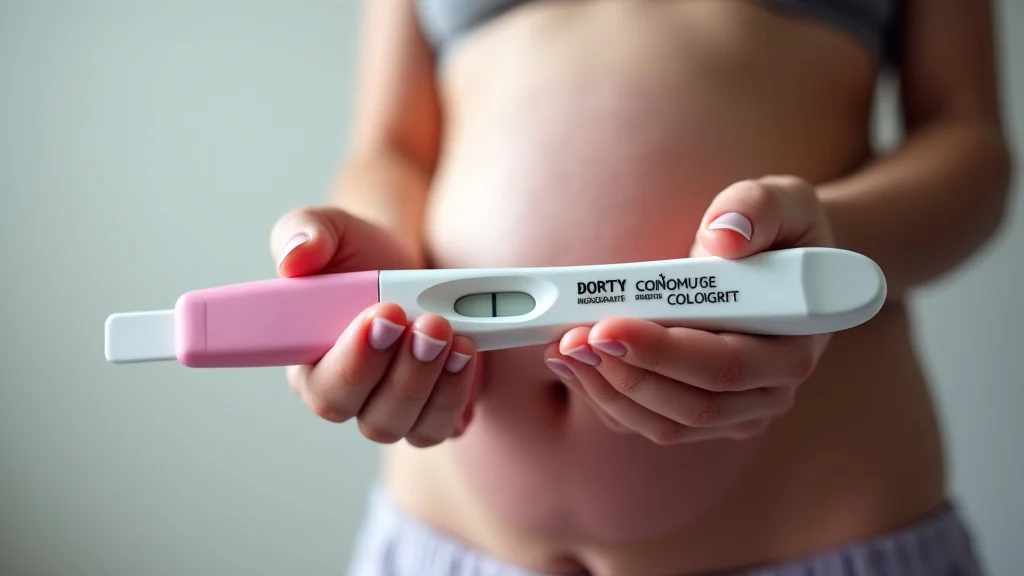
It can be confusing when you get a negative pregnancy test at 7 weeks. You might expect a positive result if you’ve missed your period and are having other signs. This is a common worry for many people, especially if this is your first time experiencing this.
Don’t fret; we’ll walk through exactly why this can happen and what it might mean in a simple, clear way. We’ll look at what the test results tell you and what to do next so you feel confident.
Key Takeaways
- A negative pregnancy test at 7 weeks can occur for several reasons, even with a missed period.
- Understanding how pregnancy tests work and hormone levels is key to interpreting results.
- Failing to follow test instructions can lead to inaccurate negative results.
- Medical conditions can sometimes affect hormone levels and test accuracy.
- Consulting a healthcare provider is essential for a definitive answer and guidance.
Understanding Pregnancy Tests And Hormones
Pregnancy tests look for a hormone called human chorionic gonadotropin (hCG). Your body starts making hCG shortly after a fertilized egg attaches to the uterine wall. Levels of hCG rise quickly in early pregnancy, roughly doubling every two to three days.
Home pregnancy tests detect this hormone in your urine. A positive test means hCG is present at a high enough level to be detected, indicating pregnancy. A negative test suggests hCG is not present above the test’s detection threshold.
This threshold varies between different brands and types of tests.
When you are 7 weeks pregnant, hCG levels are typically quite high. For most pregnancies, hCG levels are well above what even the most sensitive home tests can detect by this point. If you have a negative test at 7 weeks, it often means one of a few things is happening.
The test might have been taken too early for the hormone levels to register, even though you are experiencing symptoms. Alternatively, there might be an issue with the test itself or how it was used. It’s important to remember that early pregnancy symptoms can sometimes mimic other conditions, or even be attributed to stress or other hormonal shifts.
How Pregnancy Tests Detect hCG
Home pregnancy tests use a chemical reaction to detect hCG. They contain antibodies that bind to hCG molecules in your urine. When hCG is present, it triggers a color change or the appearance of a line on the test window.
Different tests have different sensitivities, meaning some can detect lower levels of hCG than others. A test with a lower sensitivity might give a false negative if your hCG levels are still below its detection limit. This is why choosing a sensitive test is often recommended for early pregnancy detection.
Even with a sensitive test, timing is everything.
The accuracy of a pregnancy test depends on several factors. The most important is the concentration of hCG in your urine. This concentration increases as pregnancy progresses.
Other factors include the expiration date of the test, how it was stored, and the time of day you take it. Taking the test with concentrated first-morning urine is usually best because hCG levels are highest then. If you drink a lot of fluids before testing, it can dilute your urine, potentially leading to a weaker hCG signal and a false negative result.
What hCG Levels Mean At 7 Weeks
By 7 weeks of pregnancy, which is about 5 weeks after conception, hCG levels are usually in the thousands of milli-international units per milliliter (mIU/mL). For example, typical hCG levels at 7 weeks can range from about 7,000 mIU/mL to over 70,000 mIU/mL. Most home pregnancy tests can detect hCG levels as low as 25 mIU/mL.
Therefore, if you are truly 7 weeks pregnant, a standard home pregnancy test should show a positive result.
When a negative result occurs at this stage, it strongly suggests that either you are not pregnant, or there’s a reason the hCG hasn’t reached detectable levels yet. It could also mean the test is not working correctly. Sometimes, a very early miscarriage can occur, where hCG levels rise initially but then drop before they become easily detectable on a home test.
This is a difficult possibility but one that a healthcare provider can help clarify.
Factors Affecting Test Results
Several things can influence whether a pregnancy test shows a positive or negative result, especially when you think you might be pregnant. Understanding these factors can help you interpret your results more accurately. It’s not just about having hCG in your system; it’s about having enough of it, at the right time, and using a test that can reliably detect it.
Timing Of The Test
One of the biggest reasons for a false negative is testing too early. Even though you feel 7 weeks pregnant, your body might not be quite that far along, or the pregnancy might have started developing a bit slower. Some women ovulate later in their cycle than they think.
If ovulation happened a week or two later than usual, you might only be 5 or 6 weeks pregnant instead of 7. In this case, your hCG levels might still be too low for a home test to detect.
The ideal time to take a home pregnancy test is usually after a missed period. For most women, this is about 14 days after ovulation. If your cycle is irregular, it can be harder to pinpoint this time.
If you took a test very early, before your missed period, and got a negative, it’s recommended to retest a few days later, especially if your period still hasn’t arrived. This gives your hCG levels more time to rise.
Test Sensitivity And Expiration
Pregnancy tests come with different sensitivity levels. Some are designed to detect very low levels of hCG (e.g., 10 mIU/mL), while others require higher levels (e.g., 50 mIU/mL). A less sensitive test might show a negative result even if a more sensitive one would show a positive.
Always check the package for the test’s sensitivity rating. If you got a negative on a less sensitive test at what you believe is 7 weeks, trying a highly sensitive test could give you a different answer.
Expired tests can also be unreliable. The chemicals in the test strips can degrade over time, making them less effective at detecting hCG. Always check the expiration date on the test packaging before using it.
Storing tests in a humid environment, like a bathroom, can also damage them. It’s best to store them in a cool, dry place away from direct sunlight.
Testing Procedures And Diluted Urine
How you take the test matters greatly. Most tests require you to hold the absorbent tip in your urine stream for a specific amount of time, typically 5 to 10 seconds. Or, you might need to dip the test strip into a cup of collected urine.
If you don’t follow these instructions precisely, the test may not work correctly, leading to an inaccurate negative. For instance, not holding it long enough might mean the test doesn’t absorb enough urine to detect hCG.
Drinking too much fluid before a pregnancy test can dilute your urine. When your urine is diluted, the concentration of hCG is lower, making it harder for the test to detect. This is why testing with your first-morning urine, which is naturally more concentrated, is generally recommended.
If you take the test later in the day after drinking a lot of water, you might get a false negative. This is a common mistake that can cause a lot of confusion and anxiety.
Reasons For A Negative Pregnancy Test At 7 Weeks
Even when you feel pregnant and have missed your period, a negative pregnancy test at 7 weeks warrants a closer look. Several scenarios could explain this unexpected result. It’s important to consider all possibilities rather than assuming one single reason applies to you.
Non-Pregnancy Related Symptoms
Many early pregnancy symptoms can be caused by other factors. Missed periods, for example, can be due to stress, significant weight changes, excessive exercise, hormonal imbalances, or certain medical conditions. Nausea, fatigue, and breast tenderness are also common symptoms that can occur at other times in your cycle or due to other health issues.
For instance, some women experience breast tenderness before their period starts.
Feeling symptoms associated with pregnancy does not always mean you are pregnant. Hormonal fluctuations happen throughout a woman’s reproductive life. If you have been trying to conceive, it’s easy to attribute every little change in your body to pregnancy.
However, it’s crucial to remember that these symptoms can be misleading. A negative pregnancy test, especially at 7 weeks, is a strong indicator that pregnancy is unlikely, but it doesn’t explain the symptoms themselves without further investigation.
Recent Or Early Miscarriage
A negative pregnancy test at 7 weeks could indicate a very early miscarriage that happened without you realizing it. Sometimes, a fertilized egg implants, and hCG levels start to rise, but the pregnancy doesn’t continue to develop. This is known as a chemical pregnancy or very early miscarriage.
In these cases, hCG levels may have been high enough to potentially trigger a positive test for a short period, but then they quickly dropped back to undetectable levels.
If a miscarriage has occurred, your period might arrive after a missed cycle, or you might experience some bleeding that you mistake for a light period. Your body would then clear any remaining hCG, resulting in a negative test. If you suspect this might be the case, especially if you experience unusual bleeding or cramping, it’s vital to seek medical advice.
A healthcare provider can confirm the situation and ensure you are recovering well.
Ectopic Pregnancy Considerations
While less common, an ectopic pregnancy is a serious condition where a fertilized egg implants outside the uterus, often in a fallopian tube. In an ectopic pregnancy, hCG levels typically rise slower than in a normal uterine pregnancy, or they may plateau. This can sometimes lead to a negative or faint positive pregnancy test, even when a pregnancy is present.
Symptoms of an ectopic pregnancy can include abdominal pain, shoulder pain, and vaginal bleeding, often accompanied by a missed period. Because of the potential severity of an ectopic pregnancy, any persistent symptoms combined with a confusing test result should prompt immediate medical attention. A doctor can perform diagnostic tests, such as ultrasounds and blood tests, to determine the location and viability of the pregnancy.
Medical Conditions Affecting hCG Levels
Certain medical conditions can interfere with hCG production or detection. For example, some tumors, like certain types of gestational trophoblastic disease, can produce hCG. However, these are rare.
More commonly, conditions affecting the pituitary gland or ovaries could potentially influence hormonal cycles. Kidney problems can also sometimes affect how hCG is cleared from the body, potentially impacting test results, though this is also uncommon.
It’s also worth noting that some medications can affect hormone levels. However, most common medications, including fertility drugs that contain hCG, are usually taken under medical supervision, and their effects on home pregnancy tests are generally understood. If you are taking any new medications or have a diagnosed medical condition that affects your hormones, it’s essential to discuss this with your doctor when interpreting pregnancy test results.
When To See A Doctor
A negative pregnancy test at 7 weeks, especially when accompanied by symptoms or a missed period, is a situation that often benefits from professional medical advice. While home tests are convenient, they aren’t always the definitive answer. Your doctor has access to more accurate diagnostic tools and can provide personalized guidance.
Persistent Symptoms Without A Positive Test
If you continue to experience symptoms of pregnancy, such as a missed period, nausea, or fatigue, but your home pregnancy tests remain negative, it’s time to consult a healthcare provider. There could be an underlying reason for your symptoms that is not related to pregnancy. Your doctor can run blood tests, which are more sensitive than urine tests and can detect even very low levels of hCG.
They can also investigate other potential causes for your symptoms.
Blood tests can provide a more precise measurement of hCG levels. This quantitative blood test can tell you exactly how much hCG is in your system, helping to confirm or rule out pregnancy. It can also help determine if the hCG levels are consistent with a viable pregnancy or if they suggest another issue, like an early loss or an ectopic pregnancy.
A doctor’s evaluation is crucial for peace of mind and proper care.
Irregular Periods And Cycle Tracking
For individuals with irregular menstrual cycles, pinpointing the exact timing of ovulation and potential conception can be challenging. This makes interpreting pregnancy test results more complicated. If you have irregular periods and get a negative test at what you believe to be 7 weeks, your doctor can help assess your cycle and ovulation patterns.
They might recommend tracking your cycles more closely using ovulation predictor kits or basal body temperature monitoring.
A doctor can also perform an ultrasound to visualize your uterus and ovaries. This can help determine if there are any signs of early pregnancy or other conditions affecting your reproductive health. Understanding your cycle is fundamental to understanding pregnancy test timing.
Without a regular cycle, the assumption of 7 weeks might be inaccurate, making the negative test result potentially misleading if taken too soon after conception.
Concerns About Ectopic Or Other Complications
If you experience severe abdominal pain, unusual vaginal bleeding, dizziness, or shoulder pain along with a negative or equivocal pregnancy test, seek immediate medical attention. These symptoms could indicate an ectopic pregnancy or another serious complication. Early diagnosis and treatment of an ectopic pregnancy are critical to prevent life-threatening rupture of the fallopian tube.
Your doctor will likely perform a pelvic exam, blood tests for hCG, and an ultrasound to assess the situation. Prompt medical intervention is the most important step in managing such situations. Don’t hesitate to go to the emergency room or call your doctor if you have any concerns about a potentially dangerous pregnancy complication.
Your health and safety are paramount.
Common Myths Debunked
Myth 1: A Negative Test At 7 Weeks Always Means You Are Not Pregnant.
Reality: While a negative pregnancy test at 7 weeks is a strong indicator that pregnancy is unlikely, it’s not always 100% definitive. Factors like testing too early, using an expired test, or having unusually low hCG levels can lead to a false negative. Medical conditions can also play a role.
Therefore, if symptoms persist or you have concerns, consulting a doctor is the best way to get a conclusive answer.
Myth 2: All Pregnancy Symptoms Mean You Are Pregnant.
Reality: Many symptoms commonly associated with early pregnancy, such as fatigue, nausea, breast tenderness, and missed periods, can also be caused by other factors. Stress, hormonal changes unrelated to pregnancy, dietary shifts, and underlying medical conditions can all mimic pregnancy symptoms. Relying solely on symptoms without a confirmed positive test can lead to misinterpretations.
Myth 3: You Only Need To Take One Pregnancy Test.
Reality: For the most accurate results, especially when dealing with potential timing issues or borderline hCG levels, retesting is often recommended. If you get a negative result but still suspect pregnancy, waiting a few days and retesting can be beneficial. This allows hormone levels to rise further if conception has occurred.
Using a different brand or a more sensitive test can also help confirm results.
Myth 4: Home Pregnancy Tests Are Always Accurate.
Reality: Home pregnancy tests are highly accurate when used correctly and at the right time. However, they are not infallible. False negatives can occur due to factors like improper use, diluted urine, or testing too early.
False positives are very rare but can happen due to certain medications or rare medical conditions. For the most reliable diagnosis, medical confirmation is often sought.
Frequently Asked Questions
Question: Can I be 7 weeks pregnant and still have a negative pregnancy test
Answer: While uncommon at 7 weeks, it is possible to have a negative test if you tested too early, used an expired test, or if your hCG levels are lower than expected due to various reasons. Consulting a doctor is recommended for clarification.
Question: What are the earliest signs of pregnancy if a test is negative
Answer: Early signs like a missed period, nausea, fatigue, and breast tenderness can occur even with a negative test. However, these symptoms can also be due to other causes, so a medical evaluation is important.
Question: How accurate are blood pregnancy tests compared to urine tests
Answer: Blood pregnancy tests are more sensitive than urine tests and can detect pregnancy earlier and at lower hCG levels. They can also measure the exact amount of hCG, providing more detailed information.
Question: Should I worry if my period is late but pregnancy tests are negative
Answer: It’s understandable to be concerned. A late period with negative tests could be due to stress, hormonal changes, or other factors. If it continues, or if you have other symptoms, speak with your doctor.
Question: What if I have pregnancy symptoms but multiple negative tests
Answer: This situation warrants a visit to your doctor. They can perform more sensitive tests, conduct an ultrasound, and investigate other possible causes for your symptoms to provide an accurate diagnosis.
Final Thoughts
Getting a negative pregnancy test at 7 weeks can be confusing, but it often means pregnancy is not present. Re-testing or seeing a doctor can provide clarity if symptoms persist. Understanding test timing and accuracy helps make sense of results.
Your health is the priority.
Leave a Reply