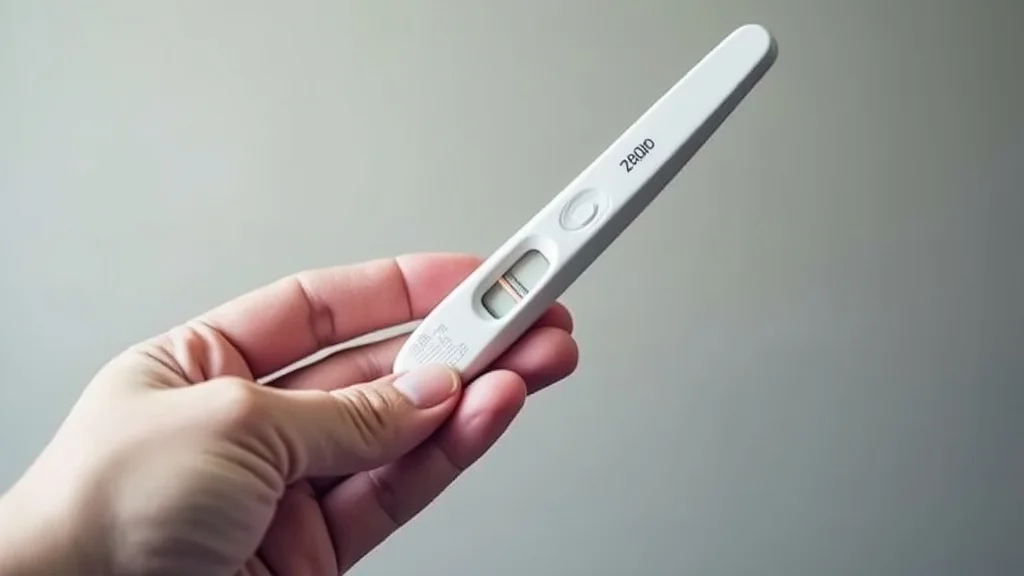
Seeing a faint line on a pregnancy test at 11 days past ovulation (11dpo) can be a little confusing, especially if it’s your first time. It’s super common for beginners to wonder if this faint positive means they are really pregnant or if it’s something else. Don’t worry, we’re here to help!
This post will break down exactly what that faint line means and what steps you should take next. We will cover everything you need to know in a simple way.
Key Takeaways
- A faint line on a pregnancy test at 11dpo is often a positive sign.
- Understanding how pregnancy tests work helps explain faint lines.
- What to do after seeing a faint positive result.
- When to retest for a clearer answer.
- Why early pregnancy hormone levels are important.
Understanding Pregnancy Tests
Pregnancy tests detect a hormone called human chorionic gonadotropin (hCG). This hormone is produced by the placenta shortly after a fertilized egg implants in the uterus. The levels of hCG start low and double roughly every 48 to 72 hours in early pregnancy. Home pregnancy tests are designed to detect even small amounts of hCG in your urine.
When you take a test, a chemical reaction occurs if hCG is present. This reaction causes a line or symbol to appear. If the line is very faint, it means that the amount of hCG detected is low. This is common in the very early stages of pregnancy because your hCG levels haven’t had enough time to rise significantly.
How Home Pregnancy Tests Work
Home pregnancy tests use a chemical that changes color when it comes into contact with hCG. The test strip contains antibodies that bind to hCG. When urine containing hCG flows over the strip, the hCG molecules attach to these antibodies. This binding triggers a chemical reaction that produces a visible line.
The intensity of the line usually depends on the concentration of hCG in your urine. A strong, clear line indicates a higher level of hCG, while a faint line suggests a lower level. Many tests have a control line that should always appear, indicating the test is working correctly. The second line, the test line, is where you look for signs of pregnancy.
Why hCG Levels Matter
The amount of hCG in your body is key to getting a clear positive result. Right after implantation, which can happen about 6 to 12 days after ovulation, hCG levels are very low. This is why a test taken too early might not detect it, or might only show a very faint line.
At 11 days past ovulation, implantation has likely occurred if you are pregnant. Your body has started producing hCG, but the levels might still be at the lower end of the detection range for some tests. This is perfectly normal and doesn’t necessarily mean anything is wrong. It just means your pregnancy is in its very early stages.
Interpreting a Faint Positive
A faint line on a pregnancy test 11dpo faint line is generally considered a positive result. Most modern home pregnancy tests are quite sensitive. They are designed to pick up even small amounts of hCG. So, if you see a line, even a faint one, it’s likely your body is telling you something important.
It’s important to remember that the darkness of the line doesn’t necessarily indicate the health or viability of the pregnancy. It simply reflects the concentration of hCG at that specific moment. Some women get very dark lines early on, while others have faint lines for a while. Both can lead to healthy pregnancies.
Factors Affecting Test Accuracy
Several factors can influence the accuracy of a pregnancy test and the appearance of a faint line. The time of day you test, how concentrated your urine is, and the sensitivity of the test itself all play a role.
Testing with your first-morning urine is often recommended because it is usually the most concentrated. This means any hCG present will be in a higher concentration, making it easier for the test to detect. If you test later in the day after drinking a lot of fluids, your urine might be diluted, leading to a weaker signal.
When to Retest
If you see a faint line, the best course of action is usually to retest in a day or two. Your hCG levels will likely have increased during this time. A retest will help confirm whether the faint line was a true positive or a potential evaporation line or a faulty test.
Retesting will give you a clearer picture. If the line becomes darker and more distinct, it’s a strong indication that you are pregnant. If the line remains faint or disappears, it might be worth consulting a doctor or trying a different brand of test.
The Waiting Game
The days between seeing a faint line and retesting can feel like an eternity. It’s natural to feel anxious or excited. Try to be patient with your body and the testing process. Each day that passes allows your hCG levels to rise.
This waiting period is also a good time to start thinking about your next steps. If you get a confirmed positive, you’ll want to schedule an appointment with your doctor. They can confirm the pregnancy with blood tests and ultrasounds and provide guidance for a healthy pregnancy.
Types of Pregnancy Tests
There are two main types of pregnancy tests: urine tests and blood tests. Home pregnancy tests are urine tests. Blood tests, done by a healthcare provider, are generally more sensitive and can detect hCG earlier and in smaller amounts than urine tests.
Home pregnancy tests come in various sensitivities, measured in milli-international units per milliliter (mIU/mL). A lower number means the test is more sensitive and can detect pregnancy earlier. For example, a 10 mIU/mL test is more sensitive than a 25 mIU/mL test.
Understanding Evaporation Lines
One of the reasons for a faint line might be an evaporation line. This happens when the urine evaporates from the test strip after the test has been read. An evaporation line typically appears as a colorless or grayish line in the test window.
It’s important to read your pregnancy test within the timeframe specified by the manufacturer, usually within 5-10 minutes. If you see a line appear much later, it’s more likely to be an evaporation line. A true positive line usually has color.
What a Faint Line Can Mean
A faint line at 11dpo can mean a few things. Most commonly, it means you are pregnant, and your hCG levels are still low. It could also mean that you are testing very early, even at 11dpo, and the hCG is just starting to be detectable.
In rare cases, a faint line could be due to a chemical pregnancy, where a fertilized egg implants but doesn’t continue to develop. Or, it could be a faulty test. That’s why retesting is so crucial.
Pregnancy Test 11dpo Faint Line: Next Steps
So, you’ve seen that faint line. What should you do now? The most important thing is to stay calm and follow a clear plan. This isn’t the time for panic, but for informed action.
Your next steps depend on the test’s instructions and your personal situation. It’s always best to follow the guidelines provided by the test manufacturer. They know their product best and can offer specific advice.
Confirming the Result
To confirm if the faint line is truly a positive, retesting is essential. Use a different test, preferably from a different brand, and test again in 24 to 48 hours. Use your first-morning urine for the most accurate results.
If the second test also shows a faint line, it’s a good indication of pregnancy. If the line is darker, your confidence can grow. If the second test is negative, or the line remains faint and indistinct, it’s time to consider other possibilities or consult a healthcare professional.
Consulting a Doctor
Once you have a confirmed positive pregnancy test, whether it’s a strong line or a faint line that becomes darker, it’s time to contact your doctor or a healthcare provider. They can perform a blood test, which is more sensitive than urine tests, to confirm the pregnancy and measure your hCG levels precisely.
Your doctor can also schedule your first prenatal appointment. This appointment is crucial for discussing your health, confirming the pregnancy, and starting your prenatal care. They will be able to answer all your questions and provide support throughout your pregnancy.
Understanding Early Pregnancy Hormones
The hormone hCG is the primary indicator of pregnancy detected by home tests. Its levels rise rapidly in the first few weeks after conception. At 11dpo, if implantation occurred around 6-12 days ago, hCG could be present in amounts between 10 and 50 mIU/mL, which is detectable by sensitive home tests.
The doubling of hCG levels is a key sign of a healthy, progressing pregnancy. If your levels are rising as expected, your doctor will be able to see this through serial blood tests. This is why a faint line at 11dpo is often a good sign, as it indicates hCG production has begun.
Factors Influencing Faint Lines
The appearance of a faint line can be influenced by several factors. It is not always a straightforward “yes” or “no” answer, which is why understanding these factors is important for interpreting your test.
Test Sensitivity
The sensitivity of a pregnancy test refers to the lowest level of hCG it can detect. Highly sensitive tests can detect pregnancy as early as 10 days before a missed period, sometimes even earlier. A test with a sensitivity of 10 mIU/mL will show a line at a lower hCG concentration than a test with a sensitivity of 25 mIU/mL.
If you used a highly sensitive test at 11dpo, you are more likely to detect low levels of hCG, resulting in a faint line. This doesn’t mean the pregnancy is less likely to progress, just that the hCG level is still building.
Hydration Levels
Your hydration level on the day of testing can significantly impact the concentration of hCG in your urine. If you have been drinking a lot of fluids, your urine will be more diluted. This can lead to a weaker signal on the test, even if you are pregnant.
For this reason, it is often recommended to test with your first-morning urine. During the night, your body reabsorbs water, making your urine more concentrated. This increases the chances of detecting even low levels of hCG.
Timing of Ovulation and Implantation
The exact timing of ovulation and implantation can vary. Ovulation is when an egg is released from the ovary, and implantation is when the fertilized egg attaches to the uterine wall. Both events are critical for pregnancy to establish.
If ovulation occurred later than you thought, or if implantation happened on the later side of the typical window, your hCG levels might still be quite low at 11dpo, even if you are pregnant. This can result in a faint positive line.
Common Myths Debunked
Many beliefs and myths surround pregnancy tests and faint lines. Let’s clear up some of the most common ones to help you feel more confident in your results.
Myth 1: A faint line means you’re not pregnant or it’s a false positive.
Reality: While a faint line can sometimes be confusing, it is usually a sign of pregnancy. Pregnancy tests are designed to detect hCG, and even a small amount of this hormone can produce a visible line. False positives are very rare.
More often, a faint line indicates very early pregnancy with low hCG levels.
Myth 2: The darker the line, the healthier the pregnancy.
Reality: The darkness of the line primarily reflects the concentration of hCG in your urine at the time of testing. It doesn’t necessarily correlate with the health or viability of the pregnancy. Many healthy pregnancies start with very faint lines that gradually darken over time.
Myth 3: You can get a faint positive from drinking certain things.
Reality: Pregnancy tests detect the hormone hCG, which is produced by the body after conception. No food or drink can artificially create hCG and cause a positive pregnancy test result. Any line that appears due to something other than hCG is usually an evaporation line or an error with the test.
Myth 4: If you’ve had a faint line before and weren’t pregnant, this one must be wrong too.
Reality: Each cycle is different, and your body’s hormone levels can fluctuate. A faint line in a previous cycle might have been due to a different hormonal situation or a less sensitive test. If you see a faint line now, especially if it darkens over subsequent tests, it’s worth taking it as a potential positive.
Frequently Asked Questions
Question: Is a faint line at 11dpo definitely a positive?
Answer: A faint line at 11dpo is usually a positive result, but it’s best to retest in 1-2 days to confirm. It means hCG is likely present in your urine, but at a low level.
Question: How soon can I retest after seeing a faint line?
Answer: You can retest in 24 to 48 hours. This allows your hCG levels to rise, which should result in a darker line if you are pregnant.
Question: What is an evaporation line?
Answer: An evaporation line is a colorless or grayish line that appears on a pregnancy test after the recommended reading time. It’s caused by urine evaporating from the test strip and is not a sign of pregnancy.
Question: Should I use first-morning urine for retesting?
Answer: Yes, using first-morning urine is highly recommended for retesting. It is the most concentrated, meaning any hCG present will be at its highest level, making it easier to detect and leading to a clearer result.
Question: What if the faint line is still there after a week?
Answer: If a faint line persists for over a week, even with retesting, it’s a strong indication of pregnancy. You should contact your doctor for a confirmation blood test and to begin prenatal care.
Summary
Seeing a faint line on a pregnancy test at 11dpo is a common experience and often a sign of early pregnancy. This usually means your body is producing hCG, but the levels are still low. Retesting in a couple of days with first-morning urine is the best next step. If the line darkens, contact your doctor to confirm and start your prenatal journey. You’ve got this!
Leave a Reply