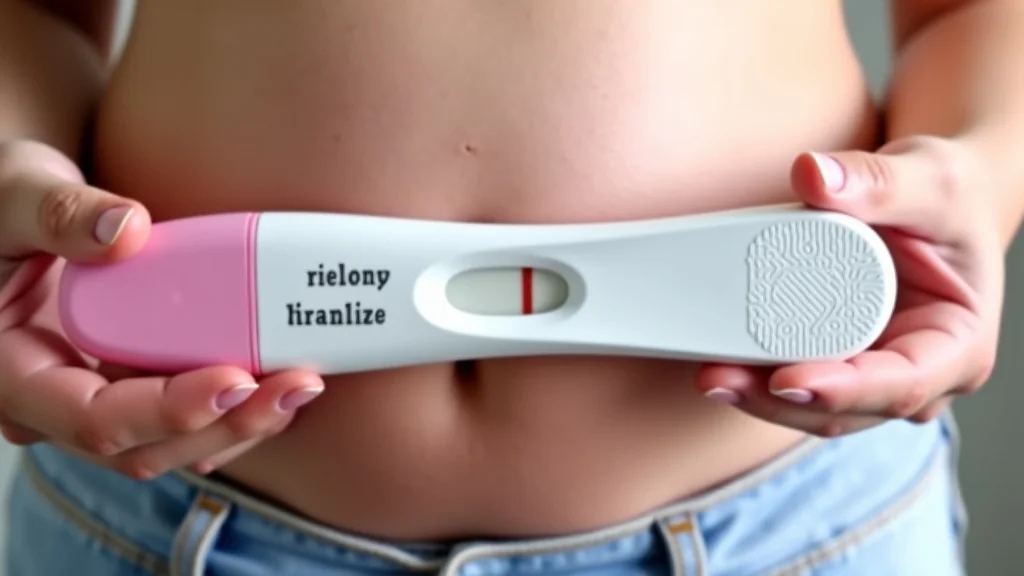
Wanting to know if you’re pregnant early is totally normal. Many people wonder about taking a pregnancy test 3 days before missed period. It can feel a bit tricky because you want accurate results right away.
This guide makes it super simple. We’ll walk through everything you need to know, step-by-step. Get ready to find out what you need to do next.
Key Takeaways
- You can often get accurate results with a pregnancy test a few days before your period is due.
- Timing and the type of test matter for early detection.
- Understanding how pregnancy tests work helps you get reliable answers.
- Different tests have different sensitivities for detecting pregnancy hormones.
- Knowing when to test can reduce the chances of a false negative.
- Early testing allows for quicker decisions and next steps.
When Can You Test For Pregnancy Early
Finding out if you’re pregnant as soon as possible is a common wish. Many people wonder about using a pregnancy test 3 days before missed period. This desire for early confirmation is understandable.
The challenge lies in ensuring the test is accurate when your body is just beginning to produce pregnancy hormones. This section explains the science behind early testing and what you need to know to get reliable results before your expected period.
Understanding Pregnancy Hormones
Pregnancy tests work by detecting a hormone called human chorionic gonadotropin, or hCG. This hormone is produced by the cells that will eventually form the placenta. hCG levels start to rise rapidly after implantation, which is when the fertilized egg attaches to the uterine wall.
Implantation typically happens about 6 to 12 days after ovulation. The amount of hCG in your body doubles about every 48 to 72 hours in the early weeks of pregnancy.
For a pregnancy test to detect hCG, there needs to be a sufficient amount present in your urine. This is why testing too early can sometimes lead to a false negative result. Even if you are pregnant, the hCG level might be too low for the test to detect it.
The sensitivity of different pregnancy tests varies, meaning some can detect lower levels of hCG than others.
How Early Can Pregnancy Tests Detect hCG
Most home pregnancy tests are designed to detect hCG levels around the time of your missed period. However, many modern tests are much more sensitive. Some of the most sensitive tests can detect hCG as early as 10 days after ovulation.
If your cycle is regular, this often means you can test a few days before your period is expected.
For example, if you ovulate around day 14 of a 28-day cycle, and implantation occurs 10 days later (day 24), you might have detectable hCG levels by day 26. This would be about 2 days before your period is due. Testing 3 days before your missed period means you are aiming to detect hCG very early in its rise.
It’s a time when the hormone might be present but still at lower levels.
Factors Affecting Early Test Accuracy
Several factors influence whether you can get an accurate result when testing early. The most critical is the timing relative to ovulation and implantation. If you ovulate later than usual in your cycle, or if implantation is delayed, the hCG levels will be lower when you test.
The sensitivity of the pregnancy test is also a major factor. A more sensitive test can detect smaller amounts of hCG.
The concentration of hCG in your urine also plays a role. It is usually highest in the morning, so testing with your first urine of the day can increase the chances of a positive result if you are pregnant. Using diluted urine from drinking a lot of fluids can lower hCG concentration, potentially leading to a false negative.
Even stress or certain medical conditions can indirectly affect hormone levels or your cycle, making early testing more challenging.
Understanding How Pregnancy Tests Work
To feel confident about testing early, it’s helpful to know the basics of how pregnancy tests function. They are designed to be user-friendly, but a little knowledge goes a long way. This part explains the science behind the tests, focusing on the key hormone they detect and how different test sensitivities can impact your results, especially when considering a pregnancy test 3 days before missed period.
The Role of hCG Hormone
As mentioned, the star player in pregnancy tests is human chorionic gonadotropin (hCG). Once a fertilized egg implants in the uterus, cells that will form the placenta begin producing hCG. This hormone is the universal signal of pregnancy.
Its levels rise quickly in the early days and weeks. A pregnancy test detects hCG by using antibodies that bind to the hormone.
These antibodies are often linked to a colored dye. When the urine sample passes over the test strip, if hCG is present, it binds to the antibodies. This binding triggers a reaction that causes a line, symbol, or word to appear, indicating a positive result.
The stronger the color or clearer the symbol, the higher the concentration of hCG detected.
Sensitivity Levels of Pregnancy Tests
Pregnancy tests come with different sensitivity ratings, usually measured in milli-international units per milliliter (mIU/mL). This number tells you the lowest level of hCG the test can detect. A lower mIU/mL number means the test is more sensitive and can detect pregnancy earlier.
For example, a test with a sensitivity of 10 mIU/mL is more sensitive than one with a sensitivity of 25 mIU/mL. If you are considering a pregnancy test 3 days before missed period, opting for a highly sensitive test (e.g., 10 mIU/mL) is generally recommended. This increases your chances of getting an accurate result if pregnancy has occurred, even at lower hCG levels.
Here’s a general guide to test sensitivities:
| Test Sensitivity (mIU/mL) | When it can potentially detect hCG |
|---|---|
| 10-15 mIU/mL | As early as 10-12 days past ovulation (around 4-5 days before missed period) |
| 20-25 mIU/mL | Around the time of your missed period |
| 50 mIU/mL or higher | Typically a few days after your missed period |
It’s important to remember that these are general timelines. Individual hCG production rates vary, and other factors like urine concentration also matter.
Types of Pregnancy Tests
Home pregnancy tests primarily come in two forms: urine tests and blood tests. Urine tests are the most common and are readily available at drugstores and supermarkets. They work by detecting hCG in your urine.
Blood pregnancy tests are performed in a doctor’s office. They are more sensitive than urine tests and can detect hCG earlier, sometimes as early as 7 days after ovulation. There are two types of blood tests: qualitative and quantitative.
A qualitative test simply checks if hCG is present, while a quantitative test measures the exact amount of hCG in your blood. For most people seeking to test at home, urine tests are the practical choice.
Within urine tests, you’ll find different formats:
- Dipstick tests: You dip the absorbent end of the stick into a urine sample.
- Midstream tests: You hold the absorbent end directly in your urine stream.
- Digital tests: These often provide results in words like “Pregnant” or “Not Pregnant” instead of lines.
All these types rely on the same hCG detection technology. The main difference is user convenience and how the result is displayed.
Best Time To Take A Pregnancy Test Early
Deciding when to take a pregnancy test, especially before your expected period, is key to getting a reliable answer. This section focuses on the optimal timing for a pregnancy test 3 days before missed period, considering your menstrual cycle and hCG levels. We’ll cover when your body is most likely to show detectable pregnancy hormones.
Understanding Your Cycle for Accuracy
To test accurately before your period, it’s essential to have a good understanding of your menstrual cycle. A typical cycle is about 28 days, with ovulation occurring around day 14. However, cycles can vary significantly from person to person.
If your cycles are irregular, it can be harder to pinpoint the exact time of ovulation and implantation.
Knowing your cycle helps you estimate when you ovulated. If you track ovulation using methods like basal body temperature (BBT) charting or ovulation predictor kits (OPKs), you can get a clearer picture. For instance, if you know you ovulated 10 days ago, testing 3 days before your expected period would be about 13 days past ovulation.
This timing increases your chances of detecting hCG if pregnancy has occurred.
When Implantation Occurs
Implantation is the event that signals the start of pregnancy and the production of hCG. It usually occurs 6 to 12 days after ovulation. If implantation happens early in this window, and you are using a sensitive test, you might get a positive result before your missed period.
For example, if ovulation occurred on day 14 and implantation happened on day 18 (4 days after ovulation), hCG production would begin. By day 25 (11 days after ovulation), hCG levels might be high enough for a sensitive test to detect. If your period is due around day 28, then testing around day 25 or 26, which is 2-3 days before your missed period, could yield accurate results.
The Importance of First Morning Urine
When you are testing early for pregnancy, especially a pregnancy test 3 days before missed period, the concentration of hCG in your urine is likely to be lower than at later stages. For this reason, it is highly recommended to use your first urine of the morning. Your body has been processing fluids overnight, and the hCG in your system will be most concentrated at this time.
Testing with diluted urine, perhaps because you drank a lot of water before bed or in the morning, can lead to a weaker signal or even a false negative. A concentrated sample ensures that even small amounts of hCG have a better chance of being detected by the test. If you test later in the day, try to limit your fluid intake for a few hours beforehand to concentrate your urine.
Testing 3 Days Before Your Period
Testing 3 days before your expected period is considered early testing. It is possible to get an accurate result at this time, but it depends heavily on the factors discussed: your cycle timing, ovulation, implantation, and the sensitivity of the test you use. Not all tests are sensitive enough for this early detection.
If you test 3 days before your period and get a negative result, but you still suspect you might be pregnant, it’s a good idea to test again a few days later, ideally on the day your period is due. Sometimes, hCG levels just need a little more time to become detectable. A repeat test can provide a more definitive answer.
Consider the following scenarios for testing early:
- Scenario 1: Regular Cycle, Early Implantation
- Cycle length: 28 days
- Ovulation: Day 14
- Implantation: Day 18 (4 days post-ovulation)
- hCG starts rising.
- Testing 3 days before period (Day 25): This is 11 days post-ovulation and 7 days post-implantation. With a sensitive test (10-15 mIU/mL), a positive result is possible.
- Scenario 2: Irregular Cycle, Later Implantation
- Cycle length: Varies, say ovulation on Day 20 this month.
- Implantation: Day 28 (8 days post-ovulation)
- hCG starts rising.
- Period expected around Day 35.
- Testing 3 days before period (Day 32): This is 12 days post-ovulation and 4 days post-implantation. hCG levels might still be too low for a sensitive test to detect. A retest closer to the missed period (Day 35) is advisable.
Interpreting Pregnancy Test Results
Once you’ve taken a pregnancy test, understanding what the result means is crucial. This part guides you through interpreting the lines, symbols, or digital readouts. It’s especially important when you’ve taken a pregnancy test 3 days before missed period, as faint lines can sometimes cause confusion.
Understanding Positive Results
A positive pregnancy test result means that hCG has been detected in your urine. Even a faint positive line usually indicates pregnancy. This is because the test detected a level of hCG above its threshold.
If you see a positive result, congratulations! It’s generally recommended to schedule an appointment with your doctor to confirm the pregnancy and discuss next steps.
The intensity of the line can sometimes offer clues, though it’s not a precise measure of how far along you are. A darker line usually means higher hCG levels, which could indicate you are further along in the pregnancy or that your hCG is rising rapidly. A very faint line on an early test might mean you are very early in the pregnancy, or it could be an evaporation line (more on that later).
Understanding Negative Results
A negative pregnancy test result means that hCG was not detected at a level sufficient to trigger a positive reading. If you tested early, a negative result does not always mean you are not pregnant. It could simply mean that it’s too early to detect the hCG levels.
If you get a negative result but your period still hasn’t arrived, it’s advisable to retest in a few days, particularly if you’ve used a less sensitive test or tested very early. If your period arrives as expected, then the negative result was likely accurate. If your period remains absent and you continue to get negative results, it’s wise to consult a doctor to explore other reasons for a missed period.
Dealing with Faint Lines and Evaporation Lines
Faint lines are common with early pregnancy testing. If you see a faint line, it’s usually a positive sign. However, it’s important to distinguish it from an evaporation line.
An evaporation line appears as the test dries and can sometimes be mistaken for a faint positive.
Evaporation lines are typically colorless or gray and appear in the test window where a positive line would form. They usually show up after the test’s recommended reading time. Always read your test results within the timeframe specified in the test instructions (usually 5-10 minutes).
If you are unsure about a faint line, it’s best to retest with a new test, preferably with first morning urine.
What to Do After Testing
Regardless of your test result, the next step usually involves consulting a healthcare professional. If your test is positive, your doctor will confirm the pregnancy, likely with a blood test or an ultrasound, and start your prenatal care. They will also be able to give you a more accurate estimate of your due date.
If your test is negative, but your period is still missing, your doctor can help determine the reason. This could range from stress, hormonal imbalances, or other medical conditions. They might also recommend retesting.
If you have taken a pregnancy test 3 days before missed period and it was negative, but your period is late and you are still concerned, a doctor’s visit is the best course of action.
Common Myths Debunked
Myth 1: A Faint Line Always Means You Are Not Pregnant
This is a common misconception. In many cases, a faint positive line on a pregnancy test, especially when testing early, is a genuine indicator of pregnancy. The line’s faintness is often due to low levels of hCG detected by the test.
As the pregnancy progresses, hCG levels rise, and the line typically becomes darker. Always follow the test instructions and retest if you are unsure. A faint line, if it appears within the specified time frame and has color, usually means yes, you are pregnant.
Myth 2: You Can Get Pregnant from Accidental Contact
This is a serious myth that can cause undue anxiety. Pregnancy can only occur through sexual intercourse where semen is ejaculated into the vagina, or through assisted reproductive technologies like IVF. Accidental contact, such as touching genitals or sharing towels, cannot lead to pregnancy.
It’s important to understand the biological process of conception to dispel such myths.
Myth 3: Testing Too Early Will Ruin the Test or Give Wrong Results Permanently
Testing too early does not ruin the test. It simply means that the hCG hormone level might be too low for the test to detect. If you test too early and get a negative result, it doesn’t permanently affect subsequent tests.
You can simply retest a few days later when hCG levels are likely to be higher. The test remains functional for future use within its expiration date.
Myth 4: Home Pregnancy Tests Are Never Accurate
Home pregnancy tests are highly accurate when used correctly. Studies show they are about 99% accurate when performed on the day of a missed period. The accuracy can decrease when testing earlier than recommended or if the test instructions are not followed precisely.
Factors like expired tests, using diluted urine, or misinterpreting results can affect accuracy, but the tests themselves are reliable tools.
Frequently Asked Questions
Question: Can I take a pregnancy test 3 days before my period and get a correct result
Answer: Yes, you often can. Using a highly sensitive pregnancy test with your first morning urine increases your chances of getting an accurate result 3 days before your missed period, provided implantation and hCG production have occurred.
Question: What is the earliest I can detect pregnancy
Answer: The earliest pregnancy can typically be detected is about 10 to 12 days after ovulation, which can be 4 to 5 days before your missed period, using a very sensitive test.
Question: What should I do if I get a faint positive line
Answer: A faint positive line usually means you are pregnant. It’s recommended to retest in a day or two, ideally with first morning urine, and then schedule an appointment with your doctor to confirm.
Question: Can stress affect my pregnancy test results
Answer: Stress itself doesn’t directly alter a pregnancy test result. However, severe stress can sometimes disrupt your menstrual cycle, making it difficult to pinpoint when to test or potentially causing a missed period for other reasons.
Question: How can I ensure the most accurate early pregnancy test result
Answer: Use a highly sensitive test (e.g., 10 mIU/mL), test with your first morning urine, ensure you know when you ovulated, and follow the test instructions exactly. Retesting a few days later is also advised.
Final Thoughts
Testing for pregnancy 3 days before your missed period is possible and often accurate with the right approach. Using a sensitive test and first morning urine are key. Remember that a faint line is usually positive.
If you get a negative result but still suspect pregnancy, retest later. Always consult your doctor to confirm any results and guide your next steps.
Leave a Reply