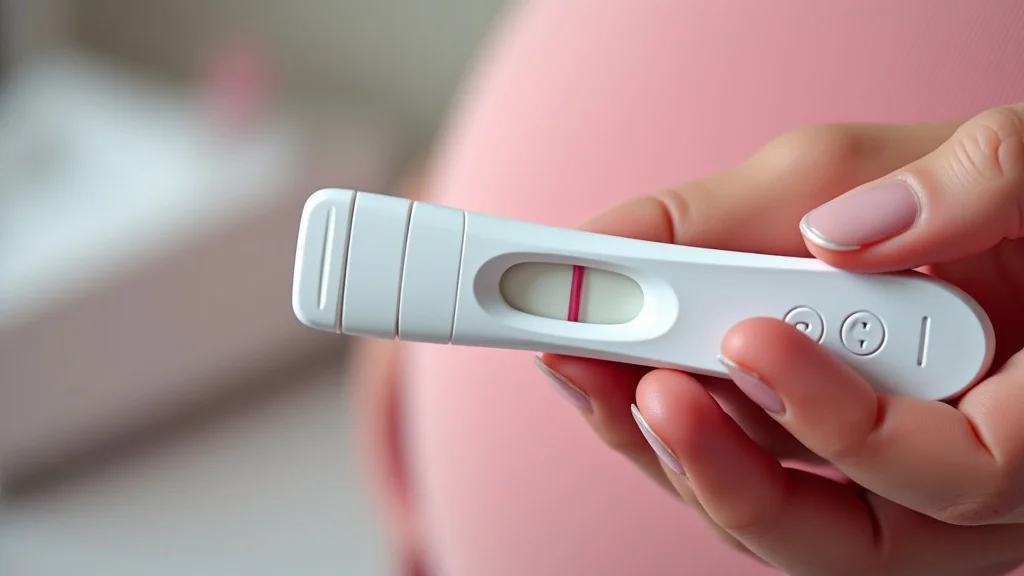
It might sound a little confusing, but wondering if you can take a pregnancy test on period is actually a common question, especially for folks new to this. Sometimes our bodies do tricky things, and a period might not be what we think it is. Or maybe you’re just trying to be extra sure.
Don’t worry, it’s totally okay to feel unsure! We’ll break down exactly what you need to know in a super simple way, step by step. This guide will help clear things up so you know what to do next.
Key Takeaways
- You can often take a pregnancy test during your period, but timing is key.
- A pregnancy test detects the hormone hCG, which is present even if you’re bleeding.
- Heavy bleeding can sometimes affect test accuracy, making it harder to read results.
- If your period is unusual or you have other pregnancy symptoms, testing is still a good idea.
- Home pregnancy tests are quite accurate when used correctly.
- There are specific times that give the most reliable results.
Understanding Pregnancy Tests And Your Cycle
Home pregnancy tests work by detecting a hormone called human chorionic gonadotropin (hCG). This hormone is produced shortly after a fertilized egg implants in the uterus. hCG levels rise rapidly in early pregnancy.
Even if you are experiencing some bleeding, it is possible for hCG to be present if implantation has occurred. This is why the question of taking a pregnancy test on your period arises. For many, it’s a way to get immediate answers when faced with an unexpected situation.
The confusion often stems from confusing pregnancy bleeding with a regular menstrual period. Implantation bleeding, which can happen when a fertilized egg attaches to the uterine wall, can sometimes be mistaken for a light period. It is usually lighter, shorter, and may be pinkish or brownish in color, unlike a typical menstrual flow.
However, it can vary greatly from person to person. Knowing the difference helps you understand why testing during a perceived period might be necessary.
The Hormone hCG Explained
Human chorionic gonadotropin (hCG) is a vital hormone for maintaining early pregnancy. It is produced by cells that will eventually form the placenta. After conception and implantation, hCG levels start to increase.
These levels typically double every 48 to 72 hours in the first few weeks of pregnancy. This rapid rise is what most home pregnancy tests are designed to detect. The hormone is released into your bloodstream and also appears in your urine.
This is why urine tests are effective.
The presence of hCG is the primary indicator of pregnancy. Early on, levels are very low, making it harder for tests to detect them. This is why waiting until you miss your period is often recommended for the most accurate results.
However, as hCG levels increase, they become more easily detectable by sensitive home pregnancy tests. Understanding how hCG works is key to knowing why testing during bleeding might still give you an answer.
Practical Application: Imagine someone is trying to conceive. They might experience light spotting around the time their period is due. If they take a pregnancy test during this spotting, and it shows positive, it’s likely due to the presence of hCG from an early pregnancy.
This spotting would not be a true menstrual period. The test is detecting the pregnancy hormone, not the blood flow itself.
Types Of Bleeding During Early Pregnancy
It’s important to distinguish between different types of bleeding that can occur around the time of a missed period. A normal menstrual period is a shedding of the uterine lining that typically lasts a few days. Its flow is usually consistent and expected on a monthly cycle.
In contrast, implantation bleeding is much lighter and often occurs about 6 to 12 days after conception. It might last only a few hours to a couple of days and can be pink, red, or brown.
Other reasons for bleeding during what seems like a period can include hormonal imbalances, certain medical conditions, or even stress. Ectopic pregnancies, though rare, can also cause bleeding and pain. Because of these variations, if you are unsure about the nature of your bleeding or if it is accompanied by other symptoms, taking a pregnancy test can provide clarity.
It’s a tool to help you understand what’s happening within your body.
Case Study Example: Sarah thought her period had started, but it was unusually light and only lasted one day. She felt a bit off and decided to take a pregnancy test a few days later. The test was positive.
Her doctor confirmed she was indeed pregnant, and the light bleeding she experienced was implantation bleeding, not her period. This highlights how a pregnancy test can provide crucial information even when bleeding occurs.
When To Take A Pregnancy Test For Best Accuracy
The best time to take a pregnancy test is usually after you have missed your period. Most home pregnancy tests are designed to detect hCG levels that are typically high enough after a missed period to give a reliable result. Taking a test too early, especially when you have bleeding, can lead to a false negative.
This means the test might say you’re not pregnant when you actually are, because hCG levels haven’t risen high enough yet to be detected.
If you are experiencing bleeding and are concerned about pregnancy, testing after a few days of observing the bleeding, or ideally after a missed period, can provide more accurate results. For example, if you believe you might have had implantation bleeding and your period is now late, that’s a good time to test. Using first-morning urine can also increase accuracy, as hCG is more concentrated then.
This offers the highest chance of detecting even low levels of the hormone.
Sample Scenario: A person has unprotected sex and then experiences some spotting a week later. They are unsure if this spotting is implantation bleeding or the start of their period. If they wait until their period is officially late according to their usual cycle and then take a pregnancy test, they will get a more accurate result.
If they test during the spotting, they risk a false negative.
Taking A Pregnancy Test During Your Period
So, can you really take a pregnancy test on your period? The short answer is yes, but with important considerations. A pregnancy test detects hCG, a hormone that is produced only after conception.
If you are pregnant, even if you are bleeding, hCG will be in your system. Therefore, a pregnancy test can detect hCG even during a period. However, the accuracy and interpretation of the results can be tricky.
The main challenge is distinguishing between pregnancy-related bleeding and a true menstrual period. If the bleeding is indeed a normal period, a pregnancy test taken during it will most likely be negative, as there would be no hCG. But if the bleeding is implantation bleeding or some other form of spotting related to an early pregnancy, a test could potentially be positive.
This is where understanding the nuances of timing and test sensitivity becomes crucial for beginners.
How Bleeding Might Affect Test Results
The type and amount of bleeding can influence the accuracy of a pregnancy test. If you are experiencing a heavy flow, similar to a normal period, it’s less likely that the bleeding is implantation bleeding. In this scenario, a pregnancy test would typically be negative unless there’s an unusual situation like a very early miscarriage that still has hCG levels present.
The sheer volume of blood can also dilute urine samples, potentially making it harder for a sensitive test to pick up low levels of hCG.
Conversely, if the bleeding is light spotting, it could be implantation bleeding. In this case, a pregnancy test would be able to detect hCG if pregnancy has occurred. However, even with light spotting, testing too early might still yield a false negative if hCG levels are not yet high enough.
Using first-morning urine, which is more concentrated, can help overcome some of these potential issues. It ensures the highest possible concentration of hCG is available for detection.
Statistical Insight: Studies show that home pregnancy tests can detect hCG levels as low as 25 mIU/mL. However, implantation typically occurs 6-12 days after ovulation. hCG levels are usually very low in the first few days after implantation.
Therefore, testing even during light spotting before a missed period might not be reliable enough. Waiting a few more days after the spotting has stopped and after your expected period date generally increases accuracy.
Interpreting A Positive Test During A Period
If you take a pregnancy test during your period and it shows a positive result, it is highly likely that you are pregnant. Even if you are experiencing bleeding, the positive result indicates the presence of hCG. This bleeding might be implantation bleeding or another type of pregnancy-related bleeding.
It is crucial not to disregard a positive test result simply because you are bleeding. This situation warrants further investigation by a healthcare professional.
A doctor can perform further tests, such as blood tests to measure hCG levels more precisely and an ultrasound, to confirm the pregnancy and assess its viability. They can also help determine the cause of the bleeding. They will want to rule out any complications.
This step is vital to ensure your health and the health of the potential pregnancy. Always consult with a doctor if you get a positive result, especially with concurrent bleeding.
Interpreting A Negative Test During A Period
If you take a pregnancy test during your period and it shows a negative result, it most likely means you are not pregnant. This is especially true if the bleeding you are experiencing is a typical menstrual period. In this case, the test is accurately reflecting the absence of detectable hCG levels.
However, if you are still concerned or have experienced unusual bleeding, it is wise to re-test a few days later, particularly if your period stops and you still have symptoms.
A false negative can occur if you test too early. This happens when hCG levels are present but not yet high enough for the test to detect. If your bleeding was very light and you suspect implantation bleeding, but the test is negative, wait a few days.
If your period doesn’t start as expected or if other pregnancy symptoms appear, taking another test is recommended. This approach helps ensure you get the most accurate information possible about your situation.
Comparison Table: Understanding the differences between normal periods and potential pregnancy bleeding can be tricky. Here’s a simple comparison.
| Characteristic | Normal Period | Implantation Bleeding |
|---|---|---|
| Flow | Moderate to heavy | Light spotting |
| Duration | 3-7 days | Few hours to 2 days |
| Color | Bright red to dark red | Pinkish or brownish |
| Timing | Regular monthly cycle | About 6-12 days after ovulation/conception |
| Associated Symptoms | Cramps, bloating | Mild cramping, breast tenderness |
Understanding Irregular Bleeding And Pregnancy
Sometimes, what appears to be a period isn’t a typical one. Irregular bleeding can happen for many reasons, and it can be a source of confusion when trying to determine pregnancy. If your bleeding is unusually light, short, or has a different color than your normal period, it might not be a true menstrual cycle.
This is precisely why taking a pregnancy test can be a helpful step, even if you think you’re having your period.
Understanding these variations is key. For instance, hormonal fluctuations, stress, changes in diet or exercise, or certain medical conditions can all lead to irregular cycles and bleeding. If you notice any significant changes or are consistently experiencing irregular bleeding, it’s a good idea to consult a healthcare provider.
They can help identify the cause and offer appropriate guidance. For now, let’s focus on how this relates to pregnancy testing.
When Irregular Bleeding Might Signal Pregnancy
Irregular bleeding that occurs around your expected period time can sometimes be an early sign of pregnancy. This is most commonly seen as implantation bleeding. However, it’s not the only cause.
Other pregnancy-related issues can also cause bleeding, such as threatened miscarriage, ectopic pregnancy, or hormonal changes. The critical factor is that the presence of hCG indicates pregnancy, regardless of the bleeding pattern.
If you experience bleeding that is lighter, shorter, or different in color than your usual period, especially if it’s accompanied by other early pregnancy symptoms like nausea, breast tenderness, or fatigue, taking a pregnancy test is a sensible precaution. Don’t dismiss the possibility just because you’re seeing some blood. The test can help provide clarity and guide your next steps.
It’s a proactive measure to understand your body’s signals.
Real-World Example: Maria typically has a heavy, 5-day period. One month, she experienced only two days of very light spotting. She was worried and took a pregnancy test.
It came back positive. Her doctor confirmed she was pregnant and that the spotting was implantation bleeding. Her regular period was delayed by her pregnancy, not just irregular.
The Role Of Ovulation Timing
Understanding your ovulation cycle is incredibly important when it comes to interpreting pregnancy tests and any bleeding you experience. Ovulation is the release of an egg from the ovary, which typically happens about 14 days before your next period starts. If conception occurs, implantation usually happens about 6 to 12 days after ovulation.
This timeline directly influences when hCG levels become detectable.
If you ovulate later than usual in your cycle, your period might be delayed, and implantation bleeding could occur closer to your expected period date. This can make it seem like you’re experiencing bleeding during your period. By tracking your ovulation, you can better estimate when implantation might have occurred and when to take a pregnancy test for the most accurate result.
Knowing your cycle helps you interpret what your body is telling you.
Informative Bullet Point:
* Tracking Ovulation: Using ovulation predictor kits (OPKs) or tracking basal body temperature (BBT) can help you pinpoint your fertile window and ovulation day. This knowledge is invaluable for understanding when pregnancy might have occurred and when to test.
This detailed tracking allows you to accurately predict when implantation might happen and when hCG levels would be high enough to detect. If you’re unsure about your cycle, this is a great starting point for more precise testing.
When To See A Doctor About Bleeding
While taking a pregnancy test can offer valuable insights, it’s essential to know when to seek professional medical advice. Any bleeding during pregnancy that is heavier than spotting, accompanied by severe pain or cramping, or if you experience dizziness or shoulder pain, should be evaluated by a doctor immediately. These could be signs of more serious complications like an ectopic pregnancy or miscarriage.
Even if your bleeding is light, if you get a positive pregnancy test, a visit to your doctor is crucial. They will want to confirm the pregnancy, check your hCG levels, and perform an ultrasound to ensure everything is developing properly. They can also discuss any concerns you might have about the bleeding and provide reassurance and guidance.
It’s always best to err on the side of caution when it comes to your health and potential pregnancy.
Common Myths Debunked
Myth 1: You Cannot Get Pregnant If You Are Bleeding
This is a common misconception. While the chances of getting pregnant during your period are generally lower, it is possible. Sperm can survive in the female reproductive tract for up to five days.
If you have a shorter menstrual cycle, or if ovulation occurs very close to the end of your period, unprotected intercourse during your period could potentially lead to pregnancy. Therefore, a pregnancy test is still relevant if there’s a possibility of conception.
Myth 2: A Pregnancy Test Will Lie If You Have Your Period
Pregnancy tests don’t “lie.” They detect the hormone hCG, which is only produced after conception. If you are pregnant and bleeding, the test can still detect hCG. If the test is negative, it means hCG levels are not high enough to be detected, suggesting you are likely not pregnant, or you tested too early for an accurate result.
The bleeding itself doesn’t make the test inaccurate; rather, the timing and hormone levels are key.
Myth 3: All Bleeding During Your Period Is Just Your Period
As we’ve discussed, this isn’t true. Bleeding can occur for various reasons during what seems like your period, including implantation bleeding. Implantation bleeding is light spotting that happens when a fertilized egg attaches to the uterine lining.
It can easily be mistaken for a very light period. If this spotting occurs and you are indeed pregnant, a pregnancy test can detect the pregnancy hormone.
Myth 4: If You Have A Heavy Period, You Definitely Aren’t Pregnant
While heavy bleeding is more characteristic of a normal period and less likely to be implantation bleeding, it does not entirely rule out pregnancy. In some cases, women can experience bleeding during early pregnancy that might be heavier than spotting. Furthermore, conditions like molar pregnancies or very early miscarriages can cause bleeding.
If you suspect pregnancy and have unusual bleeding, testing and consulting a doctor is important.
Frequently Asked Questions
Question: Can I take a pregnancy test on the first day of my period
Answer: While you can physically take a test, the results may not be accurate. It’s best to wait until after you’ve missed your period for a reliable result, as hCG levels may not be high enough to detect on day one.
Question: What if my period is very light, can I still be pregnant
Answer: Yes, a very light period could be implantation bleeding, which is a sign of pregnancy. If you suspect this, take a pregnancy test a few days after the light bleeding or when your period is due.
Question: How soon can a pregnancy test detect pregnancy if I am bleeding
Answer: Most home pregnancy tests can detect hCG about a week after conception. If your bleeding is implantation bleeding, you might get a positive result around that time or slightly later, especially if your period is delayed.
Question: My pregnancy test was negative, but I am still bleeding and worried
Answer: If your period seems unusual, or if you are worried and have persistent bleeding and negative tests, it’s a good idea to see a doctor to rule out other causes and ensure everything is okay.
Question: Is it safe to take a pregnancy test if I have a heavy period
Answer: Yes, it is safe to take a pregnancy test. If your period is heavy, a negative result is highly likely to indicate you are not pregnant. However, if you have any doubts, consulting a healthcare provider is always recommended.
Conclusion
You can take a pregnancy test on your period, but timing and understanding the bleeding are key. A test detects hCG, the pregnancy hormone. If you are pregnant, the hormone will be present even if you are bleeding.
Light or unusual bleeding might be implantation bleeding, which a test can detect. Heavy bleeding during what seems like a period usually means you are not pregnant. Always consult a doctor for confirmation and guidance.
Leave a Reply