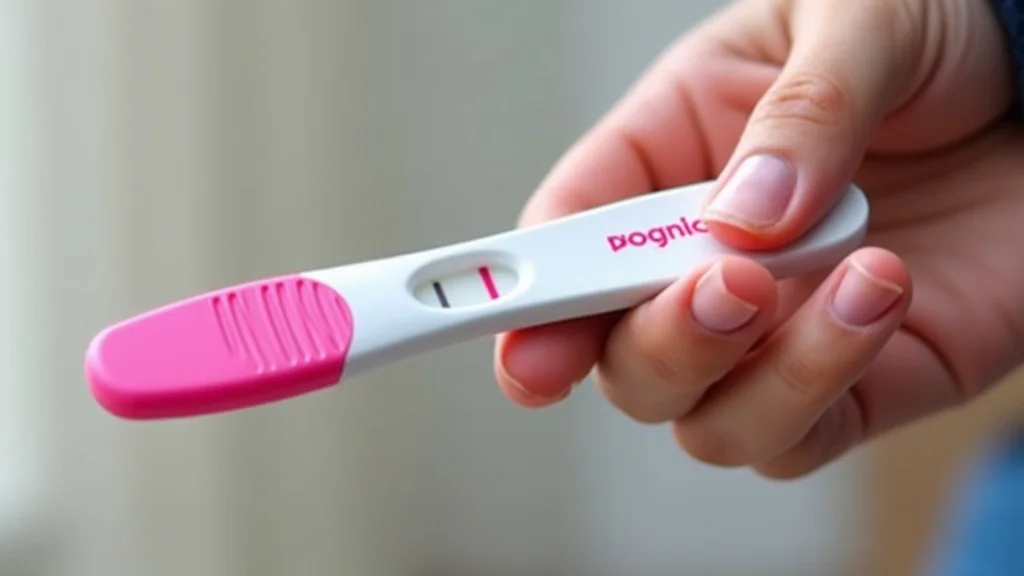
Seeing a pregnancy test one line clear other faint can be confusing, especially when you’re hoping for a clear answer. Many people wonder if that faint line really means something or if it’s just wishful thinking. It’s a common situation, and we’re here to make it simple.
Let’s break down exactly what that faint line means and what you should do next. We will guide you through each step to give you the confidence you need.
Key Takeaways
- Understand what a faint positive line indicates on a pregnancy test.
- Learn the best times and ways to take a pregnancy test for accurate results.
- Discover how different types of pregnancy tests might show results.
- Know when to retest and what follow-up steps are recommended.
- Gain clarity on the science behind pregnancy test lines.
Understanding Pregnancy Test Lines
Pregnancy tests work by detecting a hormone called human chorionic gonadotropin (hCG) in your urine. This hormone is produced shortly after a fertilized egg attaches to the uterine lining. Home pregnancy tests have a test line and a control line. The control line shows that the test is working. The test line appears if hCG is present.
How Pregnancy Tests Detect hCG
A pregnancy test stick contains a special paper treated with chemicals. When urine flows over this paper, it reacts with any hCG present. If hCG is detected, a chemical reaction happens, causing a line to appear. The intensity of this line usually depends on how much hCG is in your urine. A strong, dark line means a high level of hCG. A faint line means there is some hCG, but the level is lower.
The Significance of a Faint Positive Line
When you see a pregnancy test one line clear other faint, it typically means you are pregnant. The faintness suggests that the hCG levels are still low. This is very common in the early days of pregnancy. Your body is just starting to produce hCG, and the amount is not yet high enough for a very dark line. It’s crucial not to dismiss a faint line as a negative result.
Why a Faint Line Appears
Several factors can contribute to a faint positive line. The most common reason is testing too early. If you test before your missed period, your hCG levels might be too low to produce a strong line. Another reason could be diluting your urine by drinking too much fluid before testing. This makes the hCG concentration lower. Some tests also have varying sensitivities to hCG.
Interpreting Test Results
Always read your pregnancy test’s instructions carefully. They will explain what different lines mean. Generally, any visible line in the test area, no matter how faint, indicates a positive result. Some tests might show a faint evaporation line if you wait too long to read the result. This is why it’s important to check the test within the recommended timeframe.
Factors Affecting Test Accuracy
Getting an accurate result from a pregnancy test is important. Several things can influence whether you get a clear answer or a confusing one like a faint line. Knowing these factors helps you take the test correctly.
Timing Your Pregnancy Test
The best time to take a pregnancy test is on the day of your missed period. Testing too early can lead to a false negative, meaning the test says you aren’t pregnant when you are. This happens because hCG levels are still very low. Some highly sensitive tests can detect pregnancy a few days before your missed period, but even then, a faint line is possible. Waiting until a full week after your missed period increases the accuracy significantly.
Urine Concentration
The concentration of hCG in your urine is key to an accurate test. First-morning urine is usually the most concentrated because you haven’t been drinking or urinating for several hours. This means any hCG will be more concentrated, making it easier for the test to detect. Drinking a lot of fluids before testing can dilute your urine, potentially leading to a fainter line or even a false negative.
Test Sensitivity
Pregnancy tests vary in their sensitivity to hCG. Some tests are designed to detect lower levels of hCG, meaning they can detect pregnancy earlier. These are often called “early detection” tests. A less sensitive test might require higher hCG levels to show a positive result. If you get a faint line on one test, using a different brand with higher sensitivity might give you a clearer result.
Expiration Dates
Using an expired pregnancy test can lead to inaccurate results. The chemicals in the test stick can degrade over time, affecting their ability to detect hCG. Always check the expiration date on the packaging before using a test. An expired test might not work correctly, leading to false negatives or unreliable lines.
What to Do After a Faint Positive Line
Seeing a faint line can bring up many emotions and questions. The most important thing is to stay calm and know what your next steps should be. A faint line is usually a good sign, but it’s wise to confirm it.
Retest After a Few Days
If you get a faint positive result, the best course of action is to retest in a few days. Your hCG levels should have increased, which may result in a darker, clearer positive line. Try to use your first-morning urine for this retest. This ensures the highest possible concentration of hCG. Waiting two to three days is usually sufficient for levels to rise noticeably.
Consider a Digital Pregnancy Test
Digital pregnancy tests offer a different way to read results. Instead of lines, they display words like “Pregnant” or “Not Pregnant.” This can eliminate the confusion of interpreting faint lines. If you’re still unsure after a faint line on a traditional test, a digital test can provide a very clear answer. Some digital tests also indicate how many weeks pregnant you might be.
Consult Your Doctor
Regardless of your test results, it’s always a good idea to contact your doctor or healthcare provider. If you received a faint positive line, they can perform a blood test to confirm the pregnancy and check your hCG levels. Blood tests are more sensitive than urine tests and can detect pregnancy earlier and more accurately. They can also begin prenatal care and answer any questions you may have.
The Science Behind Pregnancy Tests
Understanding the science can demystify why you see a pregnancy test one line clear other faint. These tests are designed to be user-friendly, but knowing how they work can boost your confidence.
How the Test Strips Work
Pregnancy test strips contain antibodies that bind to hCG molecules. When you urinate on the stick, your urine travels up the strip. If hCG is present, it binds to these antibodies. This binding process triggers a chemical reaction that causes a colored dye to appear, forming the control line and the test line.
The Control Line vs. The Test Line
The control line is designed to appear every time the test is used correctly. It shows that the urine has flowed properly through the test strip and that the test is functional. The test line is the line that appears if hCG is detected. If you see only the control line, the test is negative. If you see both lines, even if the test line is faint, it indicates a positive result.
Why Lines Vary in Darkness
The darkness of the test line corresponds to the concentration of hCG in your urine. A stronger, darker line means a higher concentration of hCG. A faint line indicates a lower concentration. This is why testing early often results in a faint line, as hCG levels are still rising. As the pregnancy progresses, the test line will typically become darker.
Evaporation Lines
Sometimes, after the test has been sitting for a while, a faint, colorless line can appear. This is called an evaporation line. It happens as urine dries on the test strip. Evaporation lines are usually gray or colorless and appear outside the test result window. It’s important to read the test results within the time frame specified in the instructions to avoid mistaking an evaporation line for a positive result.
Real-Life Scenarios and Examples
Let’s look at a couple of common situations people face when using pregnancy tests. These examples show how different outcomes can occur.
Scenario 1: Testing Before a Missed Period
Sarah was feeling a little different and decided to take a pregnancy test two days before her period was due. She used a common brand and saw one clear control line and a very faint second line. She was excited but unsure. She decided to wait two more days and test again. This time, with her first-morning urine, the second line was much darker and clearer. She was indeed pregnant. This showed how testing early can result in a faint line.
Scenario 2: Using an Early Detection Test
Maria used an early detection pregnancy test one week before her period. She saw a faint positive line. Concerned it might be an evaporation line, she bought a different brand, a highly sensitive digital test, and took it the next morning. The digital test clearly read “Pregnant.” She then visited her doctor, who confirmed her pregnancy. This highlights how different tests can offer varying clarity.
Scenario 3: Low hCG Levels Due to Other Factors
John and Emily were trying to conceive. Emily took a test that showed a faint positive line. They were thrilled, but a week later, her period started. Emily’s doctor explained that sometimes a chemical pregnancy can occur. This is when a fertilized egg implants, producing a small amount of hCG, but the pregnancy does not continue. This resulted in a temporary faint positive line before menstruation.
Common Myths Debunked
There are many ideas about pregnancy tests that aren’t quite true. Let’s clear up some of these common myths.
Myth 1: A faint line means the test is faulty
The reality is that a faint line on a pregnancy test usually indicates a positive result. It means that the test has detected hCG in your urine, but at a lower concentration. This is very common in early pregnancy. The test is likely working correctly by detecting even small amounts of the pregnancy hormone.
Myth 2: You can only get an accurate result on the day of your missed period
While testing on the day of your missed period offers high accuracy, some sensitive tests can detect pregnancy a few days before. However, if you test too early, you might get a faint line or a false negative because hCG levels are still too low to be detected. Waiting increases accuracy, but a faint line before your missed period is not necessarily an error.
Myth 3: Any visible line means you are definitely pregnant and will have a healthy pregnancy
A faint line does mean hCG is present, indicating pregnancy. However, it doesn’t guarantee a healthy pregnancy. As mentioned in real-life scenarios, sometimes a chemical pregnancy can occur. It’s important to follow up with a healthcare provider for confirmation and ongoing care.
Myth 4: You can use substitutes like sugar or toothpaste to test for pregnancy
These home remedies are not reliable and do not accurately detect hCG. Pregnancy tests use specific chemical reactions to identify the hormone. Using everyday items can lead to misleading results and should be avoided. Always use an approved pregnancy test for accurate information.
Frequently Asked Questions
Question: What does a faint line on a pregnancy test mean
Answer: A faint line on a pregnancy test usually means you are pregnant. It indicates that the test has detected human chorionic gonadotropin (hCG) in your urine, but at a low level. This is common in early pregnancy.
Question: How soon can I get a faint positive line
Answer: You can sometimes get a faint positive line as early as 10-14 days after conception, which might be a few days before your missed period. However, this depends on the test’s sensitivity and your individual hCG production.
Question: Should I trust a faint line
Answer: Yes, you should generally trust a faint line as a positive result. However, it is highly recommended to retest in a few days with first-morning urine or use a digital pregnancy test for clearer confirmation. Visiting your doctor is also advised.
Question: What causes a faint line if I’m not pregnant
Answer: A faint, colorless line that appears after the recommended reading time might be an evaporation line. This is not a positive result. Always read the test within the specified window.
Very rarely, certain medical conditions can cause false positives.
Question: How long should I wait to retest after a faint positive
Answer: It is best to wait two to three days to retest after a faint positive. This waiting period allows your hCG levels to rise, which should result in a darker and clearer positive line on a subsequent test.
Conclusion
Seeing a pregnancy test one line clear other faint is a common experience. It typically signifies that you are pregnant, with hCG levels still low. The best approach is to remain calm, retest after a few days, and consult your doctor. This ensures accurate confirmation and allows for proper next steps in your healthcare journey.
Leave a Reply