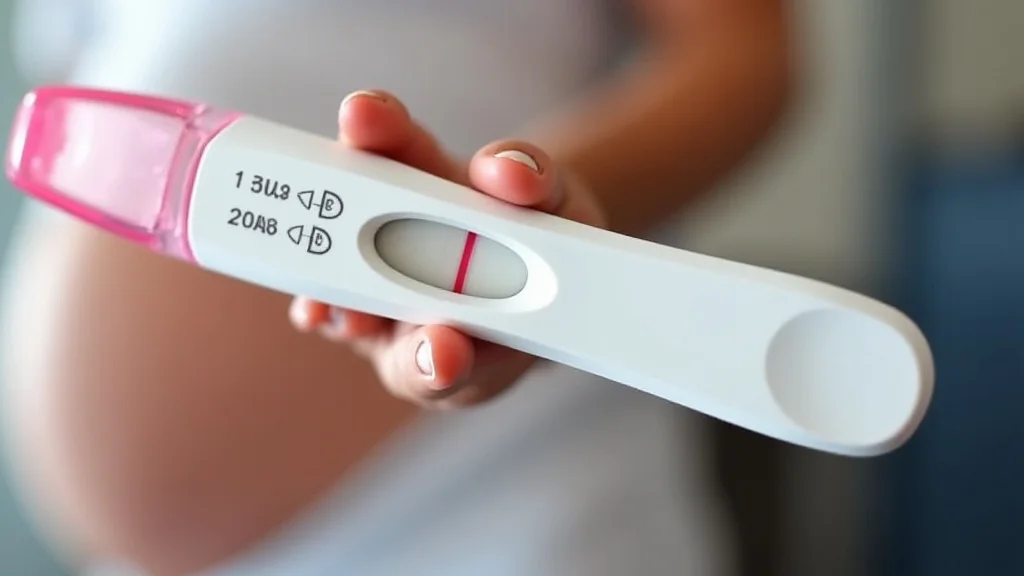
Finding out if you are pregnant can be a big moment, and sometimes it brings up questions. If you’ve taken a test and it came back negative, especially around 6 weeks, you might wonder what that means. It’s super common to feel a bit confused by a negative pregnancy test at 6 weeks.
Many things can affect a test’s result, and it’s not always as straightforward as you might think. But don’t worry! We’re going to break it down very simply, step by step, so you can feel confident about what your test result means.
Let’s explore what’s happening and what you can do next.
Key Takeaways
- A negative pregnancy test at 6 weeks is common and can be due to early testing or low hormone levels.
- Understanding how pregnancy tests work helps explain why results can vary.
- There are several reasons why a test might show negative even if pregnancy is possible.
- Knowing when to retest or consult a doctor is important for clarity.
- This information will help you interpret your test results with confidence.
Negative Pregnancy Test At 6 Weeks Causes
When you take a pregnancy test, it looks for a hormone called human chorionic gonadotropin, or hCG. This hormone is made by your body after a fertilized egg attaches to the uterine wall. The amount of hCG usually goes up quickly in early pregnancy.
However, a negative pregnancy test at 6 weeks can happen for several reasons, even if you are pregnant. It’s not always a sign that pregnancy isn’t happening. Sometimes, the test just isn’t sensitive enough yet, or the hormone level is still too low to detect.
Early testing is a very frequent reason for a negative result that might later turn positive.
HCG Hormone Levels
HCG is the key hormone that pregnancy tests detect. After fertilization, your body starts producing hCG. This hormone tells your ovaries to stop releasing eggs and helps maintain the uterine lining needed to support a pregnancy.
The levels of hCG generally double every 48 to 72 hours in the early weeks of pregnancy. This rapid increase is why tests become more accurate over time.
For a home pregnancy test to show a positive result, the hCG level needs to be above a certain threshold, which varies by test sensitivity. If your hCG levels are still below this threshold at 6 weeks, the test will read as negative. This can happen if ovulation occurred later than you thought, meaning you are actually less than 6 weeks pregnant.
It’s a simple matter of the hormone not being high enough yet.
Test Sensitivity
Home pregnancy tests come in different sensitivities. Some are designed to detect very low levels of hCG, while others require higher levels. A test with lower sensitivity might not pick up hCG until it reaches a certain point.
If you use a less sensitive test at 6 weeks, and your hCG is just a bit below its detection limit, you will get a negative result.
For instance, some tests can detect hCG at levels as low as 25 mIU/mL, while others might need 50 mIU/mL or more. A level of 25 mIU/mL might be achieved by some women at 6 weeks, but others might still be in the 15-20 mIU/mL range, leading to a false negative. This is why choosing a highly sensitive test can be beneficial in early pregnancy detection.
When Ovulation Occurred
The most common reason for a negative pregnancy test at 6 weeks when pregnancy is actually present is miscalculating ovulation. Your 6-week count typically starts from the first day of your last menstrual period (LMP). However, ovulation, the release of an egg that can be fertilized, usually happens about two weeks after your LMP.
If your cycle is irregular, or if you ovulated later than average, you might be less than 6 weeks pregnant from conception.
For example, if your LMP was May 1st, and you ovulated around May 15th, then by June 12th (which would be considered 6 weeks from LMP), you would actually be about 4 weeks pregnant from conception. At 4 weeks pregnant from conception, hCG levels are much lower and might not be detectable by all tests. This timing difference is crucial for interpreting your test results accurately.
Implantation Timing
Implantation, when the fertilized egg attaches to the uterine lining, is another factor. This process usually happens 6 to 12 days after ovulation. The sooner implantation occurs, the earlier your body starts producing hCG, and the sooner a pregnancy test can become positive.
If implantation happens later in that window, it means hCG production starts later, making it harder to detect an early pregnancy with a test at 6 weeks.
Imagine implantation occurs on day 10 after ovulation. If ovulation was on day 14 of your cycle, and you consider yourself 6 weeks pregnant (which is about 4 weeks after ovulation), this later implantation means hCG levels will be lower. If implantation happens on day 12, hCG levels will be higher.
This variation directly impacts when your test can reliably detect pregnancy.
Understanding Pregnancy Test Accuracy
Pregnancy tests are designed to detect hCG, but their accuracy depends on several factors. Knowing how they work can help you understand why you might get a negative result when you suspect you might be pregnant. Accuracy is not always 100%, especially in the very early stages.
How Home Pregnancy Tests Work
Home pregnancy tests are urine tests that use antibodies to detect the presence of hCG. When you urinate on the test stick, the urine flows through a strip. If hCG is present in your urine above a certain level, it binds to antibodies on the test strip.
This binding causes a chemical reaction that results in a line or symbol appearing, indicating a positive result. If hCG levels are too low, no reaction occurs, and the test shows a negative result.
These tests are generally very reliable when used correctly and at the right time. However, “the right time” is key. Using them too early means the hCG levels might simply not be high enough to trigger the test’s detection mechanism.
It’s like trying to see a faint star before it’s fully dark outside; you need the right conditions for visibility.
Factors Affecting Accuracy
Several factors can influence the accuracy of a home pregnancy test. Besides the test’s sensitivity and hCG levels, the concentration of hCG in your urine matters. First-morning urine is typically more concentrated, with higher levels of hCG, making it the best time to test for early pregnancy.
Testing with diluted urine, for example, after drinking a lot of fluids, can lead to a false negative.
Also, user error can play a role. Not following the test instructions precisely, such as waiting the correct amount of time to read the result, can lead to misinterpretation. Some tests have a “read within” time frame, and reading it too early or too late can affect the result.
Medical conditions like certain rare diseases, or medications containing hCG, can also interfere with test results, although these are uncommon.
When To Retest
If you get a negative result at 6 weeks but still suspect you are pregnant, waiting a few days and retesting is often recommended. Your hCG levels will continue to rise if you are pregnant. Retesting in 2-3 days, ideally with your first morning urine, can provide a clearer answer.
If your period is also late, this is another strong indicator that retesting is a good idea.
For example, if you tested at what you thought was exactly 6 weeks from your LMP and got a negative, but your period is now 3 days late, testing again on day 6 of your missed period might show a positive result. This waiting period allows your body more time to produce detectable levels of hCG.
Potential Reasons For A Negative Test
Beyond the timing of ovulation and hCG levels, other circumstances can contribute to a negative pregnancy test result. It’s important to consider these possibilities to get a full picture of what’s going on.
Irregular Cycles
Women with irregular menstrual cycles may have a harder time pinpointing when they ovulated or when their period is due. This makes it challenging to know the exact number of weeks since conception. If your cycles vary significantly, you might be testing too early for hCG to be detectable, even if you are pregnant.
For instance, if your cycle is normally 35 days long, but you’ve only had 28 days pass since your last LMP, you might think you are 4 weeks pregnant. However, if you ovulated late, you might only be 2 weeks pregnant from conception. At this stage, a negative test is expected.
Accurate timing is crucial, and irregular cycles make this more difficult.
Ectopic Pregnancy
In rare cases, a negative pregnancy test at 6 weeks could occur with an ectopic pregnancy. This is when a fertilized egg implants outside the uterus, most commonly in a fallopian tube. While hCG levels often rise more slowly in ectopic pregnancies and can sometimes be lower than expected, they can still be detected.
However, other symptoms like pain or spotting are more typical indicators.
If you experience severe abdominal pain, one-sided pelvic pain, shoulder pain, or unusual vaginal bleeding, and have a negative pregnancy test, it is vital to seek immediate medical attention. These symptoms, combined with a negative test, warrant urgent evaluation by a healthcare professional to rule out an ectopic pregnancy or other serious conditions.
Chemical Pregnancy
A chemical pregnancy is a very early miscarriage that occurs shortly after implantation. It is detected by a pregnancy test showing a positive result, but then followed by a period or spotting, and subsequent negative tests. If you had a very faint positive line and then a negative test at 6 weeks, it’s possible you experienced a chemical pregnancy.
This is a common occurrence and does not necessarily mean you will have trouble conceiving in the future.
The term “chemical pregnancy” refers to a pregnancy that has started, indicated by the presence of hCG, but does not develop further. This can be emotionally distressing, but it is a recognized biological event. Many women do not even know they had a chemical pregnancy if they do not test early or frequently.
Recent Miscarriage or Abortion
If you have recently had a miscarriage or abortion, hCG can remain in your system for a period of time after the event. This can potentially lead to a positive pregnancy test even if the pregnancy is no longer viable or has ended. Conversely, if enough time has passed and hCG levels have returned to zero, a new, current pregnancy could result in a negative test.
The body needs time to clear residual hCG.
The timeframe for hCG to leave the body varies from person to person and depends on how far along the pregnancy was. In some cases, it can take weeks for hCG levels to drop back to undetectable levels. Doctors often recommend waiting for your hCG levels to be confirmed as zero before attempting to retest for a new pregnancy, especially if you are concerned about lingering hormones.
What To Do Next
Receiving a negative pregnancy test at 6 weeks can be confusing, but there are clear steps you can take to get clarity and address any concerns you might have. It’s about gathering more information and making informed decisions for your health and well-being.
Consult Your Doctor
The most reliable way to confirm pregnancy or understand why your test is negative is to speak with your healthcare provider. They can perform blood tests, which are more sensitive than urine tests and can detect hCG earlier and at lower levels. A doctor can also conduct a pelvic exam and an ultrasound if necessary to visually confirm a pregnancy or investigate any underlying issues.
If you have a history of irregular periods, recurrent miscarriages, or concerning symptoms, a doctor’s evaluation is especially important. They can provide personalized advice and guidance based on your specific health situation. Don’t hesitate to reach out to them with your questions and concerns.
Consider a Blood Test
Blood tests for hCG are more accurate than urine tests, especially in early pregnancy. There are two types: qualitative and quantitative. A qualitative blood test simply tells you if hCG is present in your blood (yes or no).
A quantitative blood test (beta hCG) measures the exact amount of hCG. This measurement is very helpful because it can indicate how far along you are and whether the pregnancy is progressing as expected.
A quantitative blood test can detect hCG at levels as low as 5-10 mIU/mL. This can be crucial for confirming a pregnancy that might be too early to detect with a urine test. For example, if a urine test is negative at 6 weeks, but a quantitative blood test shows an hCG level of 50 mIU/mL, it strongly suggests pregnancy, and a follow-up test would be recommended to see if the levels are doubling appropriately.
Monitor Your Symptoms
Pay attention to any physical signs that might indicate pregnancy. While these symptoms can also be caused by other factors, their presence alongside a negative test might warrant further investigation. Common early pregnancy symptoms include breast tenderness, fatigue, nausea (morning sickness), frequent urination, and food aversions or cravings.
If you are experiencing several of these symptoms consistently and your period is late, it increases the likelihood of pregnancy, even with a negative urine test. Keeping a symptom journal can help you track changes and discuss them with your doctor. It’s a good way to present a clear picture of what your body is experiencing.
Common Myths Debunked
Myth 1: A negative pregnancy test at 6 weeks always means you are not pregnant.
Reality: This is not true. As we’ve discussed, there are many reasons why a pregnancy test can be negative at 6 weeks, even if pregnancy has occurred. These include testing too early for hCG to be detectable, the sensitivity of the test, and the timing of ovulation or implantation.
A negative result is not always definitive, especially in early pregnancy.
Myth 2: If you have a negative test, you don’t need to see a doctor.
Reality: If you have missed your period, are experiencing pregnancy symptoms, or are concerned about your reproductive health, it is always a good idea to consult a doctor. They can provide accurate testing, diagnosis, and guidance. A negative test does not rule out all potential pregnancy-related issues or other health concerns that might require medical attention.
Myth 3: All pregnancy tests are equally accurate.
Reality: Pregnancy tests vary in their sensitivity. Some tests can detect lower levels of hCG than others. A highly sensitive test is more likely to give a positive result earlier in pregnancy than a less sensitive one.
Therefore, not all tests are created equal when it comes to detecting very early pregnancies.
Myth 4: You can get a false negative pregnancy test only if you are not pregnant.
Reality: A “false negative” means the test shows negative, but you are actually pregnant. This is the most common type of inaccurate result in early pregnancy. It occurs when hCG levels are not yet high enough to be detected by the test.
This is why timing and test sensitivity are so important.
Frequently Asked Questions
Question: Can I get a negative pregnancy test at 6 weeks if I am pregnant?
Answer: Yes, it is possible to get a negative pregnancy test at 6 weeks even if you are pregnant. This can happen if you tested too early, ovulated later than expected, or if the test sensitivity is not high enough to detect the current level of hCG. Retesting in a few days or consulting a doctor is recommended.
Question: What is the best time to take a pregnancy test?
Answer: The best time to take a pregnancy test is usually after you have missed your period. For the most accurate results, especially in early pregnancy, it is recommended to use your first morning urine, as it contains a higher concentration of hCG.
Question: How soon after conception can a pregnancy test detect pregnancy?
Answer: Most home urine pregnancy tests can detect pregnancy about 1 to 2 weeks after conception, once hCG levels are high enough. Blood tests are more sensitive and can detect pregnancy as early as 6-8 days after conception.
Question: What does a very faint positive line mean?
Answer: A very faint positive line generally indicates that hCG is present, but at a low level. This could mean you are in the very early stages of pregnancy. It’s often recommended to retest in a few days to see if the line becomes darker, which would suggest a viable pregnancy.
Question: When should I worry about a negative pregnancy test at 6 weeks?
Answer: You should consider speaking with a doctor if you have missed your period, are experiencing pregnancy symptoms, have a history of fertility issues, or have concerning symptoms like severe pain or bleeding, despite a negative pregnancy test.
Final Thoughts
A negative pregnancy test at 6 weeks does not always mean you are not pregnant. It often means the hormone level is too low for the test to detect yet, or other timing factors are at play. Always consider retesting after a few days with first morning urine.
If your period is still absent or you have concerns, reach out to your doctor for the most accurate confirmation and guidance.
Leave a Reply