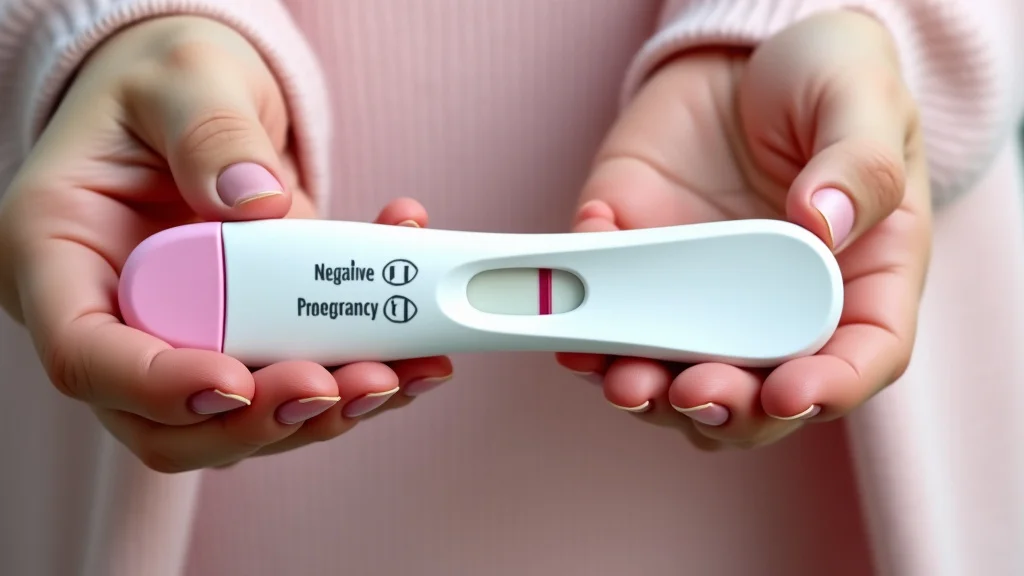
It’s super common to wonder about a negative pregnancy test 3 days before period. Sometimes, even with a negative result, you might still feel unsure. This can be a bit confusing when you’re expecting or hoping for a result.
We’re here to make it simple and clear. This guide will walk you through everything you need to know step-by-step, so you can feel confident about what your test result means. Let’s get started and clear up any confusion!
Key Takeaways
- Understand why a pregnancy test might be negative just before your period.
- Learn about the hormones involved and how they affect test accuracy.
- Discover the best time to take a pregnancy test for accurate results.
- Know what to do if your test is negative but you still suspect pregnancy.
- Recognize the limitations of early pregnancy testing.
Understanding Early Pregnancy Testing
Taking a pregnancy test before your period is a common practice for many people eager to know their status. However, getting a negative result a few days before your expected period can leave you with many questions. This often happens because pregnancy tests detect a hormone called human chorionic gonadotropin (hCG).
This hormone is produced after a fertilized egg implants in the uterus. The amount of hCG in your body increases steadily in early pregnancy.
If you test too early, the hCG levels might be too low for the test to detect. This doesn’t necessarily mean you aren’t pregnant. It could simply mean your body hasn’t produced enough hCG yet for a positive result.
The accuracy of a pregnancy test is highly dependent on the timing of the test in relation to ovulation and implantation. This section will explore the science behind early testing and why a negative result can occur before a missed period.
How Pregnancy Tests Work
Pregnancy tests work by detecting the presence of a specific hormone in your urine or blood. This hormone is called human chorionic gonadotropin, or hCG. The body starts producing hCG shortly after a fertilized egg implants in the wall of the uterus.
Implantation usually occurs about 6 to 12 days after ovulation. Once implantation happens, the cells that will form the placenta begin to produce hCG.
The concentration of hCG in a pregnant person’s body typically doubles every 48 to 72 hours in the early stages of pregnancy. Home pregnancy tests, often called urine tests, are designed to identify a certain threshold level of hCG. If the amount of hCG in the urine is above this threshold, the test will show a positive result.
If the hCG level is below the threshold, the test will show a negative result.
Blood pregnancy tests also detect hCG but can measure much smaller amounts. This makes them more sensitive and able to detect pregnancy earlier than urine tests. However, for most people, a home urine test is sufficient once hCG levels are high enough.
The sensitivity of different home pregnancy tests varies. Some tests are more sensitive and can detect lower levels of hCG, potentially giving a positive result a few days earlier than less sensitive tests.
The Role of hCG Hormone Levels
The crucial factor in getting an accurate pregnancy test result is the level of hCG in your system. hCG is often called the “pregnancy hormone” because its production is primarily linked to pregnancy. It plays a vital role in maintaining early pregnancy by signaling the body to continue producing progesterone, a hormone essential for supporting the uterine lining.
For a pregnancy test to turn positive, the hCG concentration must reach a certain level that the test kit is calibrated to detect. This level is known as the “sensitivity” of the test, usually measured in milli-international units per milliliter (mIU/mL). Most standard home pregnancy tests can detect hCG at levels of around 25 mIU/mL.
Some “early detection” tests can detect levels as low as 10 mIU/mL.
When you test a few days before your period, your hCG levels might only be around 5-10 mIU/mL, even if you are pregnant. This is because it takes time for the fertilized egg to implant and for hCG production to ramp up significantly. If you ovulated later than usual in your cycle, implantation might also have happened later, resulting in even lower hCG levels.
Therefore, a negative test at this stage doesn’t rule out pregnancy, it just means hCG levels are not yet detectable by the specific test you used.
Timing is Everything Early Testing
The timing of a pregnancy test is perhaps the most critical factor in achieving an accurate result, especially when testing before your period is due. Ovulation, the release of an egg from the ovary, typically happens around the middle of a menstrual cycle. For conception to occur, sperm must fertilize the egg, and then the fertilized egg must travel to the uterus and implant in its lining.
This entire process takes time.
Implantation, the crucial step for hCG production to begin, usually happens about 6 to 12 days after ovulation. This means that even if conception occurred, hCG levels will be very low, or undetectable, for the first week or so after implantation. If your period is due in three days, and you test now, it’s likely that implantation happened less than 10 days ago, making hCG levels too low for most tests to register a positive result.
This is why most healthcare professionals recommend waiting until after you’ve missed your period to take a pregnancy test. Testing at this point, about 14 days after ovulation, significantly increases the chance that hCG levels will be high enough for an accurate detection. Testing a day or two after a missed period can often yield reliable results.
However, for those who want to test earlier, using a highly sensitive test and testing with first-morning urine can sometimes provide results a few days before a missed period.
Why You Might Get a Negative Result Before Your Period
Getting a negative pregnancy test a few days before your expected period is quite common. This outcome doesn’t automatically mean you aren’t pregnant. Several factors contribute to this result, primarily related to the early stages of pregnancy and the sensitivity of home pregnancy tests.
Understanding these factors can help you interpret your test result with more clarity and less anxiety.
The main reason for a negative result is that hCG, the pregnancy hormone, has not yet reached a detectable level in your urine. Even if fertilization and implantation have occurred, it takes time for hCG to build up in your system. Testing too early means your hCG levels might be below the threshold that your particular test can pick up.
This section will delve deeper into the reasons behind these early negative results.
Low hCG Levels
The most frequent reason for a negative pregnancy test result a few days before your period is simply that your human chorionic gonadotropin (hCG) levels are too low to be detected by the test. For a pregnancy test to show a positive result, it needs to detect a specific minimum concentration of hCG. This minimum level varies depending on the sensitivity of the test you are using.
If you are pregnant, implantation of the fertilized egg into the uterine wall is the event that triggers hCG production. Implantation typically occurs between 6 to 12 days after ovulation. Following implantation, hCG levels begin to rise.
However, it takes several more days for these levels to increase enough to be reliably detected in urine.
For example, a highly sensitive early detection test might be able to detect hCG levels as low as 10 mIU/mL. However, it can take 2-3 days after implantation for hCG levels to reach 10 mIU/mL, and often longer to reach 25 mIU/mL, which is the detection threshold for many standard tests. Therefore, if you are testing 3 days before your period, and ovulation and implantation happened on the later side of the typical window, your hCG might still be below the detection limit of even sensitive tests.
Variations in Ovulation and Cycle Length
Not all menstrual cycles are the same, and variations in ovulation timing can significantly impact when a pregnancy test becomes accurate. While the average menstrual cycle is about 28 days, with ovulation occurring around day 14, many individuals have cycles that are longer or shorter. Furthermore, the exact day of ovulation can vary from cycle to cycle even for those with regular periods.
If you ovulate later than you think you did, or if your cycle is longer than average, then implantation will also occur later. This means that hCG production will start later, and your hCG levels will be lower at the time you choose to test. For instance, if you typically have a 30-day cycle and expect your period in 3 days, but you ovulated on day 18 instead of day 14, implantation would likely happen later, around days 24-30.
Testing on day 27 (3 days before your expected period) might yield a negative result because hCG levels haven’t had enough time to rise significantly.
It’s also important to remember that “early” pregnancy symptoms can sometimes be confused with premenstrual symptoms. This can lead someone to test earlier than they might otherwise, increasing the likelihood of a false negative. Understanding your own cycle and when you are most likely to ovulate is key to timing pregnancy tests effectively.
Test Sensitivity and Accuracy
The accuracy of a pregnancy test, especially when used early, is heavily dependent on its sensitivity. Pregnancy test kits are designed to detect hCG at different concentration thresholds, measured in milli-international units per milliliter (mIU/mL). Standard tests typically have a sensitivity of around 25 mIU/mL, while early detection tests can be as sensitive as 10 mIU/mL.
When testing a few days before your period, your hCG level might be between 5-20 mIU/mL if you are pregnant. A standard test (25 mIU/mL sensitivity) would likely give a negative result in this scenario. An early detection test (10 mIU/mL sensitivity) might pick up a level of 10-20 mIU/mL, potentially giving a positive or a very faint positive result.
It’s also important to consider user error. Incorrectly following the test instructions, such as not waiting long enough for the result or diluting the urine sample, can lead to inaccurate readings. Using first-morning urine is often recommended for early testing because the hCG concentration is typically highest then, as you haven’t consumed fluids that would dilute your urine throughout the day.
Here’s a look at how sensitivity can affect results:
| Test Sensitivity (mIU/mL) | Likely hCG Level for Positive Result | Can Detect Pregnancy Before Missed Period? |
|---|---|---|
| 25 (Standard Test) | 25 mIU/mL and above | Less Likely |
| 10 (Early Detection Test) | 10 mIU/mL and above | More Likely |
Chemical Pregnancy and Early Miscarriage
Sometimes, a negative pregnancy test result a few days before your period might occur if a very early pregnancy, known as a chemical pregnancy, did not continue. A chemical pregnancy happens when fertilization and implantation occur, leading to a detectable level of hCG, but the pregnancy does not progress. This can result in a very faint positive test followed by a period that arrives on time or is only slightly delayed.
Alternatively, if you were pregnant, your hCG levels might have been high enough for a very faint positive or even a missed positive on a highly sensitive test. However, if the pregnancy was not viable, it may have ended shortly after implantation. This is often referred to as an early miscarriage.
In such cases, hCG levels would decline rapidly, and a subsequent test taken a few days later, especially closer to or after your expected period, would likely show a negative result.
These early pregnancy losses are common and often go unnoticed unless someone is testing very early and frequently. It’s estimated that up to 50% of all pregnancies end in early miscarriage, many of them before a person even misses their period. While this can be emotionally difficult, it is a natural biological process and does not usually indicate a problem with future fertility.
What to Do After a Negative Pregnancy Test
Receiving a negative pregnancy test result when you’re hoping for a positive can be disheartening. However, if you tested a few days before your period was due, a negative result is often not conclusive. It’s essential to know the next steps to take to get a definitive answer and to understand what this result might mean for you.
This section will guide you through the best course of action.
The most important step is to re-test at the appropriate time. If your period does not arrive as expected, further testing can provide more clarity. We’ll also discuss how to interpret ongoing symptoms and when to consult a healthcare professional for personalized advice and further evaluation.
Re-testing at the Right Time
If you tested a few days before your expected period and got a negative result, the best course of action is often to wait and re-test. As we’ve discussed, hCG levels need time to rise to detectable amounts. If you are pregnant, your hCG levels will continue to increase daily.
The most reliable time to take a pregnancy test is after you have missed your period. If your period is due in 3 days and you test negative, wait another 3-4 days. If your period still hasn’t started, take another test.
By this point, if pregnancy has occurred, your hCG levels should be significantly higher, and a home pregnancy test should provide a more accurate result. Using first-morning urine for this re-test is still a good practice, as it provides the most concentrated sample of hCG.
Consider the following when re-testing:
- Wait for your missed period: This is the most critical step for accuracy.
- Use first-morning urine: The highest concentration of hCG is usually found in your first urine of the day.
- Use a sensitive test: If available, an early detection test can be useful.
- Follow instructions carefully: Ensure you are using the test correctly to avoid errors.
If you get a negative result after waiting for your missed period and are still experiencing symptoms, or if you have irregular periods, it might be worth re-testing again in a few days. Persistent negative results, coupled with a missed period, might indicate other reasons for a delayed cycle.
Interpreting Symptoms
It can be challenging to distinguish between early pregnancy symptoms and premenstrual symptoms (PMS). Many common signs of early pregnancy, such as breast tenderness, fatigue, nausea, and mood swings, often overlap with symptoms experienced just before a period. This overlap can lead to confusion and anxiety when trying to interpret what your body is telling you.
For example, some people experience cramping and light spotting around the time of implantation, known as implantation bleeding. This can be mistaken for the very beginning of a period, leading to an assumption that pregnancy hasn’t occurred. However, implantation bleeding is typically lighter and shorter than a regular menstrual period.
If you have a negative pregnancy test but are experiencing symptoms that feel unusual or different from your typical PMS, it’s worth paying attention. Consider how long these symptoms have been present and if they are intensifying. Sometimes, persistent symptoms that don’t align with your usual cycle pattern might warrant further investigation or re-testing at a later stage.
It’s a good idea to keep a symptom journal to track these changes over time.
When to See a Doctor
While home pregnancy tests are highly accurate when used correctly and at the right time, there are situations where consulting a healthcare professional is advisable. If you’ve consistently gotten negative pregnancy test results, but your period is significantly delayed, or if you are experiencing unusual symptoms, it’s time to seek medical advice.
A doctor can perform a more sensitive blood pregnancy test, which can detect hCG at much lower levels than urine tests. Blood tests can confirm pregnancy earlier and more reliably. They can also help rule out other potential causes for your symptoms or missed period, such as hormonal imbalances, stress, thyroid issues, or other medical conditions.
Furthermore, if you are trying to conceive and have been unsuccessful after a year of regular intercourse (or six months if you are over 35), your doctor can offer fertility assessments and guidance. They can also provide support and information if you are experiencing concerns about pregnancy or your reproductive health.
Common Myths Debunked
When it comes to early pregnancy testing, several myths and misconceptions can cause confusion and unnecessary worry. It’s important to rely on factual information to make informed decisions about your health and potential pregnancy. This section aims to clarify some of these common misunderstandings about negative pregnancy tests before a period.
Myth 1: A negative test 3 days before my period always means I’m not pregnant.
Reality: This is not true. As we’ve discussed, a negative pregnancy test taken 3 days before your expected period is often because hCG levels are not yet high enough to be detected. Implantation and subsequent hCG production take time.
If conception occurred, your hCG levels will continue to rise, and a test taken after your missed period will likely yield a more accurate result. Many pregnancies are confirmed only after a missed period, even if an earlier test was negative.
Myth 2: If I have pregnancy symptoms, I must be pregnant.
Reality: While some symptoms like nausea and breast tenderness can be indicators of early pregnancy, they are not exclusive to it. These symptoms can also be caused by hormonal fluctuations during your menstrual cycle, PMS, stress, or other health conditions. Relying solely on symptoms without a confirmed positive pregnancy test can lead to misinterpretation.
It’s best to wait for a definitive test result after missing your period.
Myth 3: You can get a positive pregnancy test result through evaporation lines.
Reality: Evaporation lines can sometimes appear on pregnancy tests, but they are typically colorless and may look different from a true positive line. A true positive line, even a faint one, usually has color. It’s crucial to read the test results within the timeframe specified in the instructions.
Lines that appear long after the recommended reading window are often evaporation lines and should not be considered positive results. Always re-test if you are unsure.
Myth 4: All pregnancy tests are equally sensitive.
Reality: Pregnancy tests vary in their sensitivity, meaning they can detect different minimum levels of hCG. Standard tests might require 25 mIU/mL of hCG to show a positive result, while early detection tests can detect levels as low as 10 mIU/mL. This difference in sensitivity means an early detection test might show a positive result a few days sooner than a standard test, but it doesn’t guarantee an earlier positive.
Always check the test’s packaging for its sensitivity level.
Frequently Asked Questions
Question: Can I trust a negative pregnancy test taken 3 days before my period?
Answer: A negative pregnancy test taken 3 days before your period is not always reliable. It’s often too early to detect the pregnancy hormone (hCG) at a level high enough for the test to register. Waiting until after you miss your period generally provides a more accurate result.
Question: What should I do if my pregnancy test is negative but my period is late?
Answer: If your period is late and your pregnancy test is negative, wait a few more days and re-test, preferably using first-morning urine. If you continue to get negative results but your period remains absent, it’s advisable to consult a doctor to explore other potential causes for your delayed cycle.
Question: How soon can I get a positive pregnancy test?
Answer: Highly sensitive early detection pregnancy tests can sometimes detect pregnancy as early as 10-12 days after ovulation, which can be a few days before your expected period. However, for most standard tests, it’s recommended to wait until after your missed period for the most accurate positive result.
Question: Is it possible to have pregnancy symptoms with a negative test?
Answer: Yes, it is possible. Some early pregnancy symptoms can mimic premenstrual symptoms, and they can also occur due to hormonal changes even if you are not pregnant or if the pregnancy is not yet detectable. It’s important to confirm with a reliable pregnancy test after missing your period.
Question: Should I take another pregnancy test if my period still hasn’t arrived?
Answer: Absolutely. If your period is still absent and your initial test was negative, re-testing is recommended. Waiting an additional 2-3 days and testing again, ideally with first-morning urine, can increase the chances of detecting pregnancy if it has occurred and hCG levels have risen sufficiently.
Summary
A negative pregnancy test 3 days before period is usually due to low hCG levels. These levels need time to rise after implantation. Waiting until after your period is missed offers the most accurate results.
If your period is delayed and tests remain negative, seeing a doctor is a good next step. Understanding these facts helps you interpret results confidently.
Leave a Reply