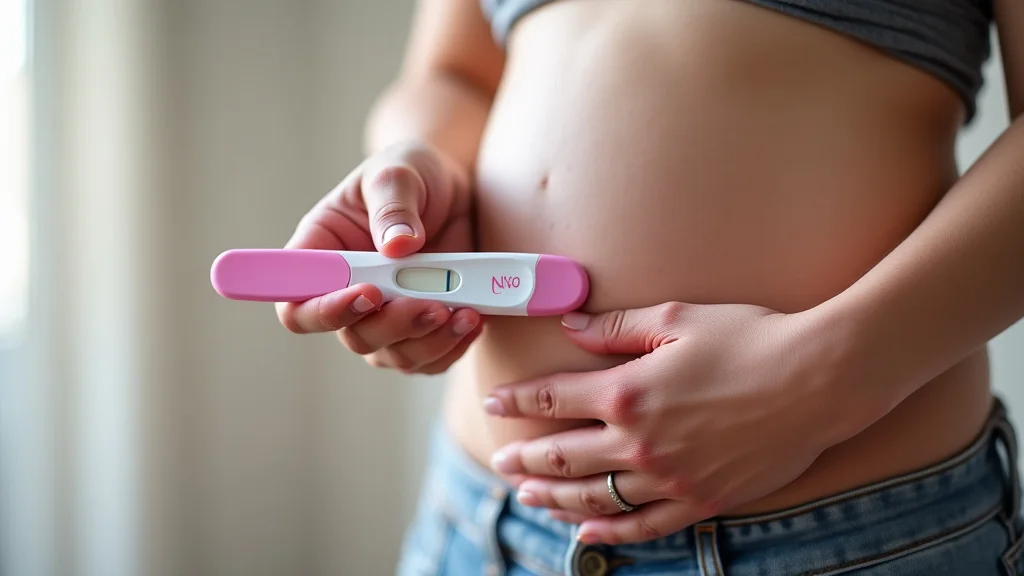
It can be a little tricky to get a clear answer when you take a negative pregnancy test 1 day before period. Sometimes, your body just isn’t producing enough of the pregnancy hormone yet for the test to pick it up, even if you are pregnant. This can leave you feeling a bit confused or worried, especially if this is new to you.
Don’t fret, though! We’ve got a simple, step-by-step guide to help you figure things out. We will cover what this result means and what you should do next.
Key Takeaways
- A negative test one day before your period can happen even if you are pregnant.
- Hormone levels might not be high enough for early detection.
- Retesting in a few days often provides a clearer result.
- Understanding your cycle helps interpret test results better.
- Other factors can influence test accuracy.
Understanding A Negative Pregnancy Test 1 Day Before Period
Seeing a negative pregnancy test result when your period is expected soon is a common experience for many people. This situation often arises because pregnancy tests work by detecting a hormone called human chorionic gonadotropin (hCG) in your urine. This hormone is produced by the placenta shortly after implantation, which is when a fertilized egg attaches to the uterine wall.
While implantation can happen about 6 to 12 days after ovulation, the amount of hCG produced increases rapidly in the early stages of pregnancy.
However, the sensitivity of pregnancy tests varies. A test taken too early, even just a day before your expected period, might not be sensitive enough to detect the very low levels of hCG present at that point. This is why a negative result at this stage doesn’t definitively rule out pregnancy.
It simply means that, at the moment the test was taken, the hCG levels were below the threshold the test could detect. This can be a source of anxiety for those hoping for a positive result or trying to confirm an early pregnancy.
The timing of ovulation within your menstrual cycle is a key factor here. Not everyone ovulates on the same day, and ovulation can even shift slightly from cycle to cycle. If you ovulated later than usual in your cycle, then implantation would also occur later, leading to lower hCG levels by the time you test.
This is why many sources recommend waiting until your missed period for the most accurate results, but even then, testing a day before can be borderline.
Why Early Testing Can Be Misleading
Pregnancy tests are designed to be sensitive, but they have limits. These limits are determined by the lowest concentration of hCG a test can reliably detect. This is often referred to as the test’s sensitivity level, measured in milli-international units per milliliter (mIU/mL).
A typical pregnancy test might have a sensitivity of around 25 mIU/mL. For comparison, some highly sensitive “early detection” tests can detect levels as low as 10 mIU/mL. When you take a test one day before your period, your hCG levels could be anywhere between 0 and potentially 20-50 mIU/mL or more, depending on when implantation occurred.
If your hCG levels are, for example, 15 mIU/mL and you use a test with a 25 mIU/mL sensitivity, you will get a negative result, even if you are pregnant. This is a false negative, meaning the test says you are not pregnant when you actually are. The hormone levels simply haven’t risen high enough to be detected by that specific test at that specific time.
The concentration of hCG in your urine also fluctuates throughout the day. Testing with first-morning urine is generally recommended because it is usually more concentrated, meaning any hCG present will be at its highest level for that day. Testing later in the day with diluted urine could lead to a negative result even if hCG levels are slightly higher.
Factors Affecting hCG Levels
Several factors can influence how quickly and to what extent hCG levels rise after conception. The most significant factor is the timing of ovulation and implantation.
- Timing of Ovulation: If conception occurs very close to ovulation, and implantation happens relatively early (around 6-8 days post-ovulation), hCG levels might rise quickly. However, if ovulation occurs later in your cycle, or implantation is delayed (e.g., 10-12 days post-ovulation), it takes longer for hCG to reach detectable levels.
- Implantation Window: The window for implantation is roughly 6 to 12 days after ovulation. The earlier implantation occurs within this window, the sooner hCG levels will start to increase significantly.
- Individual Variation: Every pregnancy is unique. Some women naturally produce hCG at a faster rate than others. This biological variation means that hormone levels can differ considerably from person to person, even in early pregnancy.
- Multiple Pregnancies: In cases of twin or multiple pregnancies, hCG levels tend to be higher than in singleton pregnancies because more placental tissue is present, producing more hCG. This could potentially lead to an earlier positive test.
These variations mean that a negative result one day before your period is not a definitive answer. It’s a snapshot of your hCG levels at a very specific moment in time, and those levels are still in their initial stages of development.
Interpreting Your Negative Result
When you get a negative pregnancy test one day before your period, it’s essential to interpret it correctly. This result generally means one of two things: either you are not pregnant, or you are pregnant but the hCG levels are too low to be detected by the test yet.
The key takeaway is that a negative result at this very early stage is not conclusive. It’s a signal that more time might be needed for a definitive answer. The most common reason for a negative result when pregnancy is suspected, especially this close to your period, is simply testing too soon.
Think of it like trying to see a very faint star in the sky. You need the right conditions and enough time for your eyes to adjust. Similarly, your body needs time to produce enough hCG for the test to “see” it.
For most standard home pregnancy tests, this means waiting until after you’ve missed your period.
The Importance of Waiting
Waiting is often the hardest part, but it’s crucial for accuracy. If you’ve tested negative one day before your period, the best course of action is usually to wait a few more days. Many healthcare professionals suggest waiting until the first day of your missed period, or even a few days after that, to retest.
During this waiting period, your hCG levels will continue to rise if you are pregnant. This increase makes it much more likely that a subsequent test will detect the hormone. If your period does not arrive a few days after your expected date, taking another test can provide a much clearer and more reliable result.
The reliability of pregnancy tests increases significantly after your period is due. For instance, a study published in the Journal of Clinical Ultrasound found that the detection rate for hCG in urine increased from approximately 50% at 12 days post-ovulation to over 95% at 14 days post-ovulation, which typically aligns with a missed period.
Retesting also allows for any minor fluctuations in hormone levels or test sensitivity issues to be overcome. If you are pregnant, the chances of getting a positive result on a retest increase substantially with each passing day after implantation.
When to Consider Retesting
You should consider retesting if:
- Your period is late.
- You still suspect you might be pregnant, even with a negative early test.
- You experience early pregnancy symptoms like nausea, breast tenderness, or fatigue.
When retesting, it’s advisable to use first-morning urine. This is because your hCG levels are most concentrated after a period of not urinating overnight, making detection more likely. Using a sensitive, high-quality pregnancy test can also improve your chances of an early and accurate result.
If you get a positive result on your retest, congratulations! You should then contact your healthcare provider to schedule your first prenatal appointment. If you continue to get negative results but your period remains absent, it might be worth consulting a doctor to rule out other potential causes for a missed period, such as stress, hormonal imbalances, or other medical conditions.
Understanding Your Menstrual Cycle
Your menstrual cycle plays a vital role in interpreting pregnancy test results. Knowing when you ovulate is key to understanding when implantation might occur and, subsequently, when hCG levels will become detectable.
The average menstrual cycle is about 28 days, with ovulation typically occurring around day 14. However, cycle lengths can vary widely, from 21 to 35 days or even more. In a shorter cycle, ovulation happens earlier.
In a longer cycle, ovulation happens later. This means “one day before your period” can mean different things in terms of how many days have passed since ovulation.
For example, if you have a 28-day cycle and ovulate on day 14, then “one day before your period” is day 27. If implantation occurred around day 8 after ovulation, by day 27, hCG levels might be detectable by a sensitive test. However, if you have a 35-day cycle and ovulate on day 21, then “one day before your period” is day 34.
If implantation happened on day 10 after ovulation, by day 34, hCG levels could be significantly higher and more easily detected.
Tracking your cycle using a calendar, fertility app, or by monitoring basal body temperature (BBT) and cervical mucus can help you estimate your ovulation date more accurately. This knowledge allows you to time your pregnancy tests more effectively and understand why an early test might be negative.
Why A Negative Test Can Still Mean Pregnancy
The primary reason a negative pregnancy test 1 day before period can still indicate pregnancy is the fluctuation and gradual increase of hCG levels in early gestation. These tests are designed to detect a certain threshold of hCG, and if your levels are just below that threshold, the test will register as negative.
Consider this: hCG levels approximately double every 48 to 72 hours in early pregnancy. When you test one day before your period, it’s possible that you are only 10-12 days post-ovulation, and implantation may have occurred very recently. At this point, hCG levels might only be in the range of 10-25 mIU/mL.
If your test’s sensitivity is 25 mIU/mL, it will not detect levels below that. However, if you are pregnant, those levels will likely rise to 25-50 mIU/mL within the next 2-3 days. This is why retesting after your missed period is so important.
Additionally, how you perform the test can impact the result. For instance, drinking large amounts of fluid before testing can dilute your urine, lowering the concentration of hCG and potentially leading to a false negative. This is another reason why using concentrated first-morning urine is recommended.
Understanding False Negatives
A false negative occurs when a pregnancy test shows a negative result, but the person is actually pregnant. This is a common scenario when testing too early, as discussed. It can also happen due to other factors, such as user error or the test itself.
Here are some situations that can lead to a false negative:
- Testing Too Early: This is the most frequent cause. Your body needs time to produce enough hCG for detection.
- Diluted Urine: Drinking excessive fluids before testing can dilute urine, making it harder for the test to detect hCG.
- Expired or Faulty Test: Using an expired pregnancy test or one that has been stored improperly can lead to inaccurate results.
- Incorrect Test Usage: Not following the test instructions precisely, such as not waiting the recommended time to read the result, can also cause errors.
It’s estimated that the accuracy of home pregnancy tests can be as high as 99% when used correctly from the day of a missed period. However, when testing days before a missed period, this accuracy rate drops significantly. Some sources suggest that testing just one day before a missed period might only have an accuracy of around 60-70% in detecting an actual pregnancy.
When to Seek Professional Advice
While home pregnancy tests are convenient and generally reliable, there are times when consulting a healthcare professional is important. If you consistently get negative pregnancy tests, but your period is significantly delayed (e.g., more than a week), or if you experience symptoms that concern you, it’s wise to see a doctor.
A doctor can perform a more sensitive blood pregnancy test, which can detect hCG levels much earlier and more accurately than urine tests. Blood tests can also measure the exact amount of hCG present, which can sometimes provide additional information about the pregnancy’s progress. Furthermore, a doctor can help identify other potential causes for missed periods or pregnancy-like symptoms, such as polycystic ovary syndrome (PCOS), thyroid issues, stress, or weight fluctuations.
If you have had recurrent negative tests but are still trying to conceive, a healthcare provider can offer guidance on fertility testing, cycle tracking, and other strategies to help you achieve pregnancy. They can also provide reassurance and support throughout your family-planning journey.
Common Myths Debunked
Myth 1: A Negative Test Today Means You Are Definitely Not Pregnant
This is not true, especially when testing before your expected period. As discussed, hCG levels take time to rise after implantation. A negative result one day before your period simply means the hormone levels were below the test’s detection limit at that specific moment.
It does not rule out pregnancy entirely.
Myth 2: All Pregnancy Tests Are Equally Sensitive
This is incorrect. Pregnancy tests vary in their sensitivity, meaning they can detect different minimum levels of hCG. Some “early detection” tests are more sensitive and can detect lower concentrations of hCG than standard tests.
Therefore, a negative result on one test doesn’t automatically mean the same result would occur on a more sensitive test.
Myth 3: You Should Always Test with First-Morning Urine, Even for Early Testing
While first-morning urine is generally recommended for its concentration, if you are testing very early, the difference might not be significant enough to change a negative result to a positive if hCG levels are extremely low. However, for the most reliable early results, it’s still best practice to use first-morning urine when possible. If you get a negative result with diluted urine, retesting with first-morning urine later is a good idea.
Myth 4: A Negative Test 1 Day Before Period Means You Will Get Your Period Soon
While a negative test at this stage might suggest your period is imminent, it’s not a guarantee. If you are pregnant, your period will be delayed. A negative test only indicates the current hCG level.
If your period doesn’t arrive as expected, it’s more important to focus on whether your period is late rather than solely on the early negative test result.
Frequently Asked Questions
Question: Can I be pregnant if my test is negative one day before my period?
Answer: Yes, it is possible to be pregnant even with a negative test one day before your period. This is because your body may not have produced enough of the pregnancy hormone, hCG, for the test to detect yet. Retesting in a few days is recommended.
Question: How soon after conception can a pregnancy test detect pregnancy?
Answer: Most home pregnancy tests can detect pregnancy from the first day of your missed period. Some highly sensitive tests might detect pregnancy a few days earlier, but testing too early increases the risk of a false negative.
Question: What should I do if I get a negative test but my period is late?
Answer: If your period is late and you still get a negative test, wait a few more days and retest. If your period remains absent and you continue to get negative tests, it is advisable to consult a healthcare provider to explore other potential causes.
Question: Does drinking a lot of water affect a pregnancy test result?
Answer: Yes, drinking a large amount of water before taking a pregnancy test can dilute your urine. This can lower the concentration of hCG, potentially leading to a false negative result. It is best to limit fluid intake for an hour or two before testing and use first-morning urine if possible.
Question: When is the best time to take a pregnancy test for accurate results?
Answer: The most accurate time to take a pregnancy test is on the first day of your missed period. Testing with first-morning urine is also recommended, as hCG levels are most concentrated then, especially in the early stages of pregnancy.
Summary
A negative pregnancy test one day before your period is common and doesn’t necessarily mean you aren’t pregnant. Hormone levels might still be too low for detection. Retesting after your period is due often yields clearer, more reliable results.
Understanding your cycle and test sensitivity helps interpret these early results correctly. Focus on retesting when your period is missed for a definitive answer.
Leave a Reply