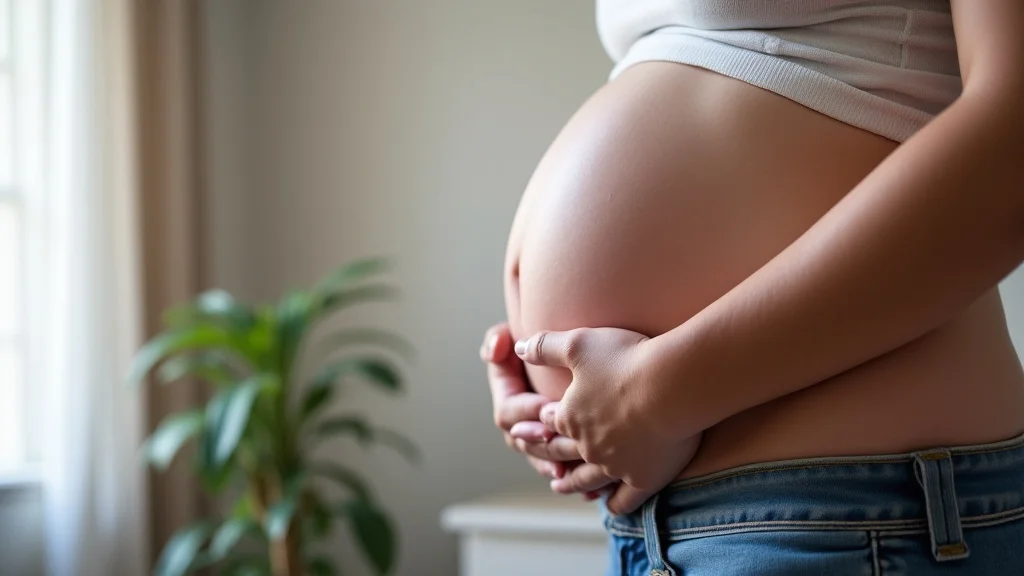
Finding out if you’re pregnant can be a mix of excitement and maybe a little confusion, especially in the very beginning. It’s super common to wonder about what’s happening around week 2. This early stage can feel a bit like a mystery, with subtle changes that are easy to miss or misinterpret.
But don’t worry, figuring out these early signs is simpler than you might think. We’ll walk through what to look for, step by step. Let’s discover what your body might be telling you.
Key Takeaways
- You’ll learn about the most common early indicators of pregnancy.
- We will explain how the timing of these signs relates to week 2.
- You will get clear information to help you recognize potential pregnancy symptoms.
- Simple explanations will make understanding your body easier.
- We provide practical tips for when you notice these changes.
Understanding Pregnancy Symptoms Week 2
Pregnancy Symptoms Week 2 What To Look For
Pregnancy symptoms week 2 often represent the very earliest whispers of conception. This is a time when your body is just beginning its incredible transformation. Many women are not yet aware they are pregnant, as the signs can be subtle and easily mistaken for premenstrual symptoms.
This period is crucial because it sets the stage for everything that follows. Understanding these initial changes helps in acknowledging the possibility of pregnancy sooner. It’s a phase of subtle shifts, not dramatic ones, which is why it requires a keen eye.
The Timeline of Early Pregnancy
The timeline of early pregnancy is divided into weeks, often starting from the first day of your last menstrual period. This might seem confusing when you’re looking for pregnancy symptoms week 2. Conception typically happens around ovulation, which is usually about two weeks after your last period begins.
So, “week 2” in common pregnancy counting can actually be the time ovulation and fertilization occur, or just after. The actual implantation, when the fertilized egg attaches to the uterine wall, usually happens a few days later, closer to week 3. This is why definitive pregnancy symptoms are rare in week 2 itself.
Most early signs you might feel or notice are actually progesterone-driven changes that can occur in any cycle.
- Week 1 is counted from the first day of your last menstrual period. This is often before conception.
- Week 2 is usually when ovulation happens and fertilization might occur.
- Week 3 is when implantation can begin, and the body starts producing hCG, the pregnancy hormone.
- Week 4 and beyond is when many common pregnancy symptoms start to become more noticeable as hCG levels rise.
The hormone progesterone plays a huge role in these early changes. After ovulation, your body produces more progesterone to prepare the uterus for a potential pregnancy. If pregnancy doesn’t occur, progesterone levels drop, leading to menstruation.
If pregnancy does occur, progesterone levels stay high, continuing to support the pregnancy. These fluctuating progesterone levels can cause symptoms that mimic those of an impending period, making it tricky to distinguish between PMS and very early pregnancy.
Hormonal Changes and Their Effects
The hormonal cascade that begins with conception is what drives most early pregnancy symptoms. After fertilization and implantation, your body starts producing human chorionic gonadotropin (hCG). This hormone is the key signal that pregnancy has begun and is what over-the-counter pregnancy tests detect.
hCG levels rise rapidly in the early weeks of pregnancy. However, in week 2, hCG levels are typically still too low to be detected by a home pregnancy test or to cause significant, distinct symptoms. The symptoms felt in week 2 are mostly due to progesterone, which rises after ovulation regardless of whether pregnancy occurs.
This progesterone surge can lead to breast tenderness, mood swings, and fatigue, all of which can feel very similar to premenstrual symptoms.
Why Week 2 Symptoms Are Tricky
The challenge with pregnancy symptoms week 2 lies in their ambiguity. Because the fertilized egg is still traveling or very newly implanted, the body’s production of hCG is minimal, if present at all. The symptoms many women experience around this time, such as mild cramping, bloating, or unusual discharge, are often identical to premenstrual syndrome (PMS) symptoms.
This overlap makes it very difficult for beginners to pinpoint if they are experiencing early pregnancy signs or just their regular cycle. The emotional aspect can also play a role; when trying to conceive, women may become hyper-aware of every bodily sensation, interpreting normal fluctuations as definitive proof of pregnancy.
Subtle Indicators to Notice
While definitive signs of pregnancy are uncommon in week 2, some women report experiencing subtle bodily sensations. These can include very mild cramping, sometimes referred to as implantation cramping, though this usually occurs later, around week 3. A slight change in vaginal discharge might also be noticed.
Some women report a heightened sense of smell or aversions to certain foods, though these are also more common in later weeks as hCG levels climb. Bloating and changes in bowel habits can also occur due to hormonal shifts. However, it is vital to remember that all these can also be signs of an upcoming period.
Implantation Cramping and Spotting
Implantation cramping and spotting are often cited as early signs of pregnancy. This occurs when the fertilized egg, now a blastocyst, burrows into the uterine lining. This process can cause mild, twinging sensations in the lower abdomen and sometimes light spotting, which is usually pink or brown.
However, this usually happens around 6 to 12 days after ovulation, placing it more typically in week 3 or even early week 4 of a pregnancy count. In week 2, if you experience cramping, it’s far more likely to be related to ovulation itself or the normal hormonal fluctuations of your menstrual cycle rather than implantation. Distinguishing between ovulation pain and early implantation cramping can be challenging.
- Implantation Cramping typically feels like mild, intermittent twinges or dull aches in the lower abdomen. It is not usually severe.
- Implantation Spotting is light bleeding that is often pink or brownish in color. It is generally much lighter than a regular menstrual period.
- Timing is Key Implantation usually occurs 6-12 days past ovulation. For a standard 28-day cycle, this places it in week 3 or 4.
The exact timing of implantation can vary from woman to woman and even from cycle to cycle. Some women report feeling implantation sensations very early, while others never notice it at all. It is important not to misinterpret ovulation-related sensations as implantation if you are only in week 2.
Ovulation itself can sometimes cause mild pelvic discomfort or pain, often on one side, known as Mittelschmerz. This discomfort typically lasts from a few minutes to a few hours.
Changes in Vaginal Discharge
Changes in vaginal discharge can occur throughout a woman’s menstrual cycle due to hormonal fluctuations. Around ovulation, the discharge typically becomes clearer, wetter, and more like egg whites to facilitate sperm. After ovulation, as progesterone levels rise, the discharge usually becomes thicker, creamier, and less abundant.
This post-ovulatory discharge pattern is common whether pregnancy occurs or not. If you are pregnant, this thicker discharge can persist. However, in week 2, these changes are primarily driven by the normal hormonal shifts of your cycle, rather than being a definitive sign of pregnancy.
It’s only when this pattern continues beyond your expected period that it might suggest pregnancy.
What to Expect
During week 2, your body is preparing for potential fertilization. If you ovulate during this week, you might notice an increase in clear, stretchy, and slippery cervical mucus. This type of mucus is fertile and designed to help sperm survive and travel to the egg.
After ovulation, if fertilization occurs, the hormonal environment changes. The cervical mucus may then become thicker and less abundant as progesterone takes over. This change is often subtle and can be easily overlooked or confused with normal premenstrual cervical mucus changes.
Breast Tenderness and Swelling
Breast tenderness and swelling are very common symptoms that can occur in both the luteal phase (after ovulation) and early pregnancy. The increase in progesterone after ovulation can make breasts feel sore, heavy, or sensitive to the touch. This symptom can start as early as a few days after ovulation, meaning it could potentially be felt in week 2.
For many women, this tenderness is indistinguishable from premenstrual breast discomfort. It’s a sign that your hormones are active, preparing your body for either pregnancy or menstruation. If you are pregnant, this tenderness often intensifies as hCG levels rise.
Progesterone’s Role
Progesterone is a key hormone in preparing the uterus for pregnancy and maintaining it. After ovulation, the corpus luteum in the ovary produces progesterone. This hormone causes the uterine lining to thicken, making it receptive for implantation.
Progesterone also affects other parts of the body, including the breasts. It can cause glandular tissues in the breasts to enlarge, leading to feelings of fullness, tenderness, and increased sensitivity. These changes are a natural part of the menstrual cycle’s second half, designed to get the body ready for potential pregnancy.
Because progesterone is elevated in the luteal phase of every cycle, breast tenderness is a symptom that can occur whether you are pregnant or not. Therefore, while you might experience breast tenderness in week 2, it cannot be confidently labeled as a definitive pregnancy symptom at this early stage. Many women who are not pregnant experience significant breast tenderness before their period arrives.
The intensity can also vary greatly from cycle to cycle and woman to woman.
Fatigue and Sleepiness
Fatigue is another common symptom that can appear very early in pregnancy, sometimes even before a missed period. The surge in progesterone after ovulation contributes to this feeling of tiredness. Progesterone has a relaxing effect on the body and can also affect your body temperature, making you feel more sleepy.
While this can certainly be a sign of pregnancy, it’s also a very common symptom of PMS or just a normal part of a busy life. If you’re feeling unusually tired in week 2, it could be an early indicator, but it’s important to consider other factors in your lifestyle.
Understanding Fatigue
Fatigue in early pregnancy is often attributed to the body working overtime to support a potential pregnancy. The increase in progesterone is believed to be a major factor, as it can act as a natural sedative. Your body’s metabolism also starts to speed up, and your blood volume increases significantly to supply the growing fetus.
All these physiological changes require more energy, which can lead to a profound sense of tiredness. This fatigue often starts around the time of implantation or shortly after and can persist through the first trimester.
However, fatigue is a very non-specific symptom. Many things can cause tiredness, including lack of sleep, stress, poor diet, illness, or even just changes in the weather. Therefore, if you are experiencing fatigue in week 2, it’s important not to jump to conclusions.
It’s a symptom that, when combined with other potential early signs and a missed period, becomes more significant. For now, focus on getting adequate rest and maintaining a healthy lifestyle.
When to Consider a Pregnancy Test
The question of when to test for pregnancy is critical, especially when dealing with the ambiguous symptoms of week 2. Home pregnancy tests work by detecting hCG in your urine. This hormone is produced by the developing placenta after implantation.
Implantation typically happens around day 6-12 after ovulation. Therefore, testing too early, like in week 2, will likely result in a false negative, even if you are pregnant. This is because hCG levels are not yet high enough to be detected by the test.
The Role of hCG
Human chorionic gonadotropin (hCG) is the hormone that confirms pregnancy. It’s produced by the cells that will become the placenta shortly after the fertilized egg implants in the uterine wall. The levels of hCG in your blood and urine rise rapidly in the early stages of pregnancy.
In the first few weeks, hCG levels typically double every 48 to 72 hours. This rapid increase is what makes pregnancy tests effective, but it also means there’s a specific window during which testing is most accurate.
- Implantation usually occurs 6-12 days after fertilization.
- hCG Production Begins shortly after implantation.
- Detectable Levels of hCG in urine are typically present around 12-14 days after ovulation. This aligns with the time of a missed period.
- Blood Tests can often detect hCG slightly earlier than urine tests.
Understanding hCG is key to accurate pregnancy testing. If you test too soon, the concentration of hCG in your urine will be too low for the test to register, leading to a negative result. This can cause unnecessary worry and confusion.
It’s far better to wait until you’ve missed your period for the most reliable urine pregnancy test results.
Waiting for a Missed Period
The most reliable time to take a home pregnancy test is after you have missed your period. For women with regular cycles, this is typically around 14 days after ovulation. If you are experiencing symptoms that you suspect might be related to pregnancy, but you are still in week 2, it’s generally too early to get an accurate result.
Waiting until your period is late increases the accuracy of the test significantly. This is because your hCG levels will have had sufficient time to rise to detectable levels.
Why Waiting Matters
Waiting until you miss your period is not just about waiting for a specific date; it’s about waiting for your body to produce enough hCG to be detected by a home pregnancy test. These tests are designed to detect a certain threshold of hCG. If you test before your period is due, the concentration of hCG in your urine might be below this threshold, leading to a false negative result.
This can be disheartening and confusing, especially if you are experiencing pregnancy symptoms.
Consider this: If ovulation happened around day 14 of a 28-day cycle, and implantation occurs 8 days later (day 22), hCG production starts then. It takes a few more days for hCG to build up to levels that most home pregnancy tests can detect. By day 28, which is when your period would normally start, hCG levels are usually high enough for a positive result.
Testing around this time or a few days after provides the best chance of an accurate reading.
Interpreting Early Test Results
Interpreting early test results requires caution. If you take a test in week 2 and it’s negative, it’s most likely too early to detect pregnancy. You should retest a few days after your missed period if your period doesn’t arrive.
If you get a positive result very early, it’s still advisable to confirm with your doctor. Sometimes, very faint positive lines can indicate an early pregnancy, while other times they might be due to faulty tests or chemical pregnancies (a very early miscarriage). A doctor can perform a blood test, which can detect hCG at lower levels than urine tests and can also monitor its rise, providing a clearer picture.
Pregnancy Symptoms Week 2 vs. PMS
The confusion between pregnancy symptoms week 2 and premenstrual syndrome (PMS) is one of the most common challenges for women trying to conceive. Both conditions share many similar symptoms due to fluctuating hormone levels, primarily progesterone and estrogen. In week 2, the body is post-ovulation and preparing for potential implantation.
Progesterone levels are elevated during this luteal phase, whether pregnancy occurs or not. This hormonal environment is responsible for many of the symptoms that can feel like early pregnancy.
Hormonal Overlap Explained
The key to understanding the overlap lies in the hormones involved. After ovulation, the corpus luteum forms and releases progesterone. Progesterone’s main job is to prepare the uterine lining for implantation and to maintain a pregnancy if it occurs.
If pregnancy does not happen, the corpus luteum breaks down, and progesterone levels drop, triggering menstruation. If pregnancy does occur, the corpus luteum continues to produce progesterone, supported by hCG. Since progesterone is elevated in both scenarios during the luteal phase, symptoms like breast tenderness, bloating, mood swings, and fatigue can be present in both PMS and early pregnancy.
- Progesterone Surge occurs after ovulation in both pregnant and non-pregnant cycles.
- Estrogen Fluctuations also contribute to mood and physical symptoms.
- Uterine Lining Preparation leads to cramps and bloating in both cases.
- Week 2 Timing means symptoms are primarily driven by these post-ovulatory hormones, making differentiation difficult.
Estrogen also plays a role. While progesterone is dominant in the luteal phase, estrogen levels also change. These hormonal shifts can influence mood, energy levels, and physical sensations.
The body is essentially undergoing similar preparatory processes for a potential pregnancy or for menstruation. This is why the symptoms can be so strikingly similar.
Common Overlapping Symptoms
Several symptoms commonly overlap between early pregnancy and PMS, making it hard to tell them apart, especially in week 2. These include:
- Breast Tenderness: Sore, swollen, or sensitive breasts.
- Bloating: A feeling of fullness or pressure in the abdomen.
- Mood Swings: Feeling irritable, anxious, or emotional.
- Fatigue: Unusual tiredness or a desire to sleep more.
- Headaches: Some women experience headaches related to hormonal changes.
- Cramping: Mild abdominal cramps or twinges.
The critical difference often lies in the intensity and duration of these symptoms. Pregnancy symptoms tend to persist and sometimes intensify, especially after a missed period, while PMS symptoms usually subside with the onset of menstruation. However, during week 2, these distinctions are not yet clear.
Distinguishing Factors to Watch For
While challenging, some subtle factors might offer clues, although they are not definitive proof in week 2.
- Implantation Spotting: As mentioned, light spotting around 6-12 days after ovulation can suggest implantation. However, it can be mistaken for the start of a light period or spotting due to other causes.
- Nausea: While more common from week 4-6, some women experience mild nausea or food aversions very early on. This is less common in week 2 but possible.
- Heightened Sense of Smell: An increased sensitivity to odors can occur early.
- Cervical Position and Firmness: Some women track their cervix. In early pregnancy, it may feel softer and be positioned higher, but this requires practice and is not a reliable indicator on its own in week 2.
The most definitive distinguishing factor will always be a missed period followed by a positive pregnancy test. Until then, many symptoms remain ambiguous. It’s best to observe your body without over-analyzing every sensation.
When to See a Doctor
If you suspect you might be pregnant, especially if you are experiencing symptoms and have a positive pregnancy test, consulting a doctor is the next essential step. Your doctor can confirm the pregnancy, discuss your health history, and guide you on prenatal care. For many, this first visit happens after a missed period and a positive home test.
However, if you experience concerning symptoms, it’s always wise to seek medical advice.
Confirming Pregnancy
A doctor can confirm pregnancy through a blood test or a pelvic exam. Blood tests can detect hCG earlier and more accurately than urine tests. They can also measure the exact level of hCG, which helps determine how far along the pregnancy is and monitor its progression.
A pelvic exam allows the doctor to check for physical signs of pregnancy, such as changes in the size and shape of the uterus and cervix. This professional confirmation is crucial for starting proper prenatal care and ensuring a healthy pregnancy.
- Blood Tests: Can detect hCG levels as early as 6-8 days after ovulation.
- Urine Tests: Most accurate after a missed period, typically around 14 days post-ovulation.
- Pelvic Exam: May reveal physical changes in the reproductive organs.
The doctor will ask about your last menstrual period, your symptoms, and any previous pregnancies or health conditions. This information helps them assess your individual situation and provide personalized advice.
Addressing Unusual Symptoms
While mild symptoms in week 2 are often normal hormonal responses, certain unusual symptoms warrant immediate medical attention. These can include severe abdominal pain, heavy bleeding (more than spotting), dizziness, or intense nausea and vomiting that prevents you from keeping fluids down. These could indicate an ectopic pregnancy, miscarriage, or other complications that require prompt medical evaluation and treatment.
It’s always better to err on the side of caution and contact your healthcare provider if you experience anything concerning.
Warning Signs
Severe abdominal pain, especially on one side, could be a sign of an ectopic pregnancy, where the fertilized egg implants outside the uterus. This is a medical emergency. Heavy vaginal bleeding, significantly more than light spotting, might indicate a miscarriage or other complications.
Intense vomiting that leads to dehydration can be a sign of hyperemesis gravidarum, a severe form of morning sickness. Dizziness or fainting could signal anemia or other issues.
Your doctor can perform diagnostic tests to rule out serious conditions and provide the necessary care. They will assess your symptoms, medical history, and may order ultrasounds or other investigations to understand what is happening.
Common Myths Debunked
Myth 1: You Can Feel Definite Pregnancy Symptoms in Week 2
The reality is that while some very subtle sensations might occur, definitive pregnancy symptoms are exceedingly rare in week 2. Most symptoms experienced at this stage are due to post-ovulatory hormonal shifts and are indistinguishable from PMS. The pregnancy hormone hCG is typically too low to cause noticeable symptoms or be detected by tests until week 3 or 4.
Myth 2: Intense Cramping in Week 2 Means You’re Not Pregnant
Intense cramping is generally not a typical sign of early pregnancy. However, mild to moderate cramping can occur due to various reasons, including ovulation, hormonal fluctuations, or the very beginning of implantation (which usually happens later). If you experience severe cramping, especially with bleeding, it is important to seek medical advice as it could indicate a complication like an ectopic pregnancy.
But mild, twingey sensations are not always a sign against pregnancy.
Myth 3: A Negative Pregnancy Test in Week 2 Rules Out Pregnancy
A negative pregnancy test in week 2 is highly likely to be a false negative. This is because hCG levels are usually not high enough to be detected by home pregnancy tests until after a missed period. If you suspect you are pregnant, it is best to retest a few days after your expected period if it doesn’t arrive.
Myth 4: You Will Know You’re Pregnant Immediately
For most women, knowing they are pregnant doesn’t happen in week 2. It often takes time, waiting for symptoms to develop and for tests to become accurate. The body is undergoing gradual changes, and pinpointing the exact moment of conception or early pregnancy without testing can be very difficult.
Frequently Asked Questions
Question: Can I feel pregnant in week 2 even if my period is not late yet
Answer: It is very unlikely to feel definitive pregnancy symptoms in week 2 because the hormonal changes are not yet significant enough. Many perceived symptoms at this stage are actually premenstrual symptoms.
Question: Is spotting in week 2 a sign of pregnancy
Answer: Light spotting in week 2 could potentially be related to ovulation itself or normal hormonal shifts. Implantation spotting typically occurs later, closer to week 3 or 4.
Question: How soon can I take a pregnancy test after possible conception
Answer: Home pregnancy tests are most accurate after you miss your period, usually around 14 days after ovulation. Testing earlier can lead to false negatives.
Question: What if I have sore breasts in week 2
Answer: Sore breasts are a common symptom after ovulation due to progesterone, whether you are pregnant or not. It can be a sign of an approaching period or very early pregnancy.
Question: Should I worry if I don’t have any symptoms in week 2
Answer: Not at all. Many women do not experience any noticeable symptoms in week 2. Symptoms vary greatly from person to person and even from one pregnancy to another.
Final Thoughts
Pregnancy symptoms week 2 are often subtle and easily mistaken for PMS. Focus on understanding the hormonal shifts that occur post-ovulation. While definitive signs are rare this early, being aware of minor bodily changes can be helpful.
Wait for a missed period and a positive test for confirmation. Trust your body’s process and seek guidance if you have concerns.
Leave a Reply