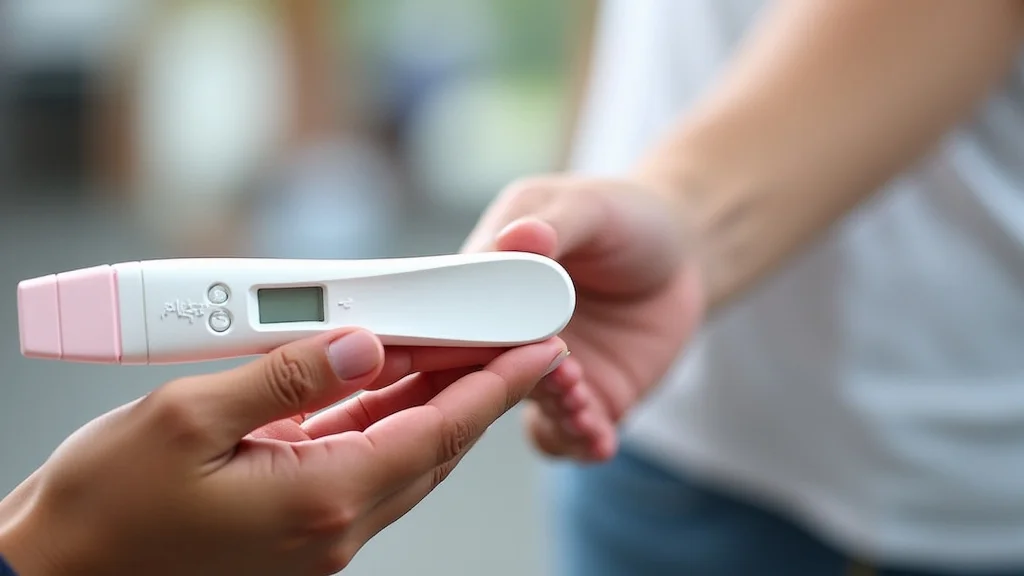
Thinking about a pregnancy test in New Zealand can feel a bit overwhelming, especially if it’s your first time. There are so many options and it’s natural to want to get it right. This guide is here to make things super easy.
We’ll walk through everything you need to know about taking a pregnancy test, step by step. No confusing terms, just clear advice to help you feel confident and prepared. Let’s figure out how to use a pregnancy test NZ style, simply and clearly.
Key Takeaways
- How to choose the right pregnancy test in NZ.
- Step-by-step instructions for taking a pregnancy test.
- When to take a pregnancy test for accurate results.
- Understanding what the results mean.
- What to do after getting your test results.
- Where to buy pregnancy tests in New Zealand.
Understanding Pregnancy Tests In New Zealand
When you are wondering if you might be pregnant, a home pregnancy test is usually the first step. These tests are designed to detect a hormone called human chorionic gonadotropin (hCG) in your urine. Your body starts making hCG soon after a fertilized egg attaches to the uterine lining.
The amount of hCG generally doubles every 2-3 days in early pregnancy. Home pregnancy tests are very common and available in pharmacies and supermarkets across New Zealand.
For beginners, the thought of taking a test can bring up questions about accuracy and timing. It is important to remember that these tests are reliable when used correctly. Many beginner users worry about getting a false positive or false negative result.
This guide will help clear up those worries and provide simple, straightforward guidance.
How Pregnancy Tests Work
Home pregnancy tests detect hCG in your pee. This hormone is made by your body when you are pregnant. The test strips have antibodies that will react with hCG.
If hCG is present, it causes a line or symbol to appear on the test window. This shows a positive result. If no hCG is found, the test will show a negative result.
The sensitivity of a test tells you how much hCG it needs to detect a pregnancy. Higher sensitivity means it can detect lower levels of hCG.
Different brands might have slightly different ways of showing results. Some use lines, while others use plus or minus signs, or words like “pregnant” or “not pregnant.” It is always a good idea to read the instructions that come with your specific test. This ensures you know exactly what to look for and how to interpret the outcome correctly.
Understanding this basic science helps build confidence in using the test.
Types Of Pregnancy Tests Available In NZ
In New Zealand, you can find several types of home pregnancy tests. The most common ones are urine tests. These are easy to use and widely available.
They come in various forms, including dip-stick tests, midstream tests, and early detection tests. Early detection tests are designed to detect pregnancy a few days before your missed period. They are more sensitive to hCG.
Midstream tests are like a small stick with an absorbent tip. You hold the tip directly in your urine stream for a few seconds. Dip-stick tests usually come with a small cup.
You collect your urine in the cup and then dip the test strip into it. Both are effective, and the choice often comes down to personal preference or availability. Most pharmacies in NZ will stock a range of these options, making them easy to purchase.
Where To Buy Pregnancy Tests In New Zealand
Buying a pregnancy test in NZ is very straightforward. You can find them at most pharmacies, like Countdown Pharmacy, Unichem, or Life Pharmacy. Supermarkets also often stock them, usually in the health or pharmacy aisle.
Some larger department stores might carry them too. You can also find them online from various retailers. The price can vary depending on the brand and sensitivity of the test.
Most tests are quite affordable.
When you go to buy one, you can usually pick them up yourself from the shelf. If you prefer more privacy, some pharmacies have a counter service where you can ask the pharmacist for assistance. They are generally discreetly packaged.
Knowing where to get them easily removes one less worry when you need one.
Getting Ready To Take A Pregnancy Test
Before you take a pregnancy test, it is best to be prepared. This helps ensure you get the most accurate result possible. Having everything ready beforehand can reduce any last-minute stress or confusion.
Simple preparation makes the entire process much smoother and more reliable.
Choosing The Right Time
Timing is key for an accurate pregnancy test. Most home pregnancy tests work best when there is enough hCG in your urine. This hormone builds up over time during early pregnancy.
The general advice is to wait until you have missed your period. Taking a test too early might give you a false negative result because the hCG levels might not be high enough yet to detect.
Some tests are called “early detection” tests. These can detect pregnancy a few days before your expected period. However, even with these, a missed period is usually the most reliable time to test.
If you get a negative result but still suspect you are pregnant, wait a few days and test again. Your hCG levels will have increased, making detection more likely.
Preparing Your Urine Sample
For most home pregnancy tests, you will need to use your first-morning urine. This is because your urine is most concentrated at this time, meaning it has the highest level of hCG. After you have been asleep for several hours, your body has not processed a lot of fluids.
This makes the hCG hormone easier to detect. If you test later in the day, try to avoid drinking large amounts of fluids beforehand. This can dilute your urine and make the hCG harder to find.
When you are ready to collect your urine, ensure you have your test ready to go. Some tests require you to pee directly on the absorbent tip. Others need you to collect urine in a clean cup first.
Always follow the specific instructions that come with your test. Using a clean container if collecting urine is important to avoid contamination, which could affect the result.
Reading The Instructions
This step is super important for getting accurate results. Every pregnancy test has its own set of instructions. These will tell you exactly how to use the test, how long to wait for the result, and how to read the symbols or lines.
Do not skip this part, even if you have used a test before. Different brands can have slightly different procedures or result indicators.
Pay close attention to details like how long to hold the test in your urine stream, or how long to wait after dipping it. Also, note the time frame for reading the result. Reading the result too early or too late can lead to an inaccurate reading.
Most tests provide a window of time, for example, between 3 and 10 minutes, to check the result. Always stick to that window.
How To Use A Pregnancy Test
Using a pregnancy test is designed to be simple. Once you have chosen your test and read the instructions, you are ready to go. Follow these steps carefully to get the most accurate outcome.
This process should feel straightforward and easy to manage.
Step-By-Step Guide
Here is a general guide. Remember to always check the specific instructions for your chosen test.
- Gather your supplies: Your pregnancy test and a clean cup if needed.
- Prepare for testing: If using a midstream test, remove the cap. If collecting urine, use a clean cup.
- Collect the urine sample: For midstream tests, hold the absorbent tip in your urine stream for the recommended time. For dip-stick tests, collect urine in the cup and dip the test stick into it for the specified duration.
- Wait for the result: Place the test on a flat, dry surface. Start a timer for the recommended waiting period.
- Read the result: Check the test window within the specified time frame.
Interpreting The Results
Once you have waited the correct amount of time, you will see a result. This usually appears as lines or symbols in a specific window on the test. A positive result typically shows two lines, a plus sign, or the word “pregnant.” A negative result usually shows one line, a minus sign, or the word “not pregnant.”
It is vital to look at the control line as well. The control line shows that the test is working correctly. If the control line does not appear, the test may be faulty, and you should use a new one.
If you see a faint positive line, it usually still means you are pregnant. However, for complete certainty, especially with faint lines, it is a good idea to see a doctor. They can confirm the pregnancy with further tests or an ultrasound.
What To Do After Testing
After you have read your result, the next steps depend on what it says. If the test is positive, it is recommended to make an appointment with your doctor or a healthcare provider. They can confirm the pregnancy and discuss your options for prenatal care.
They will likely perform a blood test or ultrasound to confirm the pregnancy and estimate your due date.
If the test is negative, but you still believe you might be pregnant, or if your period does not arrive, retest in a few days. Sometimes, hCG levels take longer to become detectable. If you continue to get negative results and your period is significantly delayed, consult with your doctor.
There could be other reasons for a missed period.
Understanding Pregnancy Test Accuracy In NZ
Accuracy is a big concern for anyone taking a pregnancy test. Fortunately, modern home pregnancy tests are highly accurate when used correctly. They are designed to give reliable results, but certain factors can influence this.
Understanding these factors helps you trust the outcome of your test.
Factors Affecting Accuracy
Several things can affect how accurate a pregnancy test is. The most common issue is testing too early. If there isn’t enough hCG in your system, you might get a false negative.
This means the test says you are not pregnant, but you actually are. Using an expired test can also lead to inaccurate results. Always check the expiration date on the packaging.
Drinking too much fluid before testing can dilute your urine, making it harder for the test to detect hCG. This is why first-morning urine is often recommended. Incorrectly following the test instructions can also lead to errors.
For example, reading the result outside the specified time window can give a misleading outcome. Storing the test improperly, like in a very hot or humid place, can also affect its performance.
False Positives And False Negatives
A false positive result means the test shows you are pregnant, but you are not. This is rare with modern tests. It can happen if you have certain medical conditions, or if you have taken certain fertility medications containing hCG.
Sometimes, a recent miscarriage or abortion can leave hCG in your system, leading to a temporary false positive.
A false negative result, where the test says you are not pregnant but you are, is more common. This usually happens because you tested too early, before hCG levels were high enough. Other causes include diluted urine, an expired test, or not following instructions carefully.
If you suspect a false negative, simply retest after a few days, ideally with first-morning urine.
The Role Of hCG Levels
Human chorionic gonadotropin (hCG) is the hormone that pregnancy tests detect. It is produced by the cells that will form the placenta. After implantation, hCG levels rise rapidly.
They typically double about every 48 to 72 hours during the first few weeks of pregnancy. Early detection tests are designed to be very sensitive to hCG, meaning they can detect it at lower concentrations.
For example, a very sensitive test might detect hCG at 10 mIU/mL, while a less sensitive one might require 50 mIU/mL or more. This sensitivity is what allows some tests to show a positive result several days before a missed period. However, if your hCG levels are lower than the test’s detection threshold, you will get a negative result, even if you are pregnant.
This is why waiting until after your missed period is the most reliable approach for most tests.
Common Myths Debunked
Myth 1 A faint line means you are definitely not pregnant
This is not true. A faint line on a pregnancy test usually indicates that hCG is present, but at a lower concentration. This can happen in very early pregnancy or if the test was taken a little too soon.
If you see a faint line, it is generally considered a positive result. However, for reassurance, it is best to retest in a few days or see a doctor to confirm.
Myth 2 Pregnancy tests from pharmacies are more accurate than supermarket ones
In New Zealand, most home pregnancy tests sold in pharmacies and supermarkets are made to the same high standards. The accuracy of a test depends more on how and when it is used rather than where it is purchased. Both types detect hCG.
Always choose a test from a reputable brand and follow the instructions precisely for reliable results.
Myth 3 You can get pregnant if you have sex during your period
While it is less likely, it is possible to get pregnant from sex during your period. Sperm can survive inside the body for up to five days. If you ovulate soon after your period ends, and have sex during or just after your period, conception can occur.
Therefore, pregnancy is still a possibility, and if you have concerns, using contraception or taking a pregnancy test is advisable.
Myth 4 All pregnancy tests work the same way
While most home pregnancy tests detect hCG in urine, there are differences. The main difference is sensitivity – how much hCG they need to detect a positive result. Some are designed for early detection, while others are standard tests.
The way they display results can also vary, with some using lines, others symbols, and some digital readouts. Always read the instructions for your specific test.
Frequently Asked Questions
Question: How soon can I take a pregnancy test in NZ
Answer: You can take a pregnancy test as early as the day your period is due. Some early detection tests can give results a few days before your missed period, but using first-morning urine is recommended for best accuracy.
Question: Can I drink water before taking a pregnancy test
Answer: It is best to avoid drinking large amounts of water right before a pregnancy test, especially if testing later in the day. This can dilute your urine and make it harder to detect hCG. First-morning urine is usually the most concentrated.
Question: What if I get a positive result but feel fine
Answer: A positive pregnancy test result should be confirmed by a healthcare professional. Even if you feel fine, it is important to see a doctor or midwife to discuss your pregnancy and receive appropriate care.
Question: Can stress affect a pregnancy test result
Answer: Stress itself does not affect the accuracy of a pregnancy test. However, stress can sometimes affect your menstrual cycle, potentially making it harder to pinpoint when your period is due, which can indirectly affect test timing.
Question: Where can I get support if my pregnancy test is positive
Answer: If your pregnancy test is positive, you can contact your local doctor, a family planning clinic, or a maternity service provider in New Zealand. They can offer advice, support, and information about your next steps.
Wrap Up
Using a pregnancy test in NZ is a simple and effective way to find out if you are pregnant. By timing your test correctly, following instructions, and understanding the results, you can gain confidence. If you get a positive result, reach out to a healthcare provider for confirmation and care.
If negative, and you still have concerns, retesting is an option. You have the information you need to proceed with clarity and ease.
Leave a Reply