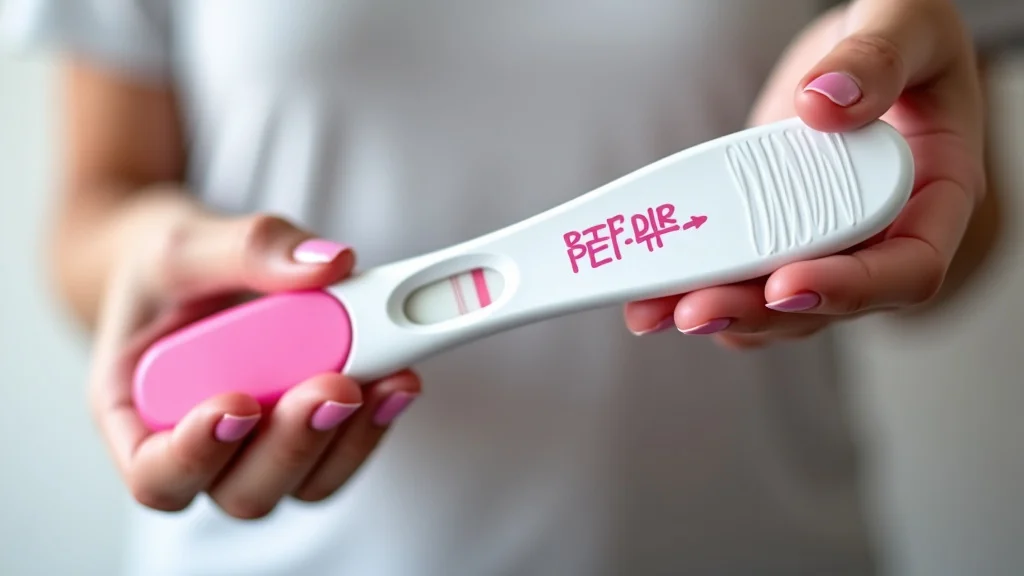
It’s natural to feel a little confused about how pregnancy test kits work. The science behind the pregnancy test kit principle might seem tricky at first, but it’s actually quite straightforward. Many people find it challenging to grasp the details, which is okay!
This guide will break it down simply, step by step. We’ll make sure you understand exactly what’s happening inside that little stick so you can feel confident. Get ready to learn the easy way!
Key Takeaways
- Pregnancy tests detect a hormone called hCG.
- hCG is produced by the body after a fertilized egg implants.
- Test kits use antibodies to react with hCG.
- The reaction creates a visible line or symbol.
- Accuracy depends on correct usage and timing.
How Pregnancy Test Kits Work
Pregnancy test kits are amazing tools that help people find out if they are pregnant at home. They work by detecting a special hormone in your urine. This hormone is called human chorionic gonadotropin, or hCG.
When a fertilized egg attaches to the wall of your uterus, your body starts making hCG. The amount of hCG in your body goes up very quickly in the early weeks of pregnancy. Home pregnancy tests are designed to pick up even small amounts of this hormone.
This makes them a reliable way to get early results.
The Role of hCG
Human chorionic gonadotropin (hCG) is a hormone that is only produced during pregnancy. It is made by cells that will eventually form the placenta. The placenta is the organ that provides oxygen and nutrients to the growing baby.
Even before a missed period, hCG levels can rise enough to be detected by a sensitive home pregnancy test. The longer you wait after your missed period, the higher your hCG levels will likely be, making the test even more accurate.
Understanding hCG is key to grasping the pregnancy test kit principle. The hormone acts like a signal that pregnancy has begun. It tells your body to maintain the uterine lining, which is essential for the pregnancy to continue.
Doctors also monitor hCG levels to track the health of a pregnancy.
Antibodies and Chemical Reactions
Inside the plastic casing of a pregnancy test kit are specially designed antibodies. These antibodies are trained to recognize and bind to hCG molecules. Think of them like tiny, specific locks that only hCG keys can fit into.
When your urine, which may contain hCG, flows over the test strip, these hCG molecules will try to attach to the antibodies.
The test strip has several zones. One zone has antibodies that will trap any hCG present. Another zone is used as a control to show the test is working properly.
When hCG binds to the antibodies in the test zone, it triggers a chemical reaction. This reaction usually involves a colored dye.
For example, some tests use a dye that changes color when it comes into contact with the hCG-antibody complex. This color change is what creates the visible line or symbol you see on the test. The control line uses a different set of antibodies to ensure the urine flowed correctly through the strip and the test components are functional.
Without the control line appearing, the test result is invalid.
Visual Indicators
The result of the chemical reaction is what you see on the test stick. There are different types of indicators, but they all rely on the same underlying pregnancy test kit principle.
- Line Tests: These are the most common. A positive result usually shows two lines, one for the control and one for the test. A negative result shows only one line (the control).
- Digital Tests: These tests have a screen that displays words like “Pregnant” or “Not Pregnant.” They use the same hCG detection but have a more advanced display mechanism.
- Symbol Tests: Some tests use plus (+) and minus (-) symbols. A plus symbol typically indicates pregnancy, while a minus symbol indicates no pregnancy.
The intensity of the test line can sometimes indicate how high the hCG level is. A very faint line might mean hCG is present but at a low level, perhaps very early in the pregnancy. A strong, dark line usually means hCG levels are higher.
It’s important to remember that even a faint line generally counts as a positive result.
Understanding the Pregnancy Test Kit Principle
Let’s really get into the core of the pregnancy test kit principle. At its heart, it’s a type of immunoassay. An immunoassay is a laboratory test that uses antibodies to detect or measure the amount of a specific substance.
In the case of pregnancy tests, that substance is hCG.
The test strip contains a solid material, often paper or a similar porous material, that has been treated with antibodies. These antibodies are typically monoclonal antibodies, meaning they are all identical and designed to bind to a very specific part of the hCG molecule. This specificity is crucial for accurate results.
The Sandwich Assay
Most home pregnancy tests use a “sandwich assay” format. This means the hCG molecule gets “sandwiched” between two different antibodies on the test strip.
- The first set of antibodies is immobilized on the test strip. These antibodies are designed to capture any hCG that passes by.
- If hCG is present in the urine, it binds to these captured antibodies.
- A second set of antibodies is linked to a visual indicator, like a colored dye. These antibodies are also designed to bind to hCG, but to a different part of the molecule than the first set.
- When hCG is present, it bridges the gap between the immobilized antibodies and the dye-linked antibodies. This forms the “sandwich.”
- The dye-linked antibodies accumulate in the test area, creating a visible line or symbol.
This sandwich method ensures that the color change only happens when hCG is present. If there’s no hCG, the dye-linked antibodies don’t get trapped in the test zone, and no line appears.
The Control Line
Every pregnancy test has a control line. This is a separate area on the test strip that has a different set of antibodies. These antibodies are designed to react with something else present in the urine, or simply to capture the dye-linked antibodies that pass by, regardless of hCG presence.
The purpose of the control line is to confirm that the test worked correctly. It shows that the urine flowed through the test strip properly and that the test’s chemical components are functioning. If the control line does not appear, the test is invalid, and you should use a new test.
For example, imagine a test where the dye is released when urine flows over it. The control line antibodies are positioned to trap this dye, forming a line. The test line antibodies are further down the strip and only trap the dye if it’s also bound to hCG.
This separation ensures that you can tell if the test itself is functioning.
Sensitivity Levels
Pregnancy tests vary in their sensitivity, which is measured in milli-international units per milliliter (mIU/mL) of hCG. A more sensitive test can detect lower levels of hCG.
| Test Sensitivity (mIU/mL) | When It Can Detect Pregnancy |
|---|---|
| 10-25 mIU/mL | Often detects pregnancy a few days before a missed period. |
| 25-50 mIU/mL | Typically detects pregnancy on the day of a missed period. |
| 50+ mIU/mL | May require waiting a week after a missed period. |
Choosing a highly sensitive test can allow for earlier detection, but it’s important to follow the instructions. Testing too early, even with a sensitive test, can sometimes lead to a false negative if hCG levels are not yet high enough to be detected.
Factors Affecting Accuracy
While the pregnancy test kit principle is sound, several factors can influence the accuracy of the results. Using the test correctly and at the right time is paramount.
Timing of the Test
The most common reason for an inaccurate result is testing too early. As mentioned, hCG levels need to rise to a detectable amount.
If you test before your expected period, especially if it’s a very sensitive test, you might get a false negative. This means the test says you are not pregnant, but you actually are. Your hCG levels might just not be high enough yet.
Waiting until you miss your period significantly increases the chances of an accurate positive result.
For instance, if your cycle is usually 28 days long, testing on day 25 might yield a negative result even if you are pregnant, as hCG might only be around 5-10 mIU/mL. By day 28, hCG could be 25-50 mIU/mL or higher, making detection much more likely.
Urine Concentration
The concentration of hCG in your urine is directly related to how diluted it is. First-morning urine is usually the most concentrated because you haven’t had fluids to drink for several hours. This makes it the ideal time to test.
Testing with diluted urine, such as later in the day after drinking a lot of fluids, can lower the concentration of hCG. This might lead to a weaker signal or even a false negative, even if you are pregnant.
A real-life scenario: Sarah tested on a Friday afternoon after drinking several glasses of water. She got a negative result. On Saturday morning, using her first urine of the day, she took another test and got a clear positive.
Her hCG levels were sufficient, but the dilution of her urine in the afternoon test masked the result.
Following Instructions
Each test kit comes with specific instructions for use. These instructions are crucial and should be followed precisely. They will tell you how long to hold the stick in the urine stream, how long to wait for the results, and how to read them.
For example, some tests require you to dip the stick for a specific number of seconds, while others require you to hold it under a stream of urine for a similar duration. If you don’t follow these steps, the test might not work correctly.
Waiting too long to read the results can also be an issue. After a certain point, the test window might show evaporation lines, which can be mistaken for a positive result, leading to a false positive. Always read the test within the time frame specified by the manufacturer.
Medical Conditions and Medications
In rare cases, certain medical conditions or medications can affect the accuracy of a home pregnancy test.
- Infertility Treatments: Some fertility treatments involve injecting hCG. This can cause a temporary increase in hCG levels, leading to a false positive result on a pregnancy test.
- Certain Medical Conditions: Very rarely, some tumors can produce hCG. This can also result in a false positive.
- Medications: Aside from hCG injections, most common medications do not affect pregnancy test results. However, it’s always wise to consult a doctor if you are on any specific medications.
It’s estimated that about 1 in 100 home pregnancy tests might give a false positive result. While rare, these instances highlight the importance of confirming results with a healthcare provider.
Interpreting Your Results
Once you have taken the test, interpreting the results is the next step. It’s important to do this carefully.
Positive Results
A positive result means the test detected hCG in your urine, suggesting you are pregnant.
If you see two lines, a plus sign, or the word “Pregnant” on a digital test, it is highly likely that you are pregnant. Even a faint second line or symbol is usually considered positive.
It’s important to remember that home pregnancy tests are very accurate when used correctly. However, for confirmation and to begin prenatal care, you should contact your doctor or a healthcare provider. They can perform blood tests or ultrasounds to confirm the pregnancy and provide guidance.
Negative Results
A negative result means the test did not detect hCG in your urine. This suggests you are likely not pregnant.
If you see only one line, a minus sign, or the words “Not Pregnant” on a digital test, and you took the test at the right time, it’s probable that you are not pregnant.
However, if you missed your period and get a negative result, it’s a good idea to re-test in a few days or a week, especially if your period still hasn’t arrived. Sometimes, hCG levels may not be high enough for detection on the first test. If you continue to get negative results but your period is significantly delayed, it’s advisable to see a doctor to explore other reasons for the delay.
Invalid Results
An invalid result means the test did not work correctly. This often happens if the instructions were not followed properly or if the test was faulty.
Signs of an invalid result include:
- No control line appears.
- The test line appears but the control line does not.
- The test results are unclear or smudge.
If you get an invalid result, do not try to interpret it. Discard the test and use a new one, making sure to follow the instructions precisely.
Common Myths Debunked
Myth 1: Any two lines mean you are pregnant, even if one is faint.
Reality: While it’s true that even a faint line usually indicates a positive result because it means hCG was detected, it’s important to understand why it might be faint. A faint line often signifies early pregnancy or lower hCG levels. However, always ensure the faint line is a true test line and not an evaporation line, which can occur after the test has dried for too long.
Always read the test within the specified time frame for the most accurate interpretation.
Myth 2: You can use any liquid, not just urine, to test.
Reality: Pregnancy tests are specifically designed to work with urine. The chemical reactions and antibodies involved are calibrated to react with the components found in urine. Using other liquids, like water, soda, or even juice, will not provide accurate results and will likely lead to a false negative or an invalid test because these liquids lack the necessary hCG or may interfere with the test’s chemistry.
Myth 3: If you get a negative result, you can’t be pregnant.
Reality: This is only true if the test was taken at the optimal time and following all instructions. Testing too early, before your hCG levels have risen sufficiently, can lead to a false negative. If your period is still missed and you receive a negative result, it is recommended to re-test in a few days to a week.
Persistent missed periods with negative tests warrant a visit to a healthcare provider.
Myth 4: Storing pregnancy tests in the bathroom makes them less effective.
Reality: While extreme temperatures or humidity can potentially degrade the chemicals in a test over time, typical bathroom conditions are usually fine for short-term storage. The primary concerns for storage are extreme heat, cold, or moisture. Keeping tests in their original sealed packaging in a cool, dry place is best.
If your bathroom is excessively humid or hot, consider storing them elsewhere, like a medicine cabinet in a bedroom.
Frequently Asked Questions
Question: How soon can I take a pregnancy test?
Answer: Most home pregnancy tests can detect pregnancy from the first day of your missed period. Some highly sensitive tests may be able to detect pregnancy a few days earlier. Using first-morning urine provides the most concentrated sample for best results.
Question: Can I reuse a pregnancy test stick?
Answer: No, pregnancy test sticks are designed for single use only. Attempting to reuse a test can lead to inaccurate results because the chemical components are designed for one reaction and will not function properly a second time.
Question: What should I do if my test result is unclear?
Answer: If your test result is unclear or you are unsure how to read it, it is best to use a new test. Make sure to carefully follow all instructions provided with the new test kit. If results remain unclear or confusing, consult a healthcare provider.
Question: Can medication affect a pregnancy test?
Answer: Generally, most common medications do not affect the accuracy of home pregnancy tests. However, if you are taking fertility treatments that involve hCG injections, this can lead to a false positive result. Always discuss your medications with your doctor if you have concerns.
Question: What is the main hormone detected by pregnancy tests?
Answer: The main hormone detected by pregnancy tests is human chorionic gonadotropin (hCG). This hormone is produced by the placenta shortly after implantation of a fertilized egg.
Final Thoughts
Understanding the pregnancy test kit principle means knowing it detects hCG, a pregnancy hormone. This hormone signals that a fertilized egg has implanted. The test uses antibodies to capture hCG, triggering a visible change.
Always follow instructions and test at the right time for accurate results. Confirm with your doctor for peace of mind.
Leave a Reply