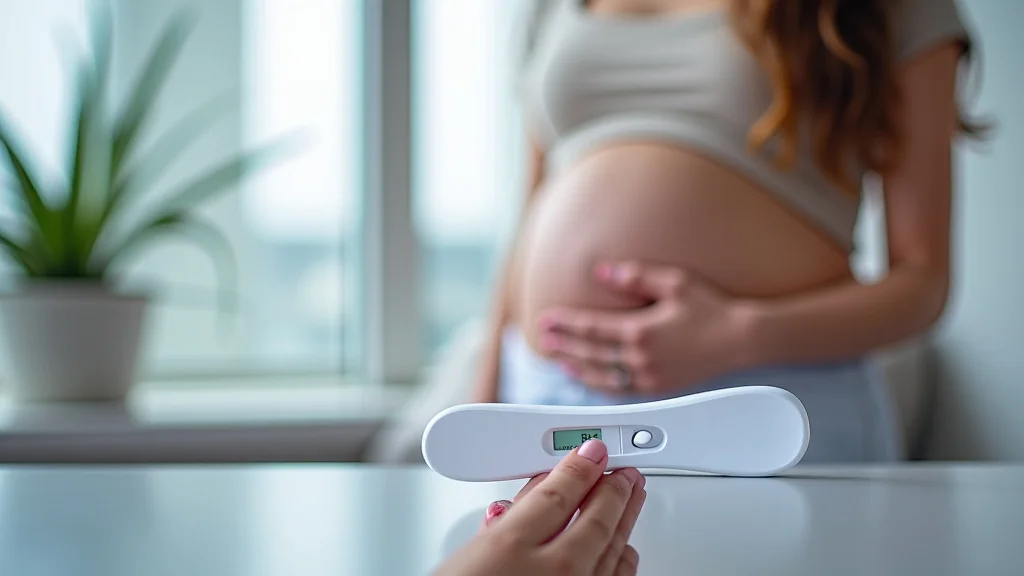
Figuring out the right code for items can feel tricky, especially when you’re new to it. The pregnancy test hs code is one of those things that can stop you in your tracks. People often wonder if there’s a special code just for them or if it fits into a broader category.
Don’t worry, it’s simpler than it sounds! This guide will break down exactly what you need to know, step by step. We’ll make sure you get this sorted out so you can move on to other important things.
Key Takeaways
- You will learn what an HS code is for pregnancy tests.
- You will discover the main HS code category for medical diagnostic products.
- You will understand why accurate classification is important for customs.
- You will find out how to verify the correct code for your specific product.
- You will be guided on where to find additional help if needed.
What Is An HS Code
An HS code, which stands for Harmonized System code, is a globally recognized system used to classify traded products. Think of it as a universal product passport. Customs authorities around the world use these codes to identify products when they cross borders.
This helps them in collecting taxes, managing trade statistics, and ensuring that goods comply with regulations. Each product is assigned a unique code that is standardized across most countries. This standardization makes international trade much smoother and more predictable.
Without it, tracking and taxing goods would be incredibly chaotic.
The HS code system is managed by the World Customs Organization (WCO). It’s updated periodically to keep up with new products and trade developments. The codes are hierarchical, meaning they start with broad categories and become more specific.
For example, a broad category might be “Chemical Products,” and a more specific one under that could be “Pharmaceutical Products.” This structure allows for detailed classification of almost any item traded internationally. The first six digits of an HS code are internationally harmonized, meaning they are the same in almost all countries. Many countries then add additional digits for their own national purposes, creating more detailed classifications.
The Purpose Of HS Codes
The main goal of HS codes is to simplify and streamline international trade. They provide a common language for customs officials and businesses. This common language ensures that everyone involved in shipping and receiving goods understands what is being traded.
It helps governments track imports and exports accurately. This data is vital for economic planning and policy-making. For businesses, HS codes are essential for determining duties and taxes.
They also help in understanding trade agreements and compliance requirements.
Moreover, HS codes play a role in enforcing trade restrictions and prohibitions. If a country bans certain items, customs can easily identify them using their HS codes. This prevents illegal or harmful goods from entering a country.
The system also aids in gathering trade statistics, which are used for economic analysis and forecasting. Accurate statistics help governments understand trade patterns and make informed decisions about trade policies. For businesses, correct classification can lead to faster customs clearance, reducing delays and costs.
How HS Codes Are Structured
The HS code system is organized into sections, chapters, headings, and subheadings. There are 21 sections, which cover broad groups of products like “Live Animals,” “Vegetable Products,” and “Machinery.” Each section is divided into chapters, usually numbered from 01 to 99. For instance, Chapter 30 covers “Pharmaceutical Products.” Chapters are then broken down into headings, which are four-digit codes.
For example, 3002 might be a heading.
Headings are further divided into six-digit subheadings. These provide more specific classifications. For medical diagnostic products, you might find subheadings like 3002.10.
For example, if you’re looking at a pregnancy test, it would fall under a more specific subheading within the broader medical product categories. Many countries add extra digits beyond the six-digit level for their national tariff schedules. These additional digits can vary from country to country, allowing for even finer distinctions.
Pregnancy Test HS Code Classification
When classifying a pregnancy test, we need to look at its primary function and composition. Pregnancy tests are typically considered diagnostic kits or reagents. These are products used to test for the presence of a specific condition, in this case, pregnancy.
The Harmonized System has specific chapters and headings dedicated to medical and diagnostic items. Finding the correct classification ensures that the product is treated appropriately by customs authorities, which affects duties and regulations.
The most common area for pregnancy tests to be classified under is within Chapter 30 of the HS code system. This chapter generally covers “Pharmaceutical Products.” However, within this chapter, there are specific headings that are more relevant to diagnostic kits. It’s important to note that pregnancy tests are not usually considered drugs meant for treatment but rather for diagnosis.
Therefore, the classification needs to reflect this diagnostic purpose.
Medical Diagnostic Reagents And Kits
Chapter 30, Heading 3002, often includes “Biological products, whether or not modified, or products of other organisms, whether or not modified, for human or veterinary use.” Within this, specific subheadings detail diagnostic reagents. For instance, a common HS code for diagnostic reagents, including those used in pregnancy tests, is often found within the range of 3002.10 or similar. These codes cover preparations used to detect pregnancy by identifying certain hormones like human chorionic gonadotropin (hCG).
The specificity of the HS code is important. Some countries may have even more detailed subheadings that differentiate between types of diagnostic kits. For example, a simple urine test strip might have a slightly different code than a more complex blood test kit.
The key is that the code accurately reflects the nature of the product as a diagnostic tool. This ensures that customs officials can process the shipment correctly and apply the right tariffs.
The Main HS Code For Pregnancy Tests
While HS codes can have variations in their later digits depending on the country, the most widely accepted HS code for pregnancy tests often falls under 3002.10. Some sources and customs authorities may also point to 3002.90 or other related subheadings depending on the exact nature and composition of the test. For example, if the test kit contains specific chemical reagents or biological materials, it will be classified accordingly.
Let’s look at an example. A common over-the-counter urine pregnancy test kit often includes a test strip and instructions. The primary component is the test strip, which contains antibodies that react to hCG.
This makes it a diagnostic reagent. Therefore, its classification under Heading 3002, which deals with biological products and diagnostic reagents, is appropriate. Always verify with the specific customs authority of the importing country, as they have the final say on classification.
Why Accurate Classification Matters
Getting the pregnancy test hs code right is very important for several reasons. First, it determines the amount of import duty or tax you have to pay. Different HS codes carry different duty rates.
A wrong code could mean paying too much tax, or worse, not paying enough, which can lead to penalties. Second, accurate classification ensures compliance with import and export regulations. Some medical devices or diagnostic kits might require special permits or licenses.
Using the correct HS code helps customs identify if such requirements are met.
Third, it affects the speed of customs clearance. When goods are classified correctly, customs processing is usually faster. Incorrect classification can lead to delays, storage fees, and potential seizure of goods.
Finally, accurate HS codes contribute to reliable trade statistics. This helps both governments and businesses understand market trends better. For a product like a pregnancy test, which is a medical device, correct classification is crucial for ensuring it meets health and safety standards.
| HS Code Range | Description | Relevance to Pregnancy Tests |
|---|---|---|
| Chapter 30 | Pharmaceutical products | Broad category for medical items. |
| 3002 | Biological products and diagnostic reagents | Core heading for diagnostic kits and their components. |
| 3002.10 | Diagnostic reagents | Commonly used for pregnancy tests due to their diagnostic nature. |
| 3002.90 | Other biological products | May be used if the test doesn’t fit more specific categories within 3002. |
Navigating Customs And Regulations
When you are importing or exporting pregnancy tests, you will interact with customs authorities. These are the government agencies responsible for controlling the flow of goods across borders. They use the HS codes to determine how to process your shipment.
It’s vital to provide accurate information to customs. This includes the correct HS code, product description, quantity, and value.
Customs officers are trained to inspect shipments and verify that the declared information matches the actual goods. If there is a discrepancy, your shipment could be delayed, inspected more thoroughly, or even confiscated. Understanding the import and export regulations of both the country you are shipping from and the country you are shipping to is crucial.
These regulations can include specific requirements for labeling, packaging, and documentation.
Import Duties And Taxes
The HS code you use for your pregnancy test will directly influence the import duties and taxes that apply. Duties are typically a percentage of the value of the goods. Taxes, such as Value Added Tax (VAT) or Goods and Services Tax (GST), are also applied.
The rates vary significantly from country to country. Some countries might offer preferential duty rates for certain medical supplies.
For example, a pregnancy test classified under 3002.10 in one country might face a 5% import duty. In another country, the same product might have a 10% duty rate or be subject to different tax structures. It is essential to research the specific tariff schedule of the destination country.
You can usually find this information on the website of their customs authority or through trade databases. Knowing these costs in advance helps in pricing your product and ensuring profitability.
Required Documentation
Beyond the HS code, several other documents are usually required when shipping medical diagnostic products like pregnancy tests. These often include a commercial invoice, a packing list, and a bill of lading or air waybill. Depending on the destination country, you might also need a certificate of origin, which proves where the product was manufactured.
For medical devices, additional health and safety documentation might be necessary. This could include a free sale certificate issued by the health authority of the exporting country, or specific product registration with the importing country’s health ministry. It is always best to check with the customs authority or a customs broker in the destination country for a complete list of required documents to avoid any surprises or delays.
Working With A Customs Broker
For businesses that are new to international trade or deal with complex shipments, hiring a customs broker can be very beneficial. A customs broker is a licensed professional who handles customs clearance on behalf of importers or exporters. They have in-depth knowledge of customs laws, regulations, and HS codes.
A good customs broker can help you determine the correct HS code for your pregnancy tests, prepare all necessary documentation, pay duties and taxes on your behalf, and liaise with customs officials. They can also advise you on potential trade agreements or programs that might reduce your costs. Using a broker can save you time, prevent costly errors, and ensure smoother customs clearance.
Their expertise is particularly valuable when dealing with sensitive items like medical diagnostic products.
Common Myths Debunked
Myth 1: There is only one single HS code for all pregnancy tests globally
Reality: While there is a general HS code range for diagnostic reagents, the exact six-digit or longer national code can vary slightly between countries. Factors like the specific components of the test kit, its intended use, and the importing country’s specific tariff schedule can influence the final assigned code. It’s important to check the classification specific to the destination country.
Myth 2: Pregnancy tests are always classified under general medical supplies
Reality: Pregnancy tests are more specifically classified as diagnostic reagents or diagnostic kits, often falling under Chapter 30 of the HS system, which deals with pharmaceutical products. General medical supplies might include items like bandages or sterile wipes, which have different classifications. The diagnostic function is key to their specific HS code.
Myth 3: If I guess an HS code, customs will correct it for me
Reality: While customs authorities may sometimes offer guidance, they are not obligated to correct incorrect classifications. An incorrect HS code can lead to penalties, fines, delays, or even seizure of goods. Businesses are responsible for ensuring the accuracy of their declarations, including the HS code.
It is best to research thoroughly or consult with a professional.
Myth 4: HS codes are static and never change
Reality: The Harmonized System is periodically updated by the World Customs Organization to reflect new products and changes in trade. Furthermore, individual countries may update their national tariff schedules, which include longer HS codes. It’s important to stay aware of any changes that might affect your product classification.
Frequently Asked Questions
Question: What is the most common HS code for a home pregnancy test kit
Answer: The most common HS code for home pregnancy test kits is often found under 3002.10, which covers diagnostic reagents. However, this can sometimes have further national subdivisions.
Question: Do all countries use the same HS code for pregnancy tests
Answer: The first six digits of the HS code are internationally harmonized, so there’s a strong similarity. However, countries can add extra digits for their own tariff and statistical purposes, leading to slight variations beyond the six digits.
Question: What happens if I use the wrong HS code for a pregnancy test
Answer: Using the wrong HS code can result in incorrect duty payments, customs delays, fines, or even the confiscation of your shipment. It’s crucial to get the code right.
Question: Are pregnancy test strips classified differently than digital pregnancy tests
Answer: Generally, both are considered diagnostic kits. The specific classification might depend on the complexity and components, but they usually fall under similar headings related to diagnostic reagents or kits within Chapter 30.
Question: Where can I find the most accurate HS code for my specific pregnancy test
Answer: You can consult the official customs tariff schedule of the importing country, use reputable HS code lookup tools online, or contact a customs broker for the most precise classification for your product.
Final Thoughts
Getting the correct pregnancy test hs code is a key step for smooth international trade. By understanding its classification under diagnostic reagents and the importance of accurate customs declarations, you can avoid issues. Always verify with the specific country’s customs authority.
This ensures your shipments arrive without costly delays or penalties.
Leave a Reply