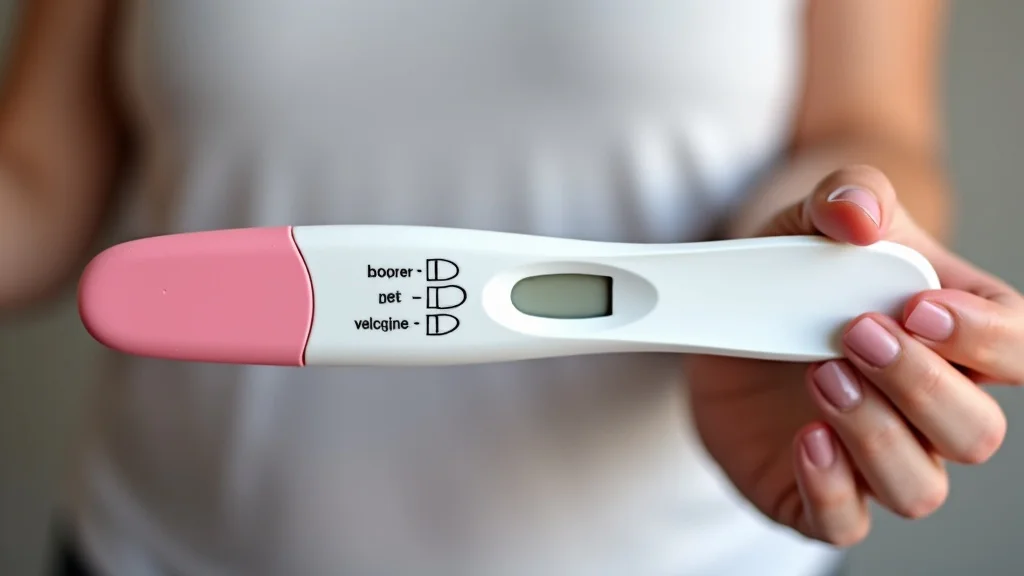
Figuring out if you’re pregnant can feel like a big puzzle, especially when you first start. You might see terms like “5 miu/ml pregnancy test” and wonder what that number even means. Is it a super-sensitive test or something else?
For beginners, it can be a bit confusing. But don’t worry, we’re going to break down exactly what this means in a really easy way. We’ll show you how to pick the right test and what to expect so you feel confident.
Let’s get started and clear up any questions you have.
Key Takeaways
- You will learn what the “5 miu/ml” on a pregnancy test signifies.
- Understand why this sensitivity level is common and useful.
- Discover how to choose the best test for early detection.
- Learn the simple steps for taking a pregnancy test accurately.
- Know what results to expect and what they mean.
- Gain confidence in using a pregnancy test at home.
Understanding The 5 Miu/ml Pregnancy Test
The number “5 miu/ml” on a pregnancy test refers to its sensitivity level. This means the test can detect as little as 5 milli-international units per milliliter of the pregnancy hormone human chorionic gonadotropin (hCG) in your urine. hCG is produced by the body shortly after a fertilized egg implants in the uterus.
Detecting this hormone is how pregnancy tests work. A lower number like 5 miu/ml indicates a higher sensitivity. These tests are designed to be very good at spotting even small amounts of hCG, which is why they are often called early detection pregnancy tests.
This high sensitivity means you can get a result earlier than with tests that require a higher hCG level to detect pregnancy.
What is Miu/ml?
Miu/ml stands for milli-international units per milliliter. This is a standard unit of measurement used to quantify the concentration of hormones in a biological fluid, such as blood or urine. In the context of pregnancy tests, it measures how much of the pregnancy hormone hCG is present.
Think of it like measuring sugar in your tea. Some tests might need a lot of sugar to taste sweet, while others only need a little. Similarly, some pregnancy tests need a lot of hCG (a higher miu/ml number) to show a positive result, while others, like those with a 5 miu/ml sensitivity, can detect pregnancy with a very small amount of hCG.
This unit is important because it helps compare the effectiveness of different pregnancy tests. A test with a lower miu/ml number, such as 5 miu/ml, is more sensitive. This means it can detect pregnancy earlier.
A test with a higher miu/ml number, say 25 miu/ml, is less sensitive. It needs a higher concentration of hCG to give a positive result. This is why choosing a test with the right sensitivity, like a 5 miu/ml pregnancy test, can be key for early detection if you are trying to find out as soon as possible.
Why 5 Miu/ml Is Common For Early Detection
The 5 miu/ml sensitivity level is widely used for early detection pregnancy tests because it aligns with the typical rise of hCG levels after conception. After a fertilized egg implants in the uterine wall, usually around 6-12 days after ovulation, the body begins producing hCG. The concentration of hCG in the urine doubles approximately every 48 to 72 hours in early pregnancy.
A 5 miu/ml test can detect pregnancy when hCG levels are just beginning to rise, often before a missed period.
This sensitivity is a sweet spot for many people wanting to test early. It offers a good balance between detecting pregnancy very soon after implantation and avoiding false positives. A test that is too sensitive might pick up very faint traces of hCG that are not related to a viable pregnancy, leading to confusion.
Conversely, a less sensitive test might miss an early pregnancy. The 5 miu/ml threshold allows for a high chance of a positive result if pregnancy has occurred, even in the very early stages.
Many popular over-the-counter pregnancy tests are designed with this 5 miu/ml sensitivity. This makes them readily available and a reliable choice for at-home testing. When you see “early detection” on a pregnancy test box, it often means it has a sensitivity of 5 miu/ml or even lower.
This is why reading the packaging carefully is important to know what you are buying.
How To Use A 5 Miu/ml Pregnancy Test
Using a 5 miu/ml pregnancy test is straightforward, but following the instructions precisely is key to getting an accurate result. Most home pregnancy tests work by detecting hCG in your urine. The good news is that these tests are designed for easy home use, so you don’t need to be a medical expert to get reliable results.
The sensitivity of 5 miu/ml means it can pick up the hormone even when it’s present in small amounts, which is common in the early days of pregnancy.
The best time to take a pregnancy test is typically in the morning. This is because your urine is usually more concentrated at this time, meaning any hCG present will be in a higher concentration as well. This increases the chances of a positive result if you are pregnant.
However, with a sensitive 5 miu/ml test, you might be able to test at other times of the day, but morning is still recommended for the most reliable outcome, especially if you are testing very early.
Step-by-Step Testing Guide
Here’s how to use your 5 miu/ml pregnancy test:
- Read the instructions carefully. Every test kit is slightly different, so it’s crucial to follow the specific directions provided by the manufacturer.
- Choose the right time. As mentioned, testing first thing in the morning is often best. This is when the hCG hormone is most concentrated in your urine.
- Collect your urine sample. You can either hold the absorbent tip of the test stick directly in your urine stream for the specified amount of time (usually 5-10 seconds) or collect your urine in a clean, dry cup and dip the test stick into it for the recommended time.
- Wait for the result. Place the test on a flat surface with the result window facing up. Do not hold it vertically while waiting. You’ll need to wait for a specific period, typically 3-5 minutes, for the result to appear.
- Read your result. The test will show lines or symbols to indicate a positive or negative result. Usually, two lines mean pregnant, and one line means not pregnant. Some digital tests will show “Pregnant” or “Not Pregnant” words.
Interpreting Your Results
Interpreting the results from your 5 miu/ml pregnancy test is usually very simple. Most tests use lines or symbols to communicate the outcome. A positive result typically means you are pregnant.
This is usually shown by two lines appearing in the result window, or a plus sign, or the word “Pregnant” on a digital test. Even a faint second line usually indicates a positive result because the test is so sensitive.
A negative result means that the test did not detect hCG in your urine at a level sufficient to indicate pregnancy. This is typically shown by one line, a minus sign, or the words “Not Pregnant” on a digital test. If you get a negative result but still believe you might be pregnant, or if your period is late, it’s a good idea to retest in a few days.
Sometimes, hCG levels might not be high enough to detect on the first test, especially if you tested too early.
Invalid results can also occur. This might happen if you didn’t follow the instructions correctly, like not waiting long enough or using old urine. An invalid result is often shown by no lines appearing or a faulty symbol.
If this happens, you should discard the test and try again with a new one. Always refer to the test’s specific instructions for detailed explanations of what different results mean.
When To Test With A 5 Miu/ml Pregnancy Test
The great thing about a 5 miu/ml pregnancy test is its ability to detect pregnancy very early. This means you don’t necessarily have to wait until you miss your period to get an answer. However, testing too early can sometimes lead to a false negative result, even with a highly sensitive test.
This happens because the hCG hormone needs time to build up in your system after implantation.
For the most accurate result, it is generally recommended to wait until you have missed your period. If your cycle is regular, this is usually around 14 days after ovulation. Testing at this point means hCG levels are more likely to be detectable by a 5 miu/ml pregnancy test.
If your cycle is irregular, try to estimate based on your last ovulation, or test about three weeks after you had unprotected sex. Early testing can be exciting, but patience often leads to more reliable results.
Testing Before A Missed Period
You can often test before your missed period with a 5 miu/ml pregnancy test. Many of these tests claim to detect pregnancy up to several days before your period is due. For example, some tests can detect pregnancy as early as 5-6 days before your missed period.
This early detection is possible because the 5 miu/ml sensitivity allows the test to pick up the hCG hormone when its levels are still quite low.
If you choose to test early, be aware that a positive result is usually reliable, but a negative result might not be. If you get a negative result before your period is due and then your period doesn’t arrive on time, it’s advisable to take another test. This is because hCG levels increase rapidly in early pregnancy.
A few days later, your hCG levels might be high enough for a second test to show a positive result. This is why many people find using a 5 miu/ml pregnancy test gives them the earliest possible answer.
Testing After A Missed Period
Testing after your missed period is the most reliable way to get an accurate result from any pregnancy test, including a 5 miu/ml pregnancy test. By the time your period is late, the hCG hormone levels in your urine are typically high enough for any standard pregnancy test to detect. With a 5 miu/ml test, the chances of detecting pregnancy at this stage are very high, making the result highly dependable.
If you test after your missed period and get a positive result, it’s almost certain you are pregnant. If you receive a negative result but your period still hasn’t started, it’s worth waiting a few more days and testing again. Sometimes, ovulation might have occurred later than you thought, meaning your hCG levels are still rising.
A negative result after a missed period that persists for a week or more usually indicates that you are not pregnant.
Testing After In Vitro Fertilization (IVF)
For individuals undergoing In Vitro Fertilization (IVF), testing for pregnancy requires careful consideration. After an embryo transfer, the body’s hCG levels are monitored closely by healthcare providers. The 5 miu/ml pregnancy test can be a useful tool for at-home confirmation, but it’s important to coordinate with your fertility clinic.
They will provide specific guidance on when and how to test.
Hormone injections, such as hCG boosters, are often administered during IVF treatment. These can remain in your system for some time and might cause a false positive result if you test too soon. Your fertility clinic will advise you on the appropriate waiting period, often called the “two-week wait,” before you should take an at-home pregnancy test.
They will typically schedule a blood test to confirm pregnancy, as it can detect hCG levels earlier and more precisely than urine tests.
Accuracy And Reliability Of Pregnancy Tests
Home pregnancy tests, especially those with a 5 miu/ml sensitivity, are remarkably accurate when used correctly. Studies have shown that these tests can be over 99% accurate in detecting pregnancy. The accuracy depends heavily on factors like when you test, how you follow the instructions, and the quality of the test itself.
The advanced technology in modern tests allows for precise detection of hCG, making them a trusted tool for early pregnancy detection.
It’s important to remember that no test is 100% foolproof. False positives and false negatives, though rare, can occur. A false positive means the test shows you are pregnant when you are not.
This can happen due to certain medical conditions, medications, or even a faulty test. A false negative means the test shows you are not pregnant when you actually are. This is more common if you test too early, before hCG levels are high enough, or if you don’t follow the instructions precisely.
Factors Affecting Accuracy
Several factors can influence the accuracy of a 5 miu/ml pregnancy test. The most significant factor is the timing of the test. Testing too early, before your hCG levels have risen sufficiently after implantation, is the leading cause of false negatives.
If implantation occurs later than average, or if your cycle is irregular, you might get a negative result even if you are pregnant. The concentration of your urine also plays a role; testing with diluted urine (e.g., after drinking a lot of fluids) can reduce the hCG concentration, potentially leading to a false negative.
Incorrect use of the test is another common reason for inaccurate results. Not holding the absorbent stick in the urine stream for long enough, or dipping it for too long, can affect the test’s ability to work properly. Similarly, not waiting the required amount of time before reading the result can lead to misinterpretation.
Expired tests or tests stored improperly can also be unreliable. Always check the expiration date on the package and store tests in a cool, dry place away from direct sunlight.
Understanding False Positives And False Negatives
False positives are uncommon but can happen. They may occur if you are taking fertility medications that contain hCG, as these can be detected by pregnancy tests. Certain medical conditions, like ovarian cysts or certain types of tumors, can also cause hCG to be present in the body, leading to a false positive.
A chemical pregnancy, where pregnancy begins but does not continue, can also result in a positive test that later turns negative.
False negatives are more common, especially when testing too early. If you test before your hCG levels are high enough, the 5 miu/ml test might not detect them. This can be disappointing, especially if you are experiencing pregnancy symptoms.
If you suspect you might be pregnant despite a negative test, wait a few days, especially if your period is still delayed, and test again. Make sure to use first-morning urine for the most concentrated sample.
When To See A Doctor
If you get a positive result on your home pregnancy test, the next step is to contact your doctor or healthcare provider. They will confirm the pregnancy, usually with a blood test and/or an ultrasound, and start your prenatal care. This is essential for ensuring a healthy pregnancy for both you and your baby.
Your doctor will guide you through the next steps, including scheduling your first prenatal appointment.
You should also see a doctor if you get a negative result but your period is significantly delayed, or if you experience unusual symptoms such as severe pelvic pain, spotting that you think might be implantation bleeding but is heavy, or a missed period combined with other concerning symptoms. These could indicate a medical issue that needs attention. If you have received a positive result but are experiencing heavy bleeding or severe pain, seek medical attention immediately, as this could be a sign of an ectopic pregnancy or other complications.
Common Myths Debunked
Myth 1: A Faint Line Means It’s Not A Positive Result
This is a very common misconception. With a sensitive 5 miu/ml pregnancy test, even a faint second line usually indicates a positive result. The intensity of the line depends on the concentration of hCG in your urine.
If you are pregnant, your hCG levels will be rising. A faint line simply means that the hCG concentration is lower, which is perfectly normal in the early stages of pregnancy or if you are testing a few days before your period is due. Always refer to the test’s instructions, but generally, any line in the test window means positive.
Myth 2: You Can Test Any Time Of Day With Any Test
While a 5 miu/ml pregnancy test is more sensitive and can often detect pregnancy earlier in the day than less sensitive tests, testing time still matters. The most concentrated urine is usually first thing in the morning. This is because you haven’t consumed fluids for several hours, so any hCG present will be more concentrated.
Testing later in the day, especially after drinking a lot of liquids, can dilute your urine and potentially lead to a weaker result or even a false negative if you are testing very early.
Myth 3: All Pregnancy Tests Are The Same
Not all pregnancy tests are created equal. The main difference lies in their sensitivity, measured in miu/ml. A 5 miu/ml pregnancy test is considered highly sensitive and designed for early detection.
Other tests might have higher miu/ml ratings, meaning they require a higher concentration of hCG to show a positive result and are therefore less suitable for early testing. Always check the packaging to understand the sensitivity of the test you are using.
Myth 4: A Home Pregnancy Test Can Detect Pregnancy Immediately After Conception
This is not true. Pregnancy tests detect the hormone hCG, which is only produced after implantation. Implantation typically occurs about 6 to 12 days after fertilization.
Therefore, even with a highly sensitive 5 miu/ml test, you cannot get a positive result immediately after conception. You need to wait until implantation has occurred and the hCG hormone has begun to be produced and reach detectable levels in your urine.
Frequently Asked Questions
Question: What does 5 miu/ml mean on a pregnancy test
Answer: 5 miu/ml refers to the sensitivity of the pregnancy test. It means the test can detect as little as 5 milli-international units per milliliter of the pregnancy hormone hCG in your urine, indicating a highly sensitive test for early detection.
Question: Can I get an accurate result before my missed period with a 5 miu/ml test
Answer: Yes, a 5 miu/ml pregnancy test is designed for early detection and can often detect pregnancy a few days before your missed period. However, testing after your period is due provides the most reliable results.
Question: Is a faint positive line on a 5 miu/ml test reliable
Answer: Yes, a faint positive line on a 5 miu/ml test is usually reliable. It indicates the presence of hCG, even if at a lower concentration, which is common in early pregnancy.
Question: How soon can I take a 5 miu/ml pregnancy test
Answer: You can typically take a 5 miu/ml pregnancy test as early as 5-6 days before your expected period. For the most accurate result, it’s best to wait until after your period is due.
Question: Why might I get a negative result with a 5 miu/ml test if I think I’m pregnant
Answer: A negative result with a 5 miu/ml test could occur if you tested too early and hCG levels are not yet detectable, if your urine is too diluted, or if you did not follow the test instructions correctly. Retesting in a few days, especially with first-morning urine, is recommended if your period is still delayed.
Conclusion
Understanding a 5 miu/ml pregnancy test is simple. This number shows how sensitive the test is to the pregnancy hormone. It helps you get an answer early.
Following the test steps carefully ensures you get an accurate result. If you get a positive, see your doctor. If it’s negative but you have questions, retest or ask your doctor.
You’ve got this!
Leave a Reply