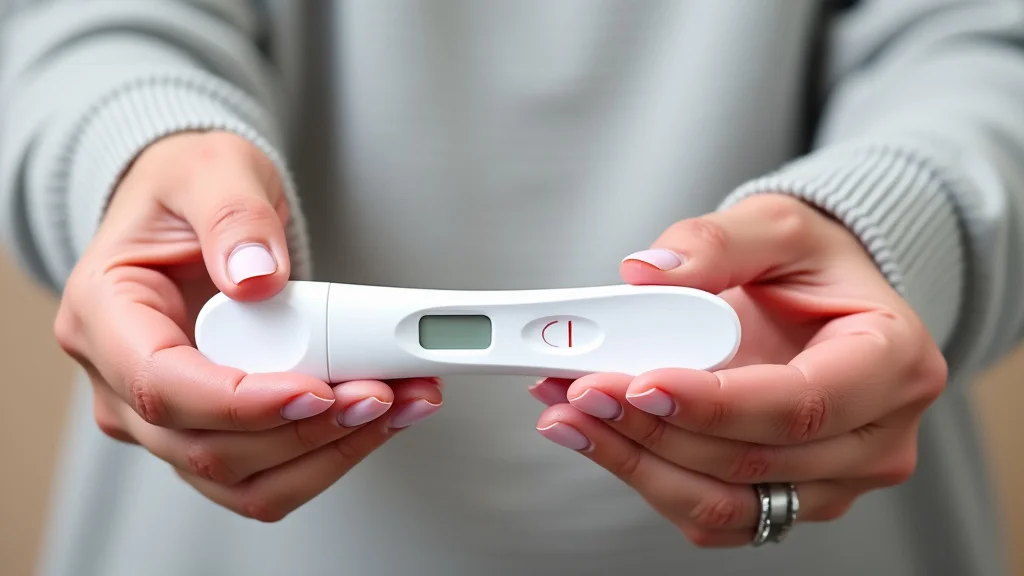
It’s totally normal to feel a bit unsure when you first use a pregnancy test. You want to be sure you’re getting the right answer, and that’s what this is all about. Sometimes, figuring out if your test is correct can feel tricky.
But don’t worry, we’ll make it super simple. We’ll walk through exactly what you need to know to get a clear result, step by step. Get ready for an easy guide that makes sense.
Key Takeaways
- Understand why confirming pregnancy test results is important.
- Learn the simple steps to check if your pregnancy test is accurate.
- Discover common reasons why test results might seem unclear.
- Know what to do next after verifying your test result.
- Gain confidence in reading and trusting your pregnancy test.
Understanding Pregnancy Test Verification
When you take a pregnancy test, you’re looking for a clear answer about whether you’re pregnant. This is a big moment, and accuracy is key. Sometimes, the lines can be faint, or you might second-guess what you’re seeing.
That’s why knowing how to do a pregnancy test verification is so helpful. It’s about making sure you can trust the result you get. This process is common because everyone wants to be certain during this sensitive time.
We’ll break down exactly how to confirm your test results, making it easy to understand and follow.
Why Verification Matters
Getting a positive or negative result on a pregnancy test is a big deal. You need to know if it’s right. A wrong result, whether it’s a false positive or a false negative, can lead to unnecessary stress or delay important medical care.
For example, if a test says you’re not pregnant when you actually are, you might miss out on starting prenatal vitamins or scheduling your first doctor’s appointment. This can have an impact on your health and the health of your pregnancy.
On the flip side, a false positive can cause emotional distress and lead to unnecessary worry. That’s why taking a moment to ensure your test is showing an accurate result is a smart step. It gives you peace of mind and ensures you’re making decisions based on correct information.
Common Scenarios Needing Verification
There are several times when checking your pregnancy test result makes sense. One of the most common is when you see a very faint line. This can happen, and it might mean you are pregnant, but the hormone level is still low.
Another time is if the test instructions seem confusing, or if you feel the result doesn’t match how you’re feeling. Some people also like to retest a few days later just to be absolutely sure.
Even if the test seems clear, a quick check of your process can boost your confidence. Were there any errors during the test? Did you read it at the right time?
These small details are part of why pregnancy test verification is a useful step for many.
The Science Behind Pregnancy Tests
Pregnancy tests work by detecting a hormone called human chorionic gonadotropin (hCG). This hormone is produced shortly after a fertilized egg implants in the uterus. The amount of hCG in your body increases rapidly in the early weeks of pregnancy.
Home pregnancy tests use antibodies that react with hCG. When hCG is present, it triggers a chemical reaction that causes a line, symbol, or digital word to appear on the test.
The sensitivity of these tests varies. Some tests are more sensitive than others and can detect lower levels of hCG. This means a more sensitive test might show a positive result earlier than a less sensitive one.
Understanding that different tests have different sensitivities can help you interpret faint lines and understand why timing is important for accurate results.
Steps for Pregnancy Test Verification
Verifying a pregnancy test doesn’t have to be complicated. It mainly involves ensuring you followed the instructions correctly and knowing how to interpret the results. Think of it as a quick double-check to make sure everything is as it should be.
We’ll walk through each step so you can feel confident about your result.
Step 1 Read and Follow Instructions Carefully
This is the most important step. Every pregnancy test is a little different. Some require you to hold the stick in your urine stream for a certain amount of time.
Others need you to collect urine in a cup and then dip the test strip into it. The instructions will also tell you when to read the test. Reading it too early or too late can give you a wrong result.
For example, some tests might show an “evaporation line” if you wait too long to read them. This is a faint, colorless line that can appear after the test’s read time has passed. It’s not a true positive.
Always check the specific instructions for your test brand.
Step 2 Check the Test Midstream or After the Specified Time
Pay close attention to the time frame given for reading the test. Most home pregnancy tests need to be read within a specific window, usually between 1 and 10 minutes. If you check it before this time, there might not be enough hCG detected yet, leading to a false negative.
If you check it much later, you might see an evaporation line, which can be mistaken for a positive result, leading to a false positive.
It’s a good idea to set a timer when you take the test. This helps ensure you’re reading it at the optimal time indicated by the manufacturer. This simple action greatly improves the accuracy of your reading and helps avoid misinterpretation.
Step 3 Interpret the Result Correctly
Once the waiting time is up, you’ll look at the test window. Different tests show results in different ways. Some have lines, some have symbols (like a plus or minus), and digital tests spell out “Pregnant” or “Not Pregnant.”
If you see two lines, it’s usually a positive result. If you see one line, it’s usually negative. Even a very faint positive line usually means you are pregnant.
Digital tests are more straightforward to read. Always compare what you see to the examples in the test’s instruction booklet.
Step 4 Consider a Faint Line
A faint line on a pregnancy test can cause confusion. Often, a faint positive line means there is hCG present, but at a lower level. This is common in the very early stages of pregnancy.
If you see a faint line, it’s generally considered a positive result.
However, to be absolutely sure, you can repeat the test a day or two later. If you are pregnant, the hCG levels will have increased, and the line should be darker and more distinct. This is a common and effective method for pregnancy test verification when a faint line appears.
Step 5 Retest if Necessary
If you are still unsure about your result, or if you got a faint line, retesting is a good idea. Use a new test kit, preferably from the same brand or a different, reputable brand. Try to test with your first morning urine, as it typically has the highest concentration of hCG.
Retesting can confirm a positive result or help clarify a negative one. If you continue to get conflicting results or have concerns, it’s always best to consult a healthcare professional. They can perform a blood test, which is more sensitive and can detect pregnancy earlier and more accurately.
Factors Affecting Test Accuracy
While home pregnancy tests are quite reliable, certain things can affect their accuracy. Knowing these factors can help you avoid misinterpreting your results. It’s not just about the test itself, but also about how and when you use it.
We’ll look at what can sometimes throw off the reading.
Timing of the Test
The biggest factor influencing accuracy is when you take the test. Most tests are designed to be most accurate from the day of your missed period onwards. Taking a test too early, before your body has produced enough hCG, can lead to a false negative.
This means the test says you’re not pregnant, but you actually are.
For example, testing just a few days after conception might not yield a positive result because hCG levels are still too low to be detected. Waiting until you miss your period significantly increases the chances of an accurate result, as hCG levels will have risen considerably.
Medications and Medical Conditions
Certain medications can interfere with pregnancy test results. Fertility drugs that contain hCG can cause a false positive. It’s important to tell your doctor if you are taking any medications, especially if they affect hormone levels.
Some rare medical conditions can also affect test accuracy. For instance, certain tumors can produce hCG, leading to a false positive. If you consistently get positive results but are not pregnant, or if you have unusual symptoms, it’s wise to speak with a doctor to rule out any underlying medical issues.
Expiration Dates and Test Storage
Like any diagnostic tool, pregnancy tests have expiration dates. Using an expired test can lead to inaccurate results, either a false positive or a false negative. The chemicals within the test strip can degrade over time, making them less effective.
Always check the expiration date on the packaging before you use a test.
Proper storage is also important. Tests should be kept in a cool, dry place, away from direct sunlight and humidity. Storing them in a bathroom cabinet, for example, can expose them to too much moisture, which might affect their performance.
Keeping tests in their original, sealed packaging until use is best.
User Error
As mentioned earlier, user error is a common reason for inaccurate results. This includes not following instructions, reading the test at the wrong time, or not using enough urine. For instance, if a test requires dipping in a cup of urine for a specific duration, and you only dip it briefly, the result might be unreliable.
Conversely, submerging the test too deeply or for too long can also cause issues. Always reread the instructions carefully, even if you’ve used the test before, as different brands have slightly different requirements. A few minutes spent reviewing the instructions can save you from potential confusion and the need to retest.
What to Do After Verification
Once you’ve completed your pregnancy test verification and are confident in your result, the next steps are clear and important. Whether you are pregnant or not, knowing what to do next helps you move forward with clarity and care.
If You Tested Positive
If your verified test result is positive, congratulations! The best next step is to schedule an appointment with your healthcare provider, such as a doctor or a midwife. They can confirm the pregnancy with a blood test and an ultrasound, and begin your prenatal care.
This includes discussing your health history, starting prenatal vitamins, and planning for a healthy pregnancy.
It’s also a good time to start thinking about lifestyle changes that support a healthy pregnancy. This might include adjusting your diet, stopping smoking or drinking alcohol, and ensuring you get adequate rest. Your healthcare provider will guide you through all these important aspects.
If You Tested Negative
If your verified test result is negative, and you still suspect you might be pregnant, or if your period is significantly late, it’s wise to retest in a few days. Sometimes, a test taken too early can give a false negative. If you continue to get negative results but your period still hasn’t arrived, consult your doctor.
There can be many reasons for a missed period besides pregnancy, such as stress, changes in diet or exercise, hormonal imbalances, or certain medical conditions. Your doctor can help you understand why your period is delayed and offer appropriate advice or treatment.
When to Seek Medical Advice
It’s always a good idea to seek medical advice if you have any concerns, regardless of your test result. This includes situations like experiencing unusual symptoms, having severe abdominal pain, or dealing with any bleeding that seems abnormal. If you’ve received conflicting results from multiple tests or feel that something isn’t right, a healthcare professional can provide the most accurate assessment and support.
Don’t hesitate to reach out to your doctor or a local clinic. They are there to help you navigate any questions or worries you may have. Your health and well-being are the top priority.
Common Myths Debunked
Myth 1: A faint line means you are not pregnant.
The reality is that a faint line on a pregnancy test usually indicates a positive result. It means that the hormone hCG is present in your urine, but at a lower concentration. This is often seen in the very early stages of pregnancy.
If you see a faint line, it’s best to assume you are pregnant and follow up with a healthcare provider or retest in a day or two to see a darker line.
Myth 2: You can take a pregnancy test any time of day for accurate results.
This is not entirely true. While some highly sensitive tests can detect hCG at any time, most home pregnancy tests are most accurate when used with your first morning urine. This is because your hCG levels are most concentrated at this time, especially in the early days of pregnancy.
Testing later in the day, after you’ve had a lot of fluids, can dilute your urine and potentially lead to a false negative result.
Myth 3: Using a pregnancy test from a discount store means it won’t be accurate.
Many discount stores sell pregnancy tests that are just as accurate as those from pharmacies or larger retailers. The key to accuracy lies in following the test instructions correctly and ensuring the test is not expired. The active ingredient and the testing mechanism are generally the same across different brands, as they all detect hCG.
So, price or brand name doesn’t necessarily dictate accuracy.
Myth 4: Pregnancy tests expire quickly and are useless after a few months.
Pregnancy tests have a shelf life, but it’s typically longer than just a few months. Most tests are good for at least two years, provided they are stored properly. Always check the expiration date printed on the packaging.
An expired test may not work correctly, leading to inaccurate results, but this is due to the degradation of chemicals, not simply a short lifespan.
Frequently Asked Questions
Question: Can I take a pregnancy test if I just found out I’m pregnant?
Answer: Yes, if you have missed your period, you can take a pregnancy test. For the most accurate results, it’s recommended to wait until your period is late.
Question: What should I do if my pregnancy test shows a positive result?
Answer: If your test is positive, schedule an appointment with your healthcare provider to confirm the pregnancy and begin prenatal care.
Question: How long do I need to wait to take a pregnancy test after unprotected sex?
Answer: It’s best to wait at least until your period is missed, which is typically about two weeks after unprotected sex, for the most reliable results.
Question: Can drinking a lot of water before a pregnancy test affect the result?
Answer: Yes, drinking a lot of water can dilute your urine, potentially leading to a false negative result, especially if taken too early in pregnancy. It’s best to use first morning urine.
Question: What if I get a negative pregnancy test but my period is still late?
Answer: If your period is late and you get a negative result, wait a few days and test again. If you continue to get negative results, consult your doctor to explore other reasons for a missed period.
Conclusion
Confirming your pregnancy test result is a simple yet important step. By following the instructions carefully, understanding how tests work, and knowing when to retest or seek medical advice, you can feel confident in your results. This process ensures you have accurate information to make the best decisions for your health moving forward.
Leave a Reply