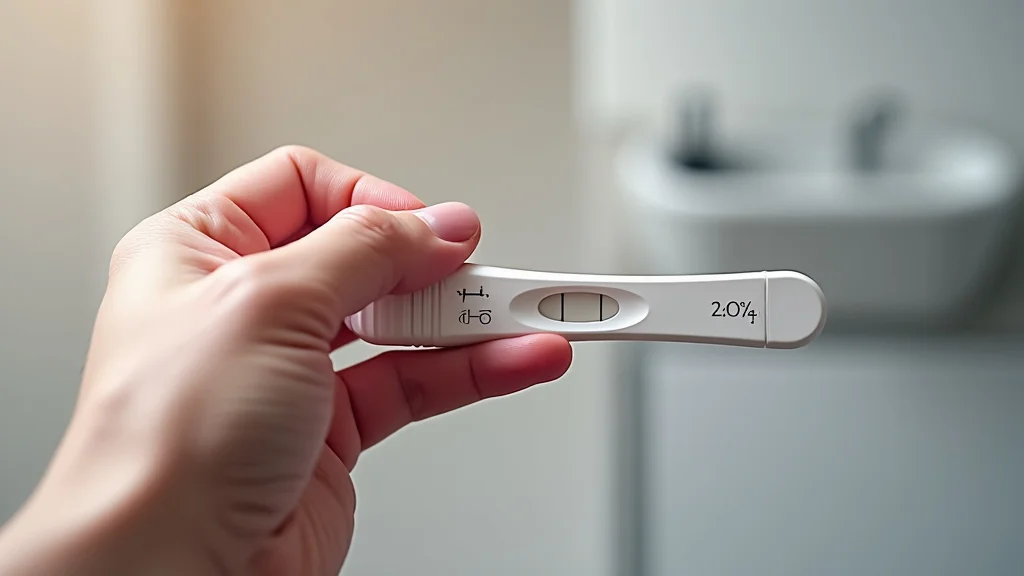
Figuring out if you’re pregnant can be exciting and a little confusing. For beginners, seeing a result on a pregnancy test 11dpo positive can bring up lots of questions. You might wonder if it’s real or too early to tell.
It’s totally normal to feel this way! This guide will make it super simple. We’ll walk through everything step-by-step so you know exactly what to expect and what that positive test means.
Get ready to find out what comes next.
Key Takeaways
- Learn what 11 days past ovulation means for pregnancy testing.
- Understand how early pregnancy tests work and their accuracy.
- Discover the significance of a positive pregnancy test at 11 dpo.
- Find out how to confirm a positive home pregnancy test result.
- Get tips on what steps to take after a positive test.
Understanding Pregnancy Test 11dpo Positive
What Does 11 Dpo Mean
DPO stands for “days past ovulation.” This is a key number when you are trying to get pregnant. Ovulation is when your ovary releases an egg. This egg can then be fertilized by sperm.
Tracking your ovulation helps you know the best time to try for a baby. 11 DPO means it has been 11 days since that egg was released from your ovary. This timing is important for pregnancy tests because it affects how much of a pregnancy hormone is in your body.
The hormone that pregnancy tests look for is called human chorionic gonadotropin, or hCG. Your body starts making hCG after a fertilized egg implants in the uterus. Implantation usually happens about 6 to 12 days after ovulation.
So, by 11 DPO, if you are pregnant, there’s a good chance that implantation has happened, and your hCG levels are high enough for a test to detect them. This is why a pregnancy test 11dpo positive result is often considered quite reliable.
When Implantation Occurs
Implantation is the vital first step for a pregnancy to begin. It’s when a fertilized egg, now called a blastocyst, attaches itself to the wall of your uterus. This process typically starts around 6 to 10 days after fertilization.
Fertilization itself happens shortly after ovulation, usually within 12 to 24 hours after the egg is released. So, if you ovulate on day 14 of a 28-day cycle, implantation could begin around day 20 to 24 of your cycle.
The exact timing can vary slightly from person to person and even from one pregnancy to another for the same person. Some women report feeling implantation, noticing light spotting or mild cramping. This is sometimes called “implantation bleeding” or “implantation cramping.” However, many women do not notice any signs at all.
The important point is that implantation needs to happen before hCG can be produced in significant amounts. This hormone is the signal that pregnancy tests detect.
HCG Hormone Levels
Human chorionic gonadotropin (hCG) is a hormone produced by the cells that will eventually form the placenta. It’s often called the “pregnancy hormone” because its presence is a strong indicator of pregnancy. After a fertilized egg implants in the uterine lining, the body begins to produce hCG.
This hormone’s main job is to maintain the corpus luteum, which is a temporary structure in the ovary that produces progesterone. Progesterone is essential for maintaining the uterine lining and supporting the early stages of pregnancy.
hCG levels start low and rise rapidly in early pregnancy. They typically double about every 48 to 72 hours during the first few weeks of pregnancy. This rapid rise is why pregnancy tests become more sensitive and accurate as time goes on.
At 11 days past ovulation (11 DPO), if implantation has occurred, hCG levels are usually high enough to be detected by most home pregnancy tests. Some very sensitive tests might even detect hCG a day or two earlier, but 11 DPO is often considered a good time for a reliable result.
How Pregnancy Tests Work
Home pregnancy tests, also known as urine tests, are designed to detect hCG in your urine. They use a special chemical strip that changes color or shows a symbol when it comes into contact with hCG. When you urinate on the test stick, the urine is absorbed by the strip.
If hCG is present, it binds to antibodies on the strip, causing a reaction that results in a positive reading. The sensitivity of these tests varies, meaning some can detect lower levels of hCG than others.
Most modern pregnancy tests are quite accurate when used correctly, especially after you’ve missed your period. For a pregnancy test 11dpo positive result, the test is likely picking up a sufficient amount of hCG. It’s important to follow the instructions on the test package precisely.
This includes how to collect the urine sample, how long to wait for the result, and how to interpret the lines or symbols. Using your first-morning urine can often give the most concentrated hCG sample, leading to a more accurate early result.
Types of Pregnancy Tests
There are a few main types of pregnancy tests available over-the-counter. The most common is the urine test, which you can buy at drugstores and supermarkets. These urine tests come in various forms, such as test sticks, midstream tests (where you pee directly on the stick), and urine collection cup tests (where you collect urine in a cup and dip a test strip into it).
All of these work by detecting hCG in your urine.
Digital pregnancy tests are also popular. They often display the results as words like “Pregnant” or “Not Pregnant” instead of lines, which can be easier to interpret. Some digital tests can even estimate how many weeks pregnant you are based on your hCG levels.
While they offer convenience, they often work on the same principle as line tests and generally require a similar level of hCG to give a result. The sensitivity of a test, often measured in milli-international units per milliliter (mIU/mL), is a key factor in how early it can detect pregnancy. Lower mIU/mL numbers mean a more sensitive test.
Sensitivity of Pregnancy Tests
The sensitivity of a pregnancy test tells you how much hCG it needs to detect a positive result. This is usually measured in milli-international units per milliliter (mIU/mL). A test with a lower mIU/mL rating is more sensitive and can detect pregnancy earlier than a test with a higher mIU/mL rating.
For example, a test with a sensitivity of 10 mIU/mL can detect lower hCG levels than a test with a sensitivity of 50 mIU/mL.
Many early result tests are sensitive enough to detect hCG around 6 days before a missed period, which corresponds to about 10-12 days past ovulation (DPO). A pregnancy test 11dpo positive result is often considered quite reliable because it indicates that your hCG levels have reached a detectable amount, usually well above 25 mIU/mL, which is a common threshold for many standard tests. Even if a test is highly sensitive, it’s still important to follow its specific instructions and use it at the right time for the most accurate outcome.
Interpreting Your Positive Result
What a Positive Pregnancy Test Means
A positive pregnancy test means that the test detected hCG in your urine. This is the hormone your body produces after a fertilized egg implants in your uterus. For most people, this is a clear sign that pregnancy has begun.
While home pregnancy tests are very accurate when used correctly, it’s always a good idea to confirm the result with a healthcare provider. They can perform further tests, such as a blood test, which can measure hCG levels more precisely, and an ultrasound to confirm the pregnancy.
Seeing a positive result, especially at 11 DPO, is a significant moment. It means that the process of conception and implantation has likely occurred successfully. This is a wonderful step for those trying to conceive.
However, it is important to remember that early pregnancy is still very delicate. Following up with your doctor will help ensure everything is developing as it should and provide you with the guidance you need for a healthy pregnancy.
Reading the Test Lines
Reading pregnancy test lines can sometimes be confusing. Most tests have a control line, which shows that the test is working properly. If the control line doesn’t appear, the test is invalid, and you should take another one.
A positive result is indicated by a second line, often called the test line. The intensity of this test line can vary. A faint positive line usually means that hCG levels are still relatively low, which is common in early pregnancy.
A strong, clear test line indicates higher hCG levels. Even a very faint line, if it appears within the timeframe specified in the test instructions, is generally considered a positive result. Some tests show a plus sign for positive, or words like “Pregnant.” If you are unsure about what you see, it is best to consult the test’s instructions or speak with a healthcare professional.
For a pregnancy test 11dpo positive, even a faint line is usually a sign that you should schedule a doctor’s appointment.
Faint Positive Lines
A faint positive line on a pregnancy test can be a source of anxiety or excitement. It means that the test has detected hCG, but at a lower concentration. This is very common in early pregnancy, especially at 11 DPO, as hCG levels are still rising.
The faintness of the line often depends on several factors, including the sensitivity of the test, how diluted your urine was, and exactly how many days past ovulation you are. Some women see faint lines for several days before the lines become darker.
If you see a faint positive line, it is still recommended to follow up with your doctor. They can perform a blood test to confirm the pregnancy and measure your hCG levels more accurately. Blood tests can detect hCG earlier and in smaller amounts than urine tests.
They can also track the rise in hCG, which is an important indicator of a healthy pregnancy progression. So, don’t dismiss a faint line; it’s often a real positive and the start of a conversation with your healthcare provider.
Evaporation Lines Versus Positive Lines
It is important to distinguish between a true positive line and an evaporation line. An evaporation line appears when urine passes over the test area, and the liquid dries out, leaving a faint, colorless mark. This can sometimes be mistaken for a faint positive.
True positive lines typically have a color, even if they are faint. They appear within the time frame specified by the test’s instructions.
Evaporation lines usually appear after the recommended reading time has passed. They are often colorless or grayish and may not have the same shape as a positive line. To avoid confusion, always read your pregnancy test within the specified window, usually between 3 to 10 minutes.
If you see a line that appears only after this time, it is most likely an evaporation line and not a positive result. If you’re still unsure, it’s best to use a new test or consult your doctor.
Confirming Your Pregnancy
Doctor’s Confirmation
While a home pregnancy test is a great first step, a doctor’s confirmation is essential. Your healthcare provider can confirm your pregnancy through a blood test or an ultrasound. Blood tests can detect hCG earlier and with more accuracy than urine tests.
They can also measure the exact amount of hCG in your blood, which helps determine the stage of pregnancy and monitor its progression. An ultrasound can visualize the gestational sac and later the developing embryo, providing definitive proof of pregnancy and its location.
Scheduling an appointment with your doctor after a positive home pregnancy test is a crucial step. This allows them to provide you with prenatal care, discuss your health history, and offer guidance on maintaining a healthy pregnancy. They will also be able to answer any questions you may have about your pregnancy test 11dpo positive result and what comes next in your pregnancy journey.
Blood Pregnancy Tests
Blood pregnancy tests are another way to detect hCG and confirm pregnancy. There are two main types: qualitative and quantitative. A qualitative blood test simply tells you if hCG is present in your blood, similar to a urine test, and will say “yes” or “no” for pregnancy.
A quantitative blood test, also known as a beta hCG test, measures the exact amount of hCG in your blood. This is often more informative for doctors.
Quantitative tests are useful for tracking how pregnancy is progressing. As mentioned, hCG levels typically double every 48 to 72 hours in early pregnancy. By measuring these levels over time, a doctor can get a clearer picture of whether the pregnancy is developing normally.
This can be especially helpful if there are concerns about miscarriage or ectopic pregnancy. A quantitative test at 11 DPO, if positive, would show a specific numerical value for hCG, offering more detailed insight than a urine test alone.
Ultrasound Scans
Ultrasound scans are imaging tests that use sound waves to create pictures of your uterus and ovaries. The first ultrasound is typically performed to confirm the pregnancy, estimate the due date, and check for any potential complications. In early pregnancy, a transvaginal ultrasound is often used because it can provide clearer images of the uterus and ovaries.
This type of ultrasound involves inserting a small, transducer wand into the vagina.
At around 11 DPO, it might be too early to see much on an ultrasound, as the embryo is very small. However, some very early ultrasounds might detect a gestational sac, which is the fluid-filled sac that surrounds the developing embryo. As pregnancy progresses, the ultrasound can reveal more details, such as the heartbeat and the growing embryo.
This visual confirmation is a powerful moment for many expectant parents and further validates a positive pregnancy test.
What to Do After a Positive Test
Schedule Your First Prenatal Appointment
The moment you see a pregnancy test 11dpo positive, the next important step is to schedule your first prenatal appointment with a healthcare provider. This appointment is crucial for establishing care and ensuring a healthy pregnancy. Your doctor will discuss your medical history, perform a physical examination, and may order initial blood work and urine tests.
They will also provide essential information about prenatal vitamins, diet, and lifestyle choices that support a healthy pregnancy.
This initial visit is a chance to ask any questions you might have about conception, early pregnancy symptoms, or anything else on your mind. Building a good relationship with your healthcare provider from the start is key to a smooth and informed pregnancy experience. They will guide you through each stage of your pregnancy, providing support and medical advice as needed.
Prenatal Vitamins
Taking prenatal vitamins is a cornerstone of early prenatal care. These vitamins contain essential nutrients that your body needs to support a growing baby and your own health during pregnancy. Folic acid is particularly important.
It helps prevent neural tube defects, serious birth defects of the brain and spine, such as spina bifida. Experts recommend starting to take folic acid at least one month before you plan to conceive and continuing throughout your pregnancy.
Other key nutrients found in prenatal vitamins include iron, which helps prevent anemia, and calcium and vitamin D, which are important for the baby’s bone development and your own health. Your doctor will likely recommend a specific prenatal vitamin or a combination of supplements based on your individual needs. It’s important to take these vitamins consistently as advised by your healthcare provider.
Lifestyle Adjustments
Once you have a positive pregnancy test, making certain lifestyle adjustments is vital for the health of your developing baby. It’s generally recommended to stop consuming alcohol, smoking, and using recreational drugs. These substances can cause serious harm to the fetus.
You should also talk to your doctor about any medications you are currently taking, as some may not be safe during pregnancy.
Limiting caffeine intake is also often advised. While moderate consumption may be safe, high levels of caffeine have been linked to an increased risk of miscarriage and low birth weight. Focusing on a balanced and nutritious diet is also important.
Eating a variety of fruits, vegetables, whole grains, and lean proteins will provide the nutrients needed for you and your baby. Staying hydrated by drinking plenty of water is also beneficial.
Common Myths Debunked
Myth 1: A Faint Line Means It’s Not Really Pregnant
This is a very common misconception. A faint positive line on a pregnancy test absolutely can mean you are pregnant. It simply indicates that your human chorionic gonadotropin (hCG) levels are detectable but still relatively low.
This is often the case in very early pregnancy, such as at 11 DPO. The strength of the line depends on hCG concentration, test sensitivity, and urine dilution. Always consider a faint line within the test’s specified reading time as positive and follow up with your doctor.
Myth 2: You Can’t Get Pregnant While Breastfeeding
While breastfeeding can suppress ovulation and reduce the chances of pregnancy, it is not a foolproof method of birth control. This is known as the lactational amenorrhea method (LAM), and it is most effective when breastfeeding is exclusive, frequent, and the mother’s periods have not returned. Once menstruation resumes, or if breastfeeding becomes less frequent, the risk of ovulation and subsequent pregnancy increases significantly.
It’s important to use additional birth control methods if you are not planning another pregnancy.
Myth 3: You Can Feel When You’re Pregnant
Many early signs of pregnancy, such as fatigue, nausea, and sore breasts, can also be symptoms of premenstrual syndrome (PMS). It’s possible to feel some subtle physical changes early on, but these are not always present or noticeable. Some women experience no symptoms at all in the first few weeks of pregnancy.
The most reliable way to know if you are pregnant is by taking a pregnancy test and confirming with a healthcare provider.
Myth 4: Home Pregnancy Tests Are Never Accurate
Home pregnancy tests are generally very accurate when used correctly and at the right time. Most tests have an accuracy rate of over 99% when taken from the day of your missed period. The accuracy can be even higher if you wait until you are at least 11 DPO, as hCG levels are more likely to be high enough for detection.
Errors usually occur due to testing too early, not following instructions, or using expired tests.
Frequently Asked Questions
Question: Can I get a false negative pregnancy test at 11 dpo
Answer: It is possible but less likely. A false negative means the test says you’re not pregnant when you actually are. This can happen if you test too early, use diluted urine, or use an expired test.
At 11 DPO, hCG levels are usually high enough that a false negative is less common, but it can still occur if your ovulation was later than you thought or your hCG levels are rising slowly.
Question: When should I take another pregnancy test if my first 11 dpo test was negative
Answer: If your first test at 11 DPO was negative and your period is still late, it’s a good idea to retest in a few days, perhaps around 14 DPO or a week after your missed period. Your hCG levels may not have been high enough yet. Using your first morning urine can also help ensure a more concentrated sample.
Question: What are the earliest symptoms of pregnancy
Answer: Early pregnancy symptoms can vary widely and often overlap with premenstrual symptoms. Some common early signs include a missed period, nausea or vomiting (morning sickness), fatigue, tender or swollen breasts, increased urination, and mood swings. However, some women experience no symptoms at all in the very early stages.
Question: How soon can a doctor confirm pregnancy after a positive home test
Answer: A doctor can usually confirm pregnancy shortly after a positive home test. They can perform a blood test to measure hCG levels, which can detect pregnancy as early as 6-8 days after ovulation. An ultrasound might be done a week or two later to visualize the pregnancy and estimate a due date.
Question: Is it safe to have sex if I have a positive pregnancy test
Answer: Generally, yes, it is safe to have sex if you have a positive pregnancy test. Unless your doctor advises otherwise due to specific concerns like a history of miscarriage or placenta previa, sexual activity does not typically harm the pregnancy. Your body is designed to protect the developing baby.
Summary
A pregnancy test 11dpo positive is usually a reliable indicator that you are pregnant. This is because by 11 days past ovulation, if conception occurred, your body likely has enough hCG to be detected. Always follow test instructions carefully and consider a faint line positive.
Scheduling a doctor’s appointment is the next important step for confirmation and to begin prenatal care. Taking care of yourself with prenatal vitamins and healthy habits supports a growing baby.
Leave a Reply