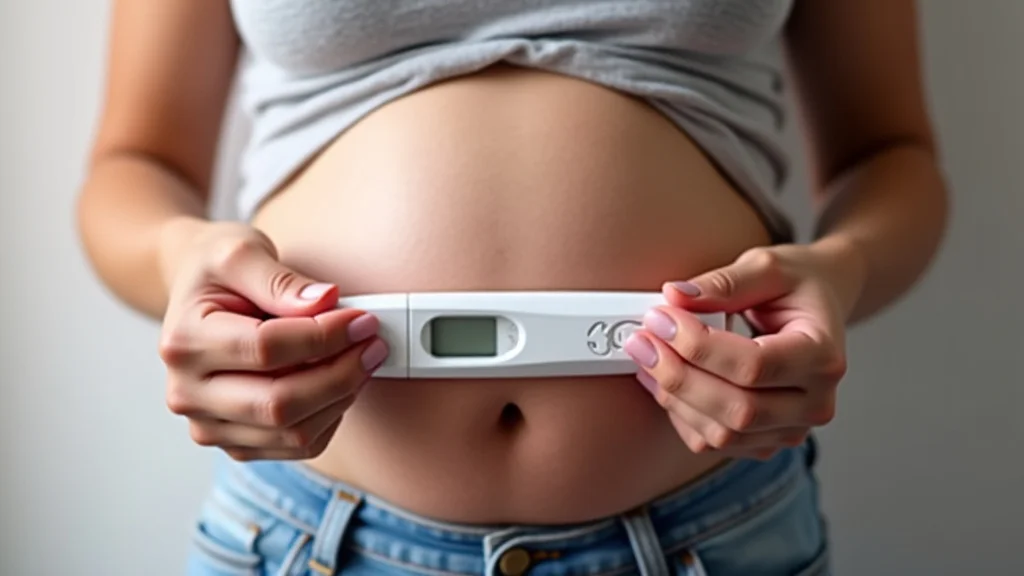
Trying to find out if you’re pregnant before your period is due can feel a bit tricky, especially if it’s your first time. You might wonder if a test will even work that early. It’s completely normal to feel a mix of excitement and worry about getting an accurate result.
Don’t worry, figuring out the best time and how to take a pregnancy test 1 week before period is simpler than you think. We’ll walk through it step by step so you can get clear answers.
Key Takeaways
- You can test for pregnancy as early as 1 week before your expected period.
- Early pregnancy tests detect the hormone hCG, which rises after conception.
- Accuracy of early testing depends on the test sensitivity and when you ovulated.
- Waiting until your period is late usually provides the most reliable results.
- Understanding how early pregnancy tests work helps interpret results correctly.
When Can You Take A Pregnancy Test
Deciding when to take a pregnancy test is a big question for many people. The common advice is to wait until you miss your period. However, some people want to know sooner.
This is where the idea of taking a pregnancy test a week before your period comes in. It’s all about timing and how sensitive the test is. The hormone that signals pregnancy, called hCG, starts to build up right after conception.
The earlier it’s there, the earlier a test might pick it up. But if you test too soon, the hCG levels might be too low for the test to detect, leading to a false negative.
Understanding Pregnancy Hormones
The key to early pregnancy testing is a hormone called human chorionic gonadotropin, or hCG. This hormone is only produced after a fertilized egg implants in the uterus. Levels of hCG rise quickly in early pregnancy, doubling roughly every 48 to 72 hours.
Home pregnancy tests work by detecting the presence of hCG in your urine. The amount of hCG needed for a test to show a positive result varies by test sensitivity. Some tests are designed to be more sensitive and can detect lower levels of hCG, making them potentially useful for early testing.
- hCG is produced by cells that will form the placenta.
- Its levels increase significantly in the first few weeks of pregnancy.
- Home pregnancy tests measure hCG in urine.
The amount of hCG needed to detect pregnancy can vary greatly. Some standard tests might require a higher level of hCG, meaning you’d have to wait longer for a positive result. More sensitive tests are designed to detect even small amounts of hCG.
This allows for the possibility of a positive result a few days before your missed period. However, even with sensitive tests, there’s a window where hCG levels might still be too low to be reliably detected, especially if ovulation occurred later than you thought.
Factors Affecting Early Test Accuracy
Several factors can influence how accurate a pregnancy test is when taken a week before your period. One of the most significant is knowing exactly when you ovulated. If your cycle is irregular, or if you’re unsure about your ovulation date, it’s harder to pinpoint the right time for an early test.
Ovulation is the release of an egg from the ovary, which typically happens about 14 days before your next period in a standard 28-day cycle. If you ovulate later in your cycle, then a week before your period might still be too early to detect enough hCG.
Another factor is the sensitivity of the pregnancy test itself. Pregnancy tests are measured in milli-international units per milliliter (mIU/mL). A lower mIU/mL number means the test is more sensitive and can detect lower concentrations of hCG.
For example, a test with a sensitivity of 10 mIU/mL can detect pregnancy earlier than a test with a sensitivity of 25 mIU/mL. Always check the packaging of your test to see its sensitivity level.
- Ovulation timing is critical for early testing.
- Test sensitivity (mIU/mL) impacts when a positive result can be detected.
- Consuming large amounts of fluids before testing can dilute urine and hCG levels.
Drinking a lot of water before taking an early pregnancy test can also affect the results. While it’s good to stay hydrated, if you drink excessively, your urine might become very diluted. This means the concentration of hCG could be lower than it actually is, potentially leading to a false negative result.
It’s generally recommended to use your first morning urine for testing, as it is usually the most concentrated and contains the highest level of hCG.
How Pregnancy Tests Work
Pregnancy tests detect hCG in your urine. This hormone is produced by the cells that will eventually form the placenta. hCG levels begin to rise shortly after a fertilized egg attaches to the uterine wall.
The test contains antibodies that react to hCG. If hCG is present in the urine, these antibodies bind to it, causing a color change or a line to appear on the test, indicating a positive result.
The Science Behind hCG Detection
The detection of hCG is the core mechanism of any pregnancy test. When you urinate on the test strip, the urine travels up the stick. If hCG is present, it binds to specific antibodies on the test.
This binding causes a chemical reaction that produces a visible indicator, like a line or a plus sign. The concentration of hCG increases rapidly in the first few weeks of pregnancy. For example, a typical hCG level at 4 weeks pregnant (which is about 2 weeks after conception) might be between 5 and 426 mIU/mL, according to some medical sources.
There are two main types of home pregnancy tests: dip-strip tests and digital tests. Dip-strip tests usually have a control line and a test line. If hCG is present, the test line will appear.
Digital tests often display a word like “Pregnant” or “Not Pregnant.” Both types rely on the same hCG detection principle. The sensitivity of the test is crucial for early detection. A highly sensitive test, for example, one rated at 10 mIU/mL, can detect pregnancy around 6 days before a missed period, assuming conception and implantation have occurred and hCG levels are high enough.
- hCG levels double approximately every 48-72 hours in early pregnancy.
- The test strip has antibodies that bind to hCG molecules.
- This binding triggers a chemical reaction visible as a positive result.
The accuracy of a test is also linked to how well you follow the instructions. Over-saturation of the test, not waiting long enough, or reading the results too late can all lead to inaccurate readings. It’s vital to read the instructions carefully for the specific test you are using.
For example, some tests might say to wait 5 minutes for results, while others might suggest up to 10 minutes. Reading the test outside this window can lead to evaporation lines, which can be mistaken for a positive result.
Types of Pregnancy Tests
Home pregnancy tests come in a few different formats, all working on the same principle of detecting hCG. The most common are urine tests. These can be further divided into:
- Dip-strip tests: These are the most basic and often the most affordable. You dip the absorbent tip into a cup of urine for a specific amount of time.
- Midstream tests: These have a plastic casing with a tip you hold directly in your urine stream. They are generally considered more convenient than dip-strips.
- Digital tests: These tests often show results as words (e.g., “Pregnant,” “Not Pregnant”) instead of lines, which can be easier to interpret. Some also display the number of weeks pregnant.
There are also blood pregnancy tests, which are typically performed in a doctor’s office. Blood tests can detect hCG earlier and more accurately than urine tests because they can measure the exact amount of the hormone in the blood. There are two types of blood tests: qualitative and quantitative.
A qualitative test simply tells you if hCG is present, similar to a urine test. A quantitative test, also known as a beta hCG test, measures the exact amount of hCG in the blood. This can be very useful for monitoring early pregnancy or diagnosing certain conditions.
- Urine tests are convenient and widely available.
- Digital tests offer clear, easy-to-read results.
- Blood tests are more sensitive and can detect pregnancy earlier.
When considering a pregnancy test 1 week before period, a highly sensitive urine test is usually your best bet. These tests are designed to pick up lower levels of hCG. It’s essential to choose a test with a sensitivity of 10 mIU/mL or lower.
Even with a sensitive test, if you ovulated later than usual, you might still get a negative result. This is why sometimes a follow-up test is recommended a few days later or after your missed period if you still suspect you might be pregnant.
Taking A Pregnancy Test Early
Taking a pregnancy test before your period is due is a common choice for those eager to know. The main goal is to detect the pregnancy hormone hCG as soon as it’s present in detectable amounts. This means you need to choose the right test and follow the instructions very carefully.
Even with a sensitive test, the early days after conception are critical for hCG production. Implantation, the process where the fertilized egg attaches to the uterine wall, typically happens about 6 to 12 days after ovulation. This is when hCG production starts.
The Best Time To Test Early
If you’re aiming to test a week before your expected period, the “best” time within that week is crucial. Generally, testing 5 to 7 days before your period is due is considered the earliest you might get a reliable result. This is because it allows some time for hCG to build up after implantation.
However, remember that ovulation timing is key. If your cycle is consistently 28 days long and you ovulate around day 14, then testing 7 days before your period would be around day 21 of your cycle. If you ovulated later, say around day 18, then testing 7 days before your period would be too early.
For the most accurate result when testing early, use your first morning urine. This urine is more concentrated, meaning it has a higher level of hCG if you are pregnant. If you test later in the day, especially after drinking a lot of fluids, the hCG levels in your urine might be too diluted to be detected, even if you are pregnant.
This can lead to a false negative result, which can be very disappointing and confusing.
- Aim to test 5-7 days before your expected period for the earliest detection.
- Use your first morning urine for the highest concentration of hCG.
- Irregular cycles make early testing more challenging to time correctly.
Consider your cycle length and typical ovulation pattern. If you track your ovulation using methods like basal body temperature or ovulation predictor kits, you’ll have a better idea of when to test. For instance, if you know you ovulated on day 16 of a 28-day cycle, then 7 days before your period would be day 21.
This might still be too early for some tests. However, if you ovulated around day 14, testing on day 21 might yield a result.
Reading Early Pregnancy Test Results
Reading the results of an early pregnancy test requires attention to detail. Most home pregnancy tests have a control line that indicates the test is working properly. If the control line doesn’t appear, the test is invalid, regardless of whether a second line shows up.
The test line is what indicates a positive result. If both the control line and the test line appear, it means hCG has been detected, and you are likely pregnant.
A faint positive line on an early test is still a positive result. It simply means that the hCG levels are low but detectable. This is common with early testing.
Don’t dismiss a faint line. It’s recommended to confirm a faint positive with another test a couple of days later, or to consult with a healthcare provider. Sometimes, a faint line can be an evaporation line, which appears as the urine dries on the test strip.
However, evaporation lines typically have no color or are very gray and appear after the recommended reading time.
- Always check for the control line to ensure the test is valid.
- A faint positive line still indicates pregnancy.
- Read results within the time frame specified on the test instructions.
If you get a negative result but still suspect you are pregnant, especially if you tested a week before your period, don’t give up hope. It’s possible that hCG levels are not yet high enough to be detected. You might want to retest in a few days, closer to your expected period date.
Sometimes, a false negative can occur if you ovulated later than you thought, or if your hCG levels are rising more slowly. For example, if you took a sensitive test on day 22 of a 28-day cycle (6 days before your period), and implantation happened late on day 10, hCG might be just starting to show.
Interpreting Your Results
Interpreting the results of your pregnancy test, especially an early one, can be a moment filled with anticipation. It’s important to remember that while home tests are very accurate, factors can influence the outcome. A positive result, even a faint one, generally means you are pregnant.
A negative result, however, needs careful consideration, particularly if you tested very early.
What A Positive Result Means
A positive pregnancy test result, indicated by two lines or a digital “Pregnant” reading, almost always means you are pregnant. Even a faint positive line is usually a reliable indicator. This is because the test has detected hCG in your urine.
Once you get a positive result, it’s recommended to schedule an appointment with your doctor or a healthcare provider. They can confirm the pregnancy, usually with a blood test or an ultrasound, and start discussing your prenatal care options.
It’s important to note that false positives are extremely rare. They can sometimes occur due to certain medical conditions, such as recent miscarriage or the use of fertility medications that contain hCG. However, for most people, a positive home pregnancy test is accurate.
If you get a positive result and are concerned, reaching out to a healthcare professional is the best next step. They can help you understand the next steps and address any concerns you might have about your pregnancy.
- A positive result, including a faint line, typically means you are pregnant.
- Schedule an appointment with your doctor to confirm the pregnancy.
- False positives are very uncommon.
The early days of pregnancy involve rapid changes. Within days of a positive test, your body is already working to support a growing embryo. Your healthcare provider will be able to estimate your due date based on the date of your last menstrual period and potentially early pregnancy tests or ultrasounds.
They will also provide essential guidance on nutrition, lifestyle, and what to expect in the coming weeks and months.
What A Negative Result Means
A negative pregnancy test result means that no hCG was detected in your urine. If you tested a week before your period, a negative result doesn’t necessarily mean you are not pregnant. It could mean that hCG levels are not yet high enough to be detected by the test you used.
This is especially true if you ovulated later than usual or if your implantation occurred later in the cycle.
If you received a negative result but your period is still late, or if you continue to experience symptoms of pregnancy, it’s advisable to retest in a few days. Using a more sensitive test or testing with your first morning urine can also help. Sometimes, a false negative can occur.
For example, if you test too early, say on day 21 of a 30-day cycle (9 days before your period), and implantation only happened on day 12, the hCG might be too low. A statistic from some studies suggests that up to 10% of pregnant women may receive a false negative result if they test before their missed period.
- A negative result may mean you are not pregnant, or you tested too early.
- If your period is late and you got a negative, retest in a few days.
- False negatives are more common than false positives.
If you continue to get negative results and your period remains absent, it’s important to consult with your doctor. There could be other reasons for a missed period, such as stress, hormonal imbalances, significant weight changes, or certain medical conditions. Your doctor can help determine the cause and recommend appropriate steps.
For instance, conditions like Polycystic Ovary Syndrome (PCOS) can affect menstrual cycles and pregnancy timing, making early detection a challenge.
Common Myths Debunked
Myth 1: You can only test after you miss your period
This is a common misconception. While testing after a missed period offers the highest accuracy, modern sensitive pregnancy tests can detect hCG in urine as early as 5 to 7 days before your expected period. This allows for earlier detection if conception has occurred and hCG levels are rising sufficiently.
Myth 2: A faint line always means a false positive
A faint positive line on a pregnancy test is usually a real, albeit early, positive result. It indicates that hCG is present in your urine, even if at a low concentration. While evaporation lines can occur, they are typically colorless and appear after the recommended reading time.
A faint, colored line within the specified window is generally considered a positive sign of pregnancy.
Myth 3: Drinking soda or vinegar can reveal pregnancy
There are many old wives’ tales about home remedies for pregnancy testing, such as mixing urine with soda or vinegar. These methods are not scientifically based and are unreliable. Home pregnancy tests are specifically designed to detect hCG, and these folk methods cannot accurately identify the hormone or its presence.
Myth 4: If you’re pregnant, every test will be positive immediately
Pregnancy is a process, and hormone levels rise over time. Even if you are pregnant, early tests might be negative if taken too soon after conception, before hCG levels have reached a detectable threshold. It’s normal for early tests to show a negative result, followed by a positive result a few days later as hCG increases.
Frequently Asked Questions
Question: Can I take a pregnancy test 1 week before my period and get an accurate result
Answer: Yes, it is possible to get an accurate result, especially with highly sensitive tests, but it’s not guaranteed. Your result depends on the test’s sensitivity and how early implantation occurred, which influences hCG levels.
Question: What is the best time of day to take an early pregnancy test
Answer: For the most accurate result when testing early, use your first morning urine. This urine is the most concentrated and has the highest levels of hCG.
Question: What does a faint positive line mean on an early pregnancy test
Answer: A faint positive line usually means you are pregnant, but hCG levels are still low. It’s a good idea to retest in a few days or consult a doctor.
Question: How sensitive do pregnancy tests need to be for early testing
Answer: For testing a week before your period, look for tests with a sensitivity of 10 mIU/mL or lower. The lower the number, the more sensitive the test.
Question: What should I do if I get a negative result but think I might be pregnant
Answer: If your period is not yet late and you suspect pregnancy, wait a few days and retest. If your period is late and you continue to get negative results, see a doctor.
Wrap Up
Figuring out if you’re pregnant a week before your period can be done with the right test. Highly sensitive tests are your best bet for early detection. Always use your first morning urine for the most accurate reading.
Remember that a faint line is often a positive sign. If you get a negative result but still suspect pregnancy, retesting in a few days is a good idea. Trust the process and your body; an accurate answer is within reach.
Leave a Reply