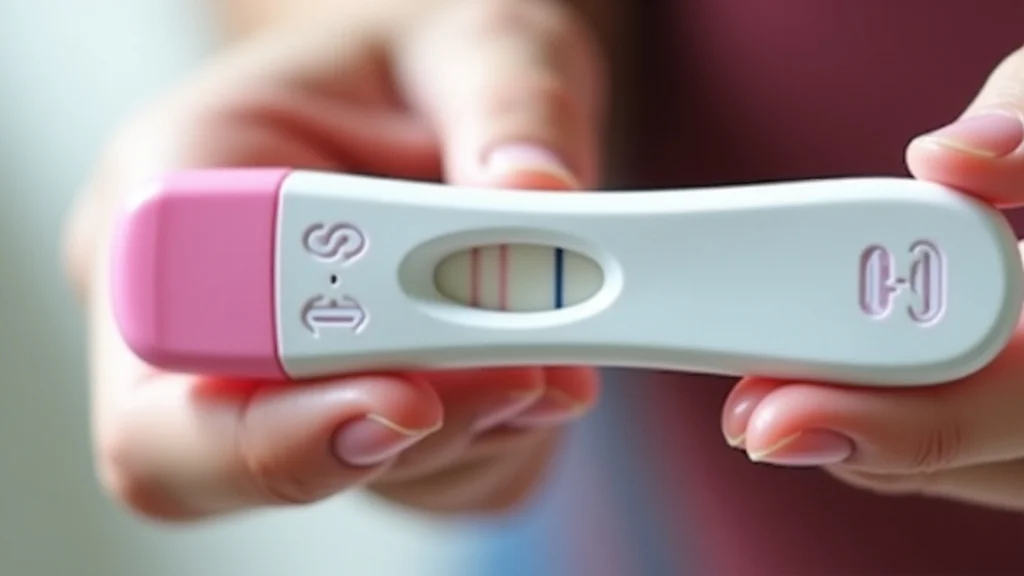
Many people wonder “on a pregnancy test what does 2 line mean” when they see the results. It can be a confusing moment, especially if it’s your first time. You just want a clear answer, right?
We’re here to help make it simple. This guide will walk you through everything step-by-step. You’ll understand what those lines really tell you.
Key Takeaways
- Two lines on a pregnancy test almost always mean you are pregnant.
- The test works by detecting a hormone called hCG in your urine.
- Different tests have slight variations in how they display results.
- Understanding the control line and test line is important.
- False positives and false negatives are rare but possible.
- Knowing what to do after a positive test is the next step.
How Pregnancy Tests Work
Pregnancy tests are designed to detect a specific hormone in your body. This hormone is called human chorionic gonadotropin, or hCG for short. Your body starts producing hCG shortly after a fertilized egg implants in the uterus.
This usually happens about six to twelve days after conception. The amount of hCG doubles about every 48 to 72 hours in early pregnancy. Pregnancy tests use antibodies that react with hCG.
When hCG is present in your urine, it triggers a chemical reaction that causes lines to appear on the test strip.
The presence of hCG is the key indicator your body is pregnant. Home pregnancy tests are very good at detecting even small amounts of this hormone. This is why they can often give accurate results even before you miss your period.
The sensitivity of the test can vary between brands. Some tests are more sensitive and can detect hCG earlier. This means you might get a positive result sooner with a highly sensitive test.
Understanding this basic mechanism helps demystify why certain results appear.
The Role of hCG
Human chorionic gonadotropin (hCG) is a hormone produced by the placenta shortly after implantation. It signals to your body that pregnancy has begun. It helps maintain the uterine lining, preventing it from breaking down.
This is why hCG is often called the “pregnancy hormone.”
The amount of hCG in your system is crucial for pregnancy tests. Levels are typically very low or undetectable before pregnancy. They rise rapidly in the first few weeks.
This rapid increase is what makes pregnancy tests effective. Most home pregnancy tests are sensitive enough to detect hCG when its level reaches around 25 mIU/mL (milli-international units per milliliter). Some “early detection” tests can detect even lower levels, sometimes as low as 5-10 mIU/mL.
The continued production of hCG supports the early development of the pregnancy. It also plays a role in many pregnancy symptoms. For instance, hCG is thought to contribute to morning sickness.
Doctors often monitor hCG levels in early pregnancy. This can help confirm the health and progress of the pregnancy. Tracking hCG levels can also help diagnose certain complications.
Detection Methods
Pregnancy tests use a variety of methods to detect hCG. Most common are urine tests, which are used in home pregnancy kits. These tests typically involve dipping a test stick into a urine sample or holding it in the urine stream.
Inside the test stick are special absorbent pads. These pads contain antibodies that are designed to bind to hCG molecules.
When urine flows over these pads, it carries any hCG present. If hCG is detected, it binds to the antibodies. This binding process then triggers a color change or the appearance of a line.
The test typically has a control line and a test line. The control line shows that the test is working correctly. The test line appears if hCG is present.
Digital pregnancy tests are also available. These tests have a small screen that displays the result as “pregnant” or “not pregnant.” They use similar technology internally but interpret the results electronically. This can make them easier to read for some people.
The underlying principle remains the same: detect hCG.
How Home Tests Work
Home pregnancy tests are built on a principle called immunoassay. This is a type of test that uses antibodies to detect specific substances. In this case, the substance is hCG.
Each test stick contains a reagent that reacts with hCG.
When you expose the test stick to urine, the urine is absorbed into a wick. This wick draws the urine up into the test area. The test area has lines or symbols that will change color if hCG is present.
The control line is always present to confirm the test is working properly. If you see only the control line, it means you are not pregnant or you took the test too early. If you see both the control line and the test line, it indicates a positive result.
This is where the question “on a pregnancy test what does 2 line mean” becomes very important.
The intensity of the test line can vary. A faint line usually still means positive, especially if it appeared within the recommended time frame. A stronger line often indicates higher levels of hCG.
This usually means a more advanced stage of pregnancy, but it’s not always a precise measure. It is important to follow the test instructions carefully for the most accurate results. Reading the test too early or too late can lead to misinterpretations.
Interpreting Pregnancy Test Lines
Understanding the lines on a pregnancy test is key to getting a clear answer. Most home pregnancy tests use a system of lines to indicate results. There is a control line and a test line.
Knowing the purpose of each line helps you interpret your test accurately. This is the direct answer to the common query “on a pregnancy test what does 2 line mean.”
The control line is a benchmark. It shows that the test has absorbed enough urine and is functioning correctly. This line typically appears first and is a solid indicator that the test is valid.
If the control line does not appear, the test might be faulty or you did not use it correctly. In such cases, you would need to repeat the test with a new kit.
The test line is where the magic happens. If your body is producing hCG, this line will appear. The strength of this line can vary.
A strong, clear test line usually means a definite positive result. Even a faint test line, if it appears within the specified time, generally indicates pregnancy. The absence of a test line means that hCG was not detected.
The Control Line Explained
The control line is vital for a pregnancy test to be considered valid. Think of it as a confirmation that the test itself is working. It uses a different set of antibodies that react with the urine or a chemical component in the test to create a visible mark.
This mark assures you that the test has correctly processed the urine.
If you see the control line appear, it means the test absorbed the urine and the internal mechanisms are functioning. This is a good sign that the test is capable of giving you an accurate result. If the control line does not show up, it means the test is invalid.
You cannot trust the result, whether it appears to be positive or negative. Reasons for a missing control line can include not using enough urine, the test being expired, or a manufacturing defect.
It is important to wait for the control line to appear before assessing the test line. Without a visible control line, the appearance or absence of a test line means nothing. Always check the instructions that come with your specific brand of test.
They will clearly show what a valid test result looks like. This ensures you are interpreting the information correctly.
The Test Line and Pregnancy
The test line is the indicator of pregnancy. When hCG is present in your urine, it interacts with specific reagents on the test strip. This interaction causes the test line to appear, usually by changing color.
If you see the test line appear, it means hCG has been detected.
This detection is the direct answer to the question “on a pregnancy test what does 2 line mean.” Two lines usually signify a positive result. The first line is the control line, and the second line is the test line. Both being visible means hCG is present at a detectable level.
The strength of the test line can vary. A dark, bold test line suggests a higher concentration of hCG. A faint test line might indicate early pregnancy or that the hCG level is just above the detection threshold.
Even a faint test line should generally be considered a positive result. It means the hormone is there. It is always recommended to confirm any positive result with a healthcare provider.
They can perform further tests, like blood tests or ultrasounds, to confirm the pregnancy and assess its health. Do not disregard a faint line; it usually means you are pregnant.
Understanding Faint Lines
A faint test line can be a source of confusion and anxiety. Many people see a faint line and wonder if it counts as positive. The short answer is yes, generally a faint line does indicate a positive result.
It means that hCG is present in your urine, but perhaps in lower amounts.
This can happen for a few reasons. You might be in the very early stages of pregnancy. Your hCG levels may have just risen above the test’s detection threshold.
This means the hormone is there, but not as concentrated as it might be a few days or a week later. Another reason could be that you tested too early. Some tests claim to detect pregnancy a few days before a missed period.
If you test too soon, hCG levels might be just starting to climb.
It is important to remember that pregnancy tests are designed to detect hCG. If a line appears, it’s because the test detected the hormone. It’s always a good idea to retest a few days later.
If you are pregnant, your hCG levels should rise, and you will likely see a stronger, clearer test line. Consulting a doctor is the best way to get definitive confirmation.
When Two Lines Mean Pregnancy
When you see two lines on a pregnancy test, it most commonly means you are pregnant. This is the standard interpretation for most home pregnancy tests. The two lines represent the control line and the test line.
Both appearing together signifies that the test has detected hCG in your urine.
The control line confirms that the test is working correctly. It shows that the test strip has absorbed urine and the chemical reaction is happening. The test line appears if the hormone hCG is present.
Therefore, if both lines are visible, it means hCG is present and the test is valid. This is the signal that your body is producing the hormone associated with pregnancy.
It is crucial to follow the instructions on your specific pregnancy test. Different brands might have slight variations in how they display results or the time frame within which you should read them. However, the fundamental principle remains consistent: two visible lines usually mean you are pregnant.
This is the most common and direct answer to “on a pregnancy test what does 2 line mean.”
Positive Result Confirmation
A positive result, indicated by two lines, is a significant finding. While home pregnancy tests are highly accurate, it is always recommended to seek professional confirmation. Your healthcare provider can perform blood tests, which can detect hCG earlier and more accurately than urine tests.
They can also schedule an ultrasound to visually confirm the pregnancy and check its development.
Confirmation with a doctor is important for several reasons. It ensures the result is indeed positive and not a rare false positive. It also allows your doctor to begin prenatal care.
This care is essential for a healthy pregnancy. They will discuss your health history and provide guidance on nutrition, lifestyle, and what to expect in the coming weeks and months.
Do not delay in contacting your doctor after a positive home pregnancy test. They are your best resource for accurate information and support throughout your pregnancy. They can address any concerns you may have and ensure you are on the right track for a healthy pregnancy journey.
Timing Matters for Accuracy
The timing of when you take a pregnancy test can significantly impact its accuracy. While many tests claim to detect pregnancy early, testing too soon can lead to a false negative. This is because hCG levels may not have risen high enough to be detected by the test.
The most reliable time to take a pregnancy test is after you have missed your period. This is when hCG levels are usually high enough for most standard home pregnancy tests to detect them accurately. Some “early detection” tests can provide results a few days before your missed period.
However, if you get a negative result with an early detection test, and you still suspect you might be pregnant, it is advisable to retest a few days later.
For the most accurate results, it is also recommended to use your first-morning urine. Your urine is typically most concentrated at this time, meaning hCG levels will be at their highest. This increases the chances of getting a clear and accurate positive result if you are pregnant.
Always follow the specific timing instructions provided with your pregnancy test kit.
Factors Affecting Results
Several factors can influence the accuracy of a pregnancy test, leading to either false positives or false negatives. Understanding these factors can help you interpret your results correctly. The most common reason for inaccurate results is testing too early.
If you test before your hCG levels are high enough, you might get a false negative, meaning the test shows you are not pregnant when you actually are. Conversely, certain medications containing hCG, such as some fertility treatments, can cause a false positive. Medical conditions like certain tumors can also produce hCG, leading to a false positive result, though this is very rare.
Improper use of the test, such as not waiting the correct amount of time to read the result, can also lead to confusion. Reading a test too late might result in seeing an “evaporation line,” which can be mistaken for a positive test line. Always follow the instructions precisely.
If you are concerned about your result, consult your doctor for a definitive diagnosis.
When Two Lines Might NOT Mean Pregnancy
While two lines almost always indicate pregnancy, there are a few rare situations where they might not. These exceptions are important to be aware of, though they are not common. Understanding these nuances helps clarify the complete picture of pregnancy testing.
This addresses potential concerns beyond the typical “on a pregnancy test what does 2 line mean” scenario.
The most frequent cause of a non-pregnancy-related positive result is an evaporation line. This can appear when urine evaporates from the test strip after the recommended reading time. It often looks like a faint, colorless, or streaky line.
It’s crucial to read the test within the specified window, usually 5-10 minutes. Anything seen after this time is generally not considered a valid result.
Another, albeit very rare, cause can be certain medical conditions. Some tumors, like gestational trophoblastic disease, can produce hCG. In such cases, a pregnancy test might show positive even if there isn’t a viable intrauterine pregnancy.
However, these situations are uncommon and usually accompanied by other symptoms or detected through medical monitoring.
Evaporation Lines
Evaporation lines are a common source of confusion with home pregnancy tests. They are faint lines that can appear on the test strip as the urine dries. These lines are not caused by hCG and therefore do not indicate pregnancy.
They are a result of the urine’s chemical components and the test strip’s material reacting as the moisture evaporates.
The key to distinguishing an evaporation line from a true positive test line is timing. Pregnancy tests have a specific window during which you should read the results. This is usually between 3 to 10 minutes after use.
If a line appears within this time frame and has color, it is generally considered a positive result (assuming the control line is also present). If a faint line appears after the recommended reading time, and it’s colorless or just a shadow, it’s likely an evaporation line.
To avoid confusion with evaporation lines, always follow the test instructions carefully. Read the test result only within the specified time. If you are unsure, it is best to discard the test and take another one later, or consult your healthcare provider.
Repeating the test with a new kit within a day or two can also help clarify the result. If you are pregnant, hCG levels will increase, making the test line darker and more definitive.
Medications and Fertility Treatments
Certain medications can interfere with pregnancy test results, leading to inaccuracies. The most common culprits are fertility treatments that contain hCG. These medications are administered to stimulate ovulation or support early pregnancy.
If you are undergoing fertility treatment and using an hCG injection, you must be careful about when you take a pregnancy test. The hCG from the injection can remain in your system for several days or even weeks. Testing too soon after an injection can lead to a false positive result because the test is detecting the medication, not pregnancy.
Your fertility clinic will typically advise you on the appropriate time to take a home pregnancy test after treatment.
Other medications are less likely to cause false positives, but it’s always wise to discuss any medications you are taking with your doctor. This includes prescription drugs, over-the-counter medications, and supplements. While rare, some substances could potentially affect test results.
Always inform your healthcare provider about your medication use when discussing pregnancy test results.
Rare Medical Conditions
In very infrequent cases, certain medical conditions can lead to a positive pregnancy test result even when a woman is not pregnant. These conditions typically involve the production of hCG by something other than a developing pregnancy. While these are extremely rare, knowing about them can be reassuring if you have an unexpected positive result.
One such condition is a molar pregnancy, also known as gestational trophoblastic disease (GTD). This is a rare complication of pregnancy where a non-viable fertilized egg implants in the uterus and develops into an abnormal growth. This abnormal tissue can produce high levels of hCG, leading to a positive pregnancy test.
Another very rare cause is certain types of tumors, such as ovarian or pituitary tumors, that can secrete hCG.
If your doctor suspects one of these rare conditions, they will conduct further tests to confirm the diagnosis. These might include blood tests to measure hCG levels precisely, ultrasound scans, and other imaging techniques. It is important to remember that these situations are uncommon, and a positive pregnancy test most often signifies a true pregnancy.
Taking the Next Steps
So, you’ve seen two lines on your pregnancy test, and you’re wondering what to do next. This is an exciting and significant moment. The first and most important step is to confirm the result with a healthcare professional.
Even though home pregnancy tests are highly accurate, a doctor’s confirmation provides certainty and allows for proper medical guidance.
Schedule an appointment with your doctor or a local clinic as soon as possible. They can perform more definitive tests, such as a blood test for hCG, which can provide an even more precise confirmation. A doctor will also be able to date your pregnancy and discuss the next steps in prenatal care.
This includes discussing your health, any necessary lifestyle changes, and answering all your questions.
Remember to stay calm and positive. This is the beginning of a new chapter. Your healthcare provider is there to support you throughout your pregnancy.
They will guide you on everything you need to know for a healthy pregnancy and a healthy baby. Congratulations on your potential pregnancy!
Consulting a Healthcare Provider
Contacting a doctor or a certified nurse-midwife is the crucial next step after a positive home pregnancy test. They are trained to provide comprehensive care and answer all your questions. This consultation is the most reliable way to confirm your pregnancy and ensure you receive the best possible care from the beginning.
During your appointment, your healthcare provider will likely ask about your medical history, menstrual cycle, and any symptoms you’ve experienced. They may perform a physical examination and order blood tests to measure your hCG levels and check your overall health. They will also discuss the importance of prenatal vitamins, especially folic acid, which is vital for preventing birth defects.
This initial visit sets the foundation for your prenatal care. It ensures that any potential risks are identified early and managed appropriately. Your provider will guide you through the stages of pregnancy, recommend necessary screenings, and offer support and advice to help you have a healthy pregnancy and a healthy baby.
Do not hesitate to express any concerns or ask any questions you may have.
What to Expect at the Doctor’s Office
When you visit your doctor after a positive pregnancy test, expect a thorough initial appointment. The healthcare provider will want to gather detailed information about your health and your potential pregnancy. This typically begins with a discussion about your medical history.
They will ask about any pre-existing conditions, previous pregnancies, medications you are taking, and your family’s health history.
They will also inquire about your last menstrual period (LMP). This information is used to estimate your due date. A pelvic exam might be performed to check the health of your reproductive organs and to estimate the size of your uterus.
You will likely be asked to provide a urine sample for further testing and possibly a blood test to measure hCG levels and assess your blood type.
This appointment is also your opportunity to ask any questions you have. It’s helpful to write down your questions before you go. Your provider will explain what to expect in the coming weeks and months of your pregnancy, discuss the importance of prenatal vitamins, and schedule your next appointment.
This first visit is designed to ensure you and your developing baby are healthy and well-supported.
Preparing for Prenatal Care
Preparing for prenatal care begins even before you see your doctor. Once you have a positive pregnancy test, start taking a prenatal vitamin that contains folic acid. Folic acid is essential for preventing neural tube defects, which are serious birth defects of the brain and spine.
It’s best to start taking folic acid as soon as you suspect you might be pregnant, or even before trying to conceive.
It is also a good time to review your diet and lifestyle. Aim for a balanced and nutritious diet. This includes plenty of fruits, vegetables, lean proteins, and whole grains.
Limit your intake of caffeine and avoid alcohol, smoking, and recreational drugs. These can all be harmful to your developing baby.
Educate yourself about the early signs and symptoms of pregnancy. While you may already be experiencing some, knowing what to look out for can be helpful. Discuss any concerns or existing health conditions with your doctor.
They can provide personalized advice to ensure a healthy pregnancy. Being proactive with your health and informed about what to expect will help you feel more confident and prepared.
Common Myths Debunked
Myth 1: A faint line means you are not pregnant
This is a very common misconception. A faint line on a pregnancy test often indicates a positive result. It means that hCG is present in your urine, but possibly at a lower concentration.
This can occur if you are in the very early stages of pregnancy or if you tested a bit too early. Always consider a faint line as a potential positive and confirm with your doctor.
Myth 2: You can only get pregnant at certain times of the month
While pregnancy occurs when sperm fertilizes an egg, which happens during ovulation, the timing can be a bit flexible. Sperm can survive in the female reproductive tract for up to five days. This means that intercourse several days before ovulation can still lead to pregnancy.
Therefore, it is possible to conceive even if you don’t have intercourse on the exact day of ovulation.
Myth 3: All pregnancy tests are equally accurate
While most home pregnancy tests are highly accurate, there can be differences in their sensitivity. Some tests are designed to detect lower levels of hCG, meaning they can provide a positive result earlier in pregnancy. The accuracy also depends on following the instructions correctly and testing at the right time.
It is always best to use a test that is within its expiration date and to follow the manufacturer’s guidelines precisely.
Myth 4: A positive pregnancy test means a healthy pregnancy
A positive pregnancy test confirms the presence of hCG, indicating that conception has likely occurred. However, it does not guarantee a healthy pregnancy. There are various factors that can affect the health and viability of a pregnancy.
This is why it is crucial to see a healthcare provider for confirmation and ongoing prenatal care. They can monitor the pregnancy’s progress and address any potential issues.
Frequently Asked Questions
Question: What does a positive pregnancy test look like
Answer: A positive pregnancy test typically shows two lines. One line is the control line, which confirms the test is working. The second line is the test line, which appears if hCG is detected in your urine.
The intensity of the test line can vary from faint to dark.
Question: Can I take a pregnancy test if I’m on my period
Answer: While it’s possible to get a pregnancy test result during your period, it’s generally not recommended. If you are experiencing a period and suspect pregnancy, it might be implantation bleeding, which can be mistaken for a light period. It is best to wait until after your period has ended and you have missed your next expected period for a more accurate result.
Question: How soon can I take a pregnancy test after unprotected sex
Answer: You can typically take a pregnancy test about two weeks after unprotected sex. This allows enough time for hCG levels to rise if conception has occurred. Testing too soon might result in a false negative, as hCG may not yet be detectable.
Question: What should I do if my pregnancy test is negative but I feel pregnant
Answer: If you have a negative pregnancy test result but still suspect you are pregnant, wait a few days and test again. Sometimes, testing too early can lead to a false negative. If you continue to have negative results and your period is still delayed, consult your doctor.
They can perform further tests to determine the cause.
Question: Do all pregnancy tests show two lines for a positive result
Answer: Most home pregnancy tests use a two-line system where both lines appearing indicate a positive result. However, some digital tests display results as words like “pregnant” or “not pregnant.” Always read the specific instructions for the brand of test you are using to understand how to interpret its results correctly.
Summary
Seeing two lines on a pregnancy test usually means you are pregnant. The control line shows the test works, and the test line shows hCG, the pregnancy hormone. Even faint lines typically count as positive.
Always confirm with a doctor. They will help you start prenatal care and ensure a healthy journey. Congratulations on your exciting news!
Leave a Reply