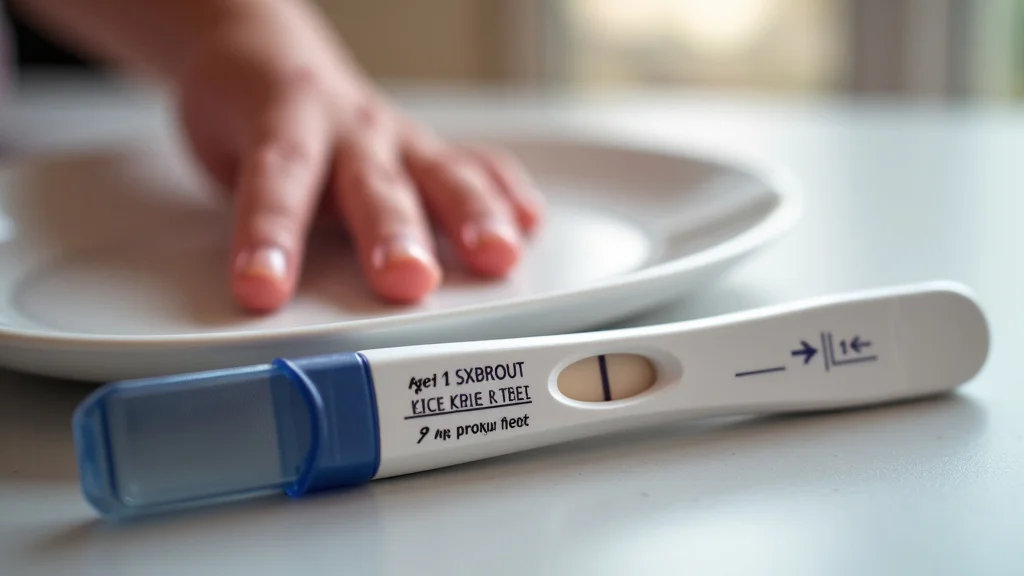
It can be really confusing and a little scary when you get two positive pregnancy tests and then one negative. This mix-up happens more than you might think, especially if you are new to taking pregnancy tests. It’s totally normal to feel unsure about what these results mean.
This post will break down exactly why this happens and what you can do next. We’ll go through it step by step so you can feel confident about your situation. Get ready to find out what those results actually tell you.
Key Takeaways
- You will learn about the reasons behind getting mixed pregnancy test results.
- We will explain how different tests can show different outcomes.
- You will find out what a faint positive line can mean.
- We will discuss when to see a doctor for clarification.
- You will understand how to perform pregnancy tests correctly.
- This article will help you interpret your results with confidence.
Understanding Mixed Pregnancy Test Results
Getting a mix of positive and negative pregnancy tests, like with 2 positive pregnancy tests 1 negative results, can be quite a head-scratcher. This often happens because pregnancy tests work by detecting a hormone called human chorionic gonadotropin, or hCG. This hormone is made by your body when you are pregnant.
The amount of hCG can change, and different tests might be more or less sensitive to these changes. Sometimes, a very early pregnancy might have just enough hCG for one test to pick up, but not enough for another, or the level might be right on the edge of detection for certain tests.
It is also possible to have a chemical pregnancy. This is a very early miscarriage that happens shortly after implantation. In such cases, hCG levels might rise enough to give a positive test but then fall quickly, leading to a negative result on a later test.
Hormone levels are key here. They fluctuate, especially in the very beginning. This is why you see these mixed signals.
How Pregnancy Tests Work
Pregnancy tests detect hCG in your urine. Your body starts producing this hormone after a fertilized egg attaches to the uterine wall. The amount of hCG doubles roughly every 48 to 72 hours in early pregnancy.
Home pregnancy tests use antibodies that react to hCG. If hCG is present above a certain threshold, a line or symbol appears on the test, indicating a positive result. The sensitivity of a test determines how much hCG it needs to show a positive result.
Test sensitivity is measured in milli-International Units per milliliter (mIU/mL). A test with a lower mIU/mL rating is more sensitive and can detect lower levels of hCG. For example, a test that detects 25 mIU/mL might show negative if your hCG level is only 20 mIU/mL, while a more sensitive test detecting 10 mIU/mL would show positive.
This difference in sensitivity is a primary reason for getting mixed results.
Factors Affecting Test Accuracy
Several factors can influence the accuracy of a pregnancy test. The timing of the test is crucial. Testing too early, before your hCG levels have risen sufficiently, can lead to a false negative.
Even with a positive test, if it’s very early, the line might be faint, and a subsequent test could be negative if your hCG hasn’t increased enough yet.
The concentration of hCG in your urine also varies throughout the day. Testing with first-morning urine is generally recommended because it is more concentrated and likely to contain higher levels of hCG. If you test later in the day after drinking a lot of fluids, your urine might be diluted, potentially leading to a false negative even if you are pregnant.
Expiration dates are another important factor. An expired test may not work correctly and could produce inaccurate results, either false positive or false negative. Always check the expiration date on the test packaging before use.
Using a test past its prime is like using old medicine; it might not do its job properly.
The Role of hCG Levels
Human chorionic gonadotropin (hCG) is the hormone that pregnancy tests are designed to detect. After conception, the placenta begins to produce hCG. This hormone signals your body to maintain the pregnancy.
The level of hCG in your blood and urine increases rapidly in the early weeks of pregnancy.
In a healthy pregnancy, hCG levels typically start to rise around the time of your missed period. By the time you take a home pregnancy test, your hCG levels are usually high enough for a sensitive test to detect. However, if your pregnancy is very new, or if there are any complications, hCG levels might not be consistently high.
This inconsistency is where the mixed results come into play.
Sometimes, the hCG level might be just at the threshold of detection for one test. If that level drops slightly or fluctuates, a subsequent test might not pick it up. This can happen in cases of ectopic pregnancy or a chemical pregnancy, where the hCG levels may not rise as expected or might even decline.
What is a Chemical Pregnancy
A chemical pregnancy is a very early pregnancy loss that occurs within the first few weeks after conception. It happens when a fertilized egg implants in the uterus, and hCG levels rise enough to produce a positive pregnancy test. However, the pregnancy does not continue to develop, and the hCG levels drop.
This typically occurs before a missed period or very shortly after.
The positive test result in a chemical pregnancy can be confusing. You might see a faint positive line, and then a few days later, a negative result. This is because the hCG hormone, which is produced to support the pregnancy, is no longer being produced at a sufficient level after the pregnancy loss.
It’s a natural process, but it can be emotionally difficult.
It is estimated that up to 50% of all conceptions result in a chemical pregnancy. Many women may not even know they had one if they do not test early or frequently. The symptoms are often very mild, similar to premenstrual syndrome (PMS).
Understanding that a chemical pregnancy can cause 2 positive pregnancy tests 1 negative results is key to interpreting these outcomes.
Interpreting Faint Lines
A faint positive line on a pregnancy test can be one of the most confusing results. It means that hCG has been detected, but the level is low. This could indicate a very early pregnancy.
The intensity of the line depends on how much hCG is in your urine and the sensitivity of the test.
Sometimes, a faint line can be a sign of a viable pregnancy, especially if you are testing very early. The line might become darker over the next few days as your hCG levels increase. However, a faint line can also sometimes be an evaporation line.
This appears when urine evaporates from the test strip after the test has been read, leaving a colorless or faint mark.
To get a clearer answer, it’s often best to retest after a day or two, preferably with first-morning urine. If the line gets darker, it’s a strong indication of pregnancy. If it remains faint or disappears, it might suggest a chemical pregnancy or a faulty test.
Always read the test instructions carefully, as they can vary between brands.
Evaporation Lines vs. Positive Lines
Distinguishing between an evaporation line and a true positive line is crucial for accurate results. An evaporation line appears in the test window after the urine has dried on the test strip. These lines are typically colorless or have a grayish tint.
They usually show up later than the specified reading time for the test.
A true positive line, whether faint or dark, will have color. The color intensity depends on the hCG level. If you see a colored line within the recommended timeframe, even if it’s faint, it generally indicates the presence of hCG.
However, it’s always wise to retest to confirm.
Most tests have a specific window for reading results, often between 3 to 10 minutes. Reading a test too late can lead to misinterpreting an evaporation line as a positive. Always stick to the recommended reading time.
If you are unsure, wait a couple of days and test again.
Understanding Different Test Brands
Different brands of pregnancy tests have varying sensitivities. This means some can detect lower levels of hCG than others. If you use two different brands, one might show a positive result while another shows a negative, even if your hCG level is the same.
This is a very common reason for mixed results like 2 positive pregnancy tests 1 negative.
More sensitive tests, often labeled as “early detection” tests, can detect hCG levels as low as 10-15 mIU/mL. Less sensitive tests might require 25 mIU/mL or more. If your hCG level is, for example, 20 mIU/mL, a 10 mIU/mL sensitive test will show positive, but a 25 mIU/mL less sensitive test will show negative.
This difference in technology and design is a key factor.
When you get mixed results, it’s often helpful to try a different brand or even the same brand again with first-morning urine. This helps to confirm whether the positive result was a true indication of pregnancy or a potential anomaly. The consistent use of one type of test can also help in tracking potential changes in hCG levels if pregnancy is confirmed.
Sensitivity Levels Explained
The sensitivity of a pregnancy test refers to the lowest concentration of hCG it can detect. This is usually measured in mIU/mL (milli-International Units per milliliter). A lower mIU/mL number means the test is more sensitive and can detect pregnancy earlier.
For instance, a test with a sensitivity of 10 mIU/mL can detect pregnancy when hCG levels are as low as 10. A test with a sensitivity of 25 mIU/mL needs at least 25 mIU/mL of hCG to show a positive result. If your hCG level is fluctuating around 20 mIU/mL, you might get a positive from the 10 mIU/mL test and a negative from the 25 mIU/mL test.
Understanding these sensitivity levels can help you choose the right test and interpret your results. For early testing, opt for tests with higher sensitivity (lower mIU/mL values). If you get a faint positive with a highly sensitive test, it’s often recommended to confirm with another test a day or two later, or a test with a slightly lower sensitivity to see if the result changes.
Common Test Brands and Their Sensitivities
Many popular pregnancy test brands are available, each with its own level of sensitivity. For example, some early detection tests from brands like First Response can detect as low as 6.5 mIU/mL of hCG. Other standard tests, like some digital tests or those from brands like EPT or Clearblue, may have sensitivities around 25 mIU/mL or higher.
When you encounter mixed results, it’s useful to note the brand names of the tests you used. If you used a very sensitive test that showed a faint positive, and then a less sensitive test that showed negative, it could mean your hCG levels are just starting to rise or are in the process of declining. This information can be valuable when discussing your situation with a healthcare provider.
Keeping track of which test gave which result can help in piecing together the puzzle. It’s not about one test being “right” and another “wrong,” but rather understanding the nuances of how each test interacts with your specific hCG levels at that moment.
When to See a Doctor
If you are experiencing 2 positive pregnancy tests 1 negative results, it is always a good idea to consult with a healthcare provider. They can offer professional advice and perform more accurate tests to determine your pregnancy status. A doctor can also help identify any underlying issues that might be causing the mixed signals.
A doctor can order a blood test to measure your hCG levels precisely. Blood tests are generally more sensitive than urine tests and can detect pregnancy earlier. They can also track the progression of hCG levels, which is crucial for confirming a healthy pregnancy or identifying potential problems like an ectopic pregnancy or miscarriage.
Do not hesitate to reach out to your doctor. They are there to help you understand your body and your health. Getting professional confirmation is the best way to gain peace of mind and ensure you receive appropriate care if you are pregnant or if there is another reason for the irregular test results.
Doctor’s Diagnosis Methods
When you visit a doctor with concerns about mixed pregnancy test results, they have several methods to confirm pregnancy. The most common and accurate is a blood test. There are two types of blood tests for hCG: qualitative and quantitative.
A qualitative hCG blood test simply detects the presence of hCG in your blood. It will tell you if hCG is there, but not how much. A quantitative hCG blood test, also known as a beta hCG test, measures the exact amount of hCG in your blood.
This test is very sensitive and can detect pregnancy much earlier than a urine test. It also allows doctors to monitor the rise or fall of hCG levels.
In addition to blood tests, your doctor may also recommend a pelvic exam or an ultrasound. A pelvic exam allows the doctor to check for physical signs of pregnancy, such as changes in the cervix and uterus. An ultrasound can visualize the developing embryo or gestational sac in the uterus, providing definitive confirmation of pregnancy and its location.
Potential Complications and Next Steps
Mixed pregnancy test results can sometimes indicate potential complications. As mentioned, a chemical pregnancy is one possibility, where the pregnancy ends very early. However, other conditions like an ectopic pregnancy, where the fertilized egg implants outside the uterus (often in the fallopian tube), or molar pregnancies (abnormal growths in the uterus) can also cause unusual hCG levels and test results.
Ectopic pregnancies are serious and require immediate medical attention. They can cause hCG levels to rise, but often not at the expected rate. Symptoms of an ectopic pregnancy can include sharp pelvic pain, vaginal bleeding, and dizziness.
It’s vital to report any severe pain or unusual bleeding to your doctor right away.
The next steps after seeing your doctor will depend on their diagnosis. If you are confirmed to be pregnant, they will guide you through prenatal care. If complications are suspected, they will outline the necessary treatment plan.
If the tests are negative and no pregnancy is detected, your doctor can help investigate other reasons for missed periods or other symptoms you might be experiencing.
Tips for Accurate Testing
To ensure you get the most accurate results from your home pregnancy tests, follow these simple tips. First, always read the instructions that come with the specific test you are using. Different brands have slightly different procedures and reading times.
What works for one test might not be exactly the same for another.
Using your first-morning urine is highly recommended. Your hCG levels are typically most concentrated in the morning, reducing the chance of a diluted sample leading to a false negative. Avoid drinking large amounts of fluid for a few hours before testing.
This keeps your urine concentrated and ready for detection.
When you get a result, make sure to read it within the time frame specified by the manufacturer. Reading too early or too late can lead to misinterpretation. If you get an unclear result, such as a very faint line or a question mark, it’s best to wait and retest in a day or two.
Best Practices for Testing
Here are some best practices to follow for reliable pregnancy testing at home:
- Choose the Right Time: Wait until you have missed your period for at least a day. Testing too early increases the chance of a false negative because hCG levels might not be high enough to detect. Some sensitive tests can detect pregnancy a few days before a missed period, but accuracy increases with time.
- Use First-Morning Urine: As mentioned, this is when hCG is most concentrated. If you must test later in the day, try to limit your fluid intake for a couple of hours beforehand to ensure your urine is as concentrated as possible.
- Follow Instructions Carefully: Each test is different. Pay close attention to how long to hold the test in your urine stream, how long to wait for the results, and how to read the display. Do not deviate from the instructions.
- Check the Expiration Date: Using an expired test can lead to inaccurate results. Always check the packaging and discard any tests that are past their expiration date.
- Store Tests Properly: Pregnancy tests are sensitive to heat and moisture. Store them in a cool, dry place, away from direct sunlight and humidity, as recommended by the manufacturer.
Adhering to these practices can significantly increase the accuracy of your home pregnancy test results and help you avoid confusing outcomes like getting 2 positive pregnancy tests 1 negative.
Troubleshooting Mixed Results
If you’re still unsure after following best practices, here’s how to troubleshoot mixed results:
- Retest with a Different Brand: Try using a test from a different manufacturer, especially one with a different sensitivity level. This can help determine if the previous results were due to the specific test’s sensitivity or an actual variation in hCG.
- Retest After 48 Hours: Wait 48 to 72 hours and take another test, ideally with first-morning urine. If you are pregnant, your hCG levels should have doubled, likely resulting in a clearer positive result.
- Consider External Factors: Factors like certain medications (which contain hCG), recent miscarriage, or hormonal imbalances could theoretically affect test results, though these are less common.
- Seek Professional Advice: If the mixed results persist or you are experiencing any concerning symptoms, contact your healthcare provider. They can perform a blood test to provide a definitive answer.
These steps can help you gain clarity and decide on the next course of action based on your findings.
Common Myths Debunked
Myth 1: A faint line always means you are not pregnant.
Reality: A faint positive line on a pregnancy test indicates that hCG has been detected, but at a low level. This is common in very early pregnancy. If the line is colored and appears within the recommended timeframe, it is generally considered a positive result.
The line may become darker over subsequent days as hCG levels rise.
Myth 2: All pregnancy tests are the same.
Reality: Pregnancy tests vary significantly in their sensitivity. Some are designed for early detection and can detect lower concentrations of hCG, while others require higher levels. This difference in sensitivity is a primary reason why you might get different results from different brands or even the same brand at different times.
Myth 3: You can only get accurate results by testing in the morning.
Reality: While first-morning urine is best because it is most concentrated, it is not the only time you can get an accurate result. If you are far enough along in your pregnancy, your hCG levels might be high enough to be detected at any time of the day. However, to maximize accuracy, especially in early stages, first-morning urine is preferred.
Myth 4: Getting one negative result cancels out previous positive results.
Reality: Mixed results, such as 2 positive pregnancy tests 1 negative, require careful consideration rather than simply dismissing one result. The negative result might be due to fluctuating hCG levels, a less sensitive test, or a very early pregnancy that is not yet consistently detectable. It’s crucial to investigate further rather than assuming one result is definitive.
Frequently Asked Questions
Question: Why did I get two positive tests and then one negative?
Answer: This can happen due to the varying sensitivity of different pregnancy tests, very early hCG levels that fluctuate, or a chemical pregnancy where the pregnancy ends very early.
Question: Is a faint positive line a reliable indicator of pregnancy?
Answer: A faint positive line usually means hCG is present, indicating a possible pregnancy. It’s best to retest in a day or two to see if the line gets darker, confirming the pregnancy.
Question: What is the best way to confirm pregnancy after mixed results?
Answer: The most reliable way to confirm pregnancy after mixed results is to see a doctor for a blood test, which can accurately measure hCG levels.
Question: Can medications affect pregnancy test results?
Answer: Some medications, particularly those containing hCG (like certain fertility treatments), can cause a false positive result. Always inform your doctor about any medications you are taking.
Question: How long should I wait before retesting after mixed results?
Answer: Waiting 48 to 72 hours is generally recommended before retesting. This allows time for hCG levels to potentially increase, providing a clearer result.
Conclusion
Dealing with 2 positive pregnancy tests 1 negative can be confusing, but understanding how pregnancy tests work and what these results might mean is key. It often comes down to hCG levels, test sensitivity, and timing. Don’t panic; take a deep breath.
Retesting, possibly with a different brand or after a short wait, can help. Your best next step is often a quick chat with your doctor to get a clear, professional confirmation.
Leave a Reply