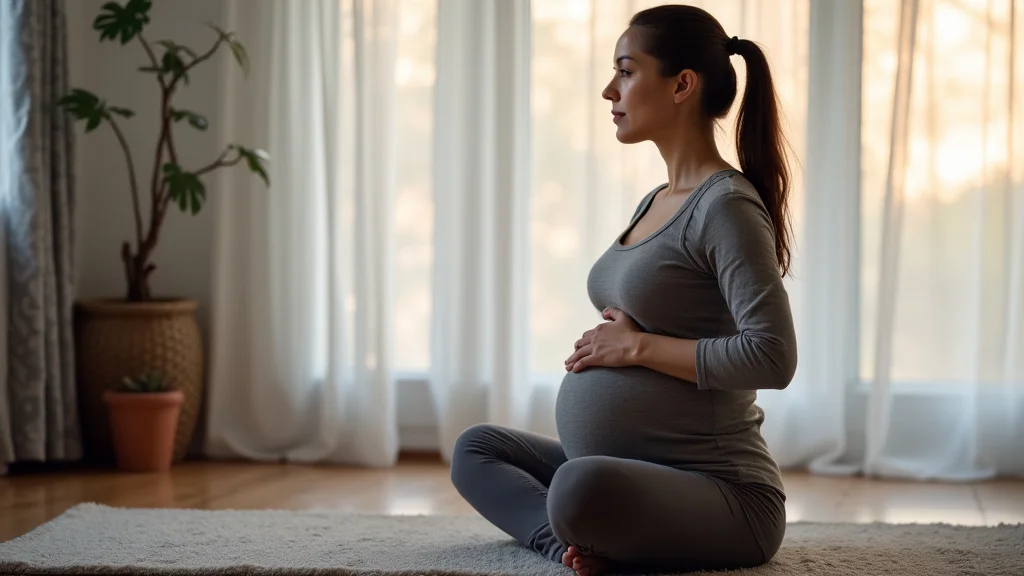
Getting into third trimester yoga poses can feel tricky. Your body is changing so fast, and finding comfortable ways to move can be a puzzle. It’s normal to wonder what’s safe and what will feel good as you get closer to meeting your baby.
Don’t worry, we’ll walk through simple poses step by step that can bring you relief and strength. Get ready to discover how yoga can support you in these final weeks.
Key Takeaways
- You will learn safe and effective yoga poses for your third trimester.
- Discover how these poses can ease common pregnancy discomforts.
- Understand modifications to make poses work for your changing body.
- Find out how to use props to enhance comfort and support.
- Learn about the benefits of continued movement during late pregnancy.
Gentle Yoga Poses For Late Pregnancy
As your pregnancy progresses into the third trimester, your body undergoes significant changes. Your belly grows larger, your center of gravity shifts, and you might experience new aches and pains. This is a time when gentle movement can be incredibly beneficial.
Yoga, with its focus on breath and mindful movement, offers a wonderful way to stay active and connected with your body. However, not all yoga poses are suitable for this stage. It’s important to choose poses that are safe, supportive, and address the unique challenges of late pregnancy.
The goal is to promote comfort, ease, and prepare your body for labor and birth. This section will guide you through some of the most helpful and accessible third trimester yoga poses.
Preparing For Third Trimester Yoga
Before you begin any practice, especially during pregnancy, it’s wise to get clearance from your healthcare provider. This ensures that yoga is a safe choice for your individual pregnancy. Listen to your body is the most crucial rule.
If something doesn’t feel right, stop. Don’t push yourself. Focus on gentle movements and deep breathing.
The aim isn’t to achieve a difficult pose, but to find a sense of ease and well-being. Making simple adjustments to common poses can make a world of difference. Using props like blankets, bolsters, and blocks can provide much-needed support.
They help you maintain balance and comfort, allowing you to relax into the pose.
Having a clear space to practice is also important. Make sure the floor is not too hard. You might want a yoga mat for cushioning.
Soft lighting and a calm environment can help you relax. You might find certain times of day are better for you. Some people feel more energetic in the morning, while others prefer to practice in the evening to unwind.
Experiment to see what works best for your body and your schedule. Consistency, even in short sessions, is more beneficial than infrequent long practices.
Foundational Poses For Comfort
Several poses are particularly well-suited for the third trimester. They focus on opening the hips, releasing tension in the back, and promoting relaxation. These are not about strenuous effort but about finding release and grounding.
They offer support for your growing body and can help alleviate common third-trimester complaints. These movements can prepare your body in gentle ways without putting undue stress on your joints or muscles. The focus is always on breath and ease.
Cat-Cow Pose Variation
This is a classic yoga pose that is excellent for spinal mobility and can help relieve lower back discomfort. In the third trimester, modifications are key. Instead of starting on your hands and knees directly on the floor, you can perform this pose at a wall or a sturdy piece of furniture like a counter or table.
This reduces pressure on your wrists and knees.
- Starting Position: Stand facing a wall or counter, about an arm’s length away. Place your hands shoulder-width apart on the wall or counter.
- Cow Pose: As you inhale, gently drop your belly, lift your chest, and look slightly up. Arch your back softly.
- Cat Pose: As you exhale, round your spine towards the ceiling, tuck your chin towards your chest, and draw your belly button in.
- Repetition: Move slowly with your breath for 5-10 cycles.
This variation is great because it takes the weight off your hands and knees. It allows you to focus on the gentle movement of your spine. The act of arching and rounding can help release tension in your back, which often feels tight in late pregnancy.
It also encourages awareness of your breath, a vital tool for labor.
Supported Child’s Pose
Child’s Pose is a resting pose, but as your belly grows, it can become uncomfortable. The key is to create space for your belly. This can be done by widening your knees significantly and using bolsters or pillows to support your torso.
- Starting Position: Come onto your hands and knees. Widen your knees as far apart as is comfortable, keeping your big toes touching.
- Support: Place a large bolster or several pillows between your thighs.
- Lowering Down: Gently lower your torso down, resting your belly on the bolster. Extend your arms forward, or rest them alongside your body.
- Relaxation: Rest your forehead on the mat or a folded blanket.
This supported version allows your belly to hang freely, removing any pressure. It’s a pose for deep rest and relaxation. It helps to calm the nervous system and can be a wonderful way to reconnect with your breath.
Many find this pose incredibly soothing, especially when feeling overwhelmed or tired.
Hip-Opening Poses For Labor Preparation
Opening the hips is very beneficial in the third trimester. It can help to create space for the baby and ease discomfort in the pelvic area. These poses can also help to release tension that might build up in the hips and pelvis, which can be helpful during labor.
Bound Angle Pose Variation (Supta Baddha Konasana)
Also known as Reclining Butterfly Pose, this is a deeply restorative pose that opens the hips and groin. Lying down makes it much more accessible and comfortable in late pregnancy.
- Starting Position: Lie down on your back.
- Support: Place bolsters or pillows under your back and head for support.
- Legs: Bring the soles of your feet together, letting your knees fall out to the sides.
- Comfort: You can place blocks or rolled blankets under your outer thighs or knees if there is any strain.
- Arms: Rest your arms by your sides, or place one hand on your belly and one on your heart.
This pose gently opens the hips without forcing them. The reclined position is very relaxing and allows the body to soften. It’s a wonderful pose for promoting circulation in the pelvic region.
Many find it helps to ease swelling in the legs and feet. It’s a perfect pose for a quiet moment of connection with your baby.
Low Lunge Variation (Anjaneyasana)
A gentle low lunge can help to open the front of the hips and stretch the quadriceps. It’s important to keep the movements gentle and to use support.
- Starting Position: Begin on your hands and knees.
- Step Forward: Step one foot forward between your hands. You can keep your back knee on the floor, or slightly lifted if that feels better.
- Support: Place a block or folded blanket under the back knee for comfort.
- Pelvic Tilt: Gently tuck your tailbone under to avoid arching your lower back.
- Hold: Breathe here, feeling a stretch in the front of the back hip. Repeat on the other side.
This pose helps to release tightness in the hip flexors, which can become very restricted during pregnancy. By gently tucking the tailbone, you protect your lower back and create more space in the pelvis. It’s a dynamic stretch that can be very invigorating.
Ensure your front knee is directly over your ankle to protect your knee joint.
Poses For Back Relief And Stability
Lower back pain is a common complaint in the third trimester. These poses aim to gently strengthen the core muscles that support your back and to relieve existing tension. Keeping your back strong and flexible can make a big difference in your comfort levels.
Pelvic Tilts
This simple movement is excellent for relieving lower back pressure and strengthening the abdominal muscles gently. It’s one of the safest and most effective third trimester yoga poses for back relief.
- Starting Position: Lie on your back with your knees bent and feet flat on the floor.
- Action: Gently flatten your lower back against the floor by tightening your abdominal muscles and tilting your pelvis up slightly.
- Release: Release back to a neutral spine position.
- Repetition: Repeat this movement for 10-15 repetitions.
This exercise helps to engage your deep abdominal muscles, which support your spine. It also helps to relieve tension in the lower back by creating a gentle rocking motion. It’s a foundational movement that can be incorporated into daily life, not just yoga practice.
Many prenatal classes start with this simple exercise.
Side-Lying Savasana (Corpse Pose)
Traditional Savasana is done on the back, which can be uncomfortable in late pregnancy due to pressure on the vena cava. A side-lying version offers deep relaxation and is very safe.
- Starting Position: Lie on your left side.
- Support: Place a bolster or pillow between your knees and ankles to keep your hips and spine aligned.
- Head Support: Use a pillow for your head.
- Comfort: You can also place a small pillow under your belly if that feels more comfortable.
- Relaxation: Close your eyes and focus on your breath.
This resting pose allows your body to fully relax and release tension. Lying on the left side is often recommended in pregnancy as it can improve circulation. This pose helps to calm the nervous system, reduce stress, and promote a sense of peace.
It is a vital part of any yoga practice, especially when preparing for birth.
Standing Poses For Strength And Balance
Standing poses help to build strength and maintain balance, which can be challenged as your body changes. These poses should be practiced with awareness and modifications as needed.
Modified Warrior II (Virabhadrasana II)
Warrior II can be a bit intense with a large belly. A modified version can still offer the benefits of opening the hips and strengthening the legs.
- Starting Position: Stand with your feet wide apart. Turn your right foot out 90 degrees and your left foot in slightly.
- Support: You can place your back hand on a wall or chair for stability.
- Bend Front Knee: Bend your front knee directly over your ankle, keeping your torso upright.
- Arms: Extend your arms out to the sides, or bring them to your hips.
- Focus: Keep your gaze forward. Repeat on the other side.
This pose helps to build strength in the legs and open the hips. The support option makes it safer and more accessible. It’s important to avoid collapsing the torso forward.
Keeping the torso upright helps to maintain good posture. The stability offered by the wall or chair allows you to focus on the pose without worrying about balance.
Mountain Pose with Pelvic Support
Even standing in Mountain Pose can feel different. Adding a gentle pelvic awareness can help with alignment and comfort.
- Starting Position: Stand with your feet hip-width apart.
- Alignment: Feel your feet grounded on the floor. Stand tall.
- Pelvic Tuck: Gently tuck your tailbone slightly, as you did in pelvic tilts, to find a neutral pelvis.
- Breath: Lengthen your spine and breathe deeply.
- Arms: Let your arms hang by your sides, or rest your hands on your belly.
This pose helps to ground you and establish good posture. The gentle pelvic tuck can alleviate pressure on the lower back. It’s a simple pose that reminds you to stand tall and present.
Even in standing, you can use your breath to find a sense of calm and stability. This is a pose you can return to many times a day.
Common Myths Debunked
Myth 1: All yoga poses are safe during the third trimester.
Reality: This is not true. Many traditional yoga poses, especially those involving deep twists, inversions, or lying flat on the back, should be avoided or significantly modified in the third trimester. Your body is changing rapidly, and certain movements can put undue stress on your abdomen, pelvis, or spine.
It’s essential to choose poses specifically adapted for late pregnancy that prioritize safety and comfort.
Myth 2: You need to stop practicing yoga once you enter the third trimester.
Reality: On the contrary, continuing a modified yoga practice can be highly beneficial. Gentle movements, stretching, and breathing exercises can help manage common third-trimester discomforts like back pain, swelling, and fatigue. The key is to adapt your practice, focusing on poses that support your changing body, rather than stopping altogether.
Myth 3: Yoga is too strenuous for the third trimester and can cause early labor.
Reality: When practiced appropriately, with modifications and a focus on gentle movement, yoga is generally very safe and can even help prepare your body for labor. Strenuous or advanced yoga poses that are not modified for pregnancy could potentially be too much. However, the gentle, restorative third trimester yoga poses discussed here are designed to promote relaxation and comfort, not to induce labor prematurely.
Always listen to your body and your healthcare provider’s advice.
Myth 4: You can’t use props in third-trimester yoga.
Reality: Props like bolsters, blankets, and blocks are your best friends in the third trimester! They are essential for making poses accessible, comfortable, and safe. Props provide support, create space, and help you maintain alignment when your body shape makes traditional poses difficult.
For instance, a bolster under your belly in a supported pose allows your abdomen to rest comfortably.
Frequently Asked Questions
Question: How often should I practice third trimester yoga poses?
Answer: Aim for consistency rather than intensity. Practicing gentle yoga poses for 15-30 minutes a few times a week can be very beneficial. Even daily short sessions focusing on breath and gentle movement can make a difference.
Question: What are the biggest benefits of doing yoga in the third trimester?
Answer: The benefits include reduced back pain, improved sleep, increased energy, better balance, and a sense of calm. It also helps you connect with your body and prepare mentally for labor.
Question: Is it okay to lie on my back for Savasana?
Answer: It’s generally recommended to avoid lying flat on your back for extended periods in the third trimester. This position can put pressure on a major blood vessel, reducing blood flow. Opt for a side-lying Savasana instead.
Question: What if I feel dizzy during a pose?
Answer: If you feel dizzy, immediately come out of the pose and rest. Sit or lie down, focus on your breath, and drink some water. If dizziness persists, consult your healthcare provider.
Question: Can I do these poses if I’ve never done yoga before?
Answer: Yes, these poses are designed to be accessible for beginners. The emphasis is on gentle movement, breath, and comfort. Listen to your body, use props, and don’t worry about doing the poses perfectly.
Final Thoughts
Embracing third trimester yoga poses brings comfort and ease. These simple movements support your changing body. They help reduce common aches and prepare you for birth.
Focus on breathing and gentle support. You are strong and capable. Enjoy this special time with mindful, nurturing movement.
Leave a Reply