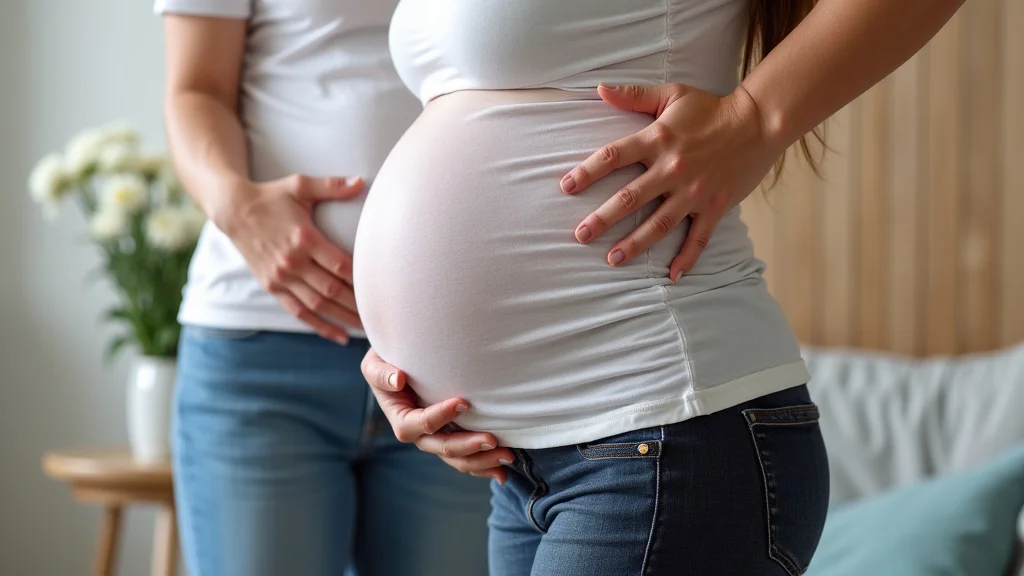
Feeling a dull ache or sharp pain in your lower back as your pregnancy progresses is super common. This third trimester lower back pain can feel like a big challenge when you’re already dealing with so many changes. But don’t worry, it’s totally manageable!
We’re going to walk through easy, step-by-step ways to help you feel more comfortable. Let’s get started on finding some relief!
Key Takeaways
- Learn why lower back pain is so common in the third trimester.
- Discover simple exercises that can ease pregnancy back pain.
- Understand the best ways to improve your posture.
- Explore helpful tools and comfort aids for back pain.
- Find out when to seek professional help for your pain.
Understanding Third Trimester Lower Back Pain
This section explains why your back might be hurting more as your baby grows. Your body is going through big changes, and sometimes that puts extra stress on your back.
Why Does My Back Hurt Now?
As your pregnancy moves into the third trimester, your baby is getting bigger. This added weight shifts your center of gravity forward. To keep your balance, you might unconsciously lean back more.
This change in posture can strain your lower back muscles. The ligaments in your body also start to loosen up. This is due to a hormone called relaxin, which helps prepare your pelvis for childbirth.
While helpful for delivery, these relaxed ligaments can make your joints less stable. This can lead to more pressure and pain in your lower back and pelvic area.
Imagine trying to carry a heavy backpack that keeps getting heavier. Your muscles and bones have to work harder to support it. Your back is doing something similar as your baby grows inside you.
The Role of Hormones
The hormone relaxin plays a big part. It’s like a natural lubricant for your joints, making them more flexible. This is great for the birth canal to expand.
However, it also affects other joints in your body, including those in your spine and pelvis. When these joints become looser, they might not be as stable as usual. This can cause muscles to overwork to compensate, leading to fatigue and pain.
Studies show that relaxin levels are highest in the third trimester. This timing directly correlates with the peak of lower back pain complaints among pregnant individuals.
Relaxin helps your body prepare for labor by widening your pelvis. It works on ligaments throughout your body, not just in the pelvis.
Weight Gain and Posture Changes
Gaining weight during pregnancy is healthy and necessary for your baby’s development. However, this extra weight, combined with the baby’s growth, puts more pressure on your spine. The forward shift of your belly can make you stand and sit differently.
You might find yourself arching your back more than usual to compensate for the weight in front. This increased lumbar lordosis, or the inward curve of your lower spine, can stretch the muscles and ligaments in your back. It can also compress nerves, leading to pain that might radiate.
Think about how you adjust your stance when you carry a heavy object in front of you. You likely pull your shoulders back and arch your lower back. Your body does something similar naturally during pregnancy.
The average weight gain during pregnancy is between 25 to 35 pounds. This significant increase adds a load that your musculoskeletal system must adapt to.
Common Symptoms to Watch For
The pain is usually felt in the area below your waist. It might feel like a dull ache or a sharp, shooting sensation. Some people experience stiffness, making it hard to move around.
The pain can get worse when you stand for long periods, walk, or bend over. It might also be more noticeable at night, disturbing your sleep. Sometimes, the pain can travel down your legs, a condition known as sciatica.
This happens if the baby’s position puts pressure on the sciatic nerve.
It’s important to distinguish normal discomfort from pain that needs medical attention. Listen to your body.
Effective Exercises for Back Pain Relief
Gentle movement can make a big difference. Here are some safe and effective exercises to help ease that third trimester lower back pain.
Pelvic Tilts
Pelvic tilts are a fantastic exercise for relieving lower back pressure. They help to gently stretch and strengthen the muscles in your abdomen and back. This exercise can also improve your posture and reduce strain on your spine.
It’s a simple movement that can be done in several positions, making it accessible and easy to incorporate into your daily routine.
Start on your hands and knees. Your hands should be directly under your shoulders, and your knees under your hips.
Inhale and let your belly drop towards the floor, arching your back slightly. This is the cow pose.
Exhale and gently pull your belly button towards your spine, rounding your back. Tuck your tailbone slightly. This is the cat pose.
Repeat this gentle rocking motion for 10-15 repetitions. Aim to do this several times a day, especially when you feel stiffness.
Cat-Cow Stretch
The cat-cow stretch is a yoga pose that is excellent for loosening your spine. It helps to improve flexibility and relieve tension in your back. This movement also encourages better blood flow to your back muscles.
It’s a very calming exercise that can be done even when you’re feeling tired.
This exercise is performed on all fours. It involves alternating between arching your back and rounding your spine.
How to do it:
- Start on your hands and knees, with your wrists aligned under your shoulders and your knees under your hips.
- Take a deep breath in, drop your belly towards the floor, and lift your chest and tailbone. Look slightly upward. This is the “cow” position.
- As you exhale, round your spine towards the ceiling, tuck your chin to your chest, and let your head drop. This is the “cat” position.
- Continue to flow between these two poses, coordinating your breath with your movement, for 5-10 rounds.
This exercise can be modified if being on your hands and knees is uncomfortable. You can perform a standing pelvic tilt against a wall or by leaning on a sturdy surface.
Child’s Pose
Child’s pose is a resting pose that gently stretches your back muscles and promotes relaxation. It can help to relieve tension in your lower back and hips. This pose is very soothing and can be used as a break whenever you feel discomfort.
It allows your body to relax and release built-up tension.
This pose is a gentle way to decompress your spine. It allows your body to rest and recover.
How to do it:
- Kneel on the floor with your knees hip-width apart or wider if it’s more comfortable for your belly.
- Rest your forehead on the floor or on a pillow placed in front of you.
- Extend your arms forward along the floor, or rest them alongside your body with your palms facing up.
- Breathe deeply and allow your body to relax into the pose. Hold for 30 seconds to a few minutes, or as long as feels comfortable.
This pose is wonderfully calming and can be done whenever you need a moment of peace and back relief.
Pelvic Floor Exercises (Kegels)
Strengthening your pelvic floor muscles is important for supporting your uterus and relieving back pressure. These muscles act like a natural hammock for your pelvic organs. When they are strong, they can better support the weight of your growing baby and reduce strain on your lower back.
Kegel exercises are simple to do and can be performed discreetly anywhere, anytime.
Strong pelvic floor muscles help support your growing baby and relieve back pressure.
How to do it:
- Imagine you are trying to stop the flow of urine midstream. Squeeze those muscles.
- Hold the squeeze for 3-5 seconds, then relax completely for the same amount of time.
- Repeat this 10-15 times. Aim to do 2-3 sets per day.
You can do Kegels while sitting, standing, or lying down. Consistency is key to building strength.
Improving Posture During Pregnancy
Good posture is a powerful tool against back pain. Learn how to stand and sit in ways that support your body.
Standing Tall
Proper standing posture can significantly reduce strain on your lower back. It helps to align your spine correctly, distributing your body’s weight more evenly. This prevents your muscles from overworking to keep you upright.
Stand with your feet shoulder-width apart. Keep your knees slightly bent, not locked.
Engage your abdominal muscles slightly by pulling your belly button gently towards your spine. This helps to support your lower back.
Avoid leaning backward excessively. Instead, try to imagine a string pulling you up from the crown of your head. This naturally aligns your spine.
Resting one foot on a small stool or step can also help reduce the curve in your lower back when standing for extended periods.
Sitting Comfortably
Sitting for long periods can worsen back pain if done with poor posture. It’s important to support your back and keep your spine in a neutral position.
Choose chairs that offer good lumbar support. If your chair doesn’t have enough support, use a small pillow or rolled-up towel to cushion the curve of your lower back.
Keep your feet flat on the floor. If your feet don’t reach the floor, use a footrest.
Avoid slouching. Try to sit up straight, with your shoulders relaxed.
Take regular breaks to stand up, walk around, and stretch. Even a few minutes away from your chair can make a big difference.
Sleeping Positions
The way you sleep can either help or hinder your back pain. Finding a comfortable and supportive sleep position is crucial.
The best sleeping position during pregnancy is on your side, preferably your left side. This position improves circulation to your baby and helps relieve pressure on your liver and vena cava.
Use pillows to support your body. Place a pillow between your knees to keep your hips, pelvis, and spine aligned. This also reduces strain on your lower back.
A pregnancy pillow can be a great investment. These long pillows are designed to support your belly, back, and head, helping you maintain a comfortable side-sleeping position throughout the night.
You can also place a pillow behind your back for extra support, preventing you from rolling onto your back.
Comfort Aids and Tools
Sometimes, a little extra help can go a long way. Here are some tools that can provide relief.
Support Belts and Bands
Maternity support belts are designed to provide gentle support to your growing belly and lower back. They work by lifting the belly slightly and taking some of the pressure off your ligaments and lower back. This can significantly reduce pain and discomfort.
These belts distribute the weight of your belly more evenly. They help to stabilize your pelvis and reduce strain.
Many pregnant individuals find wearing a support belt during activities that involve standing or walking for longer periods very helpful. It offers a feeling of stability and reduces the sensation of your belly “pulling” forward.
Studies have shown that maternity support belts can be effective in reducing lower back pain intensity. They can improve mobility and overall quality of life during pregnancy.
When choosing a belt, look for one that is adjustable and comfortable to wear. It should not dig into your skin or restrict your breathing.
Supportive Footwear
Your feet support your entire body. Wearing the right shoes is important for maintaining good posture and reducing strain on your back.
Opt for comfortable, low-heeled shoes. High heels can throw off your balance and increase the arch in your lower back, exacerbating pain.
Avoid completely flat shoes like flip-flops, as they offer little support. Shoes with good arch support and cushioning are ideal.
Consider shoes that are easy to slip on and off, as bending down can become more challenging.
Wearing supportive footwear can prevent foot pain, leg fatigue, and, importantly, contribute to better alignment of your entire body, which benefits your back.
Heat and Cold Therapy
Applying heat or cold can offer temporary relief from muscle aches and stiffness.
Heat therapy, such as a warm bath or a heating pad, can help relax tense muscles and improve blood flow. This is often good for chronic aches.
Cold therapy, like an ice pack wrapped in a cloth, can help reduce inflammation and numb acute pain. This is often useful if you experience a sudden flare-up.
Always use a barrier, like a towel, between the heat or cold pack and your skin to avoid burns or frostbite. Never apply heat directly to your abdomen if you have certain medical conditions or if advised against it by your doctor.
A warm bath with Epsom salts can be particularly soothing for sore muscles. Ensure the water is comfortably warm, not hot, and be careful when getting in and out of the tub.
When to Seek Professional Help
While most back pain is normal, it’s important to know when to consult a healthcare provider.
Signs of Serious Issues
If you experience severe or sudden pain, it’s wise to get it checked out. Other signs that warrant medical attention include pain that doesn’t improve with rest or home care.
You should also contact your doctor if you have any of the following symptoms:
- Fever
- Chills
- Pain that radiates down one or both legs, especially if accompanied by numbness or tingling
- Difficulty controlling your bladder or bowels (this is a medical emergency)
- Pain that is worse at night and disturbs your sleep significantly
These symptoms could indicate a more serious condition that requires prompt medical evaluation.
Consulting Your Doctor or Midwife
Your doctor or midwife is your best resource for managing pregnancy discomforts. They can assess your specific situation and provide personalized advice.
Don’t hesitate to discuss your back pain with them at your prenatal appointments. They can rule out any underlying issues and recommend appropriate treatments.
They might suggest physical therapy, specific stretches, or other interventions based on your needs. They can also confirm if the pain you’re experiencing is typical for third trimester lower back pain or if further investigation is needed.
Physical Therapy for Pregnancy Back Pain
A physical therapist specializing in prenatal care can be incredibly helpful. They can teach you exercises and stretches tailored to your needs. They can also help with manual therapy techniques to relieve muscle tension and improve posture.
Physical therapists can assess your movement patterns and identify specific areas of weakness or tightness contributing to your pain.
They provide hands-on treatment and guide you on safe exercises you can continue at home. This can empower you to manage your pain effectively.
It’s a good idea to ask your doctor or midwife for a referral to a qualified physical therapist.
Common Myths Debunked
Myth 1: All pregnancy back pain is the same
Reality: While common, back pain can manifest differently for everyone. Some experience dull aches, others sharp pains. The location and intensity can vary greatly depending on factors like posture, weight distribution, and baby’s position.
It’s not a one-size-fits-all experience.
Myth 2: There’s nothing you can do to relieve the pain
Reality: This is far from true! While some discomfort is normal, many effective strategies can significantly reduce or manage third trimester lower back pain. Gentle exercises, posture correction, and support aids can make a big difference.
Myth 3: Exercises will hurt the baby
Reality: When performed correctly and with your doctor’s approval, pregnancy-safe exercises are beneficial and do not harm the baby. In fact, staying active can contribute to a healthier pregnancy and delivery. Always ensure you’re doing movements approved for pregnant individuals.
Myth 4: Only women who gain a lot of weight get back pain
Reality: While weight gain contributes, it’s not the sole cause. Hormonal changes, postural shifts, and the baby’s growth all play significant roles, regardless of the exact amount of weight gained.
Frequently Asked Questions
Question: How can I sleep with third trimester lower back pain
Answer: Try sleeping on your side with a pillow between your knees. A pregnancy pillow can provide extra support for your belly and back.
Question: Are stretching exercises safe during the third trimester
Answer: Yes, gentle, pregnancy-approved stretches like pelvic tilts and cat-cow are safe and helpful. Always check with your doctor first.
Question: Can my baby’s position affect my back pain
Answer: Yes, a baby’s position can put pressure on your nerves and spine, potentially increasing back pain. Talk to your doctor about how to manage this.
Question: How long does third trimester back pain usually last
Answer: Back pain often lessens after delivery as your body recovers. However, it can take some time for your muscles and ligaments to return to their pre-pregnancy state.
Question: Should I wear a maternity support belt
Answer: A maternity support belt can offer significant relief by supporting your belly and back. Discuss it with your doctor to see if it’s right for you.
Summary
Dealing with third trimester lower back pain is common, but manageable. Gentle exercises, good posture, and supportive tools can bring much-needed relief. Always listen to your body and seek advice from your healthcare provider.
You can find comfort and enjoy these final weeks of pregnancy.
Leave a Reply