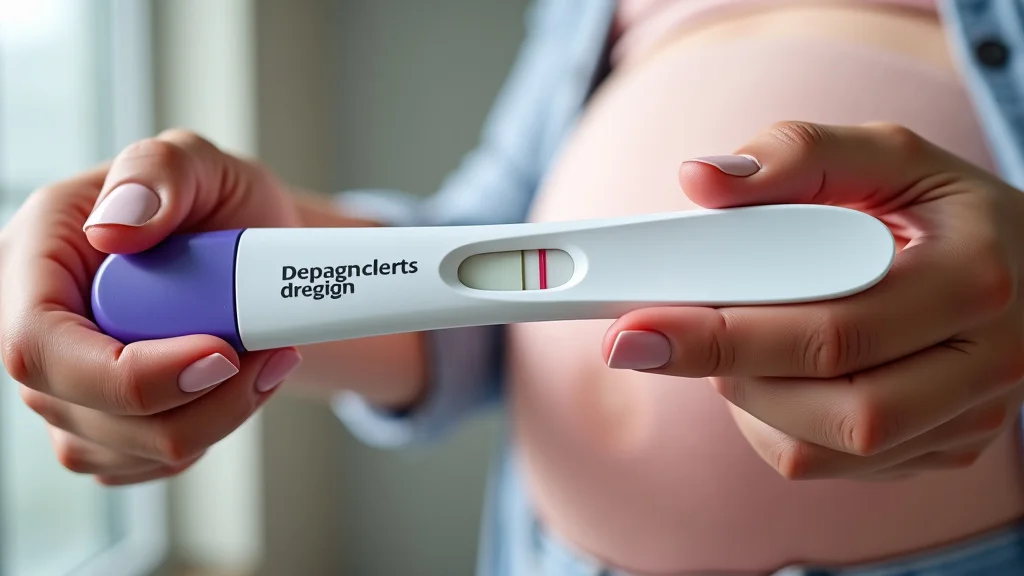
Figuring out what a pregnancy test means can feel a bit confusing at first. You might see lines or symbols and wonder what they really say about your situation. It’s totally okay if this is new to you.
We’re going to walk through it all, step by step, so you’ll feel confident knowing what your test results mean. Get ready for a simple guide that makes everything clear.
Key Takeaways
- You will learn what different pregnancy test results typically indicate.
- We will explain how pregnancy tests work at a basic level.
- You will discover factors that can affect test accuracy.
- We will cover what to do after getting your test results.
- You will understand common questions about pregnancy tests.
Understanding Pregnancy Test Meaning
When you take a pregnancy test, you are looking for a sign that your body is pregnant. The tests work by detecting a special hormone called human chorionic gonadotropin, or hCG. This hormone is made after a fertilized egg attaches to the lining of your uterus.
The amount of hCG in your body goes up quickly in early pregnancy. So, a pregnancy test looks for this hormone in your pee or blood. A positive result means hCG is detected, and a negative result means it’s not found.
Knowing the pregnancy test meaning is super important for making your next steps. For many people, especially those trying to conceive or who are new to this, the results can be a mix of excitement, relief, or concern. That’s why it’s good to have a clear idea of what each outcome signifies.
We’ll break down how these tests work and what to expect.
How Pregnancy Tests Detect hCG
Pregnancy tests, whether they are the ones you buy at the drugstore or those done at a doctor’s office, all rely on the same basic principle: detecting hCG. This hormone is only produced by the cells that will eventually form the placenta. It starts to be made very soon after implantation, which is when the fertilized egg burrows into the uterine wall.
This usually happens about six to twelve days after fertilization.
The tests use antibodies that are designed to bind to hCG. When your urine or blood sample comes into contact with these antibodies on the test strip or in the device, if hCG is present, it will cause a visible reaction. This reaction is what creates the lines, symbols, or digital readouts you see on the test.
The more hCG there is, the stronger the signal.
Types of Pregnancy Tests
There are two main types of pregnancy tests: urine tests and blood tests. Urine tests are the most common and are readily available over-the-counter. They are convenient and can be used at home.
Blood tests are typically done by a healthcare provider. They are more sensitive than urine tests and can detect hCG earlier in pregnancy. Blood tests can also measure the exact amount of hCG in your blood, which can be helpful in certain situations.
Here’s a quick look at each:
- Home Urine Tests: These are the tests you find at pharmacies and supermarkets. They are easy to use and give results in minutes. Most are quite accurate when used correctly.
- Clinical Blood Tests: These are performed in a doctor’s office or lab. They are divided into two types: qualitative (which simply detects hCG presence) and quantitative (which measures the exact amount of hCG).
Understanding Test Lines and Symbols
The way a pregnancy test shows results can vary between brands. Most common are tests with lines. A positive result often means two lines appear, while a negative result shows only one line.
Some digital tests will say “Pregnant” or “Not Pregnant” on a screen.
It’s important to read the instructions that come with your specific test. Different brands might have different ways of showing a positive or negative result. For example, some tests might show a faint line for a positive result, while others require a clear, dark line.
Digital tests are usually very straightforward.
Let’s look at common line interpretations:
- Two Lines: Typically indicates a positive pregnancy. Both the control line and the test line should be visible.
- One Line: Usually means a negative result. Only the control line appears.
- No Lines: The test may not have worked correctly. It’s best to retake the test with a new kit.
- Faint Line: This can sometimes be tricky. A faint line often still means positive, as it indicates hCG is present, even if in smaller amounts.
Factors Affecting Pregnancy Test Accuracy
While pregnancy tests are very reliable, a few things can influence their accuracy. The most common reason for an inaccurate result is testing too early. If you test before there’s enough hCG in your system, you might get a false negative.
This means the test says you’re not pregnant, but you actually are.
Other factors can also play a role. For instance, drinking a lot of fluids right before taking a urine test can dilute your urine, potentially lowering the hCG concentration. This might also lead to a false negative.
Additionally, expired tests or tests that have been stored improperly might not work correctly.
When to Take a Pregnancy Test
The best time to take a pregnancy test is after you have missed your period. Most home pregnancy tests are designed to detect hCG accurately from the first day of a missed period. Some highly sensitive tests can detect pregnancy a few days earlier, but the risk of a false negative is higher.
Testing too early is a common mistake. If you test too soon, the level of hCG might be too low for the test to detect, even if you are pregnant. Waiting until you’ve missed your period significantly increases the chances of getting an accurate result.
Here’s a guide to timing:
- Missed Period: This is the ideal time to test. It provides the most reliable results.
- A Few Days Before Period: Some sensitive tests claim to work, but accuracy is lower. You might get a false negative.
- After Ovulation: Testing too soon after ovulation, even if you suspect pregnancy, is unlikely to give a positive result.
The Role of hCG Levels
Human chorionic gonadotropin (hCG) is the key hormone that pregnancy tests look for. After a fertilized egg implants in the uterus, the body starts producing hCG. The levels of this hormone rise steadily in the early weeks of pregnancy.
They typically double every 48 to 72 hours.
The concentration of hCG in your urine or blood is what determines if a test can detect it. If the hCG level is below the test’s detection threshold, the result will be negative, even if pregnancy has occurred. This is why waiting until your period is late is so important for an accurate reading.
Consider this typical hCG progression:
- Implantation: hCG begins to be produced.
- Few Days After Implantation: hCG levels are usually too low to detect with home tests.
- First Day of Missed Period: hCG levels are often high enough for most tests to detect accurately.
- Weeks Following: hCG levels continue to rise, making detection easier.
Potential for False Results
While pregnancy tests are highly accurate, false results can happen. A false positive is when the test shows you are pregnant, but you are not. This can occur if you have certain medical conditions or are taking specific medications.
For example, some fertility treatments include hCG, which could lead to a positive result.
A false negative is when the test shows you are not pregnant, but you are. This is more common than a false positive. It often happens if you test too early, if your urine is too diluted, or if the test is faulty.
Always follow the instructions carefully to minimize the chance of error.
Here are some reasons for inaccurate results:
- Testing too early: hCG levels are still too low to be detected.
- Diluted urine: Drinking too much liquid before testing can lower hCG concentration.
- Expired or damaged tests: These might not work as intended.
- Certain medications: Some drugs, especially those containing hCG, can cause a false positive.
- Rare medical conditions: Some conditions can interfere with test results.
Interpreting Your Pregnancy Test Meaning
Once you’ve taken a pregnancy test, the next step is to understand what the result means for you. A positive result is exciting news for many, while a negative result can bring a different set of emotions. It’s important to know that one test result is not always the final word, and there are clear next steps for both scenarios.
The pregnancy test meaning is pretty straightforward: it’s about detecting hCG. But how you react and what you do next is a personal and often significant step. Whether you’re hoping for a positive or a negative, knowing what to expect can help you manage the situation.
We’ll cover what to do with your results.
What a Positive Result Means
A positive pregnancy test usually means you are pregnant. Congratulations if this is what you were hoping for! The test has detected the presence of hCG in your urine or blood, which is a strong indicator of pregnancy.
However, it’s always a good idea to confirm the result with a healthcare professional.
Your doctor can perform further tests, such as a blood test or an ultrasound, to confirm the pregnancy and estimate your due date. They can also provide you with essential prenatal care information and advice. It’s an exciting time, and getting professional confirmation is the next important step.
Steps after a positive result:
- Schedule an appointment with your doctor or a healthcare provider.
- Discuss your medical history and any concerns you may have.
- Start learning about prenatal vitamins and healthy pregnancy practices.
- Consider how you feel and who you want to share the news with.
What a Negative Result Means
A negative pregnancy test suggests that hCG was not detected in your urine or blood. This usually means you are not pregnant. If your period is significantly late and you still have negative results, it’s worth considering other reasons for your missed period, such as stress, illness, or hormonal changes.
If you continue to suspect you might be pregnant or if your period remains absent, it’s a good idea to retest in a few days or consult your doctor. They can help identify the cause of your missed period or order further tests to rule out any underlying issues. Sometimes, a second test is needed for confirmation.
What to do with a negative result:
- If your period arrives soon after, no further action is usually needed regarding pregnancy.
- If your period is still absent, consider taking another test in a few days or seeking medical advice.
- Think about potential lifestyle factors that might affect your cycle.
- If you were trying to conceive and are disappointed, give yourself time to process.
When to Seek Medical Advice
It’s always a good idea to see a doctor after you get a positive pregnancy test. They can confirm the pregnancy and discuss your health and the next steps for your pregnancy. Even with a negative result, if your period is very late or you have other symptoms that concern you, consulting a healthcare provider is recommended.
Doctors can perform blood tests that are more sensitive than home tests, and they can also check for other conditions that might be causing your symptoms. They are the best resource for accurate information and support regarding your reproductive health and any potential pregnancy. Your health is the priority.
Consult a doctor if:
- You have a positive pregnancy test.
- Your period is more than a week late, and you have negative test results.
- You experience severe abdominal pain, unusual vaginal bleeding, or dizziness.
- You have concerns about your reproductive health or menstrual cycle.
Common Myths Debunked
Myth 1: You can get a false negative if you drink water before testing.
This is a common concern, but it’s more nuanced. Drinking a lot of water right before a urine test can dilute your urine. If your urine is very diluted, the concentration of hCG might be lower than the test’s detection limit.
This could potentially lead to a false negative if you are indeed pregnant. However, testing with first-morning urine, which is typically more concentrated, is generally recommended for the most accurate results.
Myth 2: A very faint positive line means you are not really pregnant.
A faint positive line usually indicates a positive pregnancy. It means that hCG is present in your urine, but at a lower concentration. This can happen in early pregnancy or if you have certain conditions.
Instead of dismissing a faint line, it’s best to consider it a positive result and confirm it with your doctor. They can perform more sensitive tests to verify the pregnancy.
Myth 3: You can get pregnant right after taking a negative pregnancy test.
A negative pregnancy test simply means that hCG was not detected at the time of the test. It does not prevent future pregnancy. If you are sexually active and not using contraception, you can become pregnant at any time you are ovulating, regardless of a previous negative test result.
Pregnancy occurs when sperm fertilizes an egg.
Myth 4: Home pregnancy tests are never as accurate as doctor’s tests.
This is not true. Modern home pregnancy tests are very accurate, often over 99% accurate when used correctly and at the right time. They work by detecting the same hormone, hCG.
While doctor’s office tests, especially quantitative blood tests, can provide more information and detect pregnancy slightly earlier, home tests are reliable for most people when used according to their instructions.
Frequently Asked Questions
Question: How soon can I take a pregnancy test after unprotected sex?
Answer: It’s best to wait at least two weeks after unprotected sex or until you miss your period. Taking a test too soon might result in a false negative because hCG levels may not be high enough to detect yet.
Question: What should I do if my pregnancy test has an error code?
Answer: If your test shows an error code or is unclear, it’s best to get a new test. Follow the instructions on the new test carefully. If you continue to have issues or are concerned, see your doctor.
Question: Can certain medical conditions affect pregnancy test results?
Answer: Yes, some rare medical conditions, such as certain types of ovarian cysts or certain cancers, can produce hCG, potentially leading to a false positive. Also, kidney issues could affect how the body processes hCG.
Question: If I’m not trying to get pregnant, should I still worry about a false positive?
Answer: While false positives are rare, it’s good to confirm any positive result with a healthcare provider. They can investigate further if there’s any concern about what might be causing an elevated hCG level or a positive test.
Question: How long do I need to wait to retake a pregnancy test if the first one was negative?
Answer: If your period is still delayed and you received a negative result, wait a few days to a week before retaking the test. This gives your body more time to produce detectable levels of hCG if pregnancy has occurred.
Summary
Understanding pregnancy test meaning is simple. These tests detect hCG to tell you if you are likely pregnant. Test accurately by following instructions and waiting until you miss your period.
Positive results should be confirmed by a doctor. Negative results are usually accurate, but retesting may be needed if your period is delayed. You’ve got this information now to feel confident.
Leave a Reply