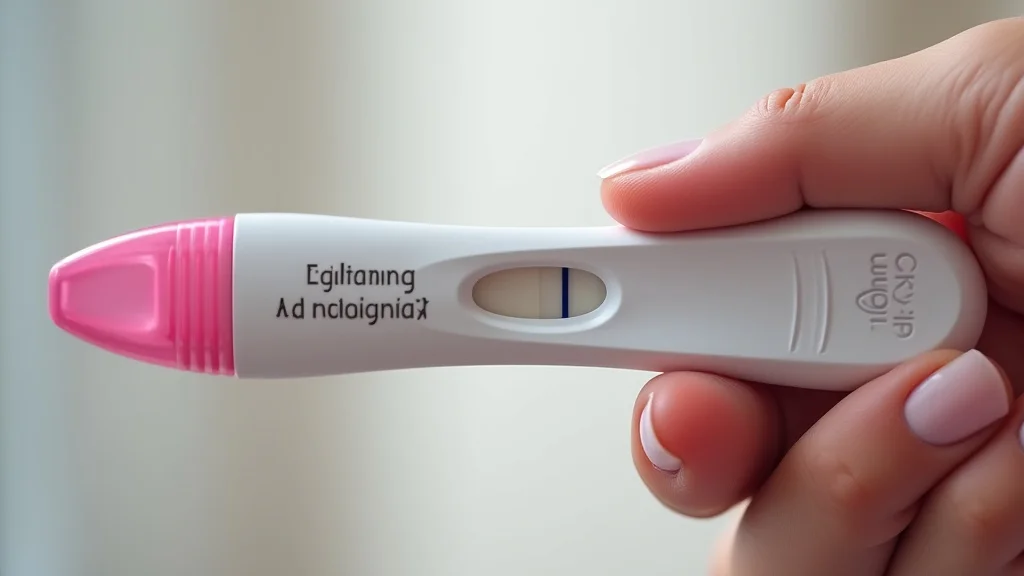
Getting a pregnancy test kit result can feel like a big moment, and sometimes it’s a bit confusing, especially if it’s your first time. You might look at the lines or symbols and wonder, “What does this really mean for me?” It’s totally normal to feel a little unsure. But don’t worry, we’re going to make it super simple.
This guide will walk you through everything step-by-step, so you can feel confident about what your test is telling you. Let’s figure this out together, clearly and easily.
Key Takeaways
- You will learn how to read different types of pregnancy test results.
- We will explain what causes false positives and false negatives.
- Discover the best time to take a pregnancy test for accurate results.
- Understand the science behind how pregnancy tests work.
- Get tips on what to do after you get your result.
- Learn about early pregnancy signs that might match your test.
How Pregnancy Tests Work
Pregnancy test kits are designed to detect a specific hormone in your body. This hormone is called human chorionic gonadotropin, or hCG. Your body starts producing hCG shortly after a fertilized egg attaches to the lining of your uterus.
This usually happens about six to ten days after conception. The pregnancy test stick has a special pad that absorbs a small amount of your urine. If hCG is present in your urine, it reacts with chemicals on that pad.
This reaction causes a visible change, like a line, a plus sign, or a digital word, to appear, indicating a positive result. The amount of hCG in your body increases rapidly in the early weeks of pregnancy, making tests more accurate the longer you wait to take one.
The accuracy of a pregnancy test depends on several factors. One of the most important is when you take the test. Taking it too early, before your body has produced enough hCG, can lead to a false negative result.
This is when the test says you are not pregnant, but you actually are. Another factor is how you follow the instructions. Every test kit is slightly different, and using it correctly is key.
For instance, not dipping it long enough or reading the result too late can affect the outcome. Understanding these basic principles helps you trust the result you see.
Detecting the Hormone hCG
Human chorionic gonadotropin (hCG) is the key player in pregnancy tests. After fertilization and implantation, the cells that will form the placenta begin to produce hCG. This hormone is essential for maintaining the pregnancy.
It signals your body to stop menstruating and to support the developing fetus. The level of hCG rises quickly in the first trimester. At around 7-10 days past ovulation, when implantation typically occurs, hCG levels start to become detectable by home pregnancy tests.
By the time you miss your period, hCG levels are usually high enough for most tests to accurately detect them.
The sensitivity of a pregnancy test refers to how much hCG it needs to detect a positive result. Some tests are more sensitive than others. Highly sensitive tests can detect lower levels of hCG and may give you a positive result a few days before your missed period.
Less sensitive tests require a higher concentration of hCG, so they are more accurate when taken on or after the day your period is due. It’s always best to check the packaging of your specific test kit to understand its sensitivity and recommended testing time.
How Urine Samples Are Analyzed
When you urinate on the absorbent tip of a pregnancy test stick, your urine travels up the stick via capillary action. This is similar to how a paper towel can soak up spilled liquid. The absorbent tip contains antibodies that are designed to bind specifically to hCG molecules.
If hCG is present in your urine, these antibodies will capture the hCG. This binding event then triggers a chemical reaction. This reaction causes a dye or colored indicator to be released, which then moves to a display window on the test.
The appearance of a line, symbol, or word in this window signals a positive result.
The test also has a control line. This line appears regardless of whether hCG is present. Its purpose is to show that the test is working correctly and that you followed the instructions properly.
If the control line does not appear, the test is invalid, and you should use a new one. The presence of both a control line and a positive result line confirms that hCG was detected and the test is valid. If only the control line appears, it means no hCG was detected, indicating a negative result.
Understanding Test Sensitivity
Test sensitivity is measured in milli-International Units per milliliter (mIU/mL) of hCG. A lower mIU/mL number means the test is more sensitive and can detect pregnancy earlier. For example, a test with a sensitivity of 10 mIU/mL can detect pregnancy sooner than a test with a sensitivity of 25 mIU/mL.
Early detection tests often have sensitivities between 10 mIU/mL and 20 mIU/mL. These are great if you want to test as soon as possible.
Standard pregnancy tests usually have sensitivities of 20 mIU/mL or 25 mIU/mL. These tests are very accurate when taken on the day your period is expected. They might not detect pregnancy a few days before your missed period.
Choosing a test with the right sensitivity for when you plan to test can improve your chances of getting an accurate result. Always check the product information for the specific sensitivity of your chosen test kit.
Interpreting Pregnancy Test Kit Result
Reading your pregnancy test kit result is the moment of truth, and it’s important to know what you’re looking for. Most home pregnancy tests use simple visual indicators to show you if hCG has been detected. These can include lines, plus signs, minus signs, or digital readouts that spell out “Pregnant” or “Not Pregnant.” Each type of test has its own way of displaying the result, so always refer to the instructions that came with your specific kit.
The key is to compare what you see in the result window to the examples shown in the test’s instructions. Even a faint line can sometimes mean positive, especially with highly sensitive tests. Pay close attention to the time frame for reading the result.
Reading it too soon might not show a clear result, while reading it too late could lead to a false reading, often called an evaporation line.
Reading Line Tests
Line tests are very common. They usually have two small windows. One window shows a control line, which confirms the test is working.
The other window is the result window. If you are not pregnant, you will see only the control line. If you are pregnant, you will see both the control line and a second line, the test line.
The test line might be faint or strong depending on how much hCG is in your urine.
Even a very faint second line generally means you are pregnant. This is because your body is producing hCG. Some people worry about faint lines, but they are often a valid indicator of pregnancy.
If you see a faint line, it’s a good idea to retest in a day or two. This is to see if the line gets darker, confirming a rising hCG level. Always compare your result to the instruction manual’s examples to be sure.
Understanding Digital Tests
Digital pregnancy tests are often considered easier to read. Instead of lines, they display words on a small screen. The most common displays are “Pregnant” or “Not Pregnant.” Some digital tests also indicate how many weeks you might be into your pregnancy, based on the hCG level detected.
These tests are very straightforward and reduce the guesswork.
When using a digital test, you simply follow the instructions to urinate on the stick or dip it in a cup of urine. After a few minutes, the screen will show the result. There’s no need to interpret faint lines or compare them to a diagram.
If it says “Pregnant,” it’s a positive result. If it says “Not Pregnant,” it’s a negative result. These tests are usually a bit more expensive but offer high clarity.
Interpreting Faint Lines
A faint line on a pregnancy test is often a sign of early pregnancy. It means that hCG is present in your urine, but at a low concentration. This can happen if you test very early, before your hormone levels have significantly increased.
Some tests are more sensitive and can pick up these lower levels. While a faint line can be exciting, it can also cause some confusion.
The best approach with a faint line is to confirm it. Retest in 24 to 48 hours with a new test. If you are pregnant, your hCG levels will likely have risen, and the test line should appear darker.
Sometimes, faint lines can be evaporation lines, which appear after the test has dried for a while. These are usually colorless or grayish and appear in the area where the positive line would be. Always read your test within the time frame specified in the instructions.
Evaporation Lines vs. Positive Lines
It’s important to know the difference between a positive line and an evaporation line. An evaporation line is a faint mark that appears in the test window as urine dries on the test strip. It’s not a sign of pregnancy.
These lines usually appear after the recommended reading time has passed and can sometimes be colorless or look gray.
A true positive line, even if faint, typically has color. It appears within the time frame specified by the test instructions. If you are unsure whether a line is a positive or an evaporation line, it’s best to wait a day or two and test again.
A second, clearer line or a digital result will offer more certainty. Always discard tests that have dried for too long before making a decision.
Factors Affecting Pregnancy Test Kit Result Accuracy
While pregnancy tests are generally very reliable, certain factors can influence the accuracy of your pregnancy test kit result. Understanding these factors can help you get the most precise outcome. It’s not just about taking the test; it’s about taking it at the right time and in the right way.
Things like the concentration of your urine, certain medications, and even the specific health conditions can play a role.
The best way to ensure accuracy is to follow the instructions precisely and to test when your hCG levels are most likely to be detectable. This usually means waiting until you miss your period. However, even with careful testing, occasional inaccuracies can happen.
Being aware of these possibilities allows you to seek confirmation if needed.
Timing of the Test
The single most important factor for an accurate pregnancy test result is timing. Pregnancy tests detect hCG, and your body only starts producing this hormone after implantation. Implantation usually happens about six to ten days after fertilization.
Therefore, testing too early, before your body has had enough time to produce a detectable amount of hCG, can lead to a false negative result. This means the test might say you’re not pregnant, even if you are.
For most home pregnancy tests, it is recommended to test on the day you expect your period to start. If your cycles are irregular, try to test about 14 days after you believe you ovulated. Testing with first-morning urine is also often recommended because it is more concentrated.
This means it will have a higher concentration of hCG, making it easier for the test to detect. However, many modern tests are sensitive enough to work with urine at any time of day.
Urine Concentration
The concentration of hCG in your urine is crucial for a positive test result. If your urine is very diluted, the hCG might be present but at a level too low for the test to detect. This is why testing with first-morning urine is often advised, as it’s typically more concentrated after a night without fluid intake.
If you test later in the day, drinking a lot of fluids beforehand can dilute your urine and potentially lead to a false negative result.
If you must test later in the day and are concerned about dilution, try limiting your fluid intake for a few hours before you plan to take the test. This will help increase the concentration of your urine. However, it’s generally better to rely on the test’s sensitivity and recommended testing time.
If you get a negative result but still suspect you might be pregnant, retesting in a day or two, preferably with first-morning urine, is a good strategy.
Medications and Medical Conditions
Certain medications can affect pregnancy test results. Fertility treatments that involve hCG injections can cause a false positive result if you test too soon after receiving the injection. This is because the injected hCG is still in your system.
Always inform your doctor if you are undergoing fertility treatments and are using home pregnancy tests. They can advise you on the best timing for testing.
Some medical conditions can also lead to unusual test results. For example, certain rare tumors can produce hCG, leading to a false positive. On the other hand, conditions that affect kidney function might alter the way your body processes hormones, potentially impacting test accuracy.
If you have any ongoing medical conditions or are taking medications, it’s wise to discuss them with your healthcare provider when you have questions about your pregnancy test results.
Following Instructions
The accuracy of any pregnancy test kit is directly tied to how carefully you follow its instructions. Each test has specific guidelines for how to use it, how long to wait, and when to read the result. Deviating from these instructions can lead to inaccurate readings.
For example, not dipping the absorbent tip into the urine for the recommended amount of time can prevent the test from properly absorbing enough urine to detect hCG.
Similarly, reading the test result too early might show an unclear or negative result when it could have become positive with more time. On the other hand, reading the test too late can lead to misinterpreting evaporation lines as positive results. Always take a few minutes to read and understand the instructions before you begin.
It’s a small step that makes a big difference in obtaining a reliable pregnancy test kit result.
When to Take a Pregnancy Test
Deciding when to take a pregnancy test is just as important as how you take it. The timing can significantly impact the accuracy of your pregnancy test kit result. Taking a test too early might not give you the clear answer you’re looking for, potentially leading to confusion or a false negative.
The best time to test is when your body has had enough time to produce a detectable amount of hCG. This usually aligns with specific points in your menstrual cycle. Waiting for the right moment increases your chances of getting a reliable and clear result.
Let’s explore when that optimal time is.
After Missing Your Period
The most common and recommended time to take a pregnancy test is on the day you expect your period to start, but it hasn’t arrived. By this point, if you are pregnant, your hCG levels are usually high enough for most home pregnancy tests to detect. Waiting until you miss your period helps ensure you are testing when the hormone concentration is most likely to be significant.
If your period is irregular, it can be a bit trickier. In such cases, it’s often advised to wait at least three weeks after your last unprotected sexual encounter. This allows ample time for conception to occur and for hCG levels to rise to detectable amounts.
Regardless of regularity, missing your period is a strong signal that it’s time to take a test.
Testing Early with Sensitive Tests
Many modern pregnancy tests are designed to be highly sensitive, meaning they can detect lower levels of hCG. These “early detection” tests can sometimes provide a positive result a few days before your missed period. For example, some tests can detect pregnancy as early as six days before your missed period.
However, it’s crucial to remember that testing this early carries a higher risk of a false negative.
This is because hCG levels are still very low in the very early stages of pregnancy. If you choose to test early, be prepared that you might get a negative result even if you are pregnant. If you do get a negative result but your period still doesn’t arrive, it’s a good idea to retest a few days later.
A second test, taken closer to your expected period date, will provide a more reliable result.
Using First-Morning Urine
Using your first-morning urine is often recommended for pregnancy tests, especially if you are testing early or are concerned about diluted urine. After a night’s sleep, your urine is more concentrated because you haven’t consumed fluids for several hours. This concentrated urine typically contains higher levels of hCG, making it easier for the pregnancy test to detect the hormone.
If you’re testing later in the day, it’s a good idea to limit your fluid intake for a couple of hours beforehand. This can help increase the concentration of your urine, even if it’s not first-morning urine. However, if you have the option, testing with first-morning urine provides the best chance for an accurate result, particularly in the early days of potential pregnancy.
Common Myths Debunked
Myth 1: A very faint line always means you are not pregnant.
This is not true. A faint line on a pregnancy test usually indicates that hCG is present in your urine, but at a low concentration. This often happens in the very early stages of pregnancy.
The intensity of the line depends on how much hCG your body is producing and the sensitivity of the test. Even a faint line, if it appears within the correct time frame and has color, is generally considered a positive result. If you’re unsure, retesting in a day or two is recommended.
Myth 2: You can get a false positive result from being stressed.
Stress does not cause a false positive pregnancy test. Home pregnancy tests detect the hormone hCG, which is produced by the body during pregnancy. Stress can affect your menstrual cycle and cause you to miss your period, but it does not trigger the production of hCG.
False positives are rare and are usually caused by specific medications containing hCG or certain rare medical conditions, not by emotional states.
Myth 3: If your period is late, you are definitely pregnant.
While a missed period is a primary sign of pregnancy, it’s not the only reason your period might be late. Many factors can cause a delayed or missed period, including stress, significant weight changes, excessive exercise, hormonal imbalances, certain medications, and underlying medical conditions like polycystic ovary syndrome (PCOS). If your period is late and you suspect pregnancy, taking a test is the best way to find out.
Myth 4: You can reuse a pregnancy test stick.
No, pregnancy test sticks are designed for single use only. Once a test has been used, it cannot be reused. Reusing a test stick will not give you an accurate result and could lead to misinterpretation.
The chemicals in the test stick react with your urine, and reusing it would mean re-exposing it to potentially dried chemicals and pigments, leading to invalid results.
Frequently Asked Questions
Question: How soon can a pregnancy test detect pregnancy
Answer: Most home pregnancy tests can detect pregnancy about 10-14 days after ovulation, which is typically around the time of your missed period. Some highly sensitive tests can detect pregnancy a few days earlier.
Question: What should I do if I get a negative result but my period is still late
Answer: If your period is late and you got a negative pregnancy test, wait a few days and test again. If it remains negative and your period still hasn’t started, consult your doctor to discuss other possible reasons for the delay.
Question: Can taking certain vitamins affect a pregnancy test
Answer: Generally, standard over-the-counter prenatal vitamins do not affect the accuracy of a home pregnancy test. However, if you are taking fertility medications containing hCG, this can lead to a false positive.
Question: What does an evaporation line look like
Answer: An evaporation line is typically a faint, colorless, or grayish line that appears in the result window after the recommended testing time has passed, as the urine dries on the test strip. It is not a sign of pregnancy.
Question: Is it better to use first morning urine or urine later in the day
Answer: First morning urine is usually recommended because it is more concentrated, making it easier for the test to detect lower levels of hCG. However, many sensitive tests can provide accurate results at any time of day.
Final Thoughts
Understanding your pregnancy test kit result doesn’t have to be confusing. By knowing how tests work, when to take them, and how to read them, you can feel confident in the outcome. Whether you see one line or two, a plus or a minus, or a digital word, you now have the knowledge to interpret it accurately.
Remember to follow the instructions carefully for the best results and consult a doctor if you have any questions or need further confirmation.
Leave a Reply