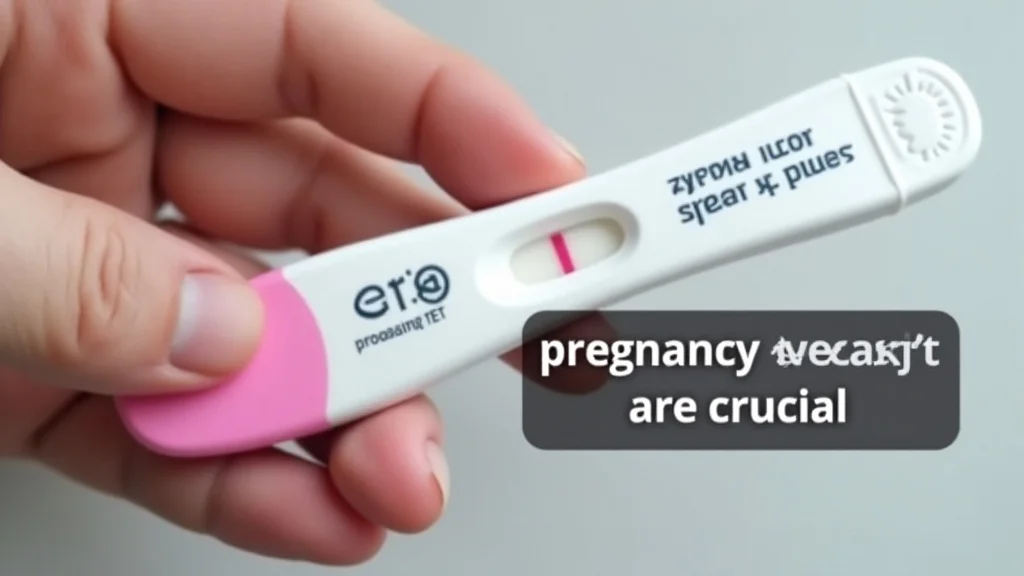
Wondering about your pregnancy test expiration date can feel a little confusing, especially if it’s your first time. It’s totally normal to pause and think if an older test still works right. You might worry about getting a wrong result, and that’s a valid concern.
But don’t you worry! We’ve got a super simple way to figure it all out, step-by-step. Let’s get this sorted out so you can feel confident.
Key Takeaways
- You’ll learn where to find the expiration date on your pregnancy test.
- We’ll explain why tests have expiration dates and what happens when they expire.
- You’ll discover if using an expired test is safe and accurate.
- We’ll guide you on what to do if your test is past its expiry.
- You’ll get tips for storing pregnancy tests to keep them good longer.
Understanding Pregnancy Test Expiration Date
Why Pregnancy Tests Have Expiration Dates
Pregnancy tests work by detecting a specific hormone in your urine called human chorionic gonadotropin (hCG). This hormone is produced by your body shortly after a fertilized egg implants in the uterus. The test kit contains chemicals and antibodies that react with hCG to show a positive result.
Over time, these chemicals can break down or degrade. This is similar to how food can go bad or how certain medications lose their potency.
The expiration date on a pregnancy test isn’t just a suggestion; it’s a marker for when the test might not be as reliable as it should be. Manufacturers carefully test their products to determine how long they remain effective under normal storage conditions. After this date, the sensitivity of the test could decrease, meaning it might not detect low levels of hCG accurately.
This could lead to a false negative result, where the test says you’re not pregnant when you actually are.
The Science Behind Test Strips
Pregnancy test strips are made with sensitive materials. These include antibodies designed to bind to hCG and indicators that change color when hCG is present. These indicators are often dyes or colored latex particles.
For the test to work correctly, these components need to be in their optimal chemical state. Humidity, temperature fluctuations, and even light exposure can affect these sensitive materials over time.
Think of it like baking. You need fresh ingredients for a cake to turn out right. If your baking powder is old, your cake might not rise properly.
Similarly, if the chemicals on the test strip have degraded, they might not react correctly with hCG. This is why the pregnancy test expiration date is so important for getting an accurate reading.
Factors Affecting Test Potency
Several things can impact how long a pregnancy test remains effective. The primary factor is time itself, as chemical reactions naturally occur and can alter the components. However, storage conditions play a huge role too.
If a test is stored in a very hot bathroom or exposed to high humidity, its internal components can degrade much faster than intended. Cold temperatures can also affect some materials.
Even how the test is packaged matters. Sealed foil pouches offer better protection against moisture and air than open boxes. Once a test is removed from its protective packaging, its shelf life can be significantly reduced.
This is why it’s crucial to always use a test that is still within its expiration period and has been stored properly.
Where to Find The Expiration Date
Locating the Date on Packaging
The expiration date is typically printed directly on the outer box of the pregnancy test kit. You’ll often find it near the barcode or other product information. It’s usually presented in a standard format, such as MM/DD/YYYY or DD/MM/YYYY, or sometimes just as a month and year (e.g., “EXP 08/2025”).
Make sure to check both the front and back of the box carefully.
Some tests also have the expiration date printed on the individual foil wrapper that contains the test stick. This is especially common for tests that come in multi-packs. If you’re only using one test from a larger box, it’s a good idea to check the wrapper as well.
This ensures that the specific test you’re about to use is still good, even if the outer box has expired.
Understanding Date Formats
Pregnancy tests use common date formats. You might see numbers like 12/2025, which means December 2025. Sometimes, it might be written out more explicitly, like “Best By December 2025.” If you see a date like 03/15/2026, it means the test is good until March 15, 2026.
Always look for the year to ensure you’re not using a test that’s too old.
If the date format seems unclear, or if there’s no date visible at all, it’s best to assume the test might not be reliable. Contacting the manufacturer can sometimes clarify this, but it’s usually simpler to just get a new test to be safe. The goal is accuracy, and a clear date helps achieve that.
What Happens When A Pregnancy Test Expires
Decreased Sensitivity
The main consequence of using an expired pregnancy test is a decrease in its sensitivity. The chemicals on the test strip that detect hCG can degrade over time. This means the test might not be able to pick up the hormone even if it is present in your urine.
This leads to a higher chance of receiving a false negative result.
A false negative can be disappointing and lead to delayed care if you are indeed pregnant. You might miss the crucial early stages of pregnancy, which are important for prenatal care and making informed decisions about your health. The integrity of the test’s reactive elements is compromised, making it less effective at its primary job.
Potential for False Results
While a false negative is the most common issue, there’s also a small possibility of other inaccuracies with expired tests. In very rare cases, degraded chemicals might react in unexpected ways. This could potentially lead to a faint positive line or an evaporation line that is mistaken for a positive result.
These are known as false positives, though they are less common than false negatives with expired tests.
Evaporation lines can appear as the urine sample dries on the test strip, and they are usually colorless or gray. Expired tests might make these lines more prominent or harder to distinguish from a real positive. It’s always important to read the test within the recommended timeframe and to be aware of what a true positive looks like for your specific test brand.
Degradation of Test Components
The components within the test strip, such as the antibodies and indicator dyes, are not immune to the passage of time. These substances are designed to react in a very specific way with hCG. As they age, their molecular structure can change, reducing their ability to bind effectively to the hormone.
This is a chemical process that cannot be reversed.
Imagine trying to use old glue; it might not stick as well as fresh glue. The same principle applies here. The reactive sites on the test strip become less functional.
This degradation is why manufacturers put expiration dates on their products. They want to ensure the product performs as intended for a reasonable period.
Using An Expired Pregnancy Test Is It Safe
Accuracy Concerns
While using an expired pregnancy test is generally not considered harmful in terms of physical safety, its accuracy is highly questionable. The primary goal of taking a pregnancy test is to get a reliable answer. If the test is past its expiration date, you cannot trust the result.
This uncertainty defeats the purpose of using the test in the first place.
A doctor would never rely on an expired diagnostic tool. The same principle applies to home pregnancy tests. The risk of an inaccurate result, whether a false negative or potentially a misleading false positive, outweighs any perceived benefit of using an old test.
When To Discard
If you discover that your pregnancy test is expired, the safest and most sensible course of action is to discard it. Do not use it. Purchasing a new, unexpired test is a small price to pay for peace of mind and accurate results.
Most drug stores and supermarkets carry a variety of pregnancy tests that are readily available.
Think about the potential stress and confusion that an inaccurate result could cause. A new test costs only a few dollars, whereas the emotional toll of a misdiagnosis, even a self-administered one, can be significant. Always err on the side of caution.
What If I Have No Other Option
In extremely rare situations, you might be in a position where an expired test is the only option available. If this happens, understand that the results are unreliable. If the test shows a negative result, you should still consider it a “maybe.” It’s possible you are pregnant and the expired test simply didn’t detect the hCG.
If you get a negative result with an expired test and still suspect you might be pregnant (e.g., you have missed your period), it is highly recommended to retest with a new, unexpired test as soon as possible. If you get a positive result, it’s more likely to be accurate than a negative, but it’s still wise to confirm with a doctor. However, the best advice is always to use an in-date test.
How To Store Pregnancy Tests For Longevity
Ideal Storage Conditions
To maximize the shelf life of your pregnancy tests, it’s essential to store them correctly. The ideal conditions involve keeping them in a cool, dry place, away from direct sunlight and extreme temperatures. A bathroom cabinet is often suggested, but only if it doesn’t experience significant temperature swings or high humidity.
Consistency is key.
Avoid storing tests in a car, a garage, or near a window where sunlight can hit them. These environments can rapidly degrade the test’s components. Maintaining a stable temperature, typically between 36°F and 86°F (2°C and 30°C), is generally recommended by manufacturers.
Always check the specific instructions on the product packaging.
Protecting From Moisture
Moisture is a major enemy of pregnancy test strips. The absorbent material and the chemicals within the test can be compromised by humidity. This is why the individual foil wrappers are so important.
They are designed to create a barrier against moisture.
Always keep the test inside its sealed foil wrapper until you are ready to use it. If the wrapper appears to be damaged or is not sealed properly, it’s a good idea to consider that test compromised. Some people even store their tests in an airtight container within their bathroom cabinet for an extra layer of protection against humidity.
Keeping Them Organized
A good practice is to keep your pregnancy tests organized. If you buy multi-packs, don’t open all the wrappers at once. Store the unused tests in their original packaging.
Some people prefer to keep a small stash of tests in a clean, dry drawer in their bedroom instead of the bathroom, as bedroom environments can sometimes be more stable.
When you purchase new tests, it’s a good habit to check the expiration date right away. If you have older tests, you can arrange them so that you use the ones closest to their expiration date first. This is similar to how you might manage food in your pantry, ensuring you use older items before they expire.
Common Myths Debunked
Myth 1: Expired Tests Always Give False Negatives
While false negatives are the most common issue with expired tests due to decreased sensitivity, it’s not the only outcome. The chemicals can degrade in ways that might lead to unusual reactions. In some very rare cases, an expired test might give a false positive or a faint, unreadable line.
The primary problem is unreliability, not a guaranteed specific type of error.
Myth 2: You Can “Revive” An Expired Test
There is no way to “revive” or restore the chemical integrity of an expired pregnancy test. Once the reactive components have degraded, their ability to accurately detect hCG is permanently diminished. Any attempt to alter the test or its conditions will not make it reliable again.
The expiration date signifies the end of its effective lifespan.
Myth 3: All Expired Tests Are Unsafe To Handle
Pregnancy tests themselves are not typically made with hazardous chemicals that would make them unsafe to handle even after expiration. The concern with expired tests is purely about their accuracy and reliability in detecting pregnancy. They are generally safe to touch and dispose of in regular household waste.
The risk is not to your physical health but to the accuracy of the result.
Myth 4: A Date Is Always Visible
While most reputable brands clearly print expiration dates on their packaging, there can be exceptions. Sometimes, the printing might be faded, or the packaging might be damaged. If you cannot clearly read an expiration date or there is no date at all, it is safest to assume the test is no longer reliable and to obtain a new one.
Don’t take chances with an unreadable date.
Frequently Asked Questions
Question: How far past the expiration date is a pregnancy test likely still accurate
Answer: It’s impossible to say for sure. The accuracy decreases over time, and factors like storage conditions play a big role. It’s best not to use any test past its expiration date for reliable results.
Question: Can I use a pregnancy test from a multi-pack if the box is expired but the individual wrappers look okay
Answer: Even if the individual wrappers are intact, the tests inside are still subject to the expiration date of the overall product. It’s safer to get a new, unexpired test.
Question: What does “EXP” mean on a pregnancy test
Answer: “EXP” is short for expiration. It indicates the date after which the manufacturer cannot guarantee the accuracy and reliability of the pregnancy test.
Question: Where can I buy new pregnancy tests
Answer: You can buy pregnancy tests at most drugstores, pharmacies, supermarkets, and online retailers. They are widely available.
Question: What should I do if I got a negative result from an expired test but still feel pregnant
Answer: If you suspect you might be pregnant after using an expired test that showed a negative result, it’s crucial to retest with a new, unexpired test. Also, consider consulting a doctor to confirm.
Summary
Always check the pregnancy test expiration date before use. Using an expired test risks inaccurate results like false negatives. Store tests in a cool, dry place away from light and moisture in their sealed wrappers.
If your test is expired, discard it and buy a new one for reliable information.
Leave a Reply