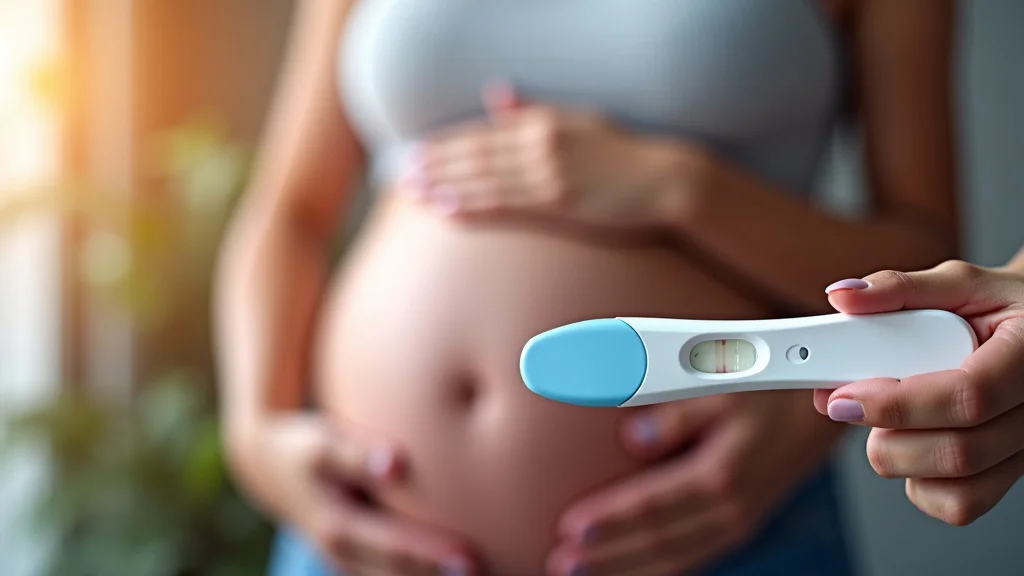
Wondering if you can take a pregnancy test 8 days before your period? It’s a super common question for many people, especially those trying to conceive or who are a bit anxious. Testing too early can sometimes feel tricky, leading to confusing results or disappointment.
But don’t worry! We’ll break it down simply, step by step, so you know exactly what to expect and how to get the clearest answer. Get ready for a clear path to knowing.
Key Takeaways
- You might get a result with a pregnancy test 8 days before your period, but it depends on the test’s sensitivity.
- Early testing can lead to false negatives if the hormone levels are too low.
- Understanding how pregnancy tests work helps explain why early testing is challenging.
- Specific types of tests are better for early detection than others.
- Timing and following test instructions precisely are vital for accurate results.
When Can You Test Early for Pregnancy
Early Pregnancy Testing Possibilities
Thinking about taking a pregnancy test 8 days before your period is a big step, and it’s totally normal to want answers as soon as possible. This is especially true if you’re eagerly awaiting a positive result or are concerned about an unexpected pregnancy. The main reason early testing is a bit tricky is because of a hormone called human chorionic gonadotropin, or hCG.
This is the hormone that pregnancy tests detect.
Your body starts producing hCG after a fertilized egg implants in your uterus. For a pregnancy test to detect hCG, the levels need to reach a certain point. If you test too early, before these levels are high enough, you might get a negative result even if you are pregnant.
This is called a false negative, and it can be quite disheartening.
However, the good news is that some tests are more sensitive than others. More sensitive tests can detect lower levels of hCG. This means it’s possible to get a positive result a bit earlier than you might think, but it’s not guaranteed.
We’ll explore how these tests work and what you can realistically expect.
Understanding hCG Levels
Human chorionic gonadotropin, or hCG, is often called the “pregnancy hormone.” It’s produced by the cells that will form the placenta soon after a fertilized egg attaches to the uterine wall. This implantation process typically happens about 6 to 12 days after ovulation. Once implantation occurs, the hCG levels begin to rise rapidly.
Initially, hCG levels are very low. They double approximately every 48 to 72 hours in early pregnancy. This rapid increase is what makes pregnancy tests work.
The tests are designed to detect hCG in your urine or blood. The earlier you test, the lower the concentration of hCG, and the harder it is for the test to pick it up.
This is why timing is so crucial for accurate results. Testing too soon means the hCG levels might not have climbed high enough for the test to register a positive result, leading to a false negative. For instance, some studies suggest that hCG can be detectable in urine as early as 10-14 days after ovulation.
Testing 8 days before your period means you are testing about 6-8 days after potential implantation, which might be too early for many standard tests.
How Pregnancy Tests Detect hCG
Pregnancy tests, whether they are taken at home with urine or by a doctor with blood, work by detecting hCG. Home pregnancy tests use antibodies that bind to hCG if it’s present in your urine. When these antibodies bind to hCG, they trigger a chemical reaction that causes a line, symbol, or digital word to appear on the test, indicating a positive result.
The sensitivity of a pregnancy test is measured in milli-international units per milliliter (mIU/mL). A more sensitive test will have a lower mIU/mL detection level, meaning it can detect lower amounts of hCG. For example, a test with a sensitivity of 10 mIU/mL can detect lower hCG levels than a test with a sensitivity of 25 mIU/mL.
This is why choosing a highly sensitive test is important if you plan to test early. These tests are often advertised as “early detection” or “sensitive” tests. Even with a sensitive test, there’s still a chance of a false negative if the hCG levels are just below the test’s detection threshold.
Therefore, understanding the test’s sensitivity is key to interpreting results accurately when testing before your missed period.
The 8-Day Window Explained
The window of “8 days before your period” refers to a specific time frame in your menstrual cycle. It’s the period leading up to when your next period is expected. For many people, trying to conceive means wanting to know if pregnancy has occurred as soon as possible.
This desire often leads to questions about testing very early in the cycle.
If your cycle is regular, you can often pinpoint when your period is due. For example, if your cycle is 28 days, ovulation typically happens around day 14. Implantation can occur 6-12 days after ovulation.
So, 8 days before your period would be roughly 6-8 days after ovulation, assuming a 28-day cycle and implantation has already happened. This is a very narrow window.
During this time, hCG levels are still very low, even if implantation has occurred. The chances of a standard home pregnancy test detecting this low level of hCG are slim. However, highly sensitive tests, which can detect hCG at levels as low as 10 mIU/mL, might be able to pick up a pregnancy at this stage.
It’s important to remember that a negative result at this point doesn’t definitively mean you aren’t pregnant. It might simply mean the hCG levels are not yet high enough to be detected.
Why Early Testing is Challenging
Testing for pregnancy 8 days before your period is challenging primarily because of the hormone hCG. While hCG is the key indicator of pregnancy, its levels are very low in the initial days after implantation. Implantation can happen anywhere from 6 to 12 days after fertilization.
If implantation happens on the later end of this spectrum, then testing 8 days before your period might be too soon to detect any significant hCG presence.
Furthermore, not all home pregnancy tests have the same sensitivity. Standard tests may require hCG levels of 20-25 mIU/mL or higher to show a positive result. Early detection tests are more sensitive, often detecting levels as low as 10 mIU/mL.
Even with a sensitive test, if implantation occurred very recently, or if implantation is just beginning, the hCG levels might still be below the lowest detection threshold.
This is why early testing, while tempting, can lead to confusing results. A faint positive could be an evaporation line or a very early pregnancy. A negative result might be a false negative because the hCG levels are too low.
This uncertainty can cause unnecessary stress and anxiety. It’s often recommended to wait until you miss your period for the most reliable results.
Getting the Most Accurate Results
Choosing the Right Pregnancy Test
When you’re thinking about taking a pregnancy test 8 days before your period, the type of test you use makes a significant difference. Not all pregnancy tests are created equal, especially when it comes to early detection. The key factor is the test’s sensitivity, which is measured by the lowest level of hCG it can detect in your urine.
Highly sensitive pregnancy tests are designed to detect lower concentrations of hCG, sometimes as low as 10 mIU/mL. These are often labeled as “early detection” or “sensitive” tests. They are your best bet if you’re considering testing before your missed period.
On the other hand, standard pregnancy tests typically have a higher detection threshold, often around 25 mIU/mL, meaning they might not be able to pick up a pregnancy this early.
When shopping, look for packages that specifically mention detecting hCG early or have a low mIU/mL rating. While these tests can offer the possibility of an earlier result, it’s still essential to understand that even the most sensitive test might not detect a pregnancy if the hCG levels are just below its detection limit. Always follow the package instructions carefully.
Understanding Test Sensitivity Ratings
The sensitivity of a pregnancy test refers to the minimum amount of the pregnancy hormone, human chorionic gonadotropin (hCG), that the test can detect to give a positive result. This is usually measured in milli-international units per milliliter (mIU/mL).
For example, a test with a sensitivity of 10 mIU/mL is more sensitive than a test with a sensitivity of 25 mIU/mL. This means the 10 mIU/mL test can detect a positive pregnancy at an earlier stage, when hCG levels are still quite low. A test with a sensitivity of 25 mIU/mL might require higher hCG levels, meaning you’d need to wait longer after potential conception for a reliable positive result.
When you are looking to test 8 days before your period, you should opt for the most sensitive tests available, ideally those with a 10 mIU/mL rating. These are commonly marketed as “early detection” pregnancy tests. However, even these highly sensitive tests might not be accurate if implantation has occurred very late in your cycle or if your hCG production is slower than average.
Always check the product packaging for the specific sensitivity level.
Using First-Morning Urine
When you decide to take a pregnancy test, especially if you are testing early, using your first-morning urine is highly recommended. Your first urine of the day is typically the most concentrated. This means it will have the highest level of hCG if you are pregnant.
Throughout the day, as you drink fluids, your urine becomes more diluted. If you test later in the day, especially after drinking a lot of water, the hCG concentration in your urine might be too low for even a sensitive test to detect, potentially leading to a false negative result.
So, if you’re planning to test 8 days before your period, setting aside that first urine stream is a crucial step. Collect the urine in a clean cup and then use it with your test, or dip the test stick directly into the stream as per the instructions. This simple habit significantly increases the chances of detecting a low level of hCG, should it be present.
Following Instructions Precisely
Taking a pregnancy test, especially when testing early, requires strict adherence to the instructions provided by the manufacturer. These instructions are not suggestions; they are critical for obtaining an accurate result. Different tests have varying requirements for how to collect the urine sample, how long to wait for the result, and how to interpret the lines or symbols.
For instance, some tests require you to dip the absorbent tip into your urine stream for a specific number of seconds, while others require you to collect urine in a cup first and then immerse the tip. The waiting time is also vital. Some tests show results within 1 to 5 minutes, while others might take up to 10 minutes.
Reading the test too early or too late can lead to incorrect interpretations, such as mistaking an evaporation line for a positive result.
Evaporation lines can appear as faint, colorless lines when urine passes over the test area and evaporates. They are often mistaken for a positive pregnancy result. Following the recommended waiting time precisely helps ensure that you are reading the test when it is designed to show a valid result, reducing the chances of misinterpreting evaporation lines or other anomalies.
What a Faint Line Means
Encountering a faint line on a pregnancy test can be confusing, especially when testing 8 days before your period. Generally, any line that appears in the test window within the specified time frame is considered a positive result, even if it’s faint. This faint line indicates the presence of hCG, though at a low concentration.
A faint positive result when testing early could mean a few things. It might signify that you are indeed pregnant, but the hCG levels are still very low because it’s too early in the pregnancy to detect higher amounts. This is common when testing before a missed period.
It could also indicate that implantation just recently occurred.
However, it’s also important to be aware of evaporation lines, which can appear as faint, colorless lines. These usually show up after the recommended reading time has passed. If you see a faint line, it’s often best to retest in a day or two with a more sensitive test or with first-morning urine.
If the line gets darker, it’s a strong indicator of pregnancy. If it remains faint or disappears, it might be a false positive or an evaporation line.
Interpreting Early Results
The Possibility of False Negatives
One of the biggest challenges when testing for pregnancy 8 days before your period is the risk of a false negative result. This happens when the test shows a negative result (no lines or a single control line) even though you are actually pregnant. The primary reason for a false negative is testing too early in your pregnancy.
As we’ve discussed, pregnancy tests detect hCG. This hormone is only produced after implantation, and its levels are very low in the first few days. If you test before your hCG levels have risen high enough to be detected by the test’s sensitivity, you will get a negative result.
This is true even if you are pregnant. For instance, if implantation occurred just a few days ago, the hCG concentration might be 5 mIU/mL or less, which is below the detection limit of most tests, even sensitive ones.
Another factor contributing to false negatives can be diluted urine. If you drink a lot of fluids before testing, your urine becomes less concentrated, making it harder for the test to detect low levels of hCG. To minimize the risk of a false negative, it’s best to wait until you’ve missed your period and to use first-morning urine for testing.
When to Retest for Accuracy
If you test 8 days before your period and get a negative result, but you still suspect you might be pregnant, it is highly recommended to retest. The reason for retesting is that hCG levels rise consistently in early pregnancy. Even if your levels were too low to be detected on your first attempt, they may increase sufficiently in the next couple of days.
A good rule of thumb is to retest after two or three days. Ideally, you should use a highly sensitive test and your first-morning urine. This approach gives your body more time to produce a detectable amount of hCG.
If you are pregnant, you are likely to see a clearer positive result on subsequent tests.
If you continue to get negative results after retesting, and your period still hasn’t arrived, it might be time to consult a healthcare provider. They can perform a blood test, which is more sensitive than urine tests and can detect pregnancy earlier and more reliably. They can also help you understand any other reasons why your period might be delayed.
False Positives Are Rare
While false negatives are a common concern when testing early for pregnancy, false positives are much rarer. A false positive means a test indicates you are pregnant when you are not. This can be understandably distressing.
The most common cause of a false positive is often an evaporation line. As mentioned before, these are faint, colorless lines that can appear if the test is left for too long after the recommended reading time. The urine evaporates, leaving behind a residue that can look like a positive result.
Always read the test within the time frame specified on the packaging.
Other, less common, causes of false positives can include certain medical conditions or medications that contain hCG, such as those used in fertility treatments. If you get a positive result, even a faint one, it is always best to follow up with your doctor. They can confirm the pregnancy with a blood test and discuss your next steps.
Consulting a Healthcare Provider
No matter what result you get when testing 8 days before your period, consulting a healthcare provider is a wise next step. If you get a positive result, your doctor will be able to confirm the pregnancy, usually through a blood test or an ultrasound, and begin your prenatal care. They can also help you date the pregnancy accurately and discuss any concerns you may have.
If you get a negative result, but your period is still late, a visit to your doctor is also recommended. There can be many reasons for a missed period besides pregnancy, such as stress, weight changes, hormonal imbalances, or other medical conditions. Your doctor can help identify the cause and offer appropriate advice or treatment.
Even if you get a faint positive line, it is essential to see a doctor. They can confirm if it is a true positive or potentially an evaporation line or a chemical pregnancy (a very early pregnancy that ends shortly after implantation). Your doctor’s expertise is invaluable in navigating these early stages and ensuring your health and well-being.
Factors Affecting Early Detection
Ovulation Timing Accuracy
The accuracy of testing 8 days before your period hinges significantly on accurately knowing when you ovulated. Ovulation is the release of an egg from the ovary, which is the fertile window for conception. If you don’t ovulate when you think you did, your entire cycle timing can be off, making early testing unreliable.
Many people estimate ovulation based on a standard 28-day cycle, assuming it occurs around day 14. However, cycles can vary greatly from person to person and even from month to month. Factors like stress, illness, or changes in lifestyle can shift ovulation.
If you ovulate later than expected, then 8 days before your expected period might actually be too soon even for a sensitive test to detect hCG.
For more precise ovulation tracking, methods like ovulation predictor kits (OPKs), basal body temperature (BBT) charting, or cervical mucus monitoring can be used. These methods help identify the fertile window more accurately. Knowing your ovulation date allows you to better time your pregnancy test, increasing the chances of a reliable result if you choose to test early.
Irregular Menstrual Cycles
Irregular menstrual cycles present a significant challenge when trying to determine the optimal time for a pregnancy test, especially when aiming for early detection 8 days before a period. Unlike individuals with regular cycles who can often predict ovulation and their next period with reasonable accuracy, those with irregular cycles have a much harder time pinpointing these dates.
An irregular cycle means the time between periods can vary, and ovulation might not occur on the same day each month, if at all. This unpredictability makes it difficult to establish a definitive “8 days before period” mark. You might think you have a week until your period, but if your cycle is longer than anticipated, you might be testing far too early for hCG levels to be detectable.
For people with irregular cycles, it is often recommended to wait until they miss a period, even if that period is unpredictable. Alternatively, using ovulation tracking methods like OPKs or BBT charting can help identify ovulation more accurately. Once ovulation is confirmed, you can count approximately 10-14 days from that point to test for pregnancy, rather than relying on a vague “days before period” timeframe.
Previous Pregnancies and hCG Levels
Past pregnancies can sometimes influence the perception and interpretation of early pregnancy test results, though they don’t directly affect current hCG levels unless a recent pregnancy ended. For example, if someone recently had a miscarriage or an abortion, residual hCG might still be present in their system.
This residual hCG can sometimes lead to a false positive result on a pregnancy test. If a pregnancy ended recently, your hCG levels will gradually decrease over time. However, it can take several weeks for hCG to return to zero.
If you test too soon after a pregnancy loss, the remaining hCG might still be detectable, causing confusion.
It is crucial to inform your healthcare provider about any recent pregnancies or pregnancy losses. They can help determine if any residual hCG is affecting your test results. For a new pregnancy, previous pregnancies do not inherently make your current hCG levels rise faster or slower.
Each pregnancy is independent in terms of hormone production.
Diet and Hydration Effects
Your diet and hydration habits can play a subtle but significant role when you’re trying to get an accurate pregnancy test result, especially when testing early. The most direct impact is on the concentration of hCG in your urine.
As mentioned earlier, drinking a lot of fluids can dilute your urine. If you’re trying to test 8 days before your period, when hCG levels are likely to be very low, a diluted urine sample might mask the presence of hCG. Even if there’s a small amount of hCG, if your urine is watery, the test might not be sensitive enough to pick it up, leading to a false negative.
Conversely, if you haven’t had much to drink for several hours before testing, your urine will be more concentrated. This is why testing with first-morning urine is so effective – you haven’t consumed fluids overnight, so your urine is naturally concentrated. Certain foods or drinks are unlikely to interfere with the test chemicals themselves, but managing your hydration levels is key to ensuring the hCG is concentrated enough to be detected.
Common Myths Debunked
Myth 1: Any Test Will Work for Early Detection
This is not true. While many home pregnancy tests are available, their sensitivity varies significantly. Standard tests may only detect hCG at levels of 25 mIU/mL or higher, which might not be present 8 days before your period.
For early detection, you need to use highly sensitive tests, often labeled as “early detection” tests, which can detect hCG at lower levels, typically around 10 mIU/mL. Using a standard test too early is likely to result in a false negative.
Myth 2: A Faint Line Always Means You’re Pregnant
A faint line on a pregnancy test generally indicates a positive result, as it suggests the presence of hCG. However, when testing very early, this faint line could potentially be an evaporation line. Evaporation lines are faint, colorless lines that can appear when urine evaporates from the test strip, usually after the recommended reading time has passed.
If you see a faint line, it’s best to retest in a couple of days to see if the line gets darker, which would confirm pregnancy.
Myth 3: You Can Get a False Negative from Holding Your Pee Too Long
This myth is incorrect. Holding your urine for an excessively long period does not cause a false negative. In fact, the opposite is true: the longer you go without urinating, the more concentrated your urine will become, potentially making it easier for a sensitive test to detect low levels of hCG.
The primary reason for a false negative is insufficient hCG levels in your urine, not the duration of holding it.
Myth 4: If Your Period Is Late, You’re Definitely Pregnant
While a missed period is often the first sign of pregnancy, it’s not the only cause. Many factors can lead to a late or missed period, including stress, significant weight changes, excessive exercise, hormonal imbalances like PCOS, thyroid issues, or certain medications. If your period is late and a pregnancy test is negative, it’s advisable to consult a healthcare provider to determine the underlying cause.
Frequently Asked Questions
Question: Can I test 8 days before my period and get an accurate result
Answer: It is possible to get a result, but accuracy is not guaranteed. Highly sensitive tests might detect hCG, but levels are often too low for a reliable positive result this early. A negative result could be a false negative.
Question: What is the earliest I can reliably test for pregnancy
Answer: The most reliable time to test for pregnancy is on the day of your missed period or a few days after. For most people, this means testing about 14 days after ovulation, when hCG levels are typically high enough for most tests to detect accurately.
Question: What if I get a faint positive line 8 days before my period
Answer: A faint positive line usually means you are pregnant, but it could also be an evaporation line if it appears after the recommended reading time. Retest in a day or two with a sensitive test; if the line gets darker, it confirms pregnancy. It’s always best to confirm with a healthcare provider.
Question: How can I increase my chances of getting an accurate early pregnancy test
Answer: To increase accuracy when testing early, use a highly sensitive test (10 mIU/mL), test with your first-morning urine, and follow the test instructions precisely. Consider waiting a few days and retesting if you get an uncertain result.
Question: What should I do after testing 8 days before my period
Answer: If you get a positive result, contact your healthcare provider to confirm the pregnancy and discuss next steps. If you get a negative result but still suspect pregnancy or your period is late, wait a few days and retest, or consult your doctor.
Conclusion
Final Thoughts
Taking a pregnancy test 8 days before your period can give you a hint, but it’s not usually a definitive answer. You need a very sensitive test and a bit of luck for hCG to be detectable. If you test early and get a negative, it doesn’t mean you aren’t pregnant.
Waiting until you miss your period provides the most reliable results.
Leave a Reply