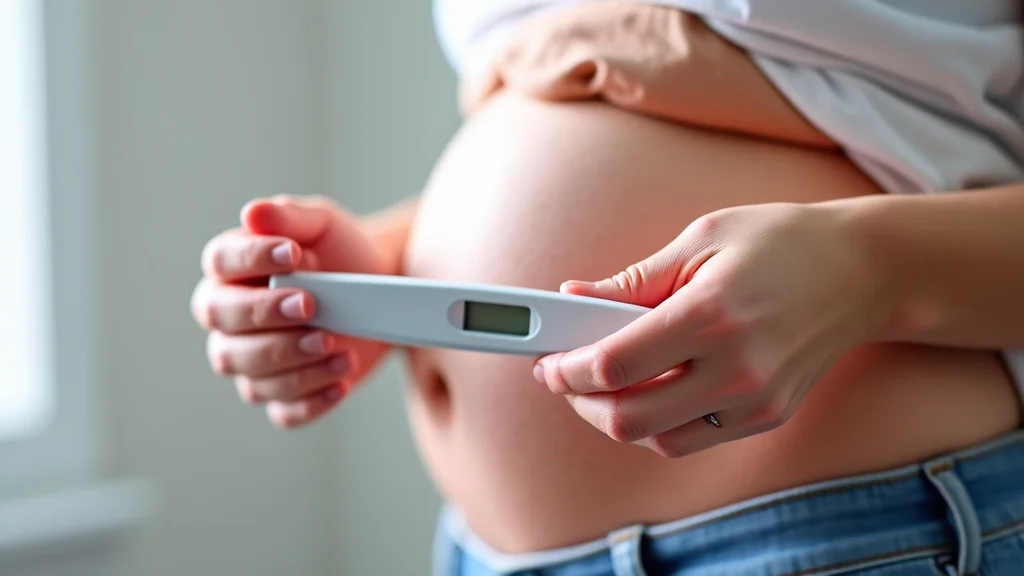
Figuring out when to take a pregnancy test can feel a bit tricky, especially when you’re new to it all. Many people wonder about taking a pregnancy test 7 days after conception. It’s a common question, and it’s totally okay to feel unsure.
We’re here to make it super simple. We’ll walk you through exactly what you need to know, step by step. Get ready to learn how to get a clear answer.
Key Takeaways
- Learn the earliest time a pregnancy test can detect pregnancy.
- Understand how pregnancy tests work and what they measure.
- Discover why waiting is often recommended for accurate results.
- Find out about different types of pregnancy tests and their sensitivity.
- Get tips on how to get the most reliable result from your test.
- Know what to do after you get your test result.
When Can You Test For Pregnancy
Taking a pregnancy test too early can lead to confusing results. The key to a reliable test is waiting for your body to produce enough of a specific hormone. This hormone is called human chorionic gonadotropin, or hCG.
It’s made after a fertilized egg attaches to the lining of your uterus.
This attachment process, called implantation, usually happens about 6 to 12 days after ovulation. Ovulation is when an egg is released from the ovary. Conception, the actual joining of sperm and egg, can happen a day or two before ovulation.
So, counting accurately from conception can be challenging. If you’re trying to figure out when to test, think about when your last period was. This is usually easier to track than the exact moment of conception.
Understanding hCG Levels
Human chorionic gonadotropin (hCG) is the hormone that pregnancy tests detect. After implantation, your body starts to produce hCG. The levels of this hormone double roughly every 48 to 72 hours in early pregnancy.
At the time of implantation, the hCG levels are very low.
Home pregnancy tests are designed to detect a certain threshold of hCG in your urine. If you test too soon, your hCG levels might not be high enough for the test to pick up. This can result in a false negative, meaning the test says you’re not pregnant when you actually are.
Waiting a bit longer allows your hCG levels to rise, making a positive result more likely and accurate.
- hCG is produced after implantation.
- hCG levels increase steadily in early pregnancy.
- Early testing might miss low hCG levels.
- This leads to potential false negative results.
The Timing of Implantation
Implantation is the critical step that signals the start of a pregnancy. This is when the fertilized egg embeds itself into the uterine wall. This process is not instantaneous.
It typically begins around 6 days after fertilization and can continue for several days, with most implantations happening between 8 and 10 days after fertilization.
The timing of implantation directly impacts when a pregnancy test can accurately detect pregnancy. Pregnancy tests work by detecting hCG, and hCG production begins only after implantation has occurred. Therefore, testing before implantation is complete or before hCG levels have risen significantly will likely yield an inaccurate negative result.
Understanding this timeline helps in choosing the best time to take a test.
The window for implantation is quite specific. If fertilization occurs, the egg travels down the fallopian tube. It takes about 3-4 days to reach the uterus.
Then, it floats freely for a few days before implanting. This means a pregnancy test is unlikely to detect hCG before at least 7-10 days after intercourse where conception might have occurred.
Why Waiting is Important
Waiting to take a pregnancy test is crucial for accuracy. Your body needs time to produce enough hCG for a home test to detect. Most home pregnancy tests can detect hCG when levels reach about 20-50 mIU/mL.
If you test too early, your hCG levels might be below this threshold, leading to a false negative.
A false negative can be disappointing and confusing. It might lead you to delay seeking prenatal care or make lifestyle changes that are important for a developing pregnancy. Waiting until you miss your period is often the best guideline.
By then, hCG levels are usually high enough for a reliable result. If you get a negative result but still suspect you might be pregnant, it’s a good idea to retest in a few days.
Can You Test 7 Days After Conception
Testing for pregnancy just 7 days after conception is often too early for a reliable result. Conception typically occurs around ovulation. If fertilization happens, implantation usually takes another 6 to 12 days.
So, at 7 days after conception, implantation might just be starting or not have happened yet. This means hCG levels would be very low or nonexistent.
While some highly sensitive tests claim to detect pregnancy very early, even they might not pick up the minimal hCG levels present just 7 days after conception. The chances of getting a false negative result are very high at this point. It’s better to wait a bit longer, ideally until after you miss your expected period, for a more accurate outcome.
Highly Sensitive Pregnancy Tests
Highly sensitive pregnancy tests are designed to detect lower levels of hCG. These tests can often detect hCG as early as 10 days after conception, and some claim to detect it even earlier, around 6 days before a missed period. However, “early detection” doesn’t always mean “perfectly accurate detection” at the earliest possible times.
Even with these sensitive tests, the hCG levels at 7 days post-conception are usually so low that they are undetectable by any test currently available. The hormone needs time to build up in your system. So, while a sensitive test might catch a pregnancy a few days earlier than a standard test, testing at exactly 7 days after conception is still very likely to yield a negative result, even if you are pregnant.
- Highly sensitive tests detect lower hCG levels.
- They can detect pregnancy a few days before a missed period.
- Even these tests may not work 7 days after conception.
- hCG levels are typically too low at this stage.
The Importance of a Missed Period
The most reliable indicator for taking a pregnancy test is a missed menstrual period. If your menstrual cycle is regular, missing your period is a strong sign that you might be pregnant. By the time you miss your period, your hCG levels have usually risen enough to be easily detected by most home pregnancy tests.
Testing after a missed period significantly increases the accuracy of the test result. If you test before you miss your period, you run a higher risk of a false negative. This is because implantation might not have occurred yet, or hCG levels are still too low to be detected.
Waiting provides your body with the necessary time to produce sufficient hCG for a clear and accurate reading.
For those with irregular cycles, it can be harder to pinpoint the exact time of a missed period. In such cases, it’s often recommended to test about 14 to 21 days after you believe ovulation occurred. This gives a broader window for implantation and subsequent hCG production.
How Pregnancy Tests Work
Pregnancy tests, whether at home or in a doctor’s office, work by detecting the presence of hCG in your urine or blood. hCG is a hormone produced by the cells that will eventually form the placenta shortly after a fertilized egg implants in the uterus.
Home pregnancy tests use a chemical reaction. They contain antibodies that bind to hCG. When hCG is present in your urine, it binds to these antibodies, which causes a color change or a line to appear on the test strip.
The intensity of the line can sometimes indicate the level of hCG, but its presence is the key indicator.
Urine vs. Blood Pregnancy Tests
There are two main types of pregnancy tests: urine tests and blood tests. Both detect hCG, but they differ in sensitivity and when they can be used.
Urine tests are the most common type used at home. They are convenient, affordable, and readily available in pharmacies and supermarkets. They work by detecting hCG in your urine.
As mentioned, their accuracy depends heavily on the timing and the sensitivity of the test. For a home urine test to be accurate, it’s generally recommended to wait until after you miss your period, or at least 12-14 days after potential conception.
- Urine tests are for home use.
- They detect hCG in urine.
- Accuracy improves after a missed period.
- Available in most stores.
Blood tests are performed in a doctor’s office. They are generally more sensitive than urine tests and can detect hCG earlier. There are two types of blood tests: qualitative and quantitative.
Qualitative tests simply tell you if hCG is present, while quantitative tests (also called beta-hCG tests) measure the exact amount of hCG in your blood. Blood tests can sometimes detect pregnancy as early as 7-10 days after conception, making them useful for confirming an early pregnancy or investigating pregnancy complications.
The Role of hCG in Testing
Human chorionic gonadotropin (hCG) is often called the “pregnancy hormone.” It is produced by the developing placenta very soon after implantation. Its primary role is to maintain the corpus luteum, which is a temporary endocrine structure in the ovary that produces progesterone. Progesterone is vital for sustaining the uterine lining and supporting the early stages of pregnancy.
The concentration of hCG in the blood and urine increases rapidly during the first few weeks of pregnancy. It can be detected in urine about 12-14 days after conception and in blood about 7-10 days after conception. This is why timing is so important.
The pregnancy test detects the presence of hCG, indicating that implantation has occurred and pregnancy has begun.
For a pregnancy test 7 days after conception, the hCG levels are usually too low to be detected by standard urine tests. While some highly sensitive blood tests might detect very minimal amounts, it’s still a period of high uncertainty. Waiting until hCG levels rise is the key to accurate results.
Example Scenario: Early Testing Results
Sarah had unprotected intercourse on January 1st. She believes she ovulated around January 2nd. By January 9th (7 days after potential conception), she felt anxious and took a home pregnancy test.
The test showed a negative result. Sarah continued to wait and took another test on January 16th (14 days after potential conception, and one day after her expected period). This second test showed a positive result.
This scenario highlights how early testing can lead to false negatives. The hCG levels on January 9th were not high enough for the test to detect. By January 16th, her hCG levels had risen sufficiently for an accurate positive reading.
Interpreting Your Pregnancy Test Results
Interpreting a pregnancy test result is usually straightforward, but it’s important to follow the instructions carefully. Most home pregnancy tests will show a result in a few minutes. There are typically two ways to see the result: lines or digital readouts.
With line tests, two lines usually mean positive, and one line means negative. Even a faint line is often considered a positive result, indicating the presence of hCG. However, if you see only one line, it usually means the test did not detect hCG, and you are likely not pregnant.
Always read the test’s instructions to understand what constitutes a positive or negative result for that specific brand.
Positive Results Explained
A positive pregnancy test result means that hCG has been detected in your urine, indicating that you are likely pregnant. This is usually very accurate, especially if you tested after missing your period. If you get a positive result, the next step is to schedule an appointment with your doctor or a healthcare provider.
They will confirm the pregnancy, usually with a blood test and/or an ultrasound, and discuss your prenatal care options. They can also help you determine your estimated due date based on your last menstrual period and early pregnancy markers.
- A positive result means hCG was detected.
- You are likely pregnant.
- Contact your doctor for confirmation and care.
- Prenatal care is important for a healthy pregnancy.
Negative Results Explained
A negative pregnancy test result means that hCG was not detected in your urine. This usually indicates that you are not pregnant. However, there are a few reasons why you might get a negative result even if you are pregnant.
The most common reason for a false negative is testing too early. If you tested before your hCG levels were high enough, the test might not have been able to detect the hormone. If you get a negative result but your period is still delayed, it’s recommended to retest in a few days to a week.
If you continue to get negative results and your period doesn’t start, it’s a good idea to consult your doctor. There could be other reasons for a missed period.
Faint Lines and Ambiguous Results
Sometimes, a pregnancy test can show a very faint line, which can be confusing. Most manufacturers state that any line, no matter how faint, that appears within the specified test time is considered a positive result. This faint line still indicates the presence of hCG, though in lower amounts.
If you get a faint positive line, it’s often best to retest in a day or two with a different test or a more sensitive brand. If you continue to see a faint line or are unsure, contact your healthcare provider. They can perform a blood test, which is more sensitive and can provide a definitive answer.
Sometimes, a faint line can also be due to chemical evaporation lines that appear after the test’s reading time limit, so it’s crucial to follow the instructions precisely.
When to Retest
If you get a negative result but your period is still not here, or if you have a faint positive line, retesting is a good idea. Wait at least 24-48 hours before taking another test. This allows your hCG levels to rise further if you are pregnant.
Using the first-morning urine is also recommended for retesting, as it is usually more concentrated and contains higher levels of hCG.
Common Myths Debunked
Myth 1: You can get an accurate pregnancy result exactly 7 days after conception.
Reality: While some highly sensitive tests might detect hCG this early, it is extremely rare. Implantation, the process that begins hCG production, typically happens between 6 and 12 days after conception. At 7 days post-conception, hCG levels are usually too low to be detected by even sensitive tests.
Testing this early has a very high chance of resulting in a false negative.
Myth 2: A negative pregnancy test always means you’re not pregnant.
Reality: A negative pregnancy test can be inaccurate if you test too early in the pregnancy. If you test before implantation is complete or before your hCG levels are high enough, the test may not detect the hormone. This is called a false negative.
If your period is late and you get a negative result, it’s best to retest in a few days.
Myth 3: All pregnancy tests are equally accurate at all times.
Reality: Pregnancy tests vary in sensitivity. Some are more sensitive than others and can detect lower levels of hCG. Therefore, their ability to detect pregnancy at different stages varies.
Highly sensitive tests can detect pregnancy a few days earlier than standard tests, but even they have limitations, especially very early on.
Myth 4: Home pregnancy tests are never accurate.
Reality: When used correctly and at the right time, home pregnancy tests are highly accurate. Their accuracy often exceeds 99% when taken after a missed period. The key is to follow the instructions precisely and wait until your hCG levels are likely to be detectable.
Frequently Asked Questions
Question: What is the earliest a pregnancy test can be accurate?
Answer: The earliest a pregnancy test can be accurate is usually around 10-14 days after conception, which often coincides with the time of your missed period. Some highly sensitive blood tests might detect pregnancy a few days earlier, around 7-10 days after conception.
Question: Why is testing 7 days after conception unreliable?
Answer: Testing 7 days after conception is unreliable because implantation, the process that triggers hCG production, usually happens later. hCG levels are typically too low at this stage to be detected by standard pregnancy tests, leading to a high chance of a false negative result.
Question: What should I do if I get a faint positive line?
Answer: A faint positive line usually means you are pregnant, but hCG levels are low. It’s a good idea to retest in a day or two, preferably with first-morning urine. If you continue to get faint positives or are unsure, consult your doctor for a blood test confirmation.
Question: Can stress cause a missed period and a negative pregnancy test?
Answer: Yes, significant stress can disrupt your hormonal balance and cause a missed period. If you’ve missed your period due to stress, a pregnancy test would likely be negative unless you are also pregnant. If your period is consistently irregular due to stress, talk to your doctor.
Question: How soon after unprotected sex can I take a pregnancy test?
Answer: To get the most accurate result, it’s best to wait until you miss your period, which is typically about 14 days after ovulation and conception. Testing sooner than that, especially before 10 days after potential conception, carries a higher risk of a false negative.
Final Thoughts
Waiting for a pregnancy test result can be anxious. For a pregnancy test 7 days after conception, it’s simply too soon. Reliable results come when hCG levels are higher.
This usually means waiting until after you miss your period. Always follow the test instructions carefully. If you have questions or concerns, your doctor is your best resource.
Leave a Reply