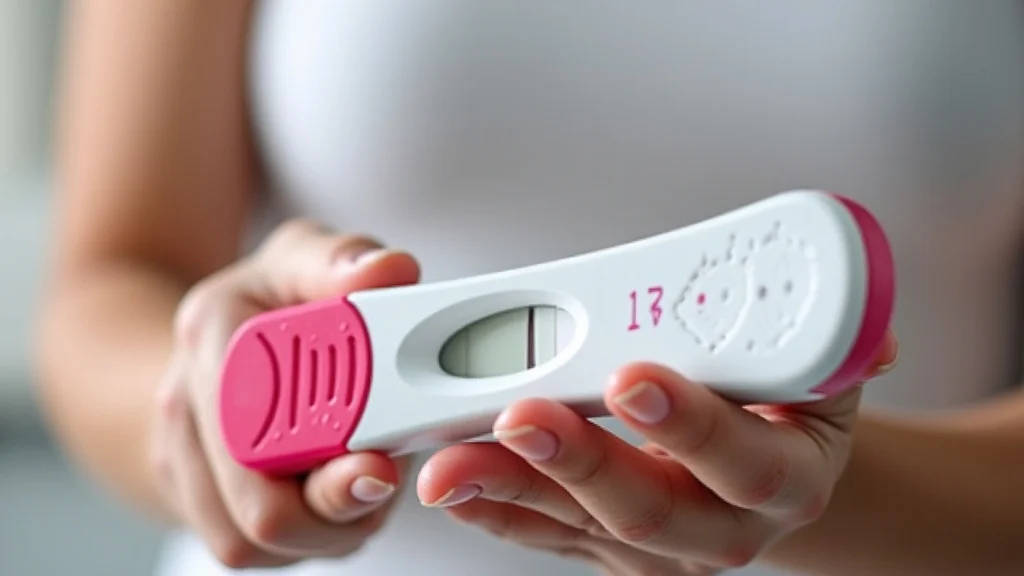
Wondering if you can get a reliable result from a pregnancy test 6 days sooner than your missed period? It’s a question many people ask when they’re eager for an answer. Getting a test this early can feel a bit tricky, but it’s often possible!
We’ll walk you through it simply, step by step. Get ready to learn what you need to know to get that answer you’re looking for, without any confusion.
Key Takeaways
- Learn when it’s best to take a pregnancy test for the most accurate results.
- Discover how early pregnancy tests work and what they detect.
- Understand the factors that affect early pregnancy test accuracy.
- Find out how to interpret different types of pregnancy test results.
- Get tips for when and how to use an early pregnancy test.
- Know what to do after you get your pregnancy test result.
Taking A Pregnancy Test 6 Days Sooner
How Early Pregnancy Tests Work
Early pregnancy tests work by detecting a special hormone in your body called human chorionic gonadotropin, or hCG. This hormone is only made when you are pregnant. It starts being produced shortly after a fertilized egg attaches to the wall of your uterus.
The amount of hCG in your body increases very quickly in the early days of pregnancy, doubling about every two to three days.
Home pregnancy tests, whether they are urine tests or blood tests, are designed to pick up this hCG hormone. The more sensitive the test, the lower the level of hCG it can detect. This sensitivity is what allows some tests to give a positive result days before your period is due.
When you take a test early, you are hoping that enough hCG has built up for the test to find it.
Understanding hCG Levels
Human chorionic gonadotropin (hCG) is a hormone that your body makes after a fertilized egg implants in the uterus. It’s often called the “pregnancy hormone” because its presence is a strong indicator of pregnancy. Levels of hCG start low but rise rapidly in the first few weeks of pregnancy.
For a home pregnancy test to be accurate, it needs to detect a certain minimum amount of hCG.
Different pregnancy tests have different sensitivity levels. Some tests can detect hCG at very low concentrations, meaning they can potentially identify pregnancy a few days before a missed period. Other tests are less sensitive and require higher hCG levels to show a positive result.
This is why choosing a sensitive test is important if you plan to test early.
It is important to remember that hCG levels vary from person to person. Some women will naturally produce more hCG earlier in their pregnancy than others. This variability means that even with a sensitive test, an early result might not always be accurate.
The timing of ovulation and implantation also plays a big role in when hCG starts to rise.
The Role of Ovulation and Implantation
For any pregnancy test, especially a pregnancy test 6 days sooner, understanding your ovulation and implantation timeline is key. Ovulation is when an egg is released from your ovary. If sperm are present, fertilization can happen.
After fertilization, the egg travels down to the uterus and implants itself in the uterine lining.
Implantation is the critical event that allows your body to start producing hCG. This typically happens about 6 to 12 days after ovulation. If you ovulate later in your cycle than you expect, or if implantation is delayed, your hCG levels will rise later.
This is why testing too early, even with a sensitive test, can lead to a false negative result.
Knowing your cycle helps estimate when implantation might have occurred. If you know when you ovulated, you can count about 7-10 days from then to estimate when implantation might happen. Testing a few days after this estimated implantation window gives your body more time to produce detectable levels of hCG.
This increases the chances of an accurate early result.
Sensitivity of Pregnancy Tests
The sensitivity of a pregnancy test refers to the lowest level of hCG it can detect. This is usually measured in milli-International Units per milliliter (mIU/mL). A more sensitive test has a lower mIU/mL number, meaning it can detect smaller amounts of hCG.
For example, a test with a sensitivity of 10 mIU/mL is more sensitive than one with a sensitivity of 25 mIU/mL.
When you’re trying to get a result from a pregnancy test 6 days sooner, choosing a highly sensitive test is crucial. These tests are specifically designed to give a positive reading even when hCG levels are still relatively low. However, even the most sensitive tests have a limit and cannot detect hCG from the very first day of conception.
It’s a balance. While high sensitivity offers the possibility of earlier results, it doesn’t guarantee accuracy. If a test is too sensitive and you test too early, you might get a false negative because implantation has just occurred, and hCG levels are not yet high enough.
Always follow the test instructions carefully for the best chance of a correct result.
When Is The Best Time To Test
The most reliable time to take a pregnancy test is on the first day of your missed period. By this point, most pregnancies will have produced enough hCG for a standard home pregnancy test to detect it accurately. Testing on this day significantly reduces the chance of a false negative result.
If you want to test even earlier, look for tests that advertise their ability to detect pregnancy a few days before your missed period. These are often called early detection pregnancy tests. They are more sensitive to hCG.
However, it is important to remember that testing this early carries a higher risk of a false negative, especially if implantation happened later than usual or your hCG levels are lower.
Consider what time of day you test. For the earliest testing, using your first morning urine is generally recommended. Your first urine of the day is typically the most concentrated, meaning it will have the highest level of hCG.
This can help a sensitive test pick up even small amounts of the hormone.
Testing Before A Missed Period
Testing before your missed period can offer an early glimpse, but it comes with important considerations. Many people are eager to know if they are pregnant as soon as possible. This desire leads to looking for a pregnancy test 6 days sooner.
Some tests are designed to detect hCG earlier than others.
These early detection tests are more sensitive. They can pick up lower levels of hCG, which might be present a few days before your period is due. However, it’s important to note that hCG levels rise gradually.
If you test too soon, even with a sensitive test, the level of hCG might not be high enough to be detected, leading to a false negative result.
For the most accurate result when testing early, use your first morning urine. This is because your urine will be most concentrated at this time, and the hCG hormone will be at its highest level. Waiting until at least the day your period is due, or a day or two after, will give you the most reliable outcome.
The Significance Of Your First Morning Urine
Your first morning urine is often considered the gold standard for early pregnancy testing. This is because you have gone several hours without drinking or urinating, allowing your body to concentrate the hCG hormone. Think of it like this: if you’ve been drinking a lot of water, your urine becomes diluted.
When your urine is more concentrated, any hCG present stands out more clearly to the test.
Using your first morning urine is especially important if you are trying to get a result from a pregnancy test 6 days sooner. Even if your hCG levels are still on the lower side, the concentration in your first urine might be just enough for a sensitive test to detect it. This can make the difference between a positive and a negative result when testing early.
While other times of the day can work, especially closer to your missed period, the morning sample offers the best chance for an early and accurate reading. If you have to test more than once, or if you are unsure about an early result, always try to use your first morning urine for subsequent tests.
Understanding Your Cycle Length
Knowing the typical length of your menstrual cycle is essential for accurately timing a pregnancy test, especially if you’re aiming for a pregnancy test 6 days sooner. A “typical” cycle is often considered 28 days, but cycles can vary greatly from person to person and even from month to month. They can range from 21 to 35 days or more.
A shorter cycle means you’ll ovulate and potentially become pregnant sooner than someone with a longer cycle. If your cycle is consistently short, your “missed period” might come sooner, making early testing less feasible. Conversely, a longer cycle offers a wider window for early testing possibilities, but also means a longer wait to know if your period is truly late.
Tracking your cycle can help you pinpoint your fertile window and estimate ovulation more precisely. This knowledge is invaluable. It allows you to better anticipate when implantation might occur and when hCG levels might become detectable.
Without this understanding, choosing the right time for an early test becomes more of a guess, increasing the chance of inaccurate results.
Types of Pregnancy Tests
There are two main types of pregnancy tests: urine tests and blood tests. Both detect hCG, but they differ in how they are administered, their sensitivity, and when they can be used.
Home urine tests are the most common. You can buy them at drugstores or supermarkets. They involve urinating on a test stick or dipping the stick into a urine sample.
These are convenient and widely available, making them a popular choice for many.
Blood tests are done by a healthcare provider in a clinic or lab. They are more sensitive than urine tests and can detect hCG earlier, sometimes as early as 6 to 8 days after ovulation. There are two types of blood tests: qualitative (which just tells you if hCG is present) and quantitative (which measures the exact amount of hCG).
Home Urine Pregnancy Tests
Home urine pregnancy tests are what most people think of when they consider taking a pregnancy test. They are readily available at most pharmacies and grocery stores. These tests detect the presence of hCG in your urine.
They are designed to be used by the average person, with clear instructions provided on the packaging.
There are different kinds of home urine tests. Some are dipstick tests where you immerse the stick in a collected urine sample. Others are midstream tests, where you hold the stick directly in your urine stream.
Digital tests are also available, which display the result in words like “Pregnant” or “Not Pregnant” instead of lines.
For taking a pregnancy test 6 days sooner, you will want to select a highly sensitive home urine test. These are often labeled as “early detection” tests. They can detect lower levels of hCG, giving you a chance at an earlier positive result.
However, it’s still best to use your first morning urine for the most accurate outcome.
Laboratory Blood Pregnancy Tests
Laboratory blood pregnancy tests are conducted by healthcare professionals. They are generally more accurate and can detect pregnancy earlier than home urine tests. These tests measure the amount of hCG in your blood.
Because blood tests are more sensitive, they can often detect hCG even before it reaches levels detectable in urine.
There are two types of blood pregnancy tests: qualitative and quantitative. A qualitative blood test simply tells you whether or not hCG is present in your blood, indicating pregnancy. A quantitative blood test, also known as a beta hCG test, measures the exact amount of hCG in your blood.
This can provide more detailed information to your doctor.
Quantitative blood tests can be particularly useful for tracking the progression of a pregnancy or for diagnosing certain pregnancy-related issues. They can be performed about 6 to 8 days after ovulation, making them an option for very early pregnancy detection if needed. They are typically performed by a doctor or at a lab.
Digital vs. Line Tests
When you decide to take a pregnancy test, you might notice there are different types available. The two most common are line tests and digital tests. Both detect hCG, but they present the results in different ways.
Line tests typically show plus (+) or minus (-) signs, or one or two lines. Two lines usually mean pregnant, while one line means not pregnant. Sometimes, a faint second line can appear, which might be confusing.
It’s important to read the test instructions to understand what a faint line means for that specific test.
Digital tests are usually easier to read because they display results in words, such as “Pregnant” or “Not Pregnant.” This eliminates any guesswork or confusion that can sometimes come with interpreting faint lines on traditional tests. For someone looking for a clear answer, especially when taking a pregnancy test 6 days sooner, a digital test can be reassuring.
Interpreting Your Test Results
Understanding how to read your pregnancy test is crucial for getting accurate information. Most home pregnancy tests provide clear instructions, and it’s vital to follow them carefully.
For line tests, the presence of two lines generally indicates a positive result, meaning pregnancy is likely. Even a faint second line often means you are pregnant, as it signifies the detection of hCG. However, if you are concerned about a faint line, it’s wise to retest in a day or two or consult a healthcare provider.
Digital tests are straightforward. They will clearly state “Pregnant” or “Not Pregnant.” If the test says “Pregnant,” it’s highly likely you are pregnant. If it says “Not Pregnant,” it means that at the time of testing, the hCG levels were not high enough to be detected by that particular test.
Positive Results
A positive pregnancy test result means that the test has detected hCG in your urine or blood, indicating that you are likely pregnant. For home urine tests, this usually means seeing two lines or a “Pregnant” display on a digital test. Even a very faint positive line on a home test usually signifies pregnancy.
If you get a positive result from a pregnancy test 6 days sooner than your expected period, it’s exciting! However, it’s still recommended to confirm the result with your doctor. They can perform their own tests and schedule your first prenatal appointment.
They will also help you understand how far along you are.
It is rare, but a false positive can occur. This can happen due to certain medications containing hCG, recent miscarriage or abortion, or very rarely, certain medical conditions. Your doctor can help rule out these possibilities and confirm your pregnancy.
Negative Results
A negative pregnancy test result means that the test did not detect hCG at a level that indicates pregnancy. On a line test, this usually means seeing only one line. On a digital test, it will say “Not Pregnant.”
If you receive a negative result, but you still suspect you might be pregnant, there are a few possibilities. You may have tested too early, and your hCG levels are not yet high enough to be detected. Implantation may have occurred later than you expected, or your ovulation date might have been different.
In these cases, it is advisable to retest in a few days, especially if your period does not arrive.
It’s also important to consider the possibility of a false negative. This can happen if the test is faulty, expired, or if you did not follow the instructions correctly. If you continue to get negative results but your period is significantly delayed, it is a good idea to consult your healthcare provider.
They can perform further testing and investigate if there are other reasons for your missed period.
Faint Lines and Uncertain Results
Encountering a faint line on a pregnancy test can be confusing and lead to uncertainty. A faint line typically means that hCG was detected, but at a very low concentration. This can happen when you test very early in your pregnancy, like when using a pregnancy test 6 days sooner.
The intensity of the line often depends on how much hCG is in your urine and the sensitivity of the test. A faint line usually indicates pregnancy, but it’s not as definitive as a strong, clear line. This is why many healthcare professionals recommend retesting in a few days if you see a faint line.
If you get a faint line, try to use your first morning urine for any subsequent tests. This will give you the most concentrated sample of hCG. If the line becomes darker over a few days, it’s a good sign that your hCG levels are rising, confirming pregnancy.
If the line disappears or remains very faint and your period is late, it might be worth a visit to your doctor.
Tips for Early Testing
If you are considering taking a pregnancy test 6 days sooner than your missed period, there are a few key things to keep in mind to maximize your chances of getting an accurate result.
First, choose a highly sensitive early detection test. These tests are designed to pick up lower levels of hCG. Read reviews and look for tests that specifically state they can detect pregnancy a few days before a missed period.
Second, and perhaps most importantly, use your first morning urine. As mentioned, this urine is the most concentrated, which means any hCG present will be at its highest level. This significantly increases the chance that a sensitive test can detect it, even if the level is still quite low.
Choosing The Right Test Kit
When you’re aiming to test for pregnancy early, the type of test kit you choose makes a big difference. Look for kits that are specifically advertised as “early detection” or “early result” pregnancy tests. These kits are more sensitive to the hCG hormone, which is produced by the body shortly after conception.
The sensitivity is usually measured in mIU/mL. A lower number indicates higher sensitivity. For example, a test that can detect hCG at 10 mIU/mL is more sensitive than one that requires 25 mIU/mL.
When looking for a pregnancy test 6 days sooner, aim for tests with a sensitivity of 10 mIU/mL or even lower if available.
Reading reviews from other users can also be helpful. Many people share their experiences with early detection tests, mentioning when they received their first positive result. This can give you an idea of which brands are most reliable for early testing.
Following Test Instructions Precisely
Following the instructions that come with your pregnancy test kit is absolutely critical, especially when testing early. Each test is designed slightly differently, and using it correctly ensures the most accurate result possible.
Pay close attention to details like how long to hold the test in your urine stream, how long to wait before reading the result, and whether you need to dip the test into a collected sample or hold it midstream. Even small deviations from the instructions can affect the outcome.
For early testing, it is especially important to note any specific guidance the test provides regarding timing. Some tests may suggest waiting a longer period for early testing than they do for testing on the day of a missed period. Always read and follow these instructions to avoid a misleading result.
What To Do If You Get An Uncertain Result
If you get an uncertain result, like a very faint line, it’s natural to feel a bit anxious. The best approach is to stay calm and get more information. An uncertain result often means the hCG levels are on the borderline of detection for that particular test.
Your next step should be to retest. It is highly recommended to wait at least 24 to 48 hours before taking another test. During this time, if you are pregnant, your hCG levels will increase.
This can make the result clearer on your next test. Remember to use your first morning urine for this retest for the best concentration of hCG.
If you continue to get uncertain results, or if you are still unsure after retesting, it’s time to contact your healthcare provider. They can perform a blood test, which is more sensitive, or a clinical evaluation to definitively determine if you are pregnant. They can also help you understand why you might be experiencing ambiguous results.
Myths About Early Pregnancy Testing
Myth 1: Any Test Can Accurately Detect Pregnancy Days Before A Missed Period
This is a common misconception. While some pregnancy tests are designed for early detection due to their high sensitivity, not all tests can reliably detect pregnancy days before a missed period. Standard pregnancy tests require a certain minimum level of hCG to show a positive result.
If implantation has just occurred, or if hCG levels are rising slowly, a less sensitive test will likely give a false negative result.
Only highly sensitive early detection tests have the potential to detect pregnancy 6 days or more before a missed period. These tests are engineered to pick up much lower concentrations of hCG. However, even with these tests, accuracy is not guaranteed this early, as individual hCG production rates vary.
Myth 2: A Faint Line Always Means You Are Not Pregnant
This is not true. A faint line on a pregnancy test usually indicates that a small amount of hCG has been detected. This is often the case when testing very early in a pregnancy, such as when using a pregnancy test 6 days sooner.
The faintness of the line is typically due to lower hCG levels at this early stage.
If you see a faint line, it is generally considered a positive result. However, because the signal is weak, it’s wise to confirm with a follow-up test in a day or two, ideally using your first morning urine. A darker line on subsequent tests would indicate rising hCG levels and confirm pregnancy.
Myth 3: Testing Too Early Is Always A Waste Of Time And Money
While testing too early can sometimes lead to a false negative or an uncertain result, it’s not always a complete waste. For those seeking an early pregnancy test 6 days sooner, using a highly sensitive test with first morning urine can sometimes provide a positive result if pregnancy has occurred and hCG levels are sufficient. It can offer peace of mind or an early indication.
The key is to understand the limitations. If you test too early and get a negative result, it doesn’t definitively mean you aren’t pregnant. It might simply mean it’s too soon for the test to detect the pregnancy hormone.
Waiting a few days or until your missed period usually yields more reliable results.
Myth 4: You Can’t Get Pregnant If You Have A Negative Test Result Early On
A negative pregnancy test, especially when taken before a missed period, does not guarantee that you are not pregnant. It only means that at the time of the test, the level of hCG in your urine was not high enough for the test to detect. This is common when testing very early.
Many factors influence hCG levels, including the exact timing of ovulation and implantation. If implantation happened later than expected, or if your hCG levels are rising more slowly, a negative test result is possible even if you are pregnant. Continuing to experience symptoms and having a delayed period warrants retesting or consulting a healthcare provider.
Frequently Asked Questions
Question: Can I get a pregnancy test 6 days sooner and be accurate?
Answer: Yes, it is possible to get an accurate result with a pregnancy test 6 days sooner if you use a highly sensitive early detection test and your first morning urine. However, the accuracy is not as high as testing on or after your missed period, and a negative result might be a false negative if testing this early.
Question: What is the earliest I can take a home pregnancy test?
Answer: Some early detection tests can detect pregnancy as early as 6 days before your missed period. However, for the most reliable results, it is recommended to wait until the day of your missed period or a few days after. Testing too early increases the risk of a false negative result.
Question: Why is my pregnancy test faint but positive?
Answer: A faint positive line on a pregnancy test usually means that hCG has been detected, but at a low level. This often happens when you test early in pregnancy. It is generally considered a positive result, but it’s a good idea to retest in a day or two to see if the line becomes darker, indicating rising hCG levels.
Question: What should I do if I get a negative result but my period is late?
Answer: If you get a negative pregnancy test result but your period is late, you should retest in a few days. If you continue to get negative results and your period remains delayed, consult your healthcare provider. They can perform further tests to determine if you are pregnant or identify other reasons for a missed period.
Question: How accurate are early pregnancy tests?
Answer: Early pregnancy tests are generally accurate when used correctly and at the right time. However, their accuracy decreases the earlier you test before your missed period. Testing on the day of your missed period or later provides the highest accuracy.
Always follow the test instructions for best results.
Summary
You can take a pregnancy test 6 days sooner for an early indication. Use a highly sensitive test and your first morning urine for the best chance. Remember that early testing carries a higher risk of false negatives.
Always confirm results with a healthcare provider, especially if you get an uncertain or negative result but still suspect pregnancy.
Leave a Reply