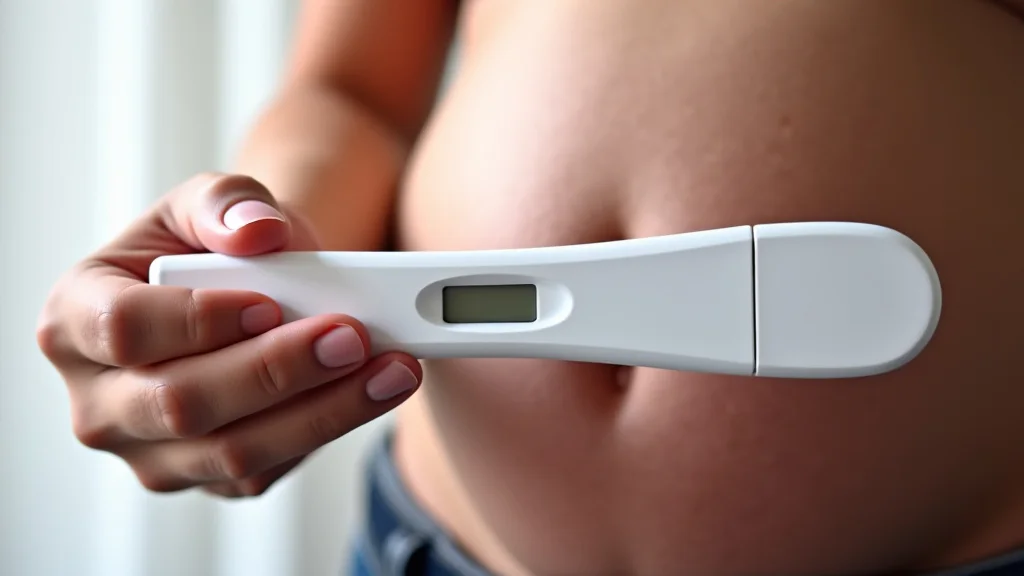
Figuring out if you’re pregnant can bring up lots of questions, especially when you want to know as soon as possible. A common time people think about testing is a pregnancy test 5 days before missed period. This can be a bit tricky for beginners because early pregnancy signs can be subtle, and the hormone levels needed for a positive test might still be low.
It’s completely normal to feel a little unsure. This guide will walk you through everything simply, step by step. We’ll cover when to test, how it works, and what your results mean.
Key Takeaways
- Learn the best time to take a pregnancy test for accurate results.
- Understand how pregnancy tests detect the pregnancy hormone hCG.
- Discover what a faint positive line means and how to interpret it.
- Find out common mistakes to avoid when taking a home pregnancy test.
- Get clear advice on what to do after getting your test results.
Taking a Pregnancy Test Early
How Early Can You Test For Pregnancy
Knowing when to take a pregnancy test is super important for getting accurate results. Most home pregnancy tests work by detecting a hormone called human chorionic gonadotropin (hCG). Your body starts producing hCG shortly after a fertilized egg implants in the uterus.
However, the amount of hCG increases over time. Testing too early means there might not be enough hCG for the test to detect, leading to a false negative result. This is why waiting until you’ve missed your period is generally recommended.
But, for those eager to know, understanding the nuances of early testing is key.
Understanding hCG Levels
Human chorionic gonadotropin (hCG) is a hormone that is produced by the cells that will form the placenta. It’s often called the “pregnancy hormone.” After a fertilized egg attaches to the uterine lining, hCG starts to be released into your bloodstream and urine. The levels of hCG rise rapidly in early pregnancy, doubling approximately every 48 to 72 hours during the first few weeks.
This hormone is what pregnancy tests look for. The sensitivity of a pregnancy test refers to how low a level of hCG it can detect. More sensitive tests can detect lower amounts of hCG, making it possible to get a positive result earlier.
However, even with sensitive tests, there’s a point at which testing too early can still yield an inaccurate result because the hormone hasn’t built up enough.
Understanding hCG levels helps explain why there’s a “sweet spot” for testing. If you test too early, the hCG concentration in your urine might be below the detection threshold of the test, even if you are pregnant. This can lead to a disheartening false negative.
Conversely, testing too late might not be necessary if you’re keen to find out sooner, provided you use a sensitive enough test and follow the instructions carefully.
The Science Behind Pregnancy Tests
Home pregnancy tests are designed to be user-friendly and provide quick results. They work using a type of immunoassay that detects hCG in urine. The test strip contains antibodies that are sensitive to hCG.
When you urinate on the absorbent tip of the test, your urine travels up the strip. If hCG is present, it binds to these antibodies.
This binding triggers a chemical reaction that causes a line, symbol, or digital word to appear in the result window. Different tests have different ways of showing results. Some use lines (one line for negative, two for positive), while others use plus or minus signs, or display words like “Pregnant” or “Not Pregnant” on a digital screen.
The accuracy of these tests depends on several factors, including the sensitivity of the test, the concentration of hCG in your urine, and how correctly you follow the test instructions.
The accuracy is highest when testing with first-morning urine because it’s usually the most concentrated, meaning any hCG present will be in a higher concentration. This makes it easier for the test to detect. While some tests claim to detect pregnancy several days before a missed period, their accuracy at these very early stages can be lower compared to testing on or after your missed period.
It’s a trade-off between wanting an early answer and ensuring the result is reliable.
When Is The Best Time To Test
The most reliable time to take a pregnancy test is on the day your period is due, or a few days after you’ve missed it. At this point, hCG levels are generally high enough for most tests to detect accurately. However, if you’re eager to test earlier, many sensitive home pregnancy tests can detect hCG as early as 5 days before your missed period.
It’s important to remember that testing this early might result in a false negative if your hCG levels are still too low.
For the most accurate early results, it’s best to use first-morning urine. This is because your urine is most concentrated after a night’s sleep, meaning any hCG produced will be in a higher concentration. This increases the chances of a positive result if you are pregnant.
If you get a negative result when testing early, but your period still doesn’t arrive, it’s a good idea to re-test a few days later.
Consider tracking your ovulation if you’re trying to conceive. Knowing your ovulation date can help you pinpoint when implantation might occur and, consequently, when hCG levels might become detectable. This timing knowledge can make early testing more strategic.
However, for absolute certainty, waiting until your period is late remains the gold standard.
Pregnancy Test 5 Days Before Missed Period Accuracy
Taking a pregnancy test 5 days before missed period is a common practice for many who are anxious to know if they are expecting. While many modern pregnancy tests are highly sensitive and can detect the pregnancy hormone hCG at lower levels, their accuracy is significantly impacted by the timing. Testing this early means you are relying on detecting very small amounts of hCG in your urine.
The primary challenge with testing this early is the potential for a false negative. A false negative occurs when the test result indicates you are not pregnant, but you actually are. This happens because hCG levels might not have risen sufficiently in your system to be detected by the test.
Even if a fertilized egg has implanted, it takes time for hCG to build up to detectable levels in urine.
While some tests market themselves as being able to detect pregnancy up to 5 days before a missed period, their accuracy rates are usually lower at these earliest stages compared to testing on or after your missed period. For instance, a test might claim 99% accuracy on the day of your missed period, but its accuracy 5 days prior could be closer to 60-70%. This means there’s a considerable chance of getting an incorrect result if you test too soon.
What A Faint Positive Line Means
A faint positive line on a pregnancy test is usually a sign that you are pregnant. It means that the test has detected the presence of hCG in your urine, but the concentration is low. This is very common when testing early, such as 5 days before your missed period, because hCG levels are still building up in your system.
When you see a faint line, it’s important not to dismiss it. Even a slight indication of a second line, provided it appears within the timeframe specified by the test instructions, generally signifies a positive result. The intensity of the line often correlates with the amount of hCG present.
A darker line typically means higher hCG levels, while a fainter line suggests lower levels.
It’s recommended to re-test a few days later, ideally on or after your missed period, using first-morning urine. If you are pregnant, you should see a darker, more distinct line. This follow-up test helps confirm the result.
If the faint line was due to an evaporation line or a faulty test, a subsequent test will likely be negative. However, if you see a faint line and it develops within the correct time frame, it’s best to assume you are pregnant and consult with your doctor.
False Negatives Explained
A false negative pregnancy test result is when the test says you are not pregnant, but you actually are. This is the most common type of inaccurate result, especially when testing early. Several factors can contribute to a false negative when taking a pregnancy test 5 days before missed period.
The primary reason is that your body may not have produced enough hCG yet for the test to detect. hCG is the hormone that pregnancy tests look for, and its levels are very low in the earliest days of pregnancy. If you test too soon after implantation, the concentration of hCG in your urine might be below the sensitivity threshold of even the most sensitive home pregnancy tests.
Another reason could be diluted urine. If you drink a lot of fluids before taking the test, your urine may be too diluted to show a positive result, even if hCG is present. This is why using first-morning urine, which is more concentrated, is generally recommended for early testing.
Incorrectly following the test instructions, such as not waiting long enough for the result or using an expired test, can also lead to false negatives.
To minimize the risk of a false negative, it’s best to wait until your period is late to take a pregnancy test. If you choose to test early, use a highly sensitive test and use your first-morning urine. If you get a negative result but still suspect you might be pregnant, wait a few days and test again.
False Positives Are Rare
False positive pregnancy test results, where the test indicates you are pregnant but you are not, are very rare. Modern home pregnancy tests are highly accurate when used correctly. The vast majority of positive results are accurate.
However, there are a few specific situations that can lead to a false positive. One is a chemical pregnancy, which is a very early miscarriage that occurs shortly after implantation. The test might detect the hCG produced by the early pregnancy before it ends.
Another cause can be certain medications that contain hCG, such as those used in fertility treatments. If you are taking such medications, it’s important to discuss this with your doctor.
Rarely, certain medical conditions can affect test results. For example, some tumors can produce hCG, leading to a false positive. Also, if a test is faulty or if a result is read after the designated time frame (an evaporation line), it might be misinterpreted as positive.
Evaporation lines are faint, colorless lines that can appear as urine evaporates from the test strip.
If you get a positive result, even if you suspect it might be false, it’s always best to confirm with your healthcare provider. They can perform further tests, such as a blood test or an ultrasound, to confirm the pregnancy and discuss your next steps.
How To Take A Pregnancy Test Correctly
Taking a pregnancy test correctly is crucial for obtaining accurate results, especially when testing early. While the process seems simple, following the instructions precisely can make a big difference. When you are looking to test pregnancy test 5 days before missed period, precision is even more important due to potentially low hormone levels.
The first step is to read the instructions that come with your specific test. Different brands may have slight variations in how to use them. Generally, you’ll need to collect a urine sample.
For the most reliable results, especially when testing early, it’s recommended to use your first-morning urine because it is the most concentrated. This means any pregnancy hormone, hCG, will be present in the highest amount.
There are usually two main methods for testing: either by holding the absorbent tip of the test directly in your urine stream for a specified number of seconds, or by collecting urine in a clean cup and dipping the test strip into it. Whichever method you use, make sure you follow the time indicated on the instructions. Exposing the test to urine for too long or not long enough can affect the result.
After exposing the test to urine, you need to wait a specific amount of time for the result to appear. This waiting period is critical. Do not read the result too early or too late.
Most tests require you to wait for a few minutes. Reading the result outside the designated timeframe can lead to misinterpretation, such as mistaking an evaporation line for a positive result.
Using First Morning Urine
Using your first-morning urine is a key recommendation for taking a pregnancy test, particularly when you are testing early, like 5 days before your missed period. After you have been sleeping and haven’t consumed fluids for several hours, your urine becomes more concentrated. This concentration means that any pregnancy hormone, hCG, that your body is producing will be at its highest level in your system during that time.
When hCG levels are higher in your urine, it makes it easier for the pregnancy test to detect. Sensitive tests are designed to pick up hCG even at low concentrations, but the more concentrated your urine, the better the chances of getting a clear and accurate positive result if you are pregnant. If you test with urine that has been diluted by drinking a lot of water, the hCG levels might be too low for the test to register, potentially leading to a false negative result.
To collect your first-morning urine, simply urinate into a clean, dry container. Many tests allow you to either pee directly on the test stick or dip the stick into the collected urine. Ensure the container is clean to avoid any contamination that could interfere with the test.
By using first-morning urine, you are maximizing the potential for the test to detect hCG accurately, especially during those crucial early days.
Reading The Results
Reading pregnancy test results correctly is vital for accurate interpretation. Most home pregnancy tests use either lines or digital displays to show the result. It’s crucial to read the test within the time frame specified in the instructions, usually between 3 to 10 minutes.
Reading too early or too late can lead to confusion.
For line tests, a negative result typically shows one line in the control window, indicating the test is working. A positive result usually shows two lines: one in the control window and another in the test window. The second line, even if faint, generally indicates a positive result.
A faint positive line often means that hCG levels are present but still low, which is common when testing early.
Digital tests are simpler to read, as they will display words like “Pregnant” or “Not Pregnant.” If you see a faint positive line on a line test, it’s usually best to confirm the result with another test a few days later, especially if you are testing before your missed period. If you see no lines or only a line in the test window (and not the control window), the test may be invalid and you should re-test with a new kit.
Common Mistakes To Avoid
When taking a pregnancy test, especially when aiming for an early result like pregnancy test 5 days before missed period, certain mistakes can lead to inaccurate outcomes. One of the most frequent errors is testing too early. While tests are sensitive, hCG levels might simply not be high enough for detection days before your period is due, resulting in a false negative.
Another common mistake is using diluted urine. Drinking excessive fluids before taking the test can lower the concentration of hCG, making it harder for the test to detect. It’s best to use first-morning urine, which is more concentrated.
Additionally, not reading the test within the specified time frame can cause confusion. Reading too early means the result might not be fully developed, while reading too late can lead to misinterpreting evaporation lines as positive results.
Forgetting to check the expiration date of the test is also a pitfall. Expired tests may not work correctly. Lastly, improper storage of the test kits, such as in extreme temperatures, can affect their accuracy.
Always store pregnancy tests in a cool, dry place. By being aware of these common mistakes and following the instructions carefully, you can significantly improve the reliability of your test results.
Interpreting Your Results
What To Do With A Positive Result
If your pregnancy test shows a positive result, congratulations! This usually means you are pregnant. Even a faint positive line generally indicates the presence of hCG, the pregnancy hormone.
The very next step you should take is to schedule an appointment with your healthcare provider, such as a doctor or a midwife. They can confirm your pregnancy with a blood test or an ultrasound and discuss your prenatal care options.
Your healthcare provider will want to determine how far along you are, discuss your health history, and provide guidance on maintaining a healthy pregnancy. This includes advice on diet, exercise, and what to avoid. They will also schedule your first prenatal visit, which is usually around 8-12 weeks pregnant, but they may want to see you sooner depending on your circumstances.
It’s important to remember that while home pregnancy tests are highly accurate, they are not a substitute for professional medical advice. Your doctor will provide the definitive confirmation and the necessary support as you begin your pregnancy journey. They can also address any questions or concerns you may have about your pregnancy or what to expect in the coming months.
Embracing this exciting news and seeking professional guidance is the best path forward.
What To Do With A Negative Result
If your pregnancy test comes back negative, it usually means you are not pregnant. However, if you tested early, especially pregnancy test 5 days before missed period, it’s possible to get a false negative. This happens if hCG levels are still too low to be detected by the test.
If your period is still late after a negative result, it’s advisable to re-test a few days later. Using first-morning urine can increase the accuracy of a repeat test. If you continue to get negative results but your period remains absent, or if you have concerns about your cycle, it’s a good idea to consult with your healthcare provider.
There could be other reasons for a missed period, such as stress, hormonal imbalances, or changes in lifestyle.
Your doctor can perform further tests to determine the cause of your missed period and offer appropriate advice. If you were trying to conceive and received a negative result, try not to feel discouraged. Continue tracking your cycle and consider when might be the best time for your next test.
Patience and consistency are key when trying to conceive.
Understanding Evaporation Lines
An evaporation line is a faint, colorless line that can appear on a pregnancy test after the initial result window has passed. It forms when urine evaporates from the test strip, and it can sometimes be mistaken for a positive result. This is a common source of confusion, particularly when testing early or when the test is left sitting for too long.
The key difference between an evaporation line and a true positive line is its color and timing. A true positive line, even if faint, will typically have a pink or blue hue (depending on the test) and appears within the timeframe specified by the test instructions. An evaporation line is usually colorless or grayish and shows up much later, often after the test has dried out.
To avoid misinterpreting an evaporation line, always read your pregnancy test within the designated time frame mentioned in the instructions. If you see a faint line, wait a day or two and test again, preferably with first-morning urine. If the line is consistently faint but present within the correct time, it is likely a positive result.
If it only appears much later or is colorless, it is likely an evaporation line, and you should assume the result is negative or re-test.
Real-Life Scenarios And Advice
Let’s look at some common situations people face when trying to determine pregnancy. Sarah is excited to test but her period isn’t due for another 6 days. She has a highly sensitive test.
She uses first-morning urine and sees a very faint line appear within the 5-minute window. She knows this faint line could be an early positive, but she’s also aware of false negatives. Sarah decides to wait two days and test again with another sensitive test.
Her second test shows a clear, definite positive line. This confirms her pregnancy.
Another scenario involves Mark and Lisa. Lisa is usually very regular, but her period is a day late. She takes a standard pregnancy test with diluted afternoon urine.
The test shows a negative result. Lisa feels disappointed but waits another two days. Her period still hasn’t arrived.
She takes another test, this time using first-morning urine. The result is clearly positive. This highlights the importance of using concentrated urine and potentially re-testing if your period is still late.
These examples show that early testing requires patience and careful interpretation. If you get an ambiguous result like a faint line, or if your period is late after a negative test, re-testing is often the best course of action. Always follow the test instructions closely and consider consulting a healthcare professional for confirmation and guidance.
| Testing Scenario | Timing Relative to Missed Period | Type of Test | Urine Concentration | Likely Outcome | Recommended Action |
|---|---|---|---|---|---|
| Early Bird Test | 5 Days Before | Highly Sensitive | First Morning Urine | Faint Positive or Negative | Re-test in 2 days; Consult Doctor |
| Standard Test | 1 Day Late | Standard Sensitivity | Diluted Afternoon Urine | Likely Negative (even if pregnant) | Re-test in 2-3 days with first morning urine |
| Late Period Test | 1 Week Late | Any Sensitivity | First Morning Urine | Clear Positive or Negative | Consult Doctor |
Common Myths Debunked
Myth 1 Early Testing Always Gives A Definitive Answer
Many people believe that if you can test early, you’ll get a definite answer. This isn’t always true. While tests are sensitive, hCG levels are very low in the early days of pregnancy.
Testing too soon can lead to a false negative, meaning the test says you’re not pregnant when you actually are. A definitive answer is best achieved by testing on or after your missed period.
Myth 2 A Faint Line Means It’s Not Real
Some think that if the second line on a pregnancy test is faint, it’s not a real positive. This is incorrect. A faint positive line indicates the presence of hCG, the pregnancy hormone, albeit in lower amounts.
This is very common when testing early. Even a faint line that appears within the correct time frame is generally considered a positive result. It’s best to re-test in a few days for a darker line.
Myth 3 All Pregnancy Tests Are The Same
Not all pregnancy tests are created equal. They vary in sensitivity, meaning some can detect lower levels of hCG than others. Tests designed for early detection are more sensitive and can pick up pregnancy hormones sooner than standard tests.
Using a highly sensitive test is crucial if you plan to test pregnancy test 5 days before missed period for a better chance at an accurate early result.
Myth 4 It’s Impossible To Get A False Positive
While false positives are very rare, they can happen. Situations like a chemical pregnancy (a very early miscarriage), certain medications containing hCG, or faulty tests can lead to a false positive result. If you get a positive result, it’s always recommended to confirm it with your doctor.
Frequently Asked Questions
Question: Can I test for pregnancy 5 days before my period is due
Answer: Yes, you can test for pregnancy 5 days before your period is due, but the accuracy may be lower. Use a highly sensitive test and first-morning urine for the best chance at an accurate result.
Question: What does a faint line on a pregnancy test mean
Answer: A faint line usually means you are pregnant, but hCG levels are still low. It’s often seen when testing early. It is best to re-test in a few days to see a darker line.
Question: Why is first-morning urine best for early testing
Answer: First-morning urine is more concentrated, meaning it has a higher level of hCG if you are pregnant. This makes it easier for sensitive tests to detect the hormone.
Question: What should I do if I get a negative result but my period is late
Answer: If your period is late and you got a negative result, wait a few days and test again. If you continue to get negative results, or if you have concerns, consult your doctor.
Question: How soon after implantation can a pregnancy test detect pregnancy
Answer: A pregnancy test can typically detect pregnancy about 6-10 days after ovulation and implantation, when hCG levels rise enough to be measured in urine.
Wrap Up
Testing for pregnancy 5 days before your missed period is possible with sensitive tests. Remember that early testing carries a higher risk of false negatives due to low hCG levels. Always use first-morning urine and follow test instructions precisely.
A faint positive line usually means you are pregnant, but re-testing is recommended. If your period is late and tests are negative, see your doctor. Trust the process and seek medical confirmation.
Leave a Reply