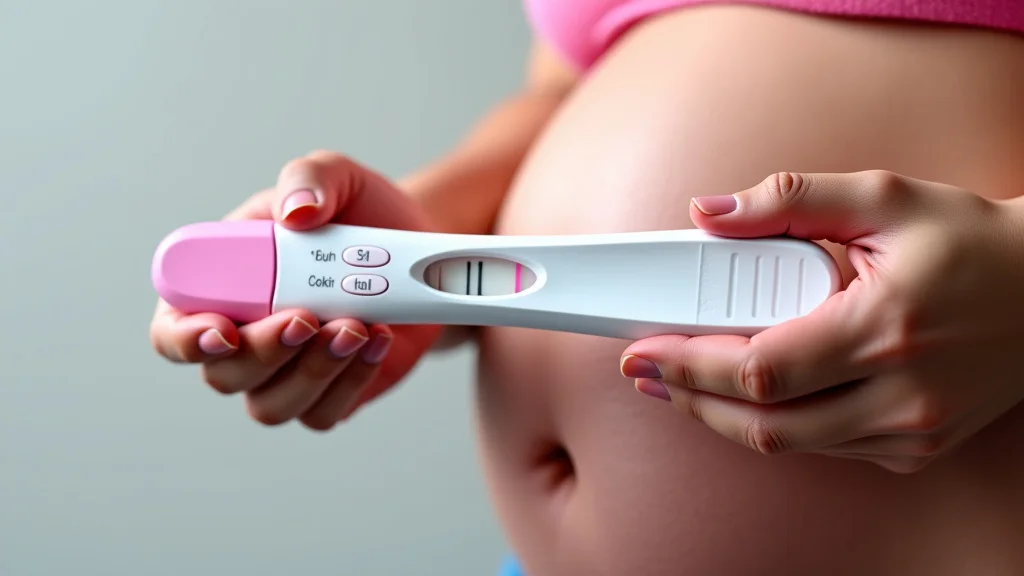
It’s exciting to think about taking a pregnancy test early. Many people wonder if a pregnancy test 4 days before period can give them an accurate result. This can feel a bit tricky, especially for the first time.
You might worry if the test will work or if you’re just wasting your time. Don’t worry, this guide will make it super simple. We will walk you through everything you need to know, step by step.
Get ready to find out when and how to test for the best results!
Key Takeaways
- You can often get accurate results from a pregnancy test 4 days before your period.
- Early pregnancy tests detect lower levels of hCG.
- Timing and test sensitivity are important for early testing.
- Understanding hCG levels helps explain why early testing works.
- False negatives are possible, even with early testing.
- Follow test instructions carefully for the best outcome.
Testing Early Pregnancy Potential
Many people want to know if they can test for pregnancy a few days before their expected period. This is a common question because there’s so much excitement and anticipation around a potential pregnancy. The main reason people consider testing early is to get an answer as soon as possible.
This can help them start making plans or adjust their lifestyle if they are pregnant.
The technology behind pregnancy tests has improved a lot. This means many tests are now sensitive enough to detect the pregnancy hormone even before a missed period. This hormone is called human chorionic gonadotropin, or hCG.
As soon as a fertilized egg implants in the uterus, your body starts producing hCG. The levels of this hormone then rise rapidly.
Taking a test a bit early means you might catch these rising hCG levels. However, the accuracy can depend on several factors. These include how sensitive the test is and how much hCG your body is producing.
It’s good to know that not all tests are created equal, and some are better suited for early testing than others. We will explore how these tests work and what to expect.
How Early Pregnancy Tests Detect hCG
Pregnancy tests work by detecting a hormone called human chorionic gonadotropin (hCG). This hormone is produced by the cells that will eventually form the placenta. It starts to be released shortly after a fertilized egg attaches to the lining of the uterus.
This implantation typically happens about 6 to 12 days after ovulation.
Once implantation occurs, hCG levels begin to rise. They generally double about every 48 to 72 hours in the early stages of pregnancy. Home pregnancy tests, also known as urine pregnancy tests, use antibodies to detect the presence of hCG in your urine.
The test stick or strip contains a special pad that reacts to hCG. If hCG is present, a line or symbol will appear on the test indicator, showing a positive result.
The sensitivity of a pregnancy test is measured in milli-International Units per milliliter (mIU/mL). A lower mIU/mL number means the test is more sensitive and can detect lower concentrations of hCG. This is what makes some tests suitable for early detection, even before a missed period.
For instance, a test with a sensitivity of 10 mIU/mL can detect lower hCG levels than a test with a sensitivity of 25 mIU/mL.
For a pregnancy test 4 days before period to be accurate, it needs to be highly sensitive. This is because the hCG levels on that day are likely to be lower than they would be on the day of your missed period. The test needs to be able to pick up even a small amount of hCG to give a reliable positive result.
Therefore, choosing a sensitive test is key for early testing.
Understanding hCG Levels and Timing
The accuracy of an early pregnancy test hinges on the level of hCG in your urine. hCG, or human chorionic gonadotropin, is the hormone produced by your body after conception. Its presence is the primary indicator of pregnancy that home tests detect.
For a pregnancy test 4 days before period to show a positive result, your hCG levels need to be high enough for the specific test to detect them.
After implantation, hCG levels typically start at a low but detectable amount and then rise quickly. A typical implantation occurs between 6 and 12 days past ovulation. If ovulation happened about 14 days before your missed period, implantation could have occurred around 10-16 days before your expected period.
This means, 4 days before your period, you might be around 10-14 days past implantation.
At this stage, for some women, hCG levels might be around 25 mIU/mL or even higher, which is detectable by many sensitive home pregnancy tests. However, implantation can occur later, or hCG might rise more slowly. This is why some women might not get a positive result 4 days before their period, even if they are pregnant.
Their hCG levels might not yet be high enough for the test to read.
The average hCG levels for a woman 10-14 days past ovulation (which is roughly 4 days before a missed period for a standard 28-day cycle) can vary significantly. Some sources indicate levels could be anywhere from 10 to 100 mIU/mL or more. This wide range is why using a sensitive test (one that detects as low as 10 mIU/mL) is recommended for early testing.
Average hCG Levels Chart (Estimates)
| Days Past Ovulation | Estimated hCG Levels (mIU/mL) |
|---|---|
| 10 days | 5-25 |
| 11 days | 10-40 |
| 12 days | 15-60 |
| 13 days | 20-80 |
| 14 days (approx. 4 days before period) | 25-100+ |
This table shows a general trend. Your individual hCG levels might be different. It’s important to remember that this is an estimate.
If you test early and get a negative result, it does not always mean you are not pregnant. It could simply mean your hCG levels are not yet detectable by the test.
Choosing the Right Early Pregnancy Test
When you’re looking to take a pregnancy test 4 days before period, the type of test you choose is super important. Not all pregnancy tests are made the same. Some are designed to be more sensitive, meaning they can detect smaller amounts of the pregnancy hormone, hCG, in your urine.
These are the ones you want for early testing.
Look for tests that advertise their sensitivity. Often, this is shown in milli-International Units per milliliter (mIU/mL). A lower number means a more sensitive test.
Tests with a sensitivity of 10 mIU/mL are generally considered good for early detection. Some tests can even detect as low as 5 mIU/mL, but these are less common and might be more expensive.
You can find these sensitive tests at most drugstores and supermarkets. They are often called “early detection” or “early result” pregnancy tests. When you are at the store, check the packaging carefully.
It will usually state the sensitivity level and how many days before your missed period it can potentially detect pregnancy.
It’s also a good idea to read reviews if you can. Other users’ experiences can give you clues about how reliable a particular brand is for early testing. Sometimes, even if a test is highly sensitive, if your hCG levels are on the lower end, you might still get a negative result.
This is why it’s important to know how to interpret results and when to retest.
Here are some points to consider when selecting an early pregnancy test:
- Sensitivity: Aim for tests with a sensitivity of 10 mIU/mL or lower. This increases your chances of detecting hCG early.
- Brand Reputation: Some brands are known for their accuracy and reliability in early detection. Research or ask for recommendations.
- Ease of Use: While most tests are straightforward, some have digital displays or clearer lines, which can make reading results easier.
- Cost: Highly sensitive tests might be a bit more expensive. Weigh the cost against the benefit of getting an earlier potential result.
Using a sensitive test is your best bet for a pregnancy test 4 days before period if you want the earliest possible answer. It gives your body’s early hormonal changes a better chance to be picked up by the test.
First Morning Urine and Early Testing
When you are aiming to take a pregnancy test 4 days before period, the time of day you take it matters a lot. For early testing, it is highly recommended to use your first morning urine. This is because your urine is most concentrated in the morning after you have gone through a long period without drinking or urinating.
This concentration means any hCG hormone your body is producing will be at its highest level in that sample.
During the day, as you drink fluids, your urine becomes diluted. This dilution can lower the concentration of hCG. If you are testing very early, when hCG levels are still low, a diluted sample might not have enough hCG for the test to detect.
This could lead to a false negative result, making you think you are not pregnant when you actually are.
So, even though you might be eager to test as soon as you wake up, it’s wise to hold off for a few hours if you can, or at least wait until your first morning void. This gives your body time to concentrate the hCG. It’s like trying to find a tiny bit of glitter in a large swimming pool versus a small cup of water.
The smaller the volume of water, the easier it is to spot the glitter. Similarly, concentrated urine makes it easier for the pregnancy test to spot the hCG.
This practice is crucial for any early testing, but it is especially important when you are testing 4 days before your expected period. At this point, hCG levels are still relatively low. Using concentrated first morning urine gives you the best possible chance of getting an accurate positive result if you are pregnant.
If you test later in the day, try to limit your fluid intake for a few hours beforehand to increase concentration.
Here are some simple steps to ensure you get the best sample:
- Do not drink large amounts of fluid before collecting your urine sample, especially if you are testing later in the day.
- Collect your urine in a clean, dry container. Some tests require you to collect urine in a cup and dip the test stick into it.
- Follow the test instructions precisely. Some tests can be used for direct urination, while others require collection.
- Use the first urine of the morning if possible for the highest concentration of hCG.
By using your first morning urine, you are maximizing the chances that the sensitive pregnancy test can detect the pregnancy hormone if it is present. This simple step can make a big difference in the accuracy of your early test result.
Interpreting Your Early Test Results
Getting a result from a pregnancy test 4 days before period can be exciting, but it’s important to know how to read it correctly. Pregnancy tests, whether they are highly sensitive early detection tests or standard ones, usually have clear instructions. It’s essential to read these instructions before you even start.
Most tests use a system of lines or symbols to indicate a positive or negative result. For example, two lines often mean positive, and one line means negative. Some digital tests will spell out “Pregnant” or “Not Pregnant.” Always pay attention to the control line, which shows the test is working properly.
If the control line doesn’t appear, the test is invalid, even if you see another line.
When testing early, a faint positive line is common. This doesn’t necessarily mean the result is wrong. It just means the hCG level is low, but still detectable.
The line might be fainter than the control line. If you see any line, however faint, it is generally considered a positive result. This is especially true when using a sensitive test 4 days before your period.
However, it’s important to be aware of potential outcomes. A positive result means hCG has been detected, which strongly suggests pregnancy. A negative result means hCG was not detected at a high enough level by the test.
This could mean you are not pregnant, or it could mean you tested too early and your hCG levels are still too low.
Here’s a breakdown of common scenarios:
- Positive Result: You see two lines, or a positive symbol. This is a strong indication you are pregnant. It’s recommended to confirm with your doctor.
- Negative Result: You see one line or a negative symbol. If you tested early, it’s possible you are pregnant but tested before hCG levels were high enough.
- Invalid Result: The control line does not appear. The test did not work correctly, and you should retest with a new kit.
If you get a faint positive line 4 days before your period, it is very likely a true positive. However, due to the early stage, it’s wise to retest in a couple of days. As your pregnancy progresses, hCG levels will rise, and you should see a stronger line on subsequent tests.
This confirmation is important for your peace of mind and for accurate medical care.
What a Faint Positive Means
Seeing a faint positive line on a pregnancy test taken 4 days before your period can be a confusing experience. Many people wonder if it’s a real result or if they are imagining it. The good news is that a faint line often does indicate a positive pregnancy.
Pregnancy tests detect hCG, and the line on the test strip is created when hCG molecules bind to antibodies in the test. The intensity of the line typically corresponds to the amount of hCG present in your urine. When you test very early, like 4 days before your period, your hCG levels might be quite low.
So, a faint line suggests that there is some hCG in your urine, but not a lot. This is perfectly normal for early pregnancy. As the pregnancy continues, your hCG levels will rise rapidly, usually doubling every 48 to 72 hours.
This means that with subsequent tests, the line should become darker and more prominent.
If you see a faint positive, here’s what you should do:
- Don’t disregard it: Even a faint line is usually a sign of pregnancy.
- Retest in a few days: Using your first morning urine again, test in 2-3 days. If you are pregnant, the line should be noticeably darker.
- Consider a more sensitive test: If you’re still unsure, a test with higher sensitivity (e.g., 5 mIU/mL) might give a clearer result.
- Consult your doctor: Regardless of the test result, contact your healthcare provider to confirm the pregnancy and discuss next steps.
A faint positive is often a sign that conception has occurred and implantation was successful. It’s a moment of cautious celebration. Remember that external factors, like how diluted your urine is, can also affect line intensity.
This is why using first morning urine is so important for early testing.
For example, if someone tested 4 days before their period and saw a very faint line, they might get a stronger, clearer line just two days later. This progression is a good sign of a healthy, developing pregnancy.
When to Retest for Accuracy
If you take a pregnancy test 4 days before your period and get a result, you might be wondering what to do next. If the result is positive, even a faint one, it’s a strong indicator that you might be pregnant. However, due to the early stage, it’s wise to confirm.
If the result is negative, there’s also a chance you might still be pregnant.
The best practice for early testing is to retest a couple of days later. If you are pregnant, your hCG levels will continue to rise. This increase makes the hormone easier for the pregnancy test to detect.
Retesting in 2 to 3 days gives your body more time to produce a detectable amount of hCG.
For example, if you tested on Monday and got a faint positive, try testing again on Wednesday or Thursday. If you tested negative on Monday, but your period hasn’t started by Thursday or Friday, take another test. A negative result early on doesn’t always rule out pregnancy.
It might simply mean you tested too soon.
Here are the general guidelines for retesting:
- For a faint positive: Retest in 2-3 days using first morning urine. You should see a darker line if the pregnancy is progressing.
- For a negative result: If your period is still delayed, retest in 2-3 days. If you get another negative result and your period still hasn’t arrived, it’s worth waiting a few more days or consulting a doctor.
- If your period arrives: If your expected period starts, you are likely not pregnant. You can stop testing.
Remember to use a sensitive pregnancy test and first morning urine for each retest. This will give you the most accurate results possible. If you continue to get inconsistent results or have concerns, it is always best to speak with your healthcare provider.
They can perform a blood test, which is even more sensitive and can detect hCG earlier and more accurately.
Potential Pitfalls of Early Testing
While the idea of taking a pregnancy test 4 days before period is tempting for an early answer, there are some common issues to be aware of. These are often called pitfalls, and they can lead to confusion or disappointment.
One of the biggest challenges is the possibility of a false negative result. This happens when the test shows you are not pregnant, but you actually are. It’s usually because you tested too early, and your hCG levels haven’t risen enough to be detected by the test.
Even with a sensitive test, if implantation happened a bit later, or hCG is rising slowly, you might not get a positive result yet.
Another concern is the possibility of a chemical pregnancy. This is a very early miscarriage that happens shortly after implantation. You might get a positive pregnancy test, but then your period arrives on time or is only a few days late.
This can be emotionally challenging. It’s important to remember that this is a common occurrence, and it doesn’t mean you cannot have a successful pregnancy in the future.
Interpreting a faint positive can also be a pitfall. While it often means pregnancy, sometimes evaporation lines can look similar to faint positives. An evaporation line appears in the test window after the urine has dried up.
These lines usually appear later, after the recommended reading time. Always read the test within the time frame specified by the manufacturer.
Here are some common pitfalls:
- False Negatives: Testing too early, before hCG levels are high enough.
- Chemical Pregnancies: Getting a positive result followed by an early miscarriage.
- Evaporation Lines: Misinterpreting a line that appears after the test window has closed.
- Misinterpreting Results: Not reading the test instructions or understanding how to read faint lines.
- Testing Too Often: Getting anxious or confused by inconsistent results from testing multiple times a day or with different brands.
To avoid these pitfalls, patience is key. While a pregnancy test 4 days before period can be done, understand its limitations. If you get a negative result, wait a few days and retest if your period hasn’t started.
If you get a positive, even a faint one, contact your doctor for confirmation. They can provide accurate testing and guidance.
Understanding False Negatives
A false negative on a pregnancy test means the test indicates you are not pregnant, but you actually are. This is one of the most common issues when trying to test early, such as taking a pregnancy test 4 days before your period. The main reason for a false negative is testing too soon.
As we’ve discussed, pregnancy tests detect hCG. This hormone is only produced after implantation. If implantation happens later than average, or if your body produces hCG more slowly, then by the time you test, the levels might still be too low for the test to detect.
This is especially true 4 days before your period, as hCG levels are still relatively low for many women at this stage.
For example, a woman might ovulate a few days later than she thinks. If she ovulated on day 16 instead of day 14 of her cycle, and implantation occurs 9 days later, then she would be testing only 7 days past implantation 4 days before her period. This is a much lower hCG level than if she ovulated on day 14 and implanted on day 10, giving her 10 days past implantation.
Another factor can be the sensitivity of the test itself. While sensitive tests are recommended for early testing, even they have a limit. If your hCG levels are just at the threshold of the test’s detection capability, a slightly diluted urine sample could push it below that threshold, resulting in a false negative.
To reduce the risk of a false negative:
- Use a highly sensitive test (e.g., 10 mIU/mL or lower).
- Use your first morning urine to ensure the most concentrated sample.
- Wait a few days and retest if your period is still delayed.
- Consider a blood test if you continue to suspect pregnancy but get negative urine tests. Blood tests are generally more sensitive and can detect hCG earlier.
If you get a negative result and your period is late, don’t assume you aren’t pregnant. Patience and retesting are your best friends when trying to get an accurate result early on.
The Possibility of Chemical Pregnancy
A chemical pregnancy is a very early pregnancy loss that happens soon after conception. It occurs when a fertilized egg implants in the uterus, but then stops developing. Often, it happens before a woman would typically miss her period, or very shortly after a positive pregnancy test.
The term “chemical pregnancy” is used because the pregnancy is only detectable through a pregnancy test (which detects the chemical hormone hCG) or possibly through blood tests. There are usually no signs or symptoms of pregnancy that a doctor would detect, such as a gestational sac seen on an ultrasound. It is essentially a biochemical confirmation of pregnancy followed by a very early miscarriage.
For someone taking a pregnancy test 4 days before period, a chemical pregnancy can be a confusing and sometimes upsetting experience. They might get a positive test result, feel hopeful, and then experience a period that seems heavier or comes a few days later than expected. This can make them question if the positive test was “real.”
It’s important to understand that a chemical pregnancy is not a “failed” pregnancy in the sense that something went wrong with the woman’s body. It simply means that for reasons often unknown, the fertilized egg did not continue to develop properly. It is a common occurrence, and many women experience them without even knowing they were pregnant, as they might not test that early.
Here are some facts about chemical pregnancies:
- Common: They are estimated to occur in about 50% of all pregnancies, though many go unnoticed.
- Early Detection: They are more frequently detected now because women are testing earlier.
- Not a Sign of Infertility: Experiencing a chemical pregnancy does not typically mean you are infertile or will have trouble conceiving in the future.
- Emotional Impact: While biologically very early, it can still be emotionally significant for those hoping for a pregnancy.
If you suspect you’ve had a chemical pregnancy, it’s best to discuss it with your doctor. They can help you understand what happened and reassure you about future fertility. For many, it’s a step on the path to a successful pregnancy.
Benefits of Testing Later
While the allure of a pregnancy test 4 days before period is strong, there are significant benefits to waiting until you have missed your period. Waiting a bit longer can provide more accurate results and reduce the emotional rollercoaster that can come with early testing.
The primary benefit of waiting is increased accuracy. By the time your period is due, your hCG levels will have risen significantly. This makes it much more likely that any pregnancy test, even a less sensitive one, will detect the hormone.
You are less likely to get a false negative result, which can happen when you test too early.
Waiting also reduces the chance of detecting a chemical pregnancy. While a chemical pregnancy is technically a pregnancy, it doesn’t result in a live birth. Experiencing a positive test followed by a period can be emotionally distressing.
Waiting until after your period is due can help you avoid this disappointment by primarily detecting pregnancies that are progressing.
Furthermore, waiting until you’ve missed your period can also mean clearer results. Faint positive lines are more common with early testing. While they usually indicate pregnancy, they can cause confusion.
Waiting for a missed period often leads to stronger, clearer positive lines, providing more certainty.
Here are the advantages of waiting:
- Higher Accuracy: hCG levels are typically high enough for reliable detection by most tests.
- Reduced False Negatives: Less chance of testing before hCG is detectable.
- Avoids Chemical Pregnancy Confusion: Less likely to detect a pregnancy that would not have continued.
- Clearer Results: Stronger positive lines, reducing ambiguity.
- Emotional Stability: Can help manage expectations and reduce disappointment from early inconclusive results.
For instance, a woman who tests 4 days before her period might get a negative result. If she waits until her period is 2 days late, she might take the same test and get a clear positive. This difference highlights the importance of timing for accuracy.
While early testing is possible, waiting offers a more definitive answer.
Why Waiting Improves Accuracy
The most compelling reason to wait to take a pregnancy test, even if you’re considering a test 4 days before period, is the dramatic increase in accuracy. Accuracy is directly tied to the level of hCG, the pregnancy hormone, in your body. This hormone is produced by the developing placenta shortly after implantation.
Implantation typically happens about 6 to 12 days after ovulation. For a standard 28-day cycle, ovulation usually occurs around day 14. Therefore, 4 days before a missed period would be around day 24 of the cycle.
At this point, if implantation occurred around day 10, you would have about 14 days of hCG production. However, if ovulation and implantation happened later, you might have only 7-10 days of hCG production.
Most home pregnancy tests can detect hCG levels of around 25 mIU/mL. Highly sensitive tests can detect levels as low as 10 mIU/mL. However, on average, hCG levels are only around 25 mIU/mL about 12 days past ovulation.
So, 4 days before a typical missed period might still be too early for many women to get a reliable positive, even with a sensitive test. If ovulation and implantation were delayed, the levels would be even lower.
When you wait until after your period is due, you are giving your body more time to produce sufficient hCG. By the time your period is a day or two late, you are likely 14-16 days past ovulation. At this point, average hCG levels often range from 50 to 100 mIU/mL, and sometimes much higher.
This elevated level makes it much easier for any pregnancy test to detect the hormone accurately.
Consider this scenario: A woman ovulates on day 14 and implants on day 10. Four days before her period (day 24) she might have around 50 mIU/mL. A sensitive test could pick this up.
However, if she ovulates on day 16 and implants on day 13, then four days before her period (day 24) she would only have 7 days of hCG production, potentially only reaching 20 mIU/mL. A standard test would miss this. But by day 28 (her missed period), she’d likely have much higher levels.
Therefore, waiting until after your expected period date significantly reduces the risk of a false negative result, offering a more confident and accurate confirmation of pregnancy.
Reducing Emotional Stress
The anticipation surrounding a potential pregnancy can be intense. For many, the desire to know as soon as possible leads them to test very early, like taking a pregnancy test 4 days before period. While this is understandable, it can also lead to significant emotional stress and anxiety.
Early testing often involves dealing with faint positive lines or negative results that might not be definitive. A faint positive, while often a sign of pregnancy, can cause a lot of worry. Is it real?
Will it get darker? What if it disappears? This uncertainty can be emotionally taxing.
Similarly, a negative result when you strongly suspect you are pregnant can be disheartening and lead to self-doubt.
Moreover, testing very early increases the likelihood of detecting a chemical pregnancy. While a chemical pregnancy is a biological confirmation of conception, it results in a miscarriage. Experiencing a positive test followed by a period can be emotionally devastating, creating a sense of loss and confusion.
It’s like experiencing a pregnancy and then a loss all within a week or two.
Waiting until after your expected period has passed can help mitigate these emotional challenges. By this time, hCG levels are usually high enough for a clear, definitive result. This clarity can bring peace of mind, whether the result is positive or negative.
A clear positive means you can begin to process the news and prepare for next steps with your doctor.
A clear negative result, if your period has arrived, provides closure. If your period is still delayed after a negative test, it prompts a discussion with your doctor about other potential reasons for delayed menstruation, rather than prolonged anxiety over an inconclusive pregnancy test.
Here’s how waiting can reduce stress:
- Clearer Results: Reduces anxiety caused by faint lines or ambiguous results.
- Avoids Early Miscarriage Anxiety: Lessens the emotional impact of detecting a chemical pregnancy.
- More Definitive Answers: Provides greater certainty, whether pregnant or not.
- Fewer Tests: Reduces the need for repeated testing and the associated costs and stress.
For example, a woman who tests 4 days before her period gets a faint positive, spends days worrying and retesting, and then gets her period. This cycle of hope and disappointment is emotionally draining. If she had waited until her period was two days late, she might have gotten a clear negative and moved on with less emotional turmoil, or a clear positive and started planning.
Common Myths Debunked
Myth 1: A faint positive line means you are not pregnant.
This is a common misconception. A faint positive line usually indicates that hCG is present in your urine, but at a lower concentration. This is very common when testing early, such as taking a pregnancy test 4 days before period.
The line’s intensity depends on the amount of hCG and the test’s sensitivity. If you see any line, even faint, within the test’s specified time, it should be considered a positive result. It is often recommended to retest in a few days to see a darker line as hCG levels increase.
Myth 2: You can get pregnant from unprotected sex just one time.
Yes, you absolutely can get pregnant from unprotected sex just one time. Sperm can survive in the female reproductive tract for up to five days. This means that even if you have unprotected intercourse on one occasion, and ovulation occurs within that five-day window, pregnancy is possible.
This is why using reliable contraception consistently is important if pregnancy is not desired.
Myth 3: If you have your period, you cannot be pregnant.
While a period typically signals that pregnancy has not occurred, there are rare exceptions. Some women experience light bleeding or spotting during early pregnancy, which they might mistake for a light period. This can happen due to hormonal fluctuations or implantation bleeding.
However, a true menstrual period is generally much heavier than implantation bleeding. If you suspect pregnancy despite bleeding, it’s best to consult a doctor.
Myth 4: Testing with saliva can detect pregnancy.
This is incorrect. Home pregnancy tests detect hCG, which is present in urine and blood. Saliva does not contain detectable levels of hCG in early pregnancy.
Therefore, saliva-based pregnancy tests are not accurate and should not be relied upon. Always use urine or blood tests for pregnancy detection.
Frequently Asked Questions
Question: How accurate is a pregnancy test 4 days before period
Answer: A pregnancy test 4 days before your period can be accurate, but it depends on the sensitivity of the test and your individual hCG levels. Highly sensitive tests can detect pregnancy this early, but there is a higher chance of a false negative if hCG levels are still low.
Question: What if I get a negative result 4 days before my period but my period is late
Answer: If you get a negative result and your period is late, it is possible you are pregnant but tested too early. It is recommended to wait a few days and retest, preferably using first morning urine. If your period remains absent, consult your doctor.
Question: Can I take a pregnancy test anytime of day 4 days before my period
Answer: While you can technically test anytime, it is best to use your first morning urine when testing 4 days before your period. This is because your urine will be most concentrated, meaning any hCG present will be at its highest level, increasing the chances of a detectable result.
Question: What does a very faint line mean on an early pregnancy test
Answer: A very faint line on an early pregnancy test usually indicates a positive result. It means that hCG has been detected, but at a low concentration. It is often recommended to retest in 2-3 days with first morning urine to see if the line gets darker.
Question: How many days before my period can I test for pregnancy
Answer: Many sensitive home pregnancy tests can detect pregnancy as early as 5 days before your missed period, which is approximately 4 days before your expected period day. However, accuracy increases significantly the closer you get to your missed period.
Summary
Taking a pregnancy test 4 days before your period is possible with sensitive tests. Your body produces hCG after implantation, and early tests can detect this hormone. Using first morning urine and a sensitive test increases accuracy.
A faint positive often means pregnancy, but retesting in a few days is recommended. Waiting until after your period is due generally provides more accurate and less stressful results. Always follow test instructions and consult your doctor for confirmation.
Leave a Reply